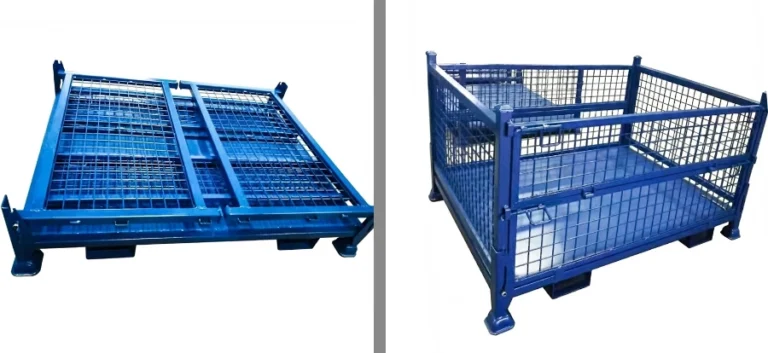
What is the folded height?
The folded stack height is 330 mm, with the folded state measured at 1100 × 885 × 330 mm.

Collapsible Mybox for return logistics: fold-flat empty-return mode, 1100 × 885 × 330 mm folded size, and a 60–80% footprint reduction guidance for circulation loops.
When your business ships full boxes out and brings empty boxes back, the collapsible Mybox is designed to cut the return footprint. In the folded state, the unit measures 1100 × 885 × 330 mm, so empty-return and storage space can drop by 60–80% compared with a non-foldable box.
Mybox is a foldable steel pallet cage / stillage family built for repeated circulation. Fold the side posts down, collapse the panels inward, and the unit goes flat for return transport, depot storage, or backhaul consolidation. That means less floor space, fewer trips for empty packaging, and a cleaner loop between warehouse, plant, and customer site.
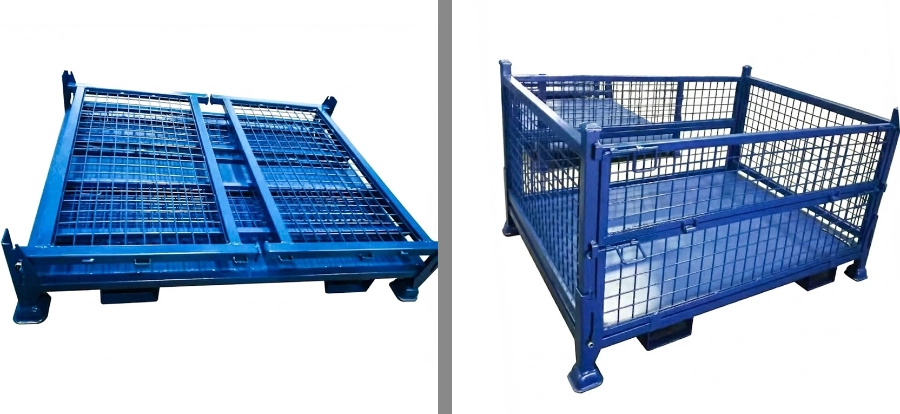
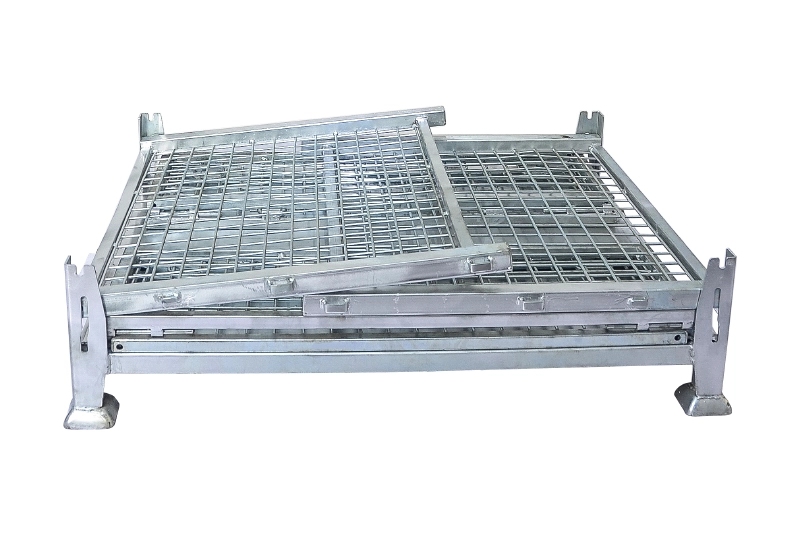
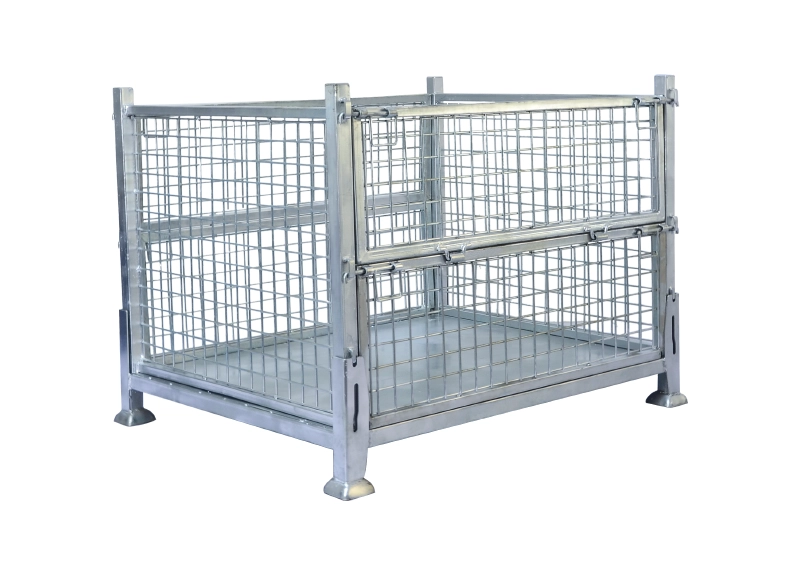
Use this mode when empty boxes come back through the same route. The body folds flat, the return load becomes denser, and the depot needs less staging room.
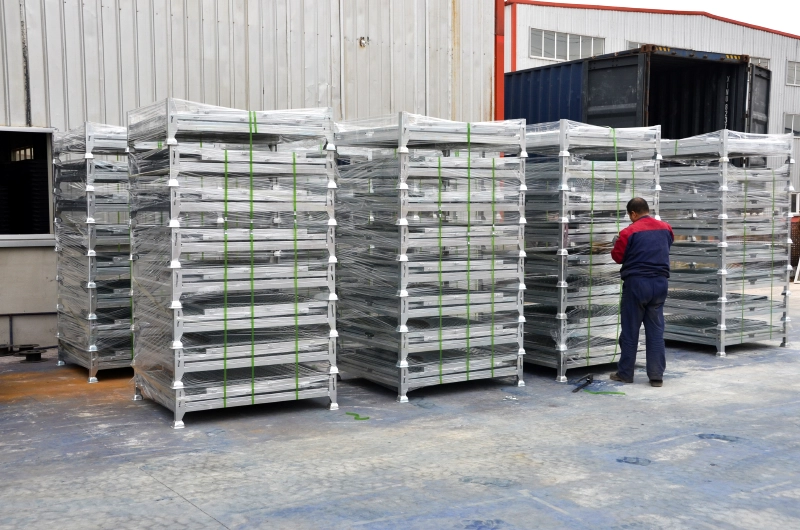
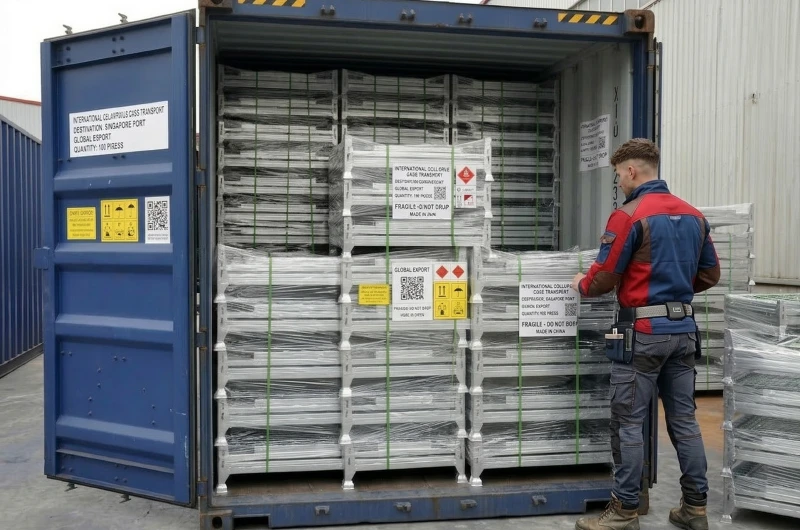
For export or inter-plant transfer, fold the empty units, stack them tightly, and load them in a standard shipping container. In the provided example, 192 units fit in one 40HQ using an 8 × 2 × 12 layout.
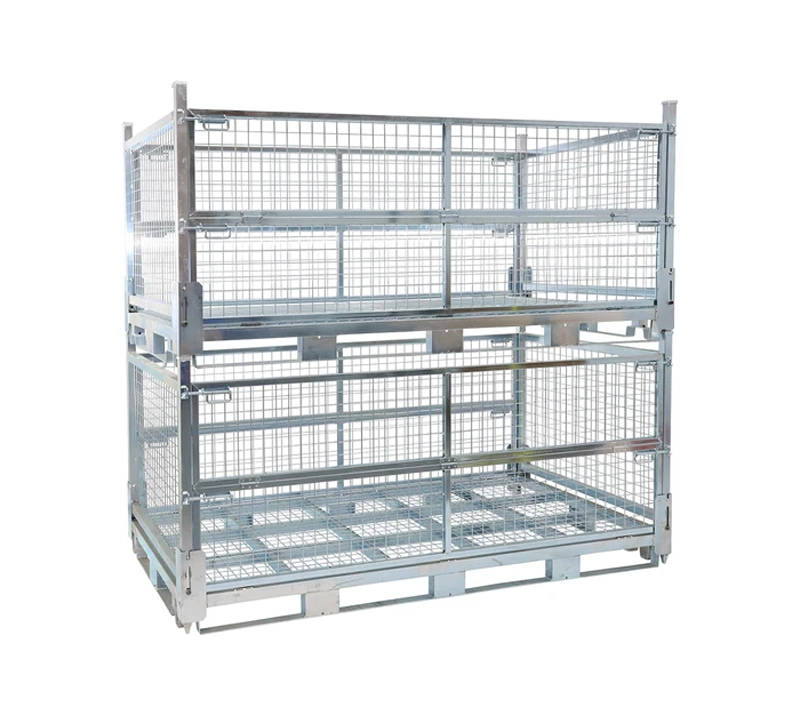
When the box is loaded, it acts as a stackable stillage for floor storage or rack-adjacent storage. Add a lid, liner, or casters when the application needs more protection or easier movement.
Release the side posts, fold the panels inward, and flatten the body. The result is a compact return stack at 330 mm high, which is much easier to stage and ship back than a rigid cage.
For empty-return and storage circulation, the fold-flat format can reduce occupied space by 60–80% versus a non-foldable box, based on the stated product guidance.
Best for loop logistics, return packaging, inter-plant transfers, export shipping, warehouse buffers, and any route where the same container repeatedly leaves full and comes back empty.
If you need a fully sealed dust- and moisture-barrier package, or if your load is extremely loose and ununitized, add a lid, liner, divider, or choose a different enclosure format.
Share the item size, unit weight, stacking rule, and whether the load is loose parts, boxed parts, or a mixed kit.
Decide between open, lidded, lined, wheeled, galvanized, or powder-coated configurations based on the route and environment.
Check folded height, return stack density, and container loading layout before rollout. The 40HQ 192-piece number is an example load plan, not a universal limit.
Start with a sample run, confirm handling and fold-back behavior, then scale to the full circulation fleet once the route is stable.
The folded stack height is 330 mm, with the folded state measured at 1100 × 885 × 330 mm.
In the stated example loading plan, 192 units fit in one 40HQ, arranged 8 × 2 × 12. Use it as a planning example, not as a fixed universal figure.
The foldable version gives you the same circulation idea, but the empty unit collapses flat, so the return trip and storage footprint are much smaller.
Yes, but small loose parts usually need a liner, divider, or box-in-box setup so the load stays organized and does not escape through the mesh.
If the route needs full sealing, strict moisture protection, or a single-use package, a lid plus liner or a different packaging format may be a better fit.