
Mybox with Brake Casters for Mobile Picking
Mybox
Mybox optional brake-caster PDP for mobile picking, line-side replenishment, and internal transfer. Learn how the caster option works and when fixed feet are better.
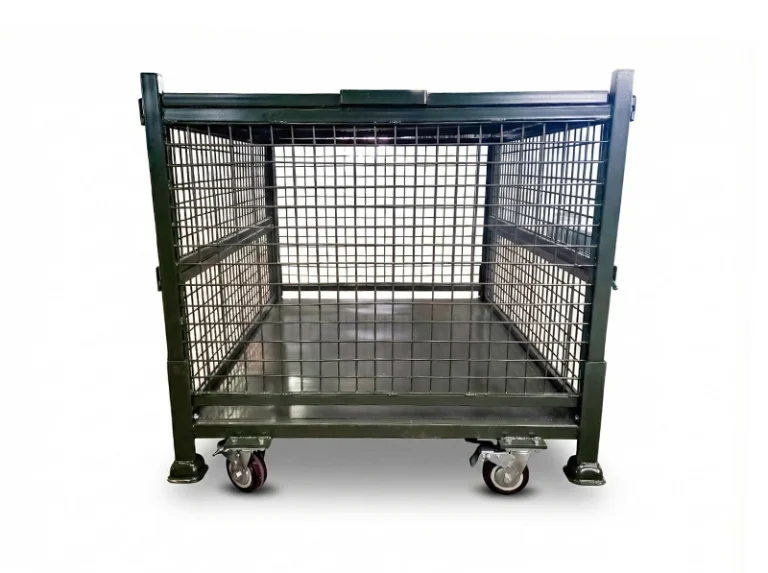
Switch from fixed storage to rolling picking in one spec
Mybox can be built with optional brake casters so the same box can stay parked at a fixed station or move with the picking route. The container load is still governed by the body rating; the caster set is a mobility option, not a replacement for the box rating.
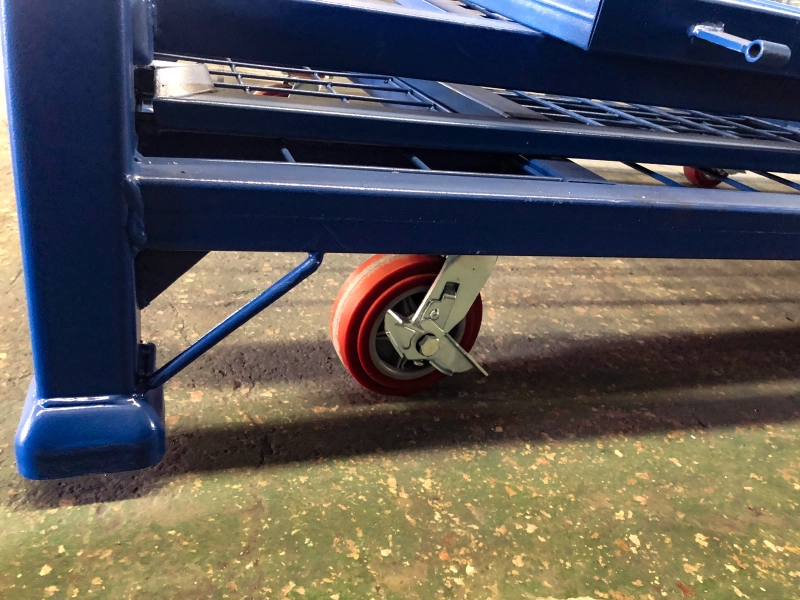
We install the caster set on the base frame according to the approved drawing. Brake casters help the box stay put during picking and handover, while fixed-foot versions remain the better choice when you want maximum stationary stacking and simpler storage. For short-distance line-side flow, WIP turnover, kitting, and dispatch staging, the mobile version saves repeated forklift moves.
- Optional caster base: add swivel casters with brake for rolling pickup and short transfer.
- Brake is for parking: it helps lock position on level floors, but does not change the box load rating.
- Load follows the box: static and dynamic load are determined by the container body and order spec.
- Choose the right version: fixed feet for higher static stacking; casters for frequent movement.
- Best fit: line-side replenishment, order picking, parts kitting, and internal dispatch.
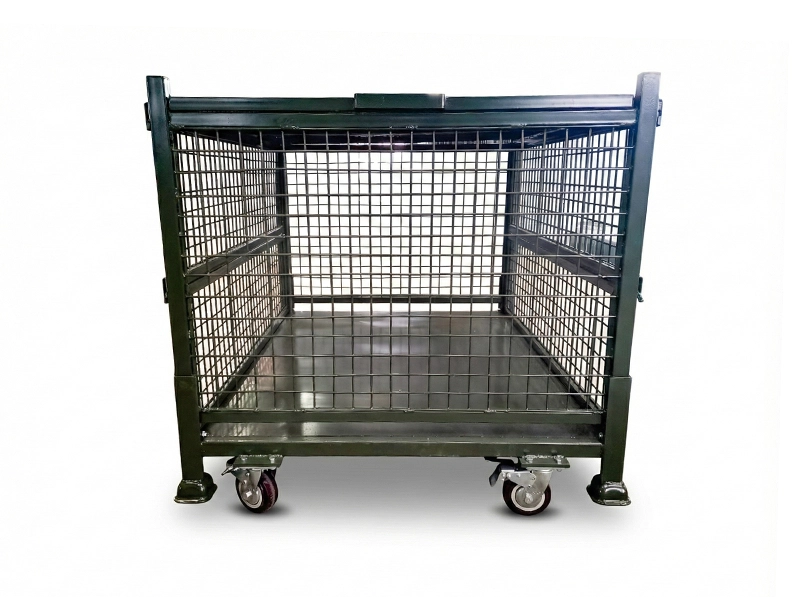
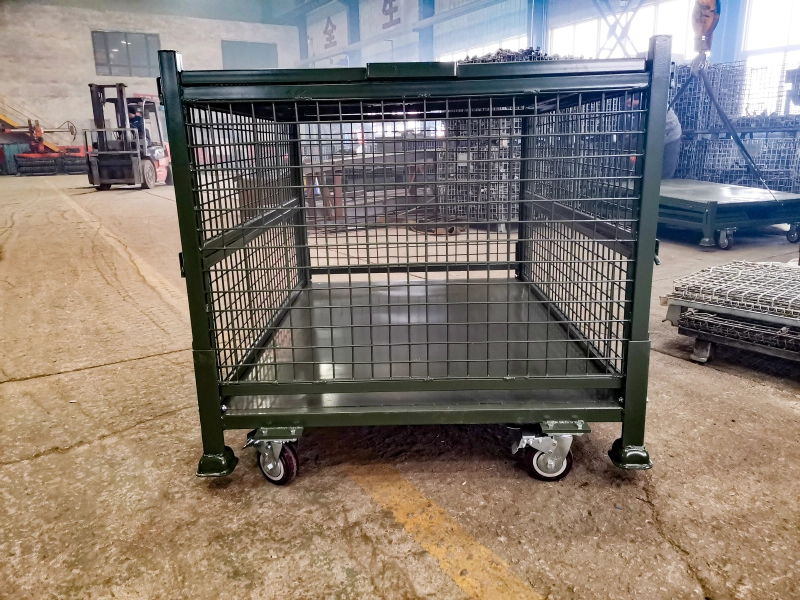
Fixed foot, caster, or caster-plus-lid — pick by flow, not by habit
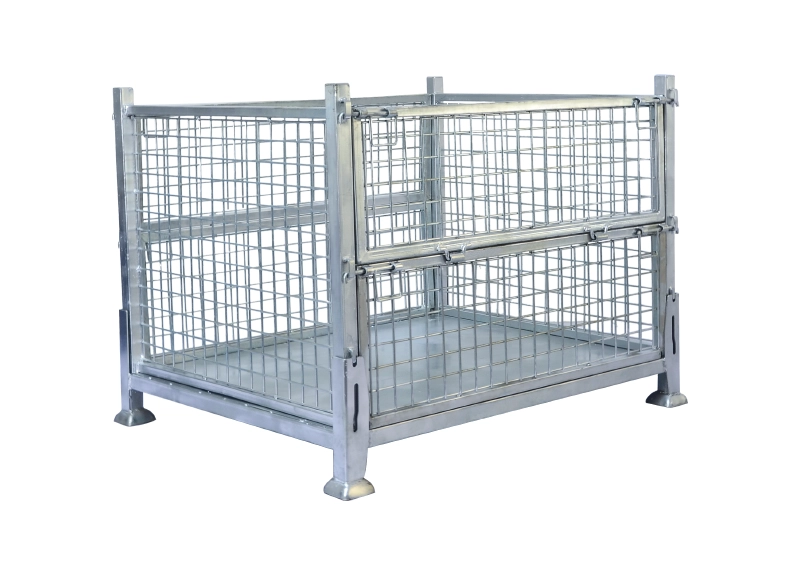
Standard fixed-foot
Mybox for stationary stacking
Use the fixed-foot version when the box stays in one place for storage, rack placement, or higher stack stability. It is the cleanest choice when movement is occasional and the main job is hold, stack, and retrieve.
Best for: static storage and rack-side use
Motion: forklift, pallet jack, or planned transfer only
Choose this when: you want fewer moving parts
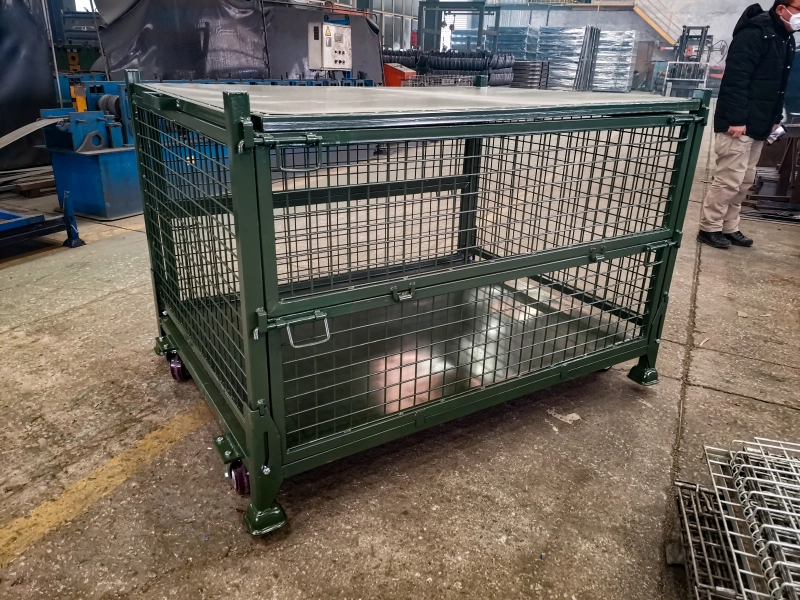
Caster mobile picking
Mybox with brake casters
Use the caster version when the box needs to move with the picking route. Brake casters let the box park safely at a station, then roll again when the next batch is ready. That makes it practical for line-side replenishment, kitting, and short dispatch runs.
Best for: short-distance mobile picking
Motion: push-on-floor for smooth routes
Choose this when: the same box must switch between fixed and mobile use
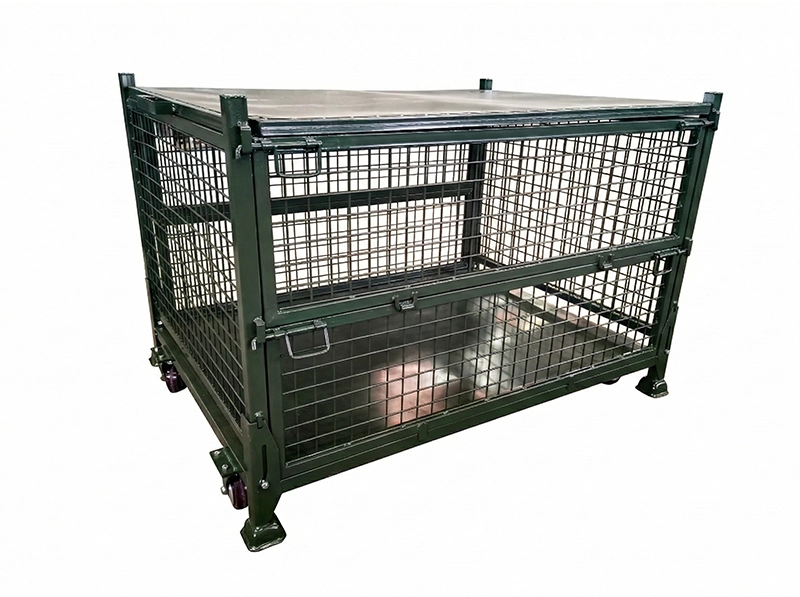
Lid + casters
Mybox with lid for protected dispatch
Use the lid-and-caster version when you need mobility plus extra protection for parts security or dust control. It keeps the mobile picking advantage, while the top cover helps protect the load during staging and internal transfer.
Best for: protected internal transfer
Motion: mobile, then park with brake engaged
Choose this when: parts need both movement and cover
What changes, what does not, and where the brake matters
Installed to the approved drawing
The caster set is mounted on the lower frame as an optional configuration. Wheel type, brake layout, and finish are locked by the order drawing, not by guesswork.
Brake is for parking, not for payload
Brake casters help keep the box in place during picking and handover. They do not make the wheels equal to the box load rating, and they do not replace floor control on a slope.
Load follows the container body
The box still needs its own static and dynamic load target. Once you add casters, the moving condition also depends on the floor, the route, turning radius, and the chosen wheel spec.
Fixed or mobile is a process choice
Choose fixed feet for static storage and higher stack stability. Choose casters when the same unit must travel between stations, support short-distance replenishment, and reduce forklift dependence.
How to specify a mobile picking Mybox without overbuying wheel hardware
Define the flow
Confirm whether the box is mainly for stationary storage, line-side replenishment, kitting, or dispatch staging. The answer decides whether fixed feet or casters make more sense.
Check the route
Measure floor condition, slope, turning space, and transfer distance. Mobile use works best on smooth indoor routes and short moves, not on rough outdoor ground.
Set the wheel spec
Confirm caster type, brake position, wheel finish, and mounting details against the approved drawing. The caster set must match the moving load and the real route conditions.
Lock the handling rule
Use brake casters when parked, and release them only for movement. For heavier or longer moves, use the correct handling equipment and keep the container rating as the governing limit.
Questions buyers ask before choosing casters
How are the casters installed?
They are mounted to the base frame as an optional configuration. The final wheel plate, size, finish, and brake layout are confirmed in the drawing stage so the box and the wheel set stay aligned.
Does the mobile version always include brakes?
Brake casters are available as an optional choice. For a picking box, brakes are the practical option because they keep the container parked at the station instead of drifting during handover.
Does a caster make the box carry more?
No. The box static and dynamic load still come from the container body design and the approved order spec. Wheel hardware supports movement; it does not turn the wheel set into the payload rating.
Should I choose fixed feet or casters?
Choose fixed feet if the box mostly stays in one place, stacks high, or goes to rack storage. Choose casters if the box must move between stations, support line-side picking, or reduce repeated forklift trips.
Where is the caster version not a good fit?
It is not the first choice for rough ground, long open-yard transfers, or sloped parking. In those cases, a fixed-foot configuration or a different handling flow is safer and easier to control.
What should I send for a quote?
Send the load target, floor condition, transfer distance, whether you need brakes, and whether you want fixed feet, casters, or a lid. We will match the base frame, wheel spec, and handling method to that flow.
Need a mobile picking layout that still respects load and stability? Request a drawing & quote.