
Portable Stack Rack for Cross-Dock Staging
derack
Portable Stack Rack options for cross-dock staging, temporary buffer zones, and compact return storage. Learn the mobility trade-offs versus fixed stack racks.
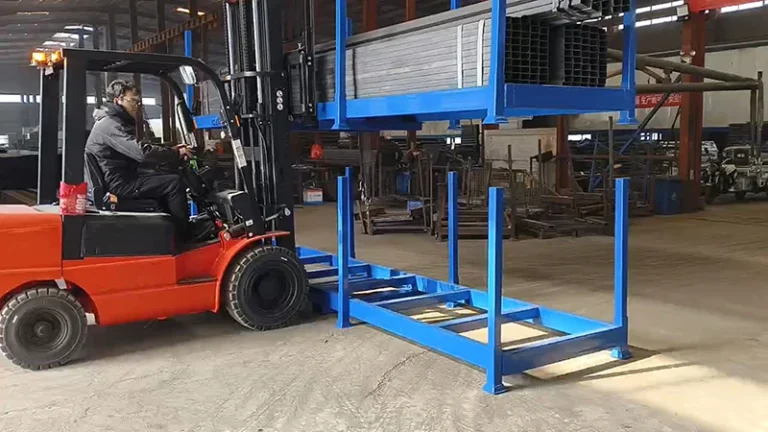
Move it with casters, stack it when parked.
Portable Stack Rack is built for short-distance movement between receiving, staging, and outbound lanes. It helps teams push a loaded unit to the right spot, then keep the same rack family in a stackable workflow after parking.
For portable use, the trade-off is real: wheel selection, floor condition, and moving height affect both stacking safety and usable capacity. That is why a portable rack should be sized around the actual cross-dock flow, not around a fixed rack assumption.
- Pushable staging unit for cross-dock, replenishment, and temporary buffer zones
- Stacking concept stays simple at rest; transport mode is defined by caster spec and floor condition
- Return storage can be nested or stripped, helping empty racks recover floor and trailer space
- Designed for situations where mobility matters more than the maximum static stack count
- Trade-off notice: mobility can reduce stacked layers and rated load compared with a fixed stack rack
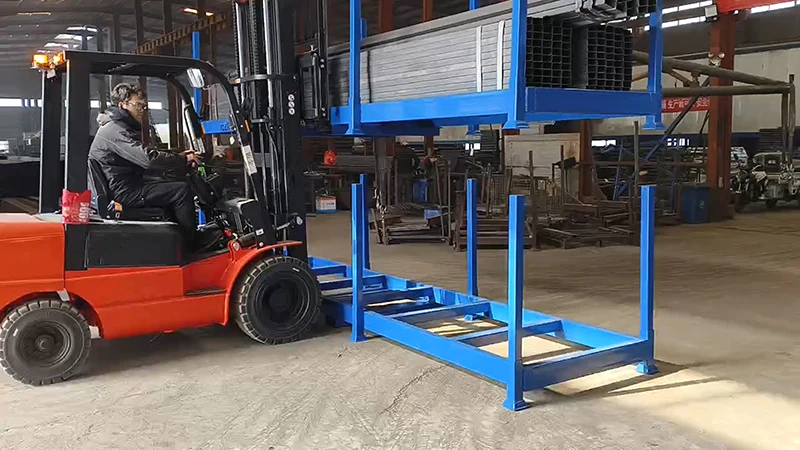
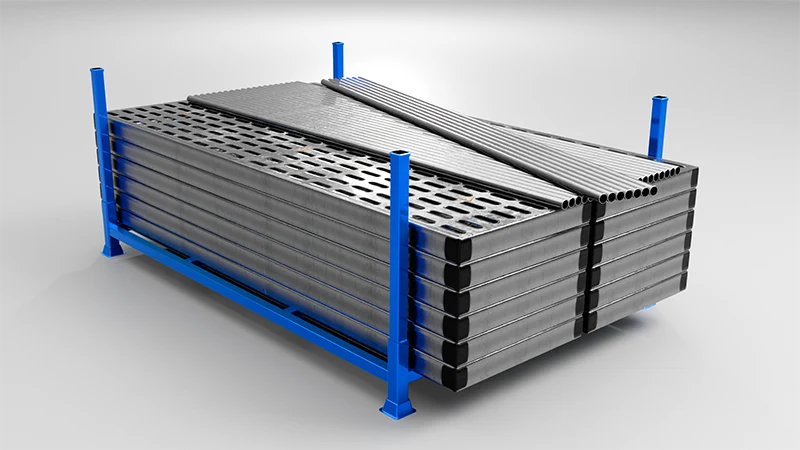
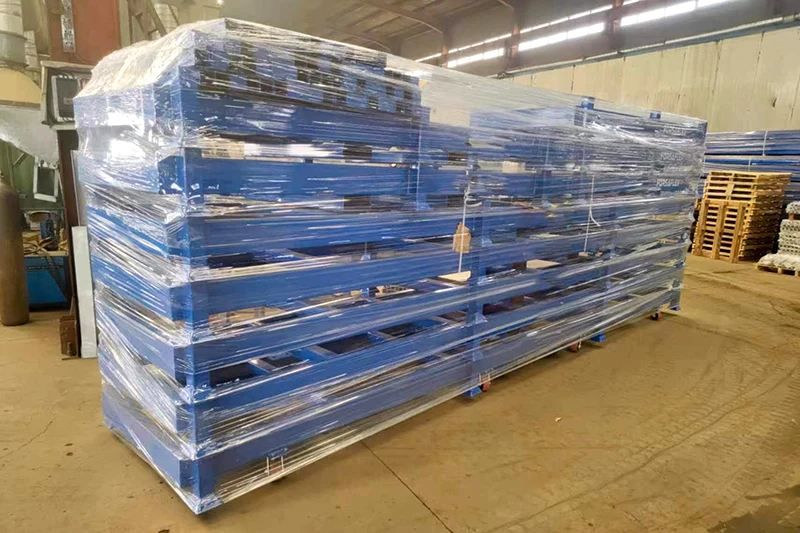
Portable vs fixed stack rack: pick by flow, not by habit.
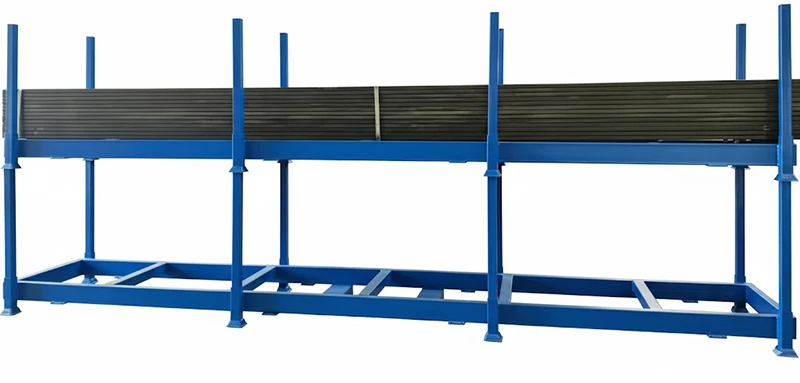
Portable mode
Portable Stack Rack
Best when the rack must travel between inbound, staging, and outbound lanes. Use a caster package matched to the heaviest moving condition.
Use case: cross-dock, temporary buffer, peak-season dispatch
Trade-off: mobility can reduce stack height and static rating
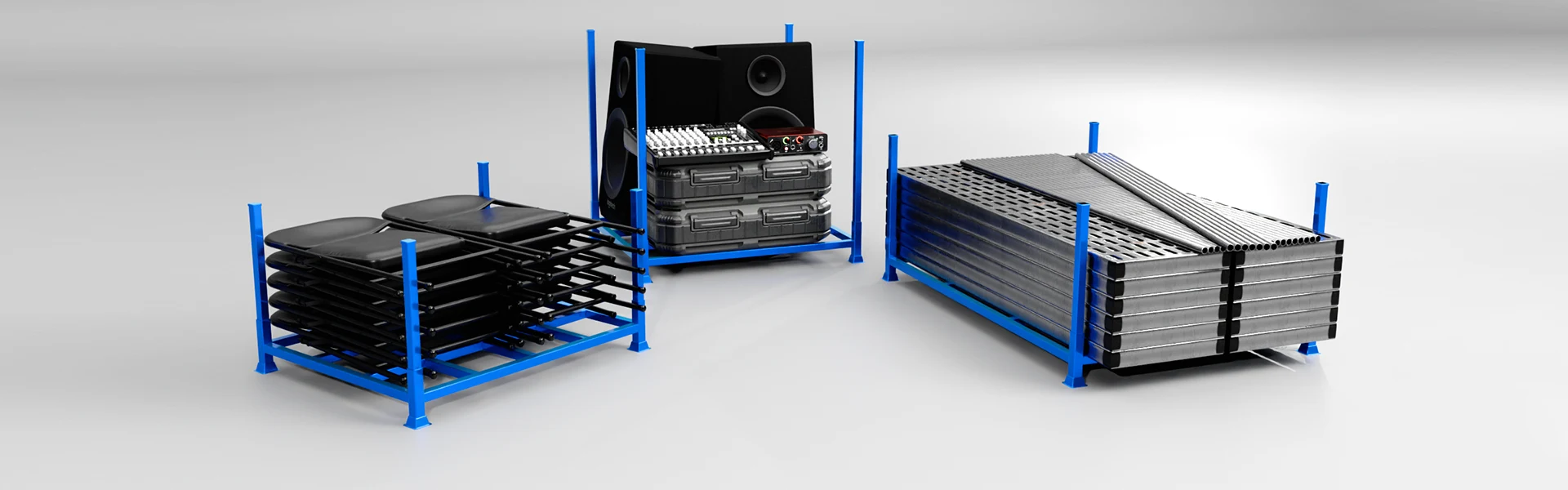
Fixed mode
Fixed Stack Rack
Choose fixed stacking when the priority is maximum static support and a simpler stationary storage layout.
Use case: long-term storage, dense static stacking
Trade-off: no mobility for cross-dock or line-side moves
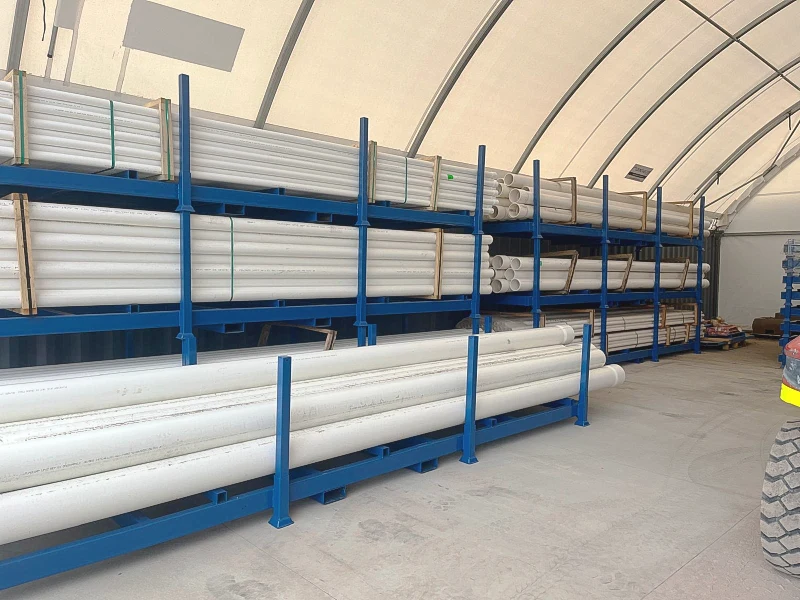
Return storage
Compact Return Mode
When empty racks come back from the line or truck, a nested return concept can reduce the footprint and simplify backhaul planning.
Use case: empty-rack recovery, route backhaul, yard staging
Trade-off: nesting ratio depends on rack geometry and post design
Built for cross-dock rhythm, not just static storage.
Push where the work happens
Move the unit to receiving, sorting, staging, or outbound without rebuilding the flow around a forklift-only transfer.
Keep the load plan honest
Portable mode should be sized to the actual wheel package, floor condition, and handling distance. A portable rack is not a fixed rack with wheels added later.
Recover space on the way back
When empty racks return, a nested or stripped return setup can save trailer and yard space compared with sending every frame back as a full-size footprint.
Know the trade-off up front
Adding mobility usually means giving up some stack height or static capacity. We recommend locking that decision to the real operation, not to a generic catalog promise.
From volume check to mobile rack plan.
Share your move pattern
Tell us how many units move each shift, the push distance, the turn radius, and whether the rack stays indoors or crosses to yard space.
Confirm the moving condition
We check floor quality, caster need, stack height target, load center, and whether the load travels as a full unit or in staged layers.
Compare portable and fixed options
You get a clear trade-off view: mobility versus static capacity, stack count, and return-space savings. That makes the decision practical.
Approve the final detail set
After the load plan and layout are agreed, we finalize the rack configuration and the recommended handling rules for your site.
Questions buyers ask before switching to portable stacking.
How much weight can the casters carry?
The caster load is not a single universal number. It depends on the wheel package, the total moving load, the floor condition, and the handling distance. We size the wheel set to the heaviest moving case you actually run.
Is stacking safe while the rack moves?
Only under a defined moving condition. In practice, that means the rack is built for mobility, the floor is level, the stack height is limited to the validated range, and the load is centered and secured. Do not treat a portable rack as a fully loaded fixed stack rack during travel unless the configuration has been engineered and approved for it.
How is it different from a fixed stack rack?
A fixed stack rack is better when you want maximum static stacking and the simplest storage behavior. A portable stack rack adds mobility for cross-dock and temporary staging, but that mobility usually comes with a trade-off in stack count and/or rated load.
How does return storage save space?
If the rack style supports it, empty frames can be nested or partially stripped so return storage uses less floor and trailer space. The exact saving depends on frame geometry, post design, and whether the stack rack is meant to nest on return.
When should I choose portable instead of fixed?
Choose portable when the rack must move between zones and time in transit matters to your flow. Choose fixed when the load stays put and you need the highest straightforward static storage efficiency.
What should I send for a quick proposal?
Share your cross-dock volume, rack size target, maximum moving load, floor condition, stack height expectation, and the return-space target. We will turn that into a practical mobile rack option.