
Rerack Empty Nesting Stack Rack | Return Freight Reduction & Seasonal Buffer Storage
Rerack empty nesting PDP for project-fit return freight reduction, seasonal buffer storage, and line-side staging. Confirms the 100 mm nesting gap as a project value and keeps transport counts as samples only.
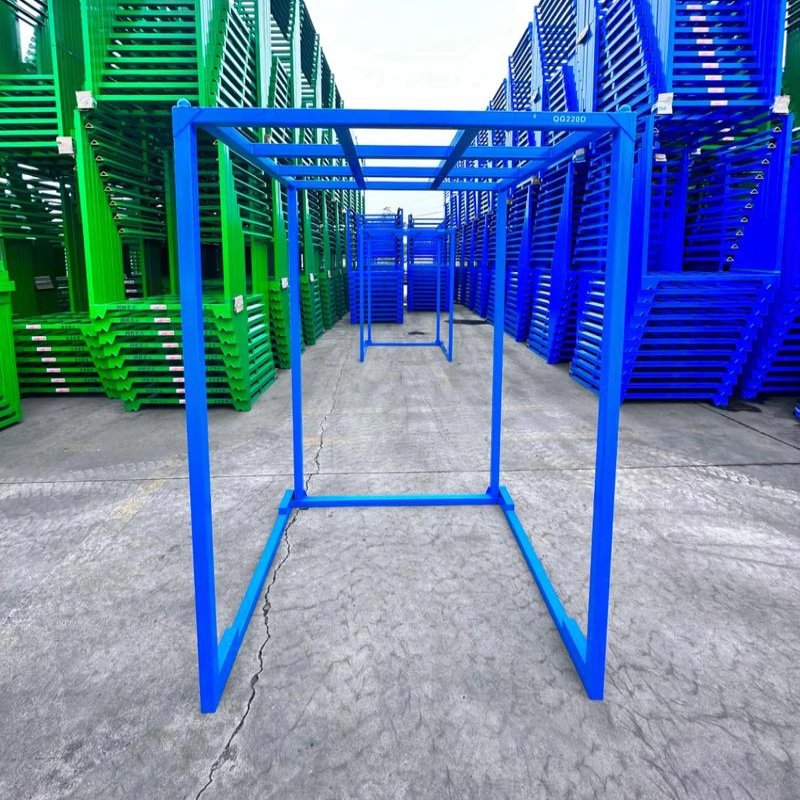
Empty nesting that cuts both floor space and return freight
Rerack is for projects where the empty frame must travel efficiently, not sit as dead floor inventory. The value comes from nesting the racks together, shrinking return volume, and freeing ground space for seasonal buffer storage or line-side staging.
The key point is simple: the nesting gap is not a universal standard. In the 13320 project, the empty nesting gap was set at about 100 mm to match the fork thickness used on that job. That works as a project reference, but every new job must confirm fork thickness, clearance, and stack geometry before approval.
- Empty racks nest into one another, so backhaul volume and yard footprint can drop together.
- The published 52 / 64 / 88 / 144 loading counts are project samples, not a single standard rating.
- The same frame can support seasonal buffer storage, temporary staging, or empty-return transport.
- Confirm fork thickness and nesting clearance for each project; do not assume the same nesting rate across all variants.
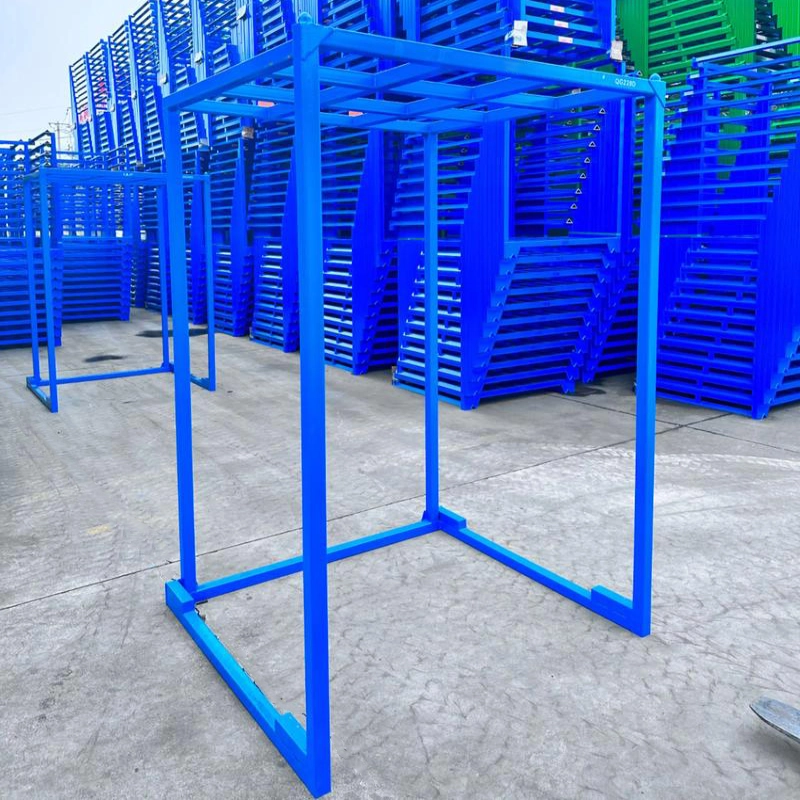
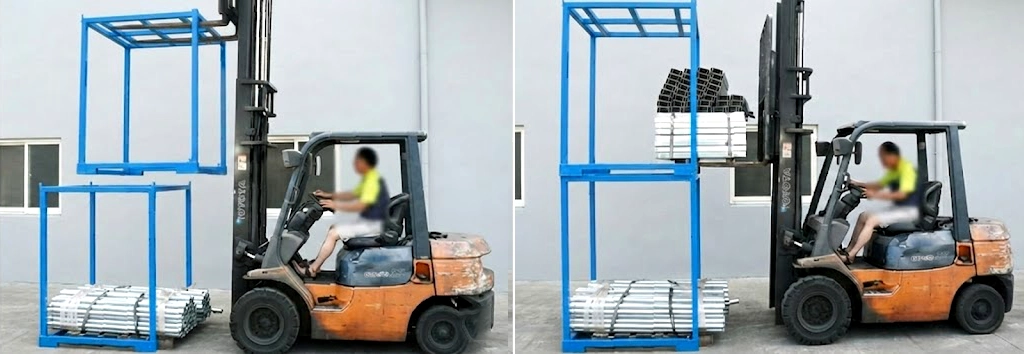
Three ways teams use Rerack in real projects
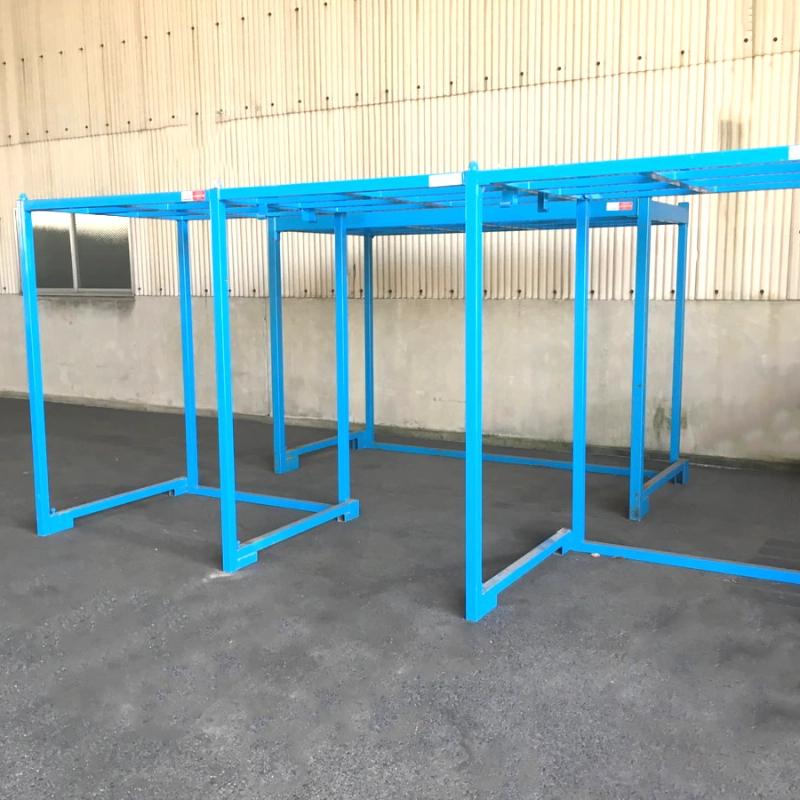
Return freight
Nested return plan
Best when the empty frame must move back through a carrier network. Nesting reduces cubic volume, so the same truck or container can carry more frames per trip.
Use this when backhaul cost and return density matter more than permanent rack installation.
Seasonal buffer
Seasonal buffer and staging
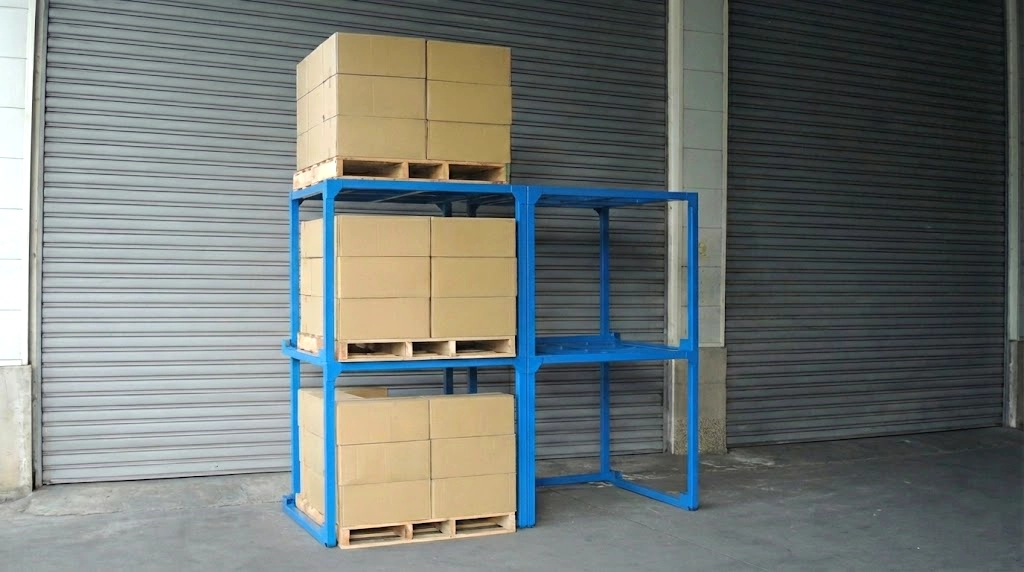
When demand spikes, Rerack can hold palletized goods as a temporary floor-level buffer. When demand drops, the empty frames nest away and give the floor area back.
Use this when you need short-cycle staging without turning the whole area into a fixed racking aisle.
Project-fit comparison
When to compare a different frame
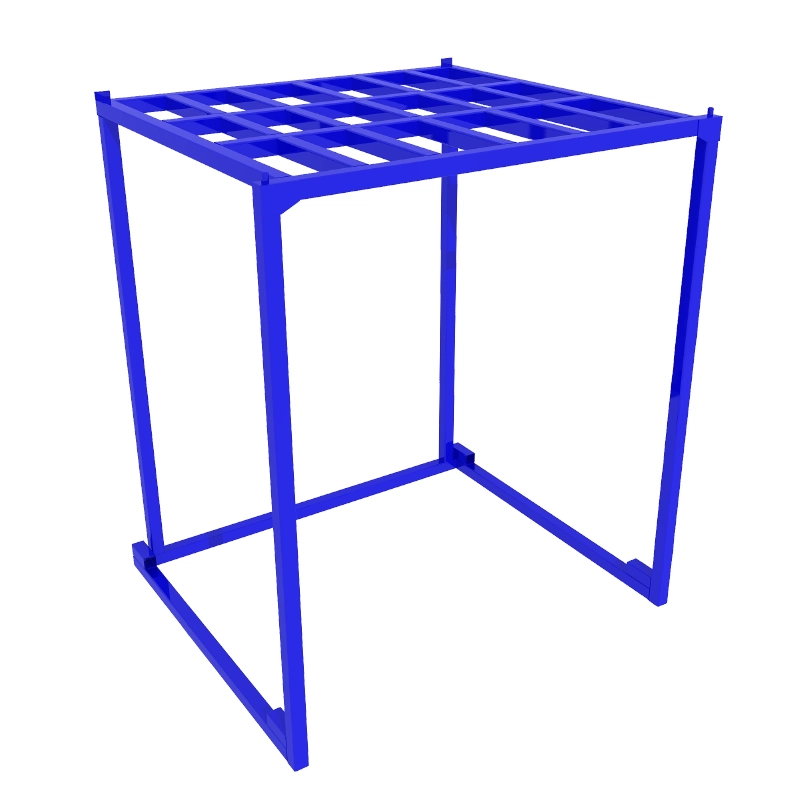
If you need removable posts, bottom-frame reuse, or a different handling logic, compare the project against a demountable post pallet. Rerack is strongest when empty nesting and direct return savings are the priority.
Use this card as the choice checkpoint before finalizing drawings and sample counts.
What this page answers for buyers
Return freight volume drops
Empty frames stack into each other, so the cubic volume required for backhaul is much smaller than moving loose frames one by one.
Floor area comes back
The same frame can support seasonal overflow or line-side staging, then nest away when the peak passes and the floor must be released again.
The 100 mm value is project-based
The 100 mm nesting gap came from one confirmed job and was chosen to fit the fork thickness used on that project. It is not a universal rule for every Rerack build.
Project counts are not a standard promise
40 ft high cube counts of 52, 64, or 88 pieces and a 17 m flatbed count of 144 pieces are all project samples. The final count depends on frame size, stacking method, and transport setup.
What we need before we lock the nesting plan
Confirm the pallet and load envelope
Share the pallet size, loaded height, unit weight, and the number of layers you want to stage or stack.
Measure fork thickness and nesting clearance
We need the actual fork thickness and the space you want between nested frames before we can fix the clearance.
Define the operating mode
Tell us whether the frame is for return freight, seasonal buffer storage, or line-side staging. The best layout changes with the use case.
Approve the project sample count
Confirm the target transport mode, then lock the sample count for that specific job. The published counts are references, not a universal standard.
Common questions about empty nesting
Is the 100 mm nesting gap a standard for every version?
No. It is a project value from the 13320 job, selected to fit the fork thickness used there. Every new project must confirm the actual fork thickness and clearance.
Are 52, 64, 88, and 144 standard loading numbers?
No. They are project sample counts from different transport layouts. They show what was achieved on specific jobs, but they are not a universal promise for every rack size.
Can every Rerack nest at the same rate?
No. Nesting depends on frame geometry, fork thickness, and the job drawing. The same nominal product can still behave differently across projects.
When should I consider a different solution?
If you need removable posts, a different base reuse strategy, or another handling logic, compare the project against a demountable post pallet or a fixed-rack layout.
Is this suitable for long-term outdoor rain exposure?
The available project data does not support treating standard spray-coated steel as a long-term rainproof default. Use the actual storage environment to decide whether this frame is a fit.
Send us the return-freight target, seasonal buffer demand, pallet size, load height, and fork thickness. We will turn that into a project-fit nesting proposal and help you choose the right operating mode.
Request a project-fit nesting proposal Open PDP-01 Open BLOG-03 Open CASE-01
B2B Racking Structural Engineering Calculator
Input your structural guidelines below. Our math system calculates material deflection, stress bounds, and recommends optimal profiles.
Click Compute to calculate stress factors and display structural drawing recommendations.