
Rerack Forklift Transfer Stack Rack
Rerack
Forklift-driven Rerack stack racks move load, pallet, and frame as one unit to reduce secondary unloading, support project-confirmed fork geometry, and keep warehouse layouts flexible.
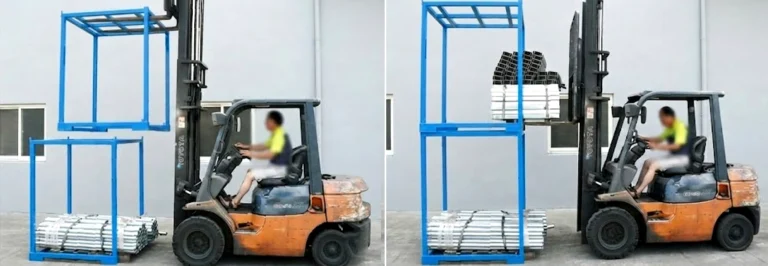
Move the whole loaded frame without unloading
Rerack is for sites that already run forklifts and want the load, pallet, and rack to travel as one unit. That cuts secondary handling, keeps the storage plan flexible, and makes seasonal layout changes faster.
For this handling mode, the fork entry geometry must be confirmed by project: fork thickness, fork length, approach direction, and pocket clearance all matter. If the entry edge is forced or the rack is picked up violently, the fork doorway can deform. This page is about forklift-based handling only, not manual carrying.
- Project-confirmed fork geometry for the actual forklift and pallet combination.
- Load + pallet + rack move together, reducing unload and reload steps.
- Flexible enough for buffer zones, peak-season changeovers, and fast aisle re-mapping.
- Do not force the forks in; verify fork thickness and entry method before production.
Choose the transfer method that fits the project
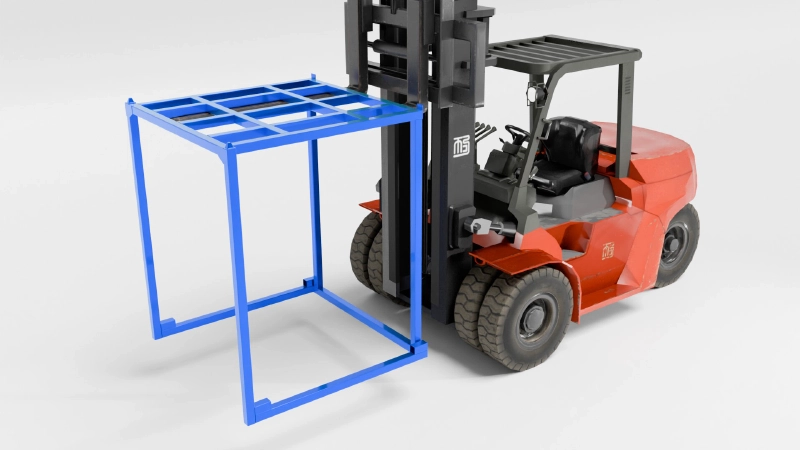
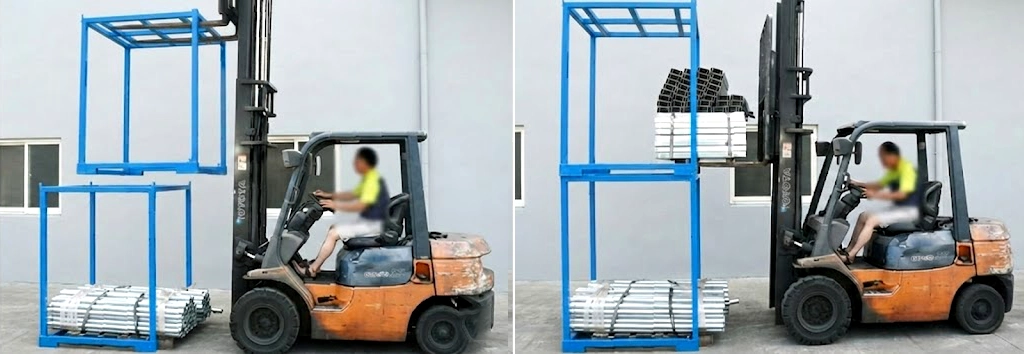
Fork geometry
Four-way entry, only when the project geometry supports it
When the frame is laid out for four-way access, the forklift can approach from the approved sides without twisting the pocket. The key is not the marketing label, but the real fork thickness, fork length, and entry clearance on your site.
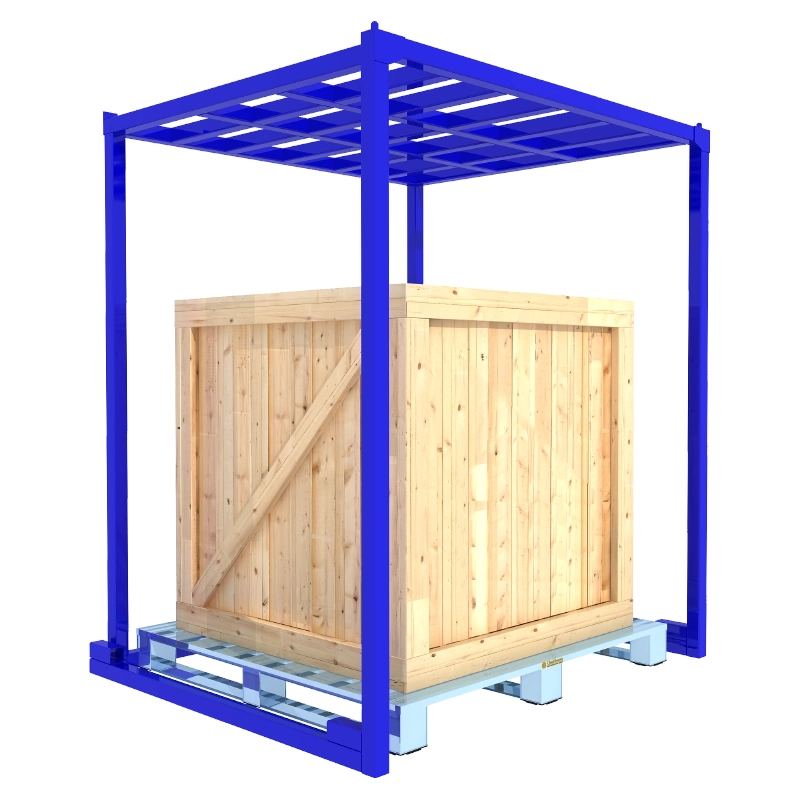
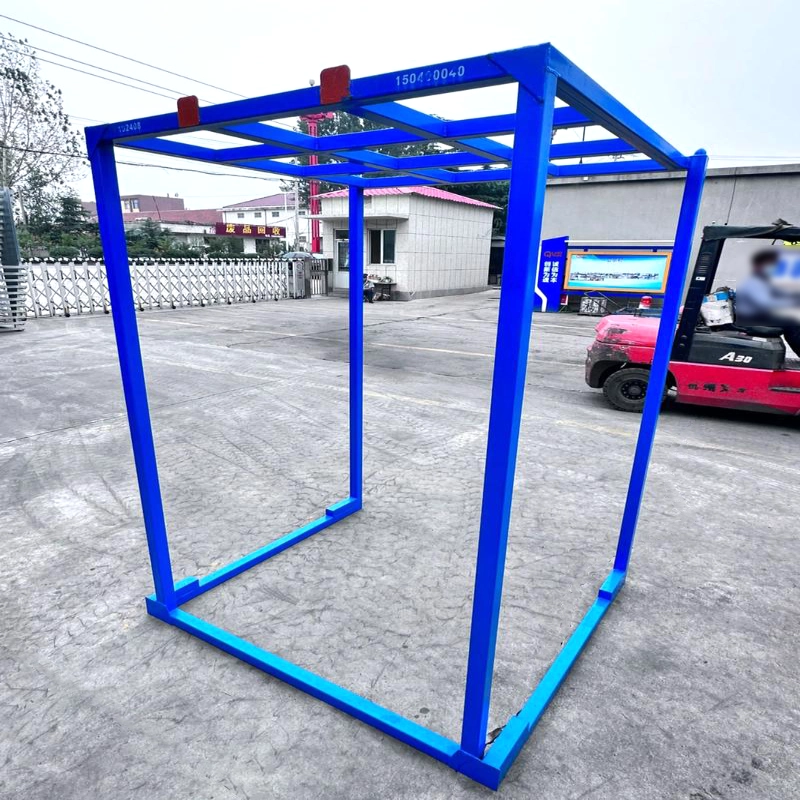
One-piece move
Load, pallet, and rack move together
Instead of unloading the goods, breaking the pallet apart, and rebuilding the storage unit later, the forklift moves the full set as one handling unit. That is where the time saving comes from in 3PL, manufacturing buffers, and temporary storage zones.
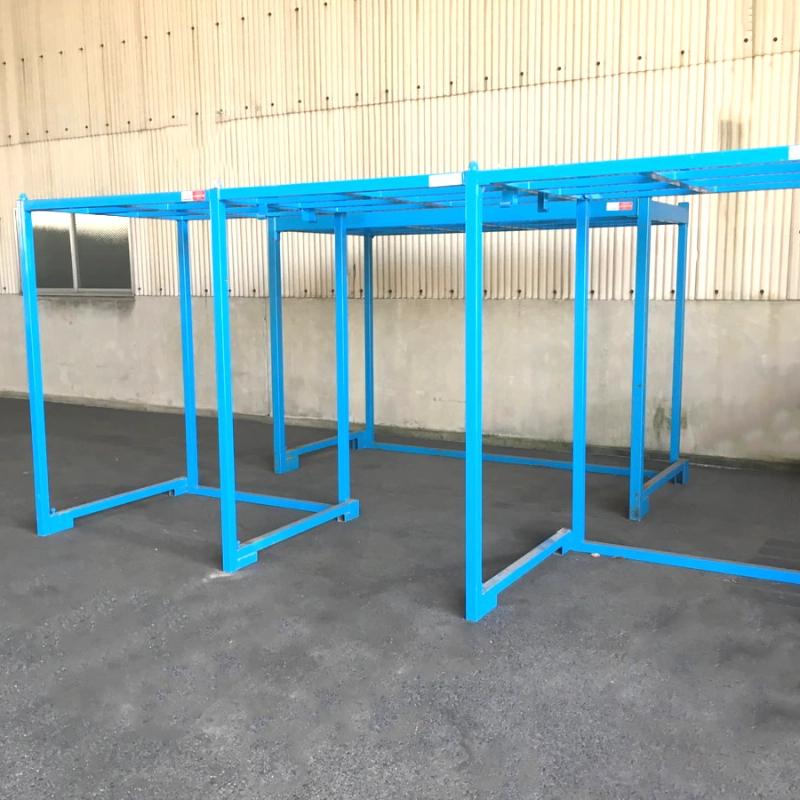
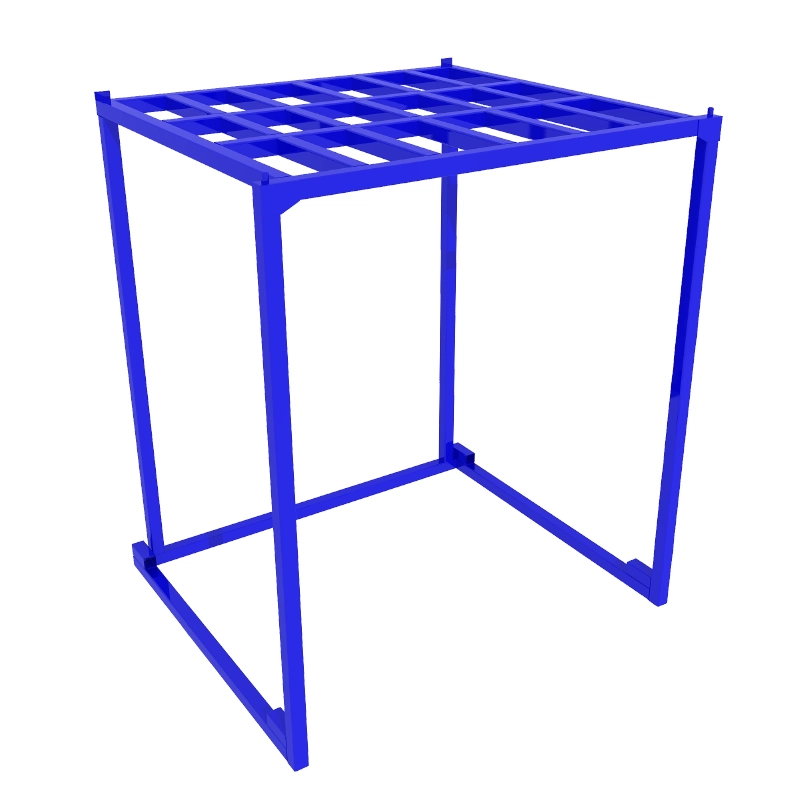
Layout change
Move the filled zone, then re-map aisles for peak and off-peak
Because the rack is not anchored like fixed pallet racking, you can shift filled units, open or close aisles, and re-balance the storage block when demand changes. Empty units can still nest for return storage and outbound transport.
What this solves for forklift-driven sites
Less re-handling
The unit stays intact during movement, so you avoid an extra unload-and-reload cycle that usually burns time and creates touch damage.
More flexible than fixed racks
Unlike anchored pallet racks, the storage block can be moved when the process changes, which is useful in buffer zones and seasonal operations.
Project-confirmed fork fit
The fork opening is not a guess. We confirm the fork thickness, the entry direction, and the pocket clearance before the rack is released.
No violent pick-up
If operators stab, pry, or twist the entry point, the doorway can deform. The handling rule is simple: align first, then lift.
How to switch from a storage rack to a forklift transfer plan
Send your forklift and pallet data
Share fork thickness, fork length, lifting capacity, pallet size, and the way the truck approaches the rack.
Confirm the entry geometry
We check whether the project needs one-sided, two-sided, or four-way entry and verify the safe pocket clearance.
Lock the handling method
We define whether the load will move as a rack unit, a pallet unit, or a combined cargo unit, then align the drawing to that method.
Build the project-sized rack
Once the geometry is approved, the rack is produced for the actual site flow, not for a generic stock assumption.
What buyers usually confirm before ordering
Does this work with any forklift?
No. The rack must match the real fork thickness, fork length, and entry direction used on site. Four-way entry is only valid when the geometry is confirmed for that project.
Does it remove unloading completely?
It reduces secondary unloading in the intended workflow because the cargo, pallet, and rack move together. Final process design still depends on your site layout and outbound flow.
Is it a substitute for fixed pallet racking?
Not as a one-to-one replacement. Rerack is the better fit when you want flexible positioning, buffer storage, and unitized forklift movement instead of a fully anchored layout.
What should be avoided?
Do not force the forks into a distorted opening, and do not use violent pick-up. If the fork path is unknown, confirm the parameters first rather than trial-fitting the rack.
Related reading: PDP-01, PAGE-01, and BLOG-07 for the broader handling and layout discussion. Send your forklift parameters to switch the handling plan.