
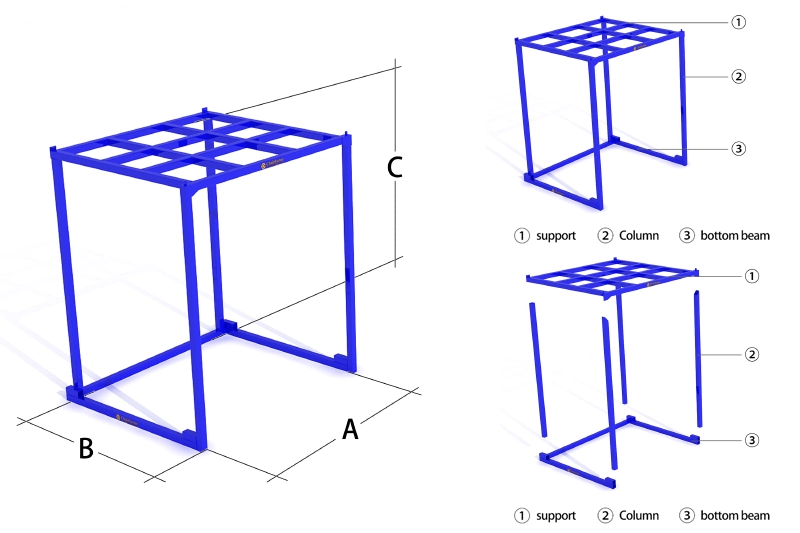
Forklift-movable stack rack family for palletized goods
Rerack is a project-fit steel stillage family built for full-load stacking, empty nesting, and pallet-specific internal sizing.
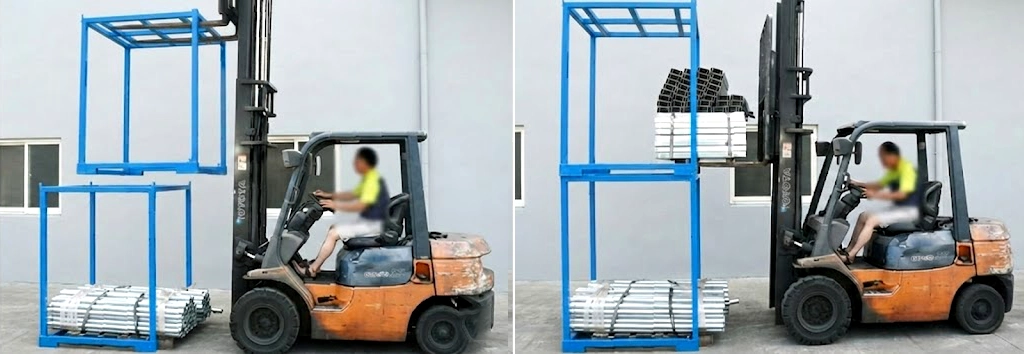
It is not fixed racking, not a wire cage, and not floor stacking. It is a unitized steel asset that moves by forklift, keeps cargo off the floor, and returns in a more compact nested form.
- Full-load stacking helps reduce bottom-layer crush risk.
- Empty units nest to save storage space and backhaul volume.
- Two structure families are available: inverted stack rack and demountable post pallet.
- Internal dimensions are matched to your pallet and cargo envelope.
- Best for stable palletized cartons, bagged goods, crates, and similar unit loads.
Related pages: PDP-02, PDP-03, PDP-04, PDP-05, PDP-06, CASE-01, CASE-02, CASE-03, and BRAND-01.
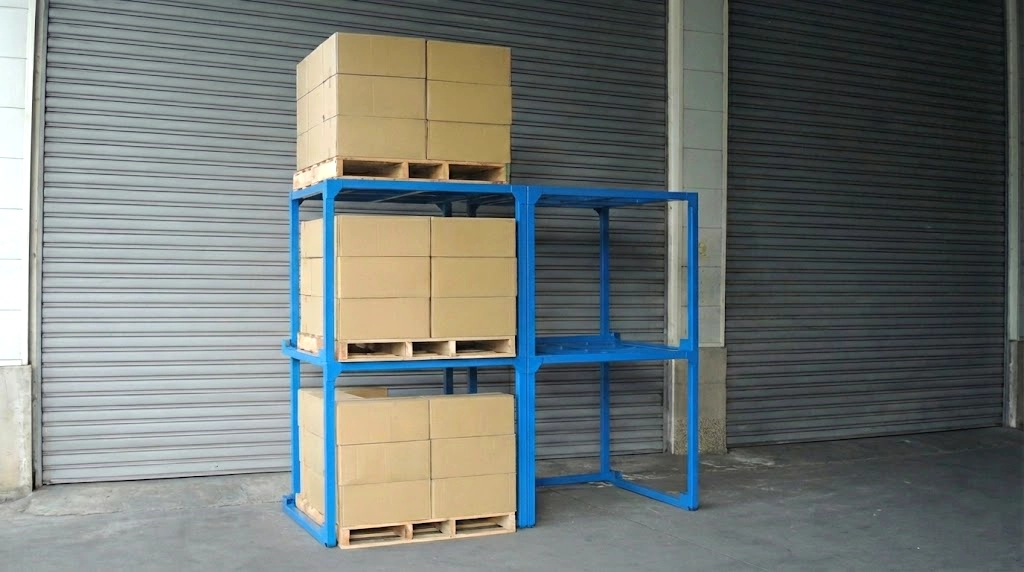
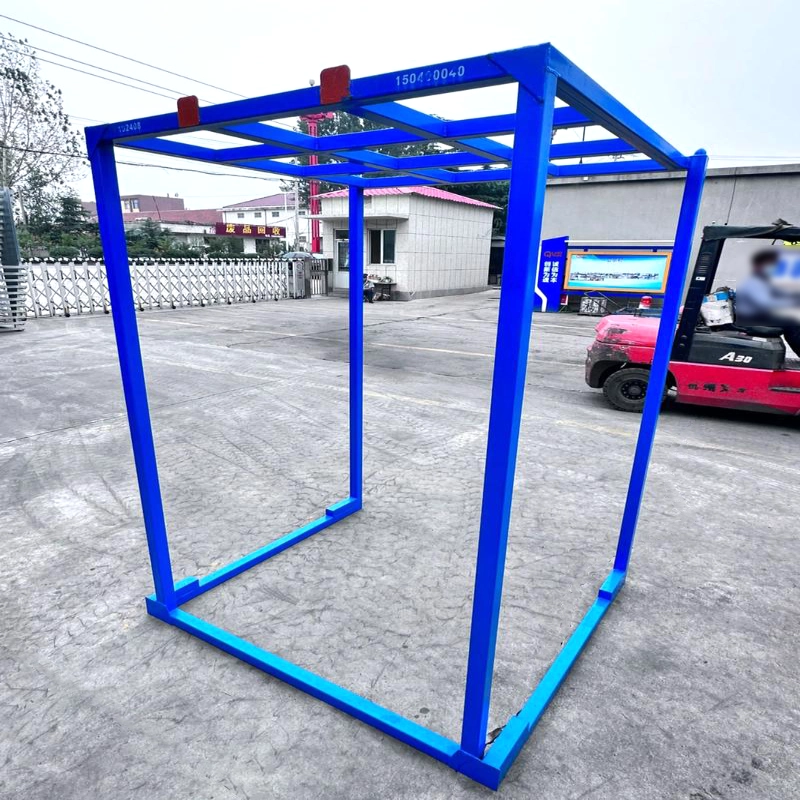
Inverted frame or removable-post structure
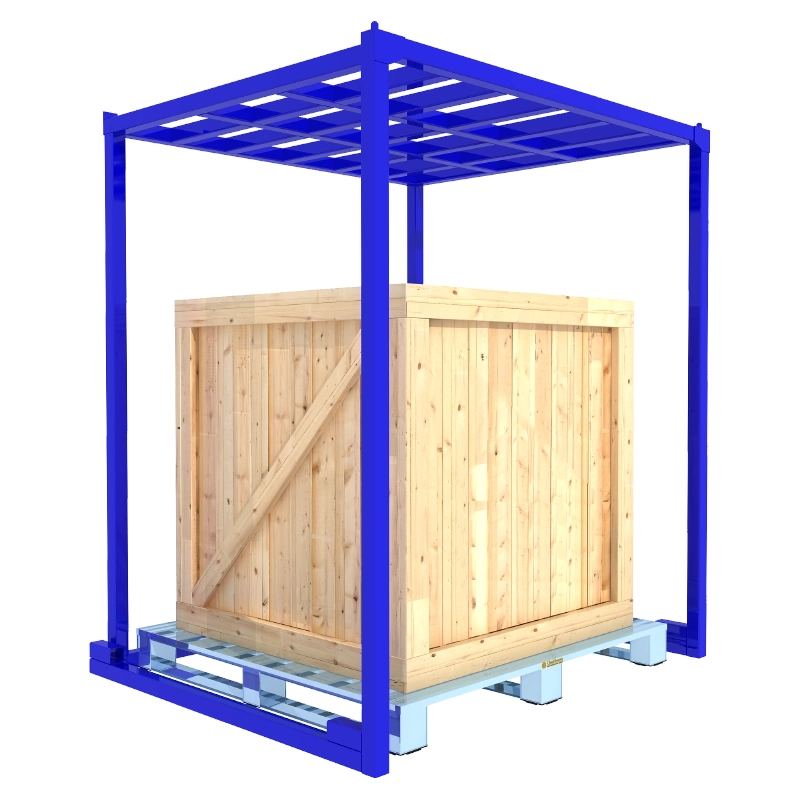
Welded frame
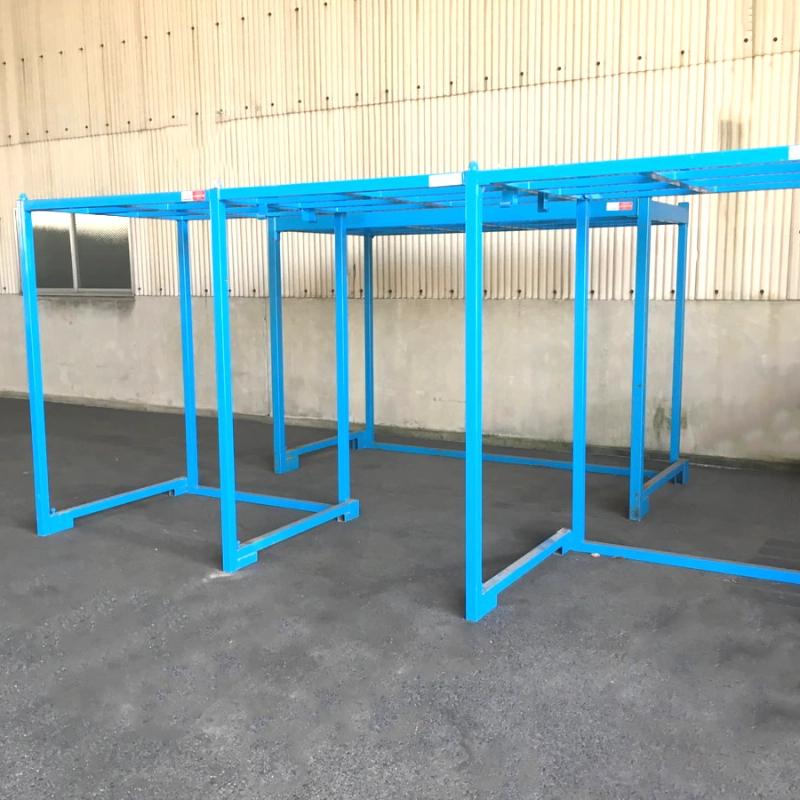
Inverted stack rack
A welded form for repeat forklift handling, straightforward deployment, and compact empty nesting.
Use when: you want a stable stack rack for palletized cargo.
Best fit: unit loads that stay consistent from cycle to cycle.
Removable posts
Demountable post pallet
A variant with removable corner posts for projects that want detachable structure logic.
Use when: the buying team wants a removable-post structure or a side-by-side comparison.
Best fit: handling routes that need a different return logic.
Custom sizing
Project-fit internal size
The internal opening is set around your pallet and cargo envelope, so the rack follows the load.
Use when: pallet footprint, cargo outline, or fork clearance is the main constraint.
Best fit: projects that need the structure to match the load.
The mechanism is simple: stack, protect, nest
Forklift-movable, not fixed
The storage layer moves as a unit, so you can re-layout zones without anchoring the system to the floor.
Bottom-crush mitigation
By lifting the load into a steel frame, the lower layers are not sitting directly on the floor stack.
Nesting return
Empty racks can nest into a smaller footprint, which helps cut return freight and yard clutter.
Built around the cargo envelope
Pallet size, load outline, and handling clearance drive the final internal dimension.
Send the load data, then choose the structure family
Share pallet size and cargo outline
Provide the pallet footprint, load height, weight range, and any fork-entry or clearance constraints.
Choose the structure family
Select the inverted stack rack or the demountable post pallet, or ask for both in one comparison quote.
Confirm the operating environment
Indoor storage, cold-room use, short-cycle staging, and return logistics all influence the final build.
Approve drawing and quotation
We close the internal size and nesting logic before release so the rack matches your actual handling route.
Questions buyers usually ask first
Is Rerack a fixed pallet rack?
No. It is a forklift-movable unitized stillage system.
Can you publish one standard size and load rating?
No universal size or single rated value is claimed here.
What cargo types fit best?
Stable palletized cartons, bagged goods, crates, and similar unit loads fit best.
When should I send the inquiry?
Send it once you know the pallet size and cargo profile.
B2B Racking Structural Engineering Calculator
Input your structural guidelines below. Our math system calculates material deflection, stress bounds, and recommends optimal profiles.
Click Compute to calculate stress factors and display structural drawing recommendations.