
Sebox Automotive Parts Internal Circulation Packaging
Sebox
Sebox for automotive and mechanical parts circulation: one box through machining, assembly, and inspection, then fold flat to reduce empty return volume.
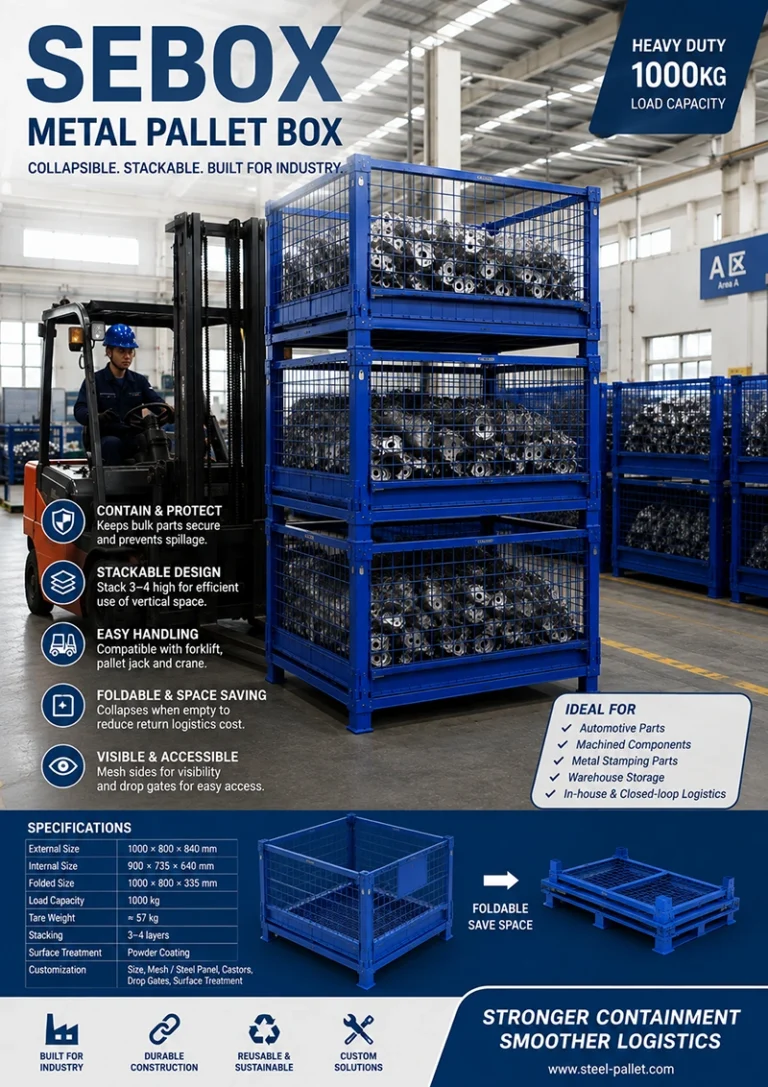
One box through machining, assembly, and inspection
Sebox keeps one part family in one palletized metal container through the whole loop, then folds flat on the return leg so empty space does not keep moving around the plant.
For packaging audits and new line planning, the real question is not which box looks nicer. It is which container survives repeated handoffs, keeps WIP visible, and comes back without turning the backhaul into wasted air. Sebox fits repeated in-plant circulation where parts move by forklift or pallet jack between machining, assembly, and inspection. If you need tighter containment for small chips or loose parts, add liners or choose a solid-panel version; if you only need single-use shipping, cartons or shrink wrap may still be the lower-cost option.
- Machining to assembly to inspection without repacking
- Visual WIP control without opening cartons
- Stackable handling on forklift and pallet jack routes
- Fold-flat return flow that cuts empty volume
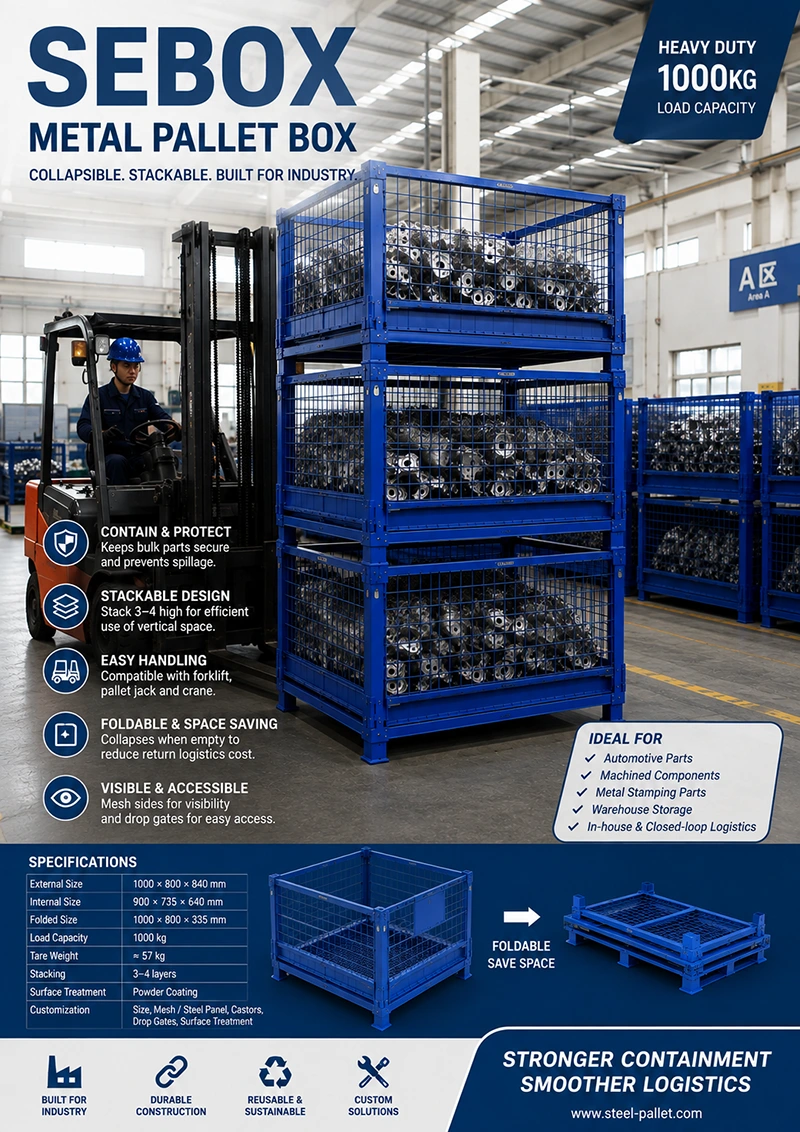
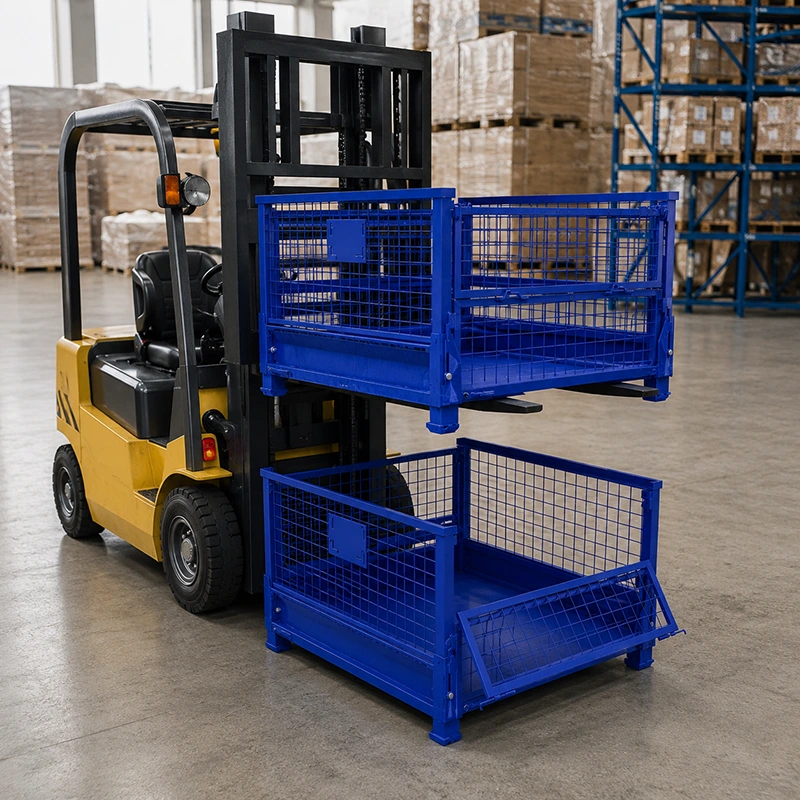
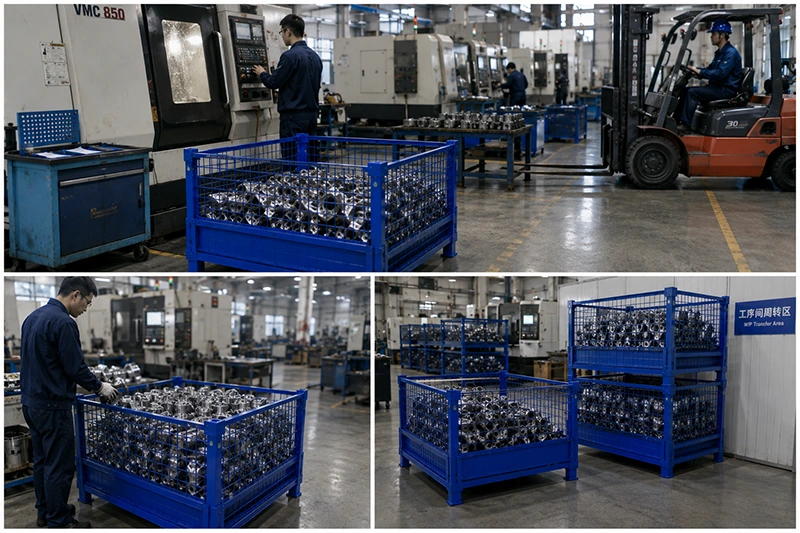
Three ways to design a parts circulation lane
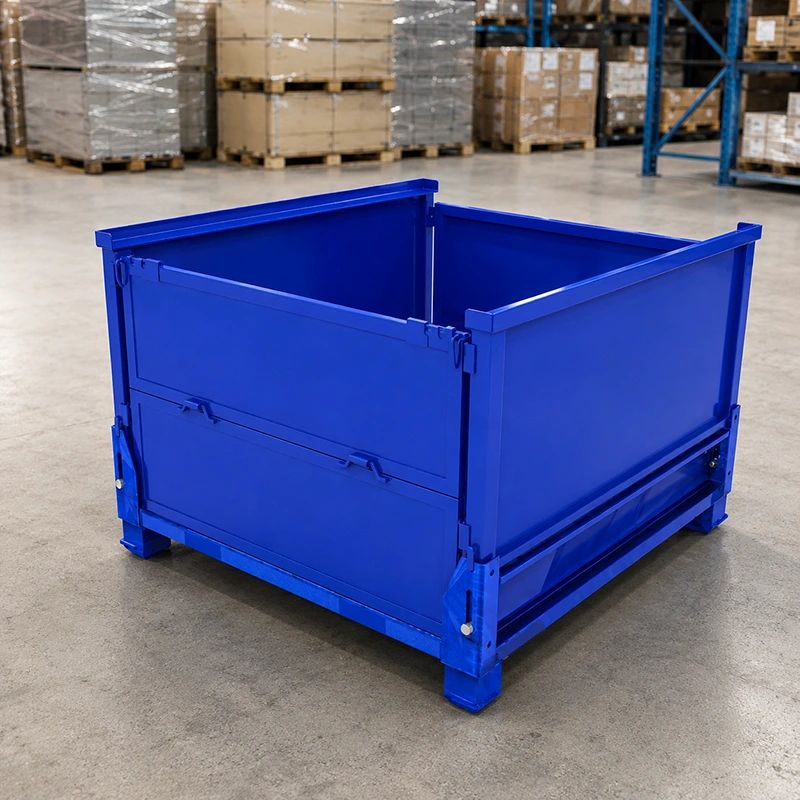
Line shuttle
Machining-to-assembly shuttle
Assign one Sebox to one part family, move it straight from machining to assembly, and keep the same label and count on every leg.
- Best for repeated batch handoffs
- Keeps WIP visible without repacking into cartons
- Use liners for burrs, chips, or sharp edges
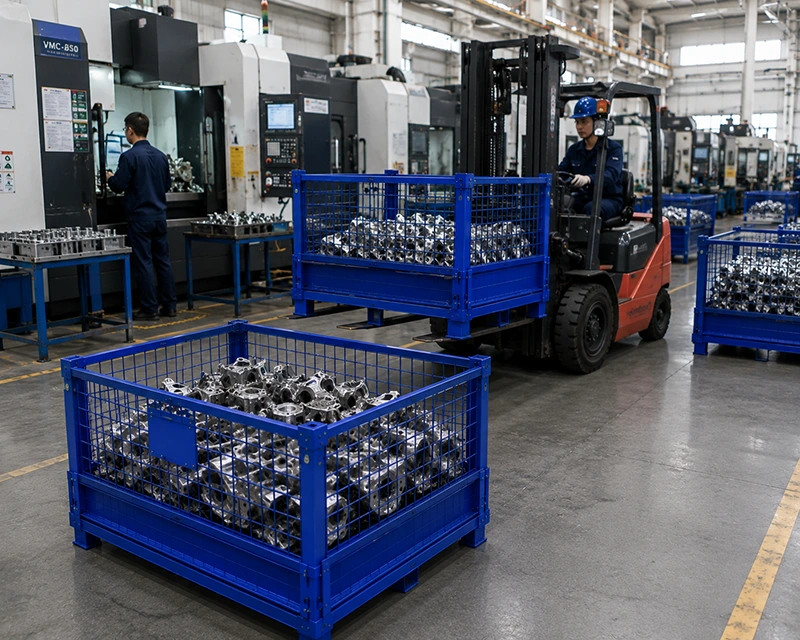
Inspection buffer
Inspection and rework buffer
Use the half-drop front gate when the box must stay stacked but bottom items still need access at inspection or rework stations.
- Good for stacked staging in short buffers
- Half-drop access helps bottom items stay reachable
- Not ideal when you need airtight dust sealing
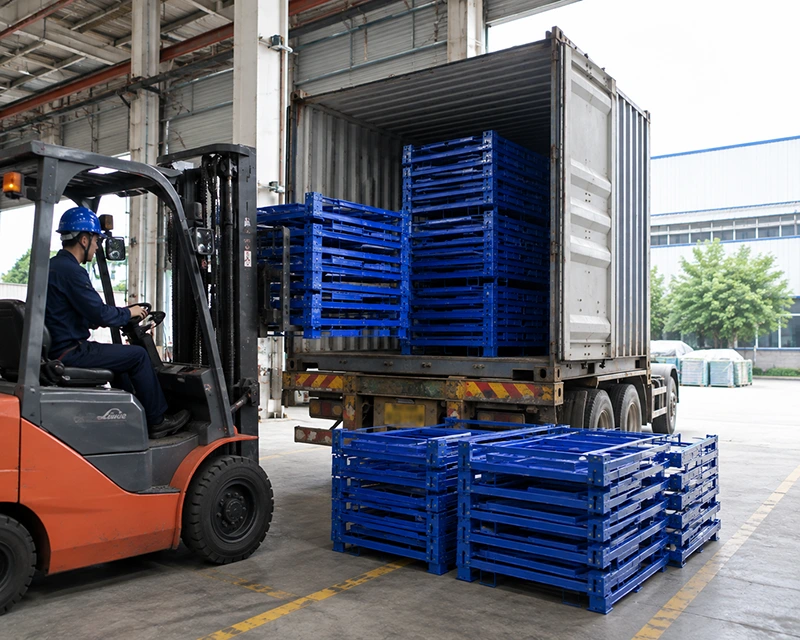
Return loop
Empty return loop
Fold the box after receipt, bundle empties at a return point, and move more units on the backhaul without paying for carton air.
- Empty volume typically drops to about one-third or one-quarter, depending on model
- Useful on long reverse-logistics routes
- Best when the same box comes back many times
What changes when the loop gets repeated
Paper carton + shrink wrap
Lowest starting cost, but metal parts puncture paper, wrap loosens after repeat handling, and every loop creates waste.
Plastic pallet box
Useful for moderate-weight clean parts, but wall thickness, fork contact, heat, and sharp edges decide how long it lasts.
Solid steel sheet bin
Strong and tidy, but the load is hidden, inspection takes longer, and the empty unit is usually heavier.
Sebox foldable steel mesh box
A visible, stackable, fold-flat box for repeated in-plant loops. Add liners or a solid-panel version when you need tighter containment.
How to set up the loop without overdesign
Map the handoffs
List each move between machining, assembly, inspection, and warehouse. Mark where the box must be opened, counted, or stacked.
Pick the right enclosure
Use mesh for visibility, solid panels for smaller loose parts, and caster versions only when the loop needs short moving storage.
Lock the return rule
Decide where empties fold, how they are tagged, and who owns the backhaul. A clear return rule protects floor space.
Pilot one part family
Run one family first, then freeze the label, pack count, and handling method before expanding to the rest of the line.
Questions packaging engineers usually ask first
How does a Sebox move through the loop?
Load the part family after machining, move the same container to assembly and inspection, then fold the empty unit and send it back on the return leg.
Why do cartons wear out fast in automotive circulation?
Repeated fork contact, oil, moisture, and stacking pressure all work against paper and wrap. A loop that repeats every day exposes the weak points quickly.
How much return space can be saved?
Many collapsible models reduce empty volume to about one-third or one-quarter, depending on the final drawing and fold design.
When is Sebox not the right choice?
Use another pack if you need airtight dust sealing, very tiny loose parts without liners, or single-use shipping where disposable cartons are still the cheaper call.
Which option should I choose instead?
Plastic pallet boxes work well for moderate clean parts, solid steel bins suit full enclosure, cartons fit short low-risk moves, and Sebox fits repeat internal circulation where visibility and return volume both matter.