
Sebox Collapsible Cage Pallet | 1000kg Metal Pallet Box for Factory Internal Flow
Sebox
Sebox is a collapsible cage pallet for loose parts and machined components, with a standard 1000 × 800 × 840 mm size, 1000 kg design load, fold-flat return size, and mesh or steel panel options.
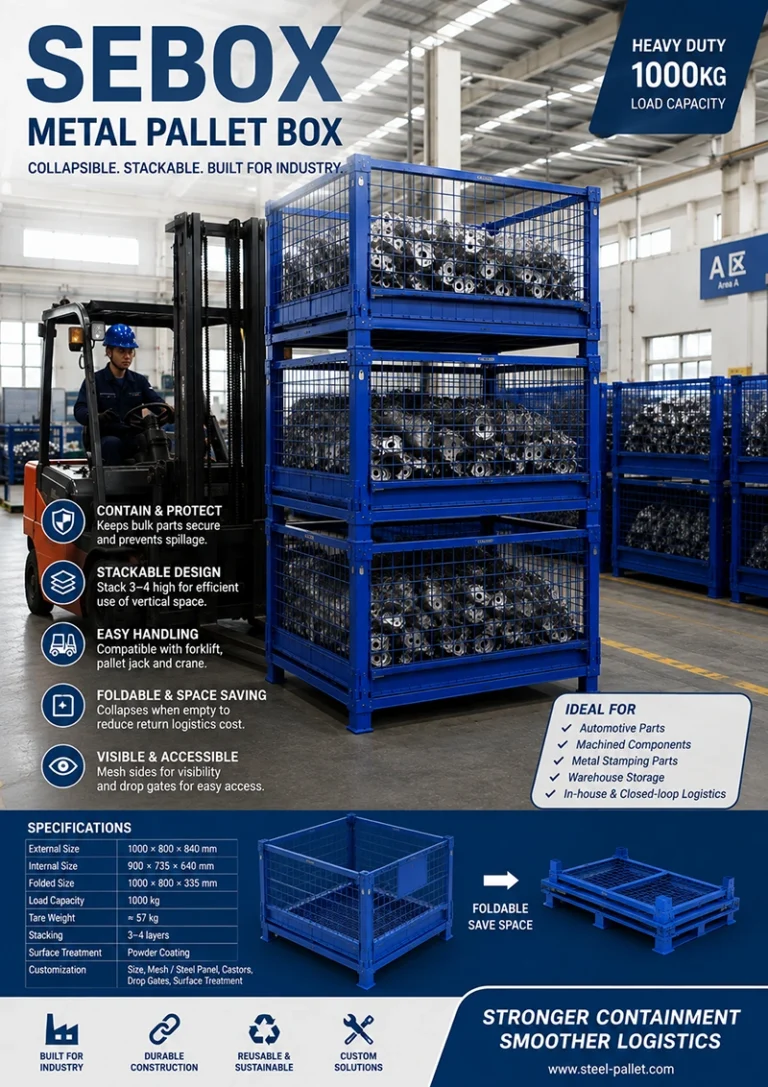
Sebox is a collapsible cage pallet for factory internal flow
Sebox is a welded Q235 steel frame with fold-flat return storage, made for loose parts, machined components, and metal pieces that need to stay contained through warehousing, forklift transfer, and line-side circulation. It is not a one-time carton.
The documented standard model is 1000 × 800 × 840 mm, with a 1000 kg design load and about 57 kg self weight. In the folded state, it becomes 1000 × 800 × 335 mm, which is why it is used as a collapsible stillage for reverse logistics and empty-box return.
Choose mesh sides when you need visual inventory and quicker part recognition. Choose steel panels when smaller parts need tighter containment. The base is built for palletized handling and stacking, while the exact stacking limit must follow the confirmed drawing and site conditions.
- Standard size: 1000 × 800 × 840 mm, separate from project-only variants
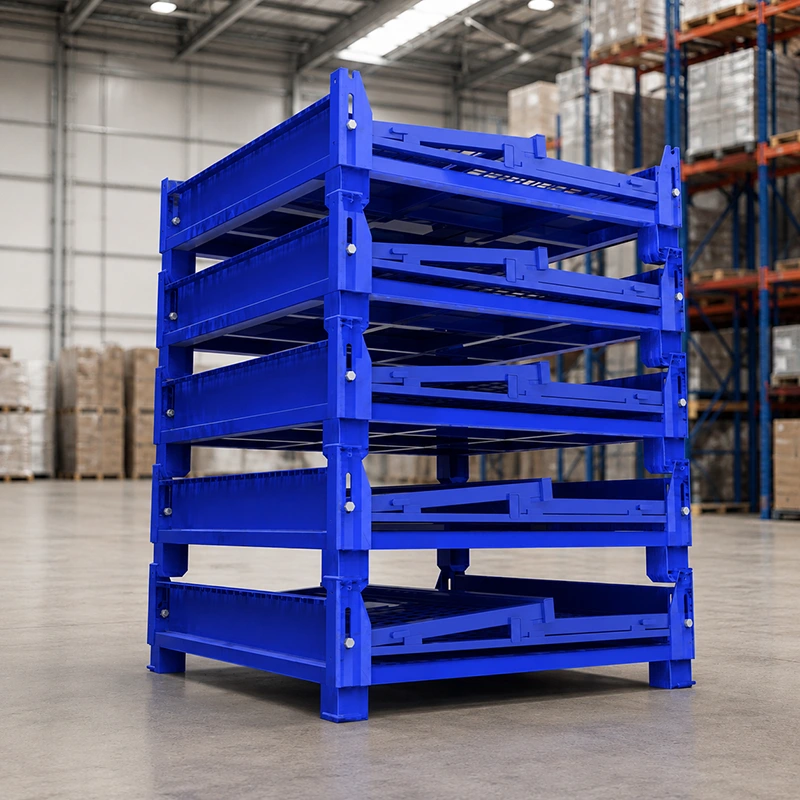
- Folded return size: 1000 × 800 × 335 mm for less empty-trip volume
- Mesh or solid panel configuration selected by part size and visibility
- Forklift pockets and stackable base for mechanical handling
- Half-drop access option for stacked retrieval, where specified by drawing
Project note: the technical notes also record separate locked variants such as 1220 × 1015 × 950 mm / 1300 kg / about 70 kg and 1240 × 835 × 870 mm / 1500 kg / about 67 kg. Keep these as separate project references and confirm the drawing before quoting.
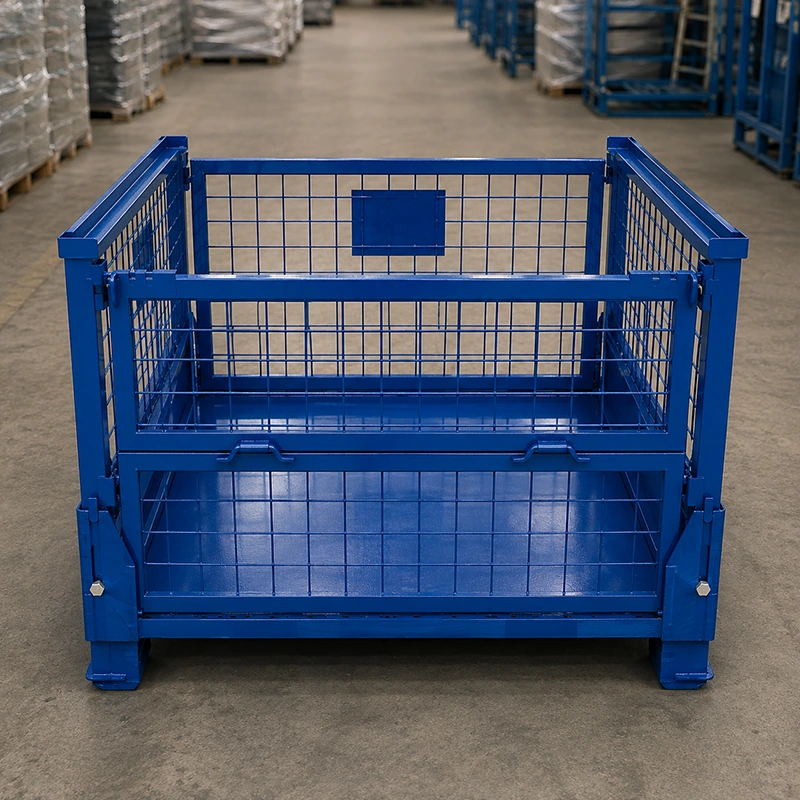
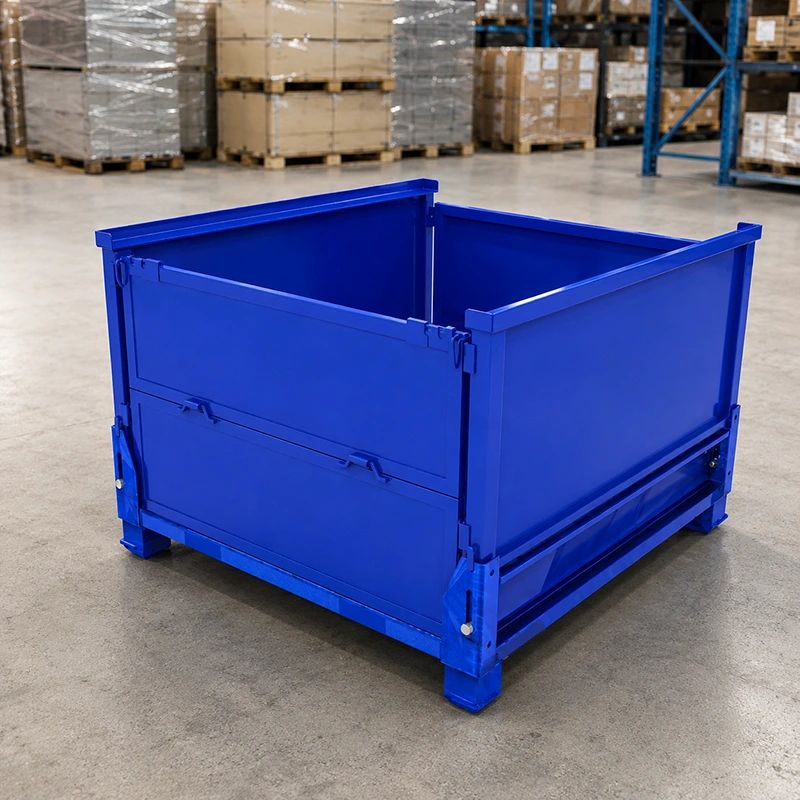
Mesh side, steel panel, or mobile line-side handling
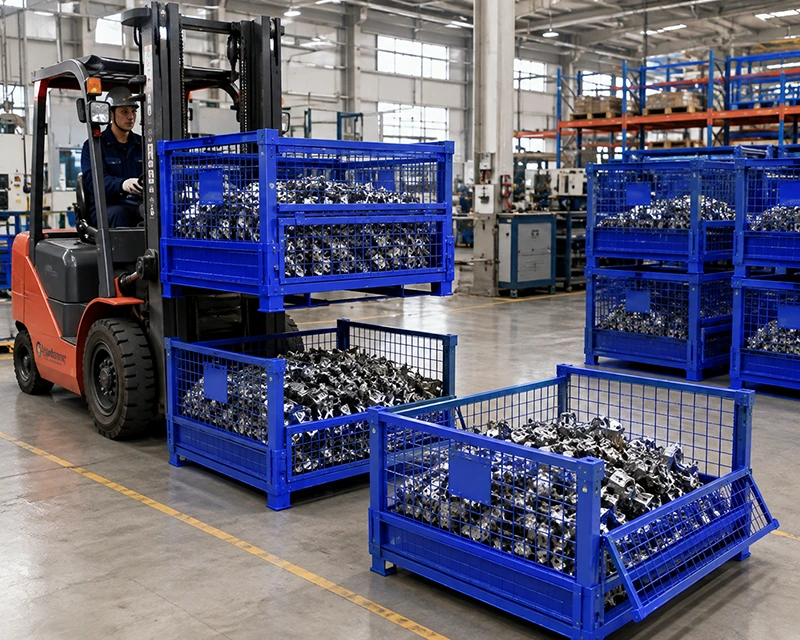
Visibility-first
Mesh side configuration
Choose this when operators need to identify parts without opening the box. The mesh wall helps visual inventory, makes part recognition faster, and suits mixed part numbers that stay within a contained frame.
- Good for visible inventory and fast picking
- Works well for larger loose parts and mixed batches
- Pairs with forklift handling and stacked storage
Containment-first
Steel panel configuration
Choose this when the stored parts are smaller, sharper, or more likely to spill. Solid side panels increase containment and are useful when the load needs a more closed boundary than a mesh wall.
- Better side containment than open mesh walls
- Useful for smaller parts and mixed scrap collection
- Still follows the same palletized handling logic
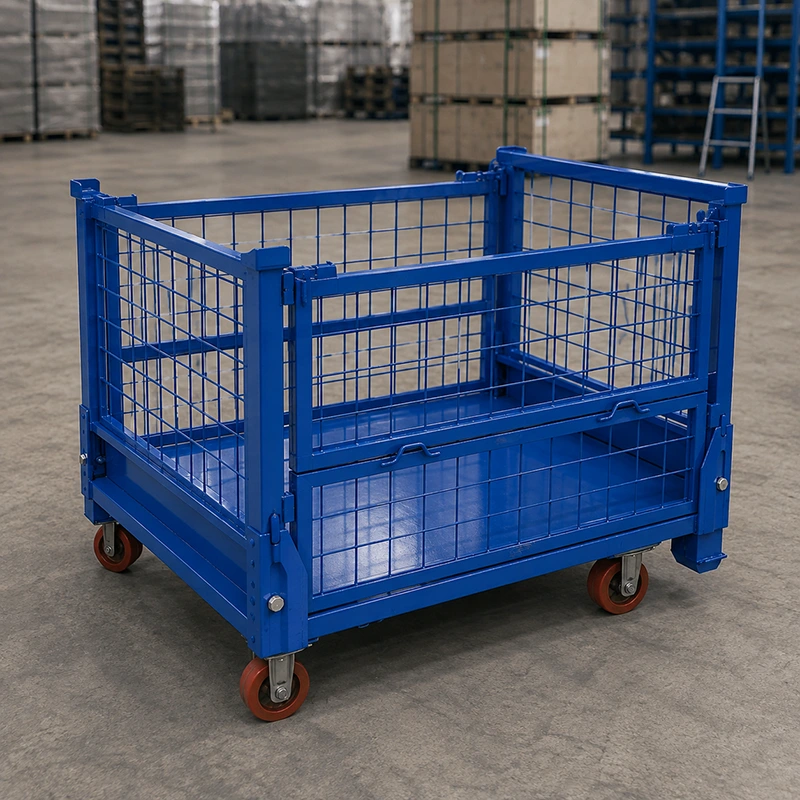
Line-side mobility
Mobile handling option
Choose this only when the project needs line-side movement instead of fork-only transfer. Casters are a project option, so floor condition, load, and route must be checked before quoting.
- Useful for station-to-station internal transfer
- Project option, not the default standard build
- Confirm floor, load path, and return storage method
Built for contained flow, fold-flat return, and palletized handling
Q235 welded steel frame
The standard build is a welded steel structure designed for industrial circulation, not a disposable carton. It is suitable for repeated internal use when the project drawing and load path are confirmed.
Mesh or panel selection
Use mesh when you want visibility and quicker inventory checks. Use steel panels when the load needs tighter side containment. That choice depends on part geometry, not on the same rule for every SKU.
Stackable transport stillage
The frame is built for stackable transport and mechanical handling. Forklift pockets and the base structure support palletized movement, while the confirmed stacking limit must follow the selected drawing.
Fold-flat empty return
When the box is empty, it can fold down to a much smaller return form, which helps reduce empty-trip space use and makes reverse logistics easier to plan.
From work conditions to a quoted drawing
Share the work conditions
Send the part size, weight, surface sensitivity, handling route, and whether the load is loose parts, machined components, or scrap.
Pick mesh or steel panel
Choose mesh for visibility or steel panels for tighter containment. If the route is line-side, note whether casters are required.
Lock stacking and handling
Confirm forklift access, stacking intention, return volume target, and any floor or transport limit that affects the build.
Receive drawing and quote
We then align the final drawing, the confirmed size, and the quote so the order matches the actual project instead of a mixed SKU description.
Questions buyers ask before they send a drawing
What is the standard size and load?
The documented Sebox standard model is 1000 × 800 × 840 mm with a 1000 kg design load and about 57 kg self weight.
Mesh wall or steel panel — how should I choose?
Choose mesh when visibility and inventory checks matter. Choose steel panels when the parts are smaller, sharper, or need more side containment. The right choice depends on the load shape and the way the box will be opened on site.
Can it be stacked and moved by forklift?
Yes, the frame is intended for palletized mechanical handling and stackable use, but the exact stacking limit, fork entry detail, and loading condition must follow the confirmed drawing and site requirements.
How much space does the fold-flat version save?
The folded size is 1000 × 800 × 335 mm, so the return volume is much smaller than the assembled box. The actual saving depends on how many units are stacked for return transport and how the truck is loaded.
When should I choose another box family instead?
If you need a fully sealed bin, very fine-part containment, or a completely different load/footprint, compare it with solid steel sheet bins, plastic pallet boxes, or a standard flat steel pallet. Those families solve different handling problems.