
Sebox Configuration Selection: Mesh vs Steel Plate Inserts
Sebox
Choose mesh or steel plate inserts for Sebox based on part size, visibility, containment, and handling needs.
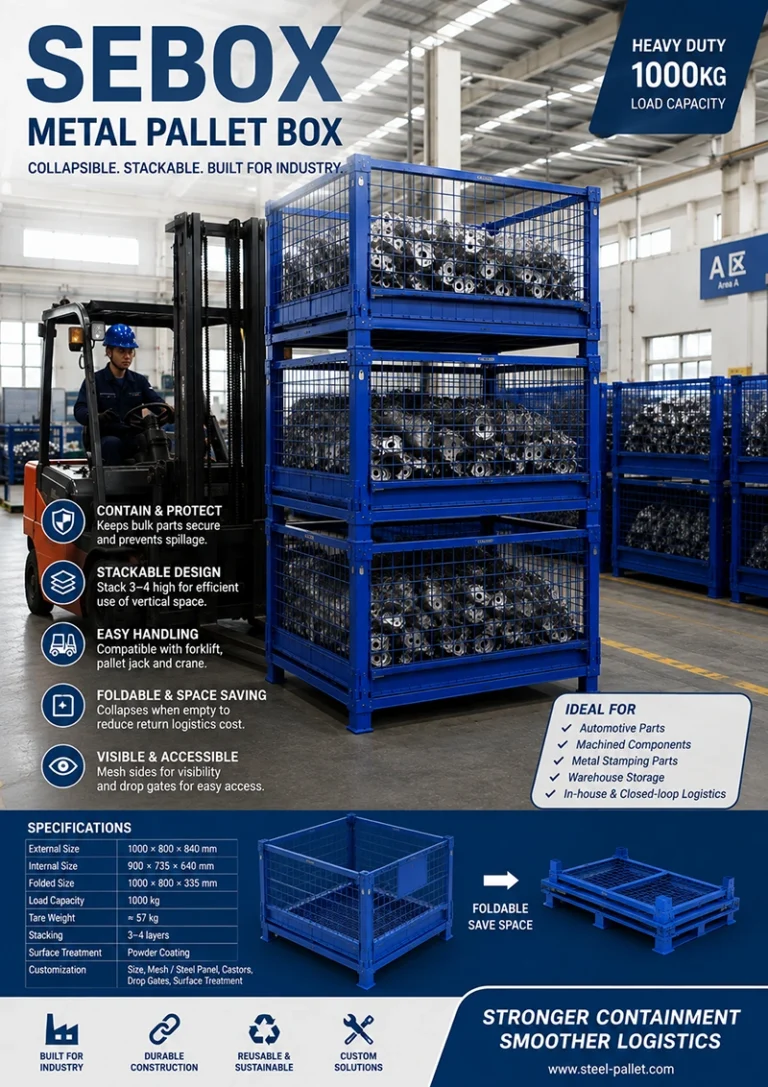
Mesh for visibility, steel plate for containment
Sebox is one steel frame with configurable insert options. This page is about choosing the right insert for the job, not about comparing two different SKUs.
If you need to see the contents quickly, mesh is usually the first candidate. If you need tighter containment for small loose parts, sharp edges, or parts that should not sit against an open grid, steel plate is the safer direction. The final choice should follow the confirmed drawing and the smallest part size.
- Mesh supports visual inventory and faster checking when the parts are large enough
- Steel plate improves containment when leak risk matters more than side visibility
- The bottom and four doors can be specified as mesh or steel plate per project
- The frame is foldable and stackable for storage, transport, and return logistics
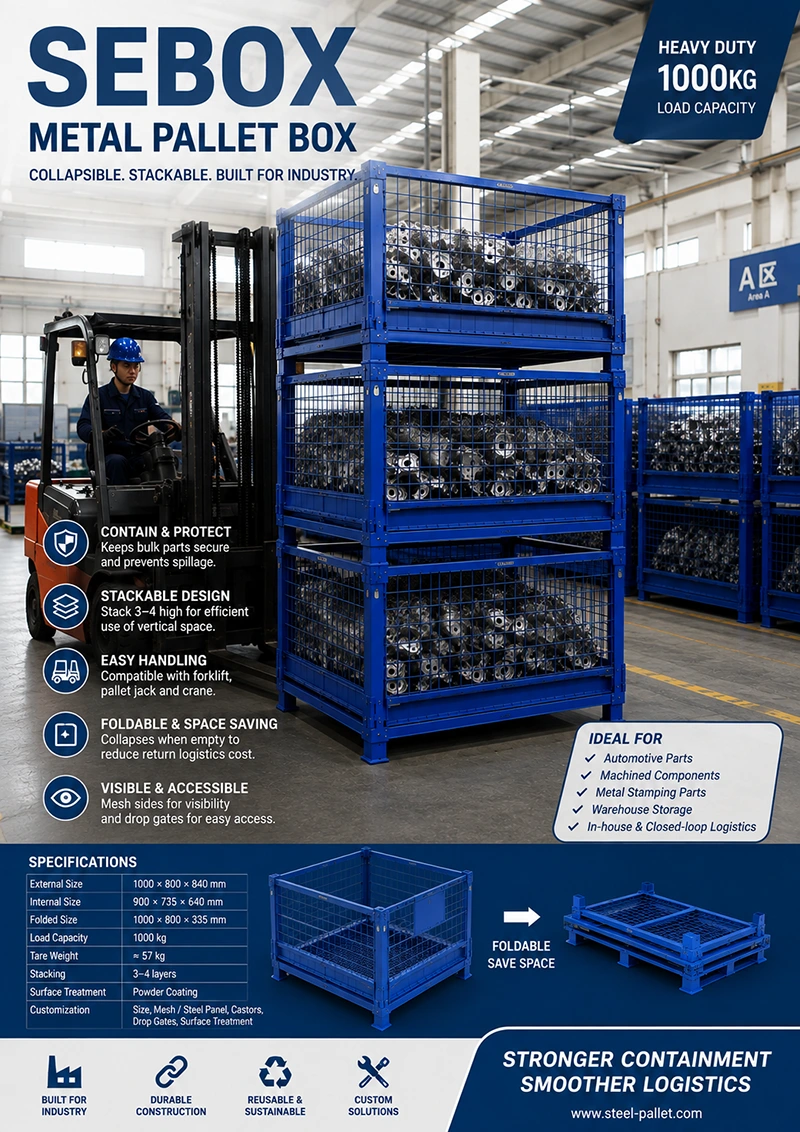
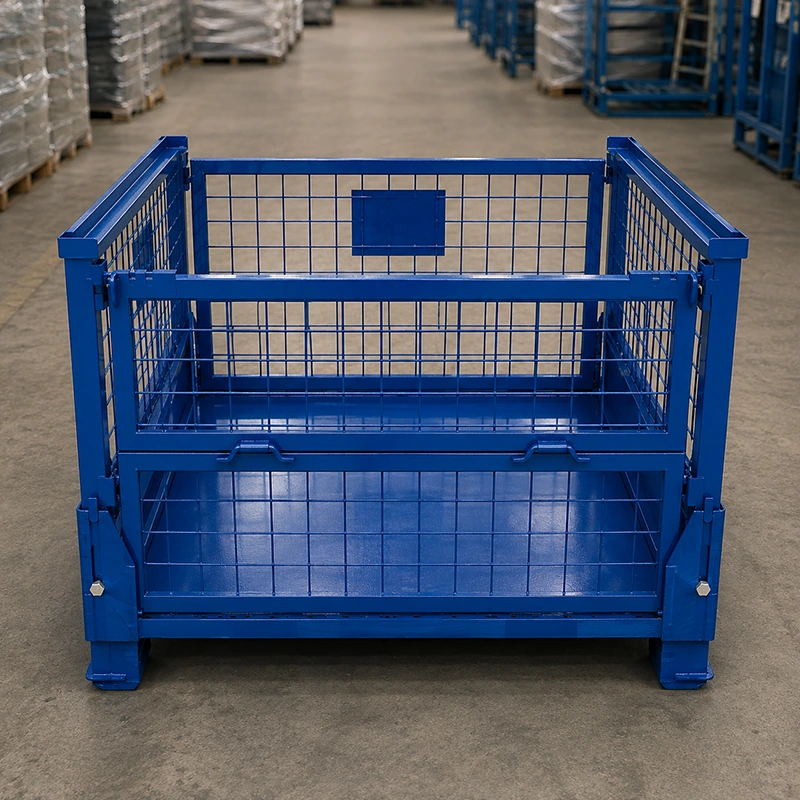
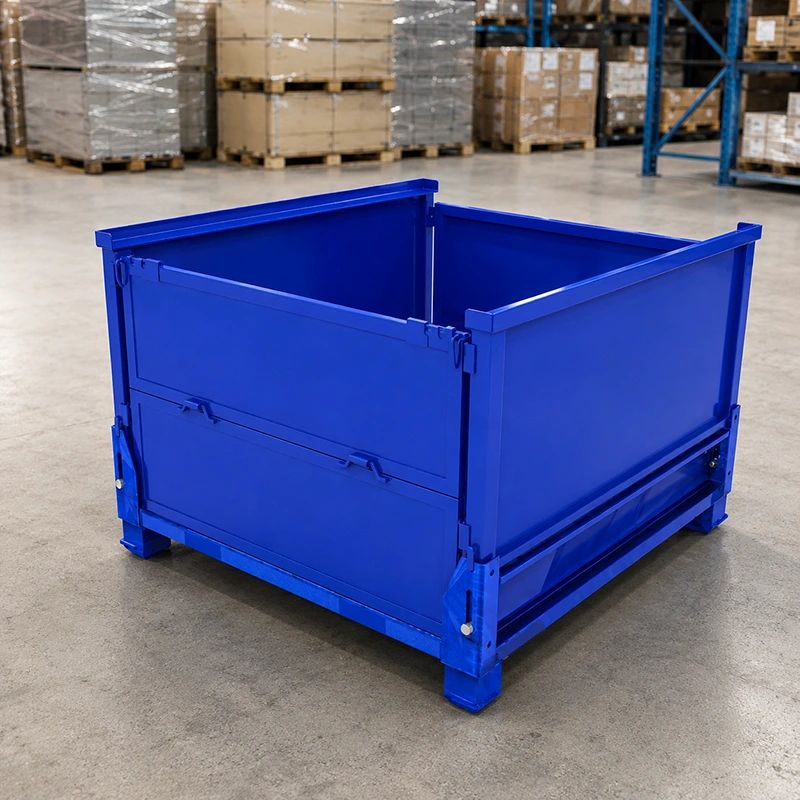
Three practical Sebox configurations
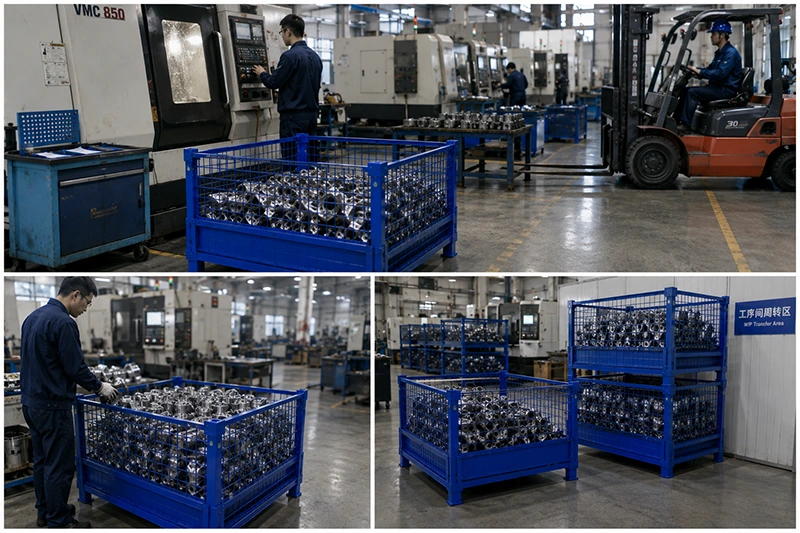
Mesh body
Best when you need visual inventory
Use mesh where operators must see the contents fast and the smallest part will not pass through the opening. It is a practical choice for parts that stay contained without full side coverage.
Best when the part size is larger than the mesh opening
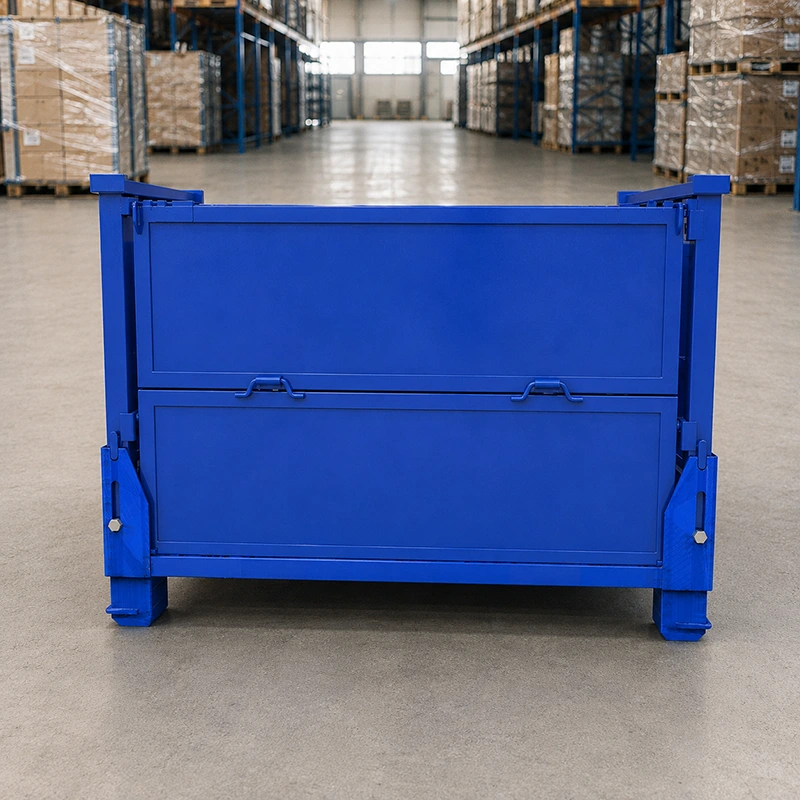
Steel plate body
Best when containment matters more than visibility
Choose steel plate when small loose parts, edges, or drop risk make an open grid less suitable. The trade-off is less side visibility, but more confidence that parts stay inside.
Side visibility is reduced compared with mesh
Mixed configuration
Use different inserts on the same frame
The technical description allows the bottom and four doors to be specified with mesh or steel plate. That means you can balance visibility and containment within one Sebox frame, instead of treating them as separate products.
Confirm drawing, openings, and load case before ordering
What changes, and what does not
Will mesh leak small parts?
Mesh is for visibility and flow, not for every part size. If the smallest item is smaller than the opening, mesh alone is not the right choice. Use steel plate, or confirm a liner or tray with the drawing.
Will steel plate block visibility?
Yes. Solid plate reduces side visibility, so it is less useful for quick inventory checks. It is the better choice when you want containment and protection first.
Can the inserts be changed onsite?
The available technical description says the bottom and four doors can be specified as mesh or steel plate, and the structure uses bolted connections. That means module changes are project-based and should match the confirmed drawing before installation or later maintenance.
Does insert choice change load capacity?
The public资料 does not show a separate load rating just for mesh versus steel plate inserts. Capacity must follow the confirmed frame, bottom structure, and working condition, not the insert name alone.
How to lock the right Sebox configuration
Share the part list
Send the smallest loose part, part shape, and whether the load includes sharp edges, chips, or mixed sizes.
Choose the insert rule
Pick mesh for visual inventory, steel plate for containment, or a mixed configuration if different faces have different risks.
Confirm handling and stack plan
Check forklift access, stacking height, empty folding, and whether the box needs casters for internal transfer.
Lock the drawing and order
Once the configuration is fixed, the same Sebox frame can be produced with the agreed mesh or plate modules for the project.
Configuration, not confusion
Is mesh or steel plate a different product?
No. The business logic here is one Sebox frame with selectable inserts. The insert changes the job fit, but it does not turn the product into a different SKU family.
What if I need both visibility and containment?
Use a mixed configuration. For example, choose mesh where checking is important and steel plate where the risk of leakage or impact is highest. Final details should be set against the confirmed drawing.
Is this suitable for very tiny loose parts?
Only if the final configuration is validated for the smallest piece. If the part is too small for the mesh opening, select steel plate or add a confirmed liner solution.
How should I start a project request?
Send your part type, smallest piece size, expected handling method, and whether you want mesh or steel plate on the body, bottom, or doors. If you are still comparing the product family, return to PDP-01 for the core page and PAGE-01 for the application overview.
Send your part type for a configuration recommendation, and we will map the insert choice to the confirmed drawing instead of treating mesh and steel plate as separate products.