
Sebox Half-Drop Gate Stacked Picking Access
Sebox
Sebox stacked-picking PDP for line-side storage. The half-drop gate helps operators remove parts from loaded bins without de-stacking the whole unit. Includes stack guidance, use cases, and fit limits.
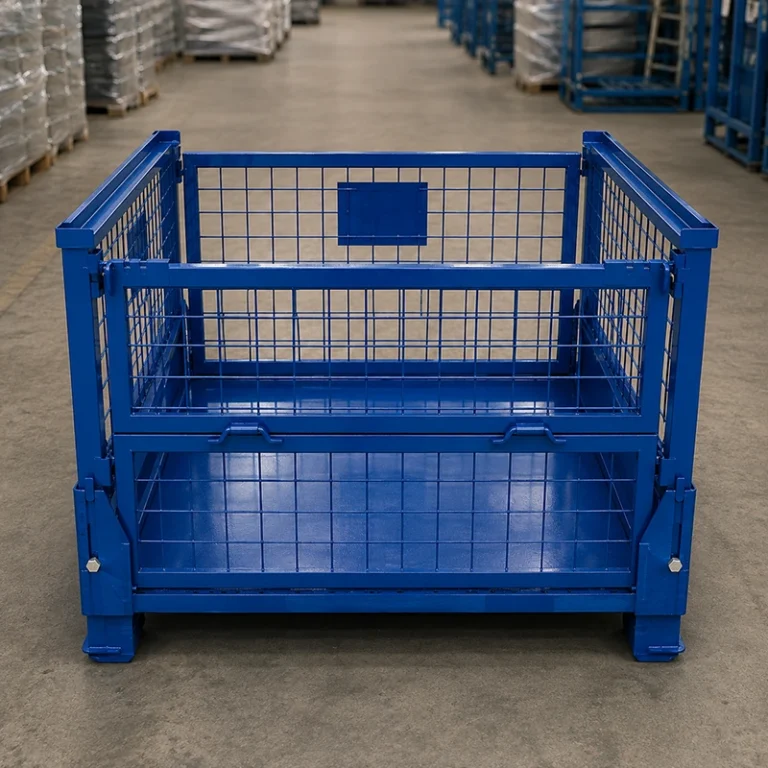
Reach lower parts without de-stacking the whole bin
Sebox is a collapsible cage pallet for line-side storage when the load must stay stacked and still remain accessible.
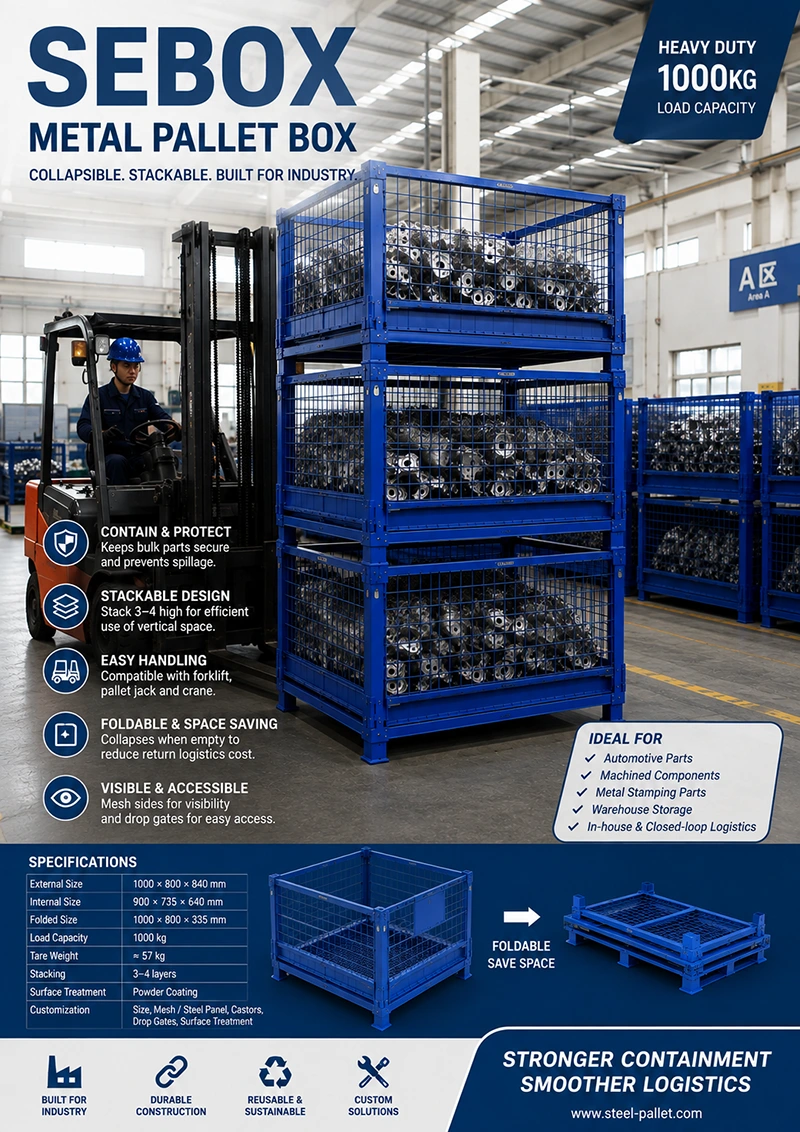
The half-drop front gate is a convenience feature for stacked picking: it helps operators remove parts from the accessible side while the container stays in place. It is not a substitute for a full unloading process or a lifting device. On the published standard Sebox data, the design load is 1000 kg, the recommended loaded stack is 3–4 layers, and the folded size is 1000 × 800 × 335 mm.
- Take parts from the accessible side while the bin remains in the stack.
- Keep the standard load unit in a 1000 kg design-load workflow.
- Use folded return storage to reduce empty-bin footprint.
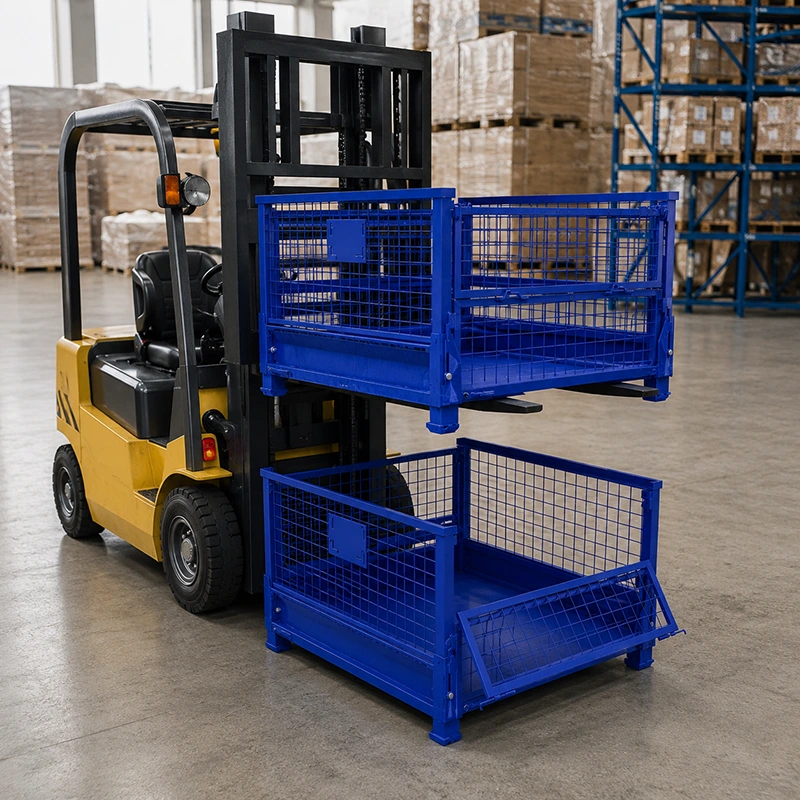
- Move the bin with forklift and pallet jack handling through the integrated base pockets.
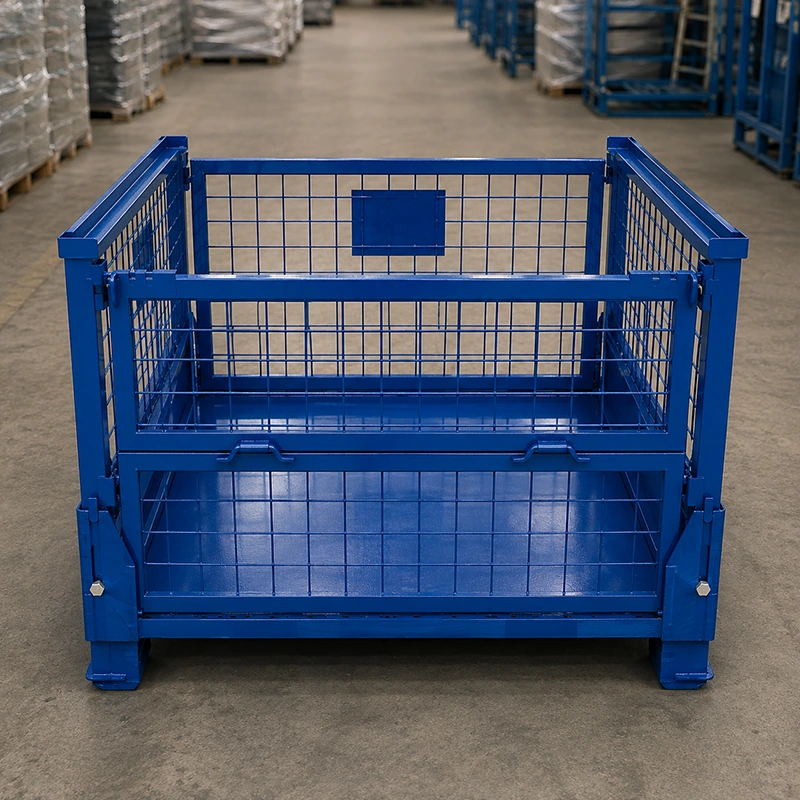
Three configuration options and when to use them
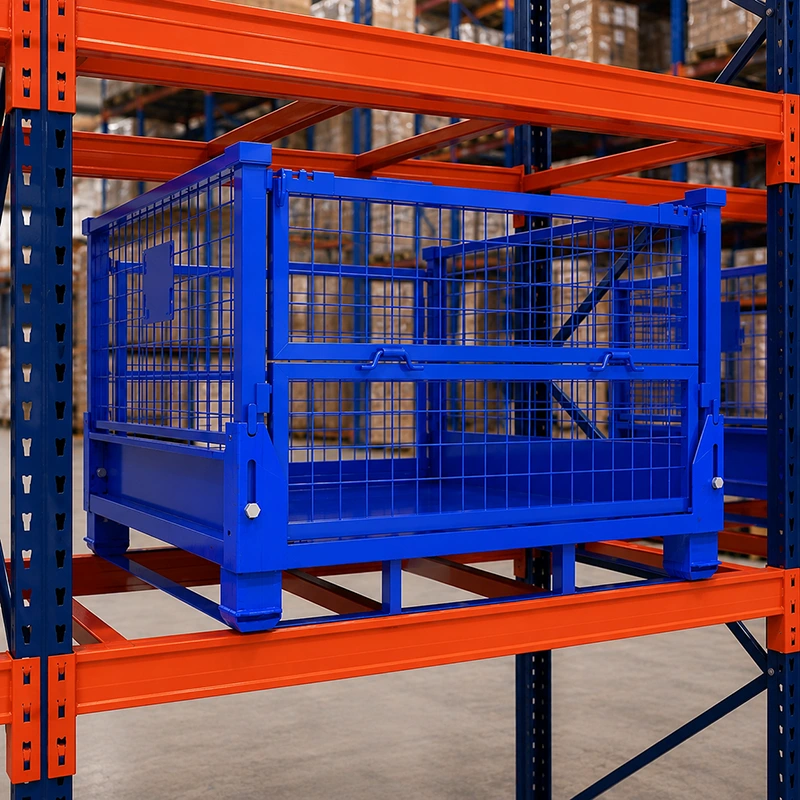
Best for frequent pick access
Half-drop gate standard
Use this when the team needs to take parts out after stacking. Good for line-side buffers, kitting zones, and visual inventory.
- Use case: stacked picking and line-side buffer
- Good fit: frequent access with safe aisle clearance
- Not for: no-clearance aisles or unstable loose loads
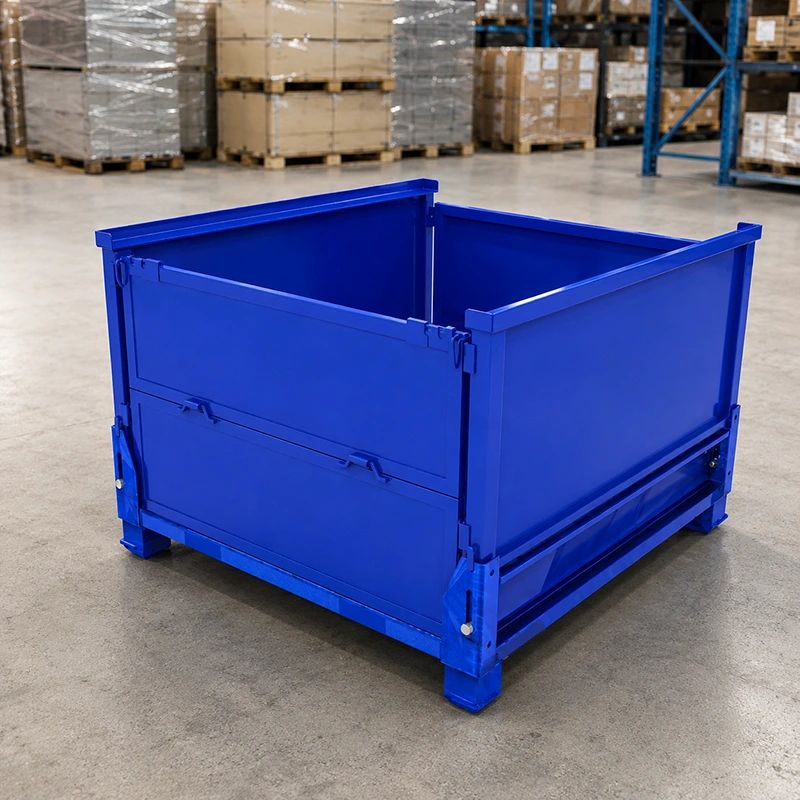
Stronger side containment
Solid panel containment
Choose this when side containment matters more than open visibility. Useful for mixed parts and heavier loads that should stay enclosed.
- Use case: mixed parts and heavier containment
- Good fit: transport, warehouse storage, and enclosed staging
- Not for: visual inventory priority
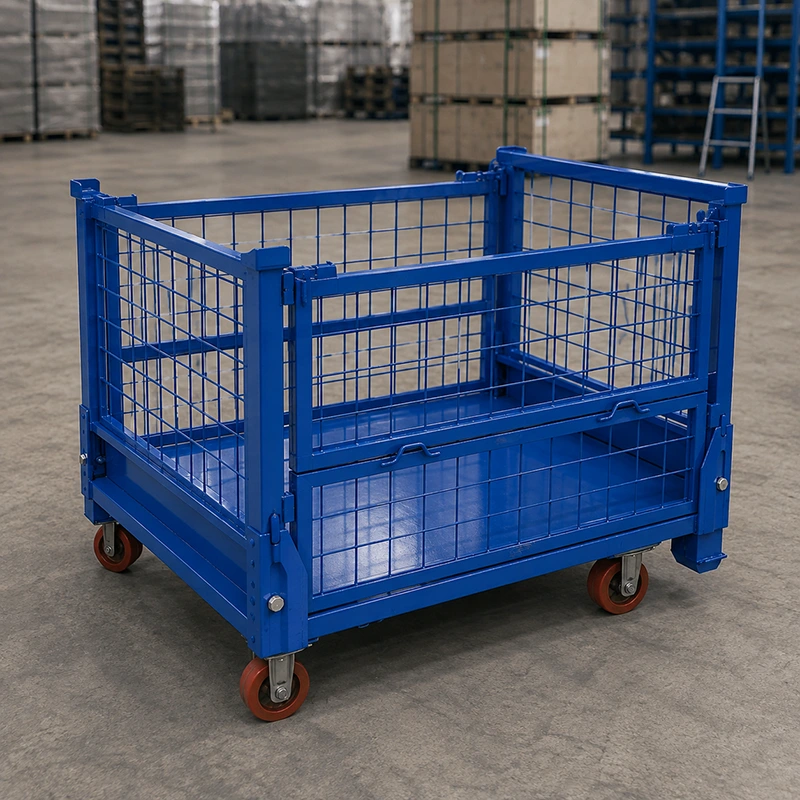
Short-distance movement
Caster transfer version
Use only when the bin needs short repositioning on smooth indoor floors. It helps move the container, but it does not replace forklift handling for full transfers.
- Use case: short-distance line-side repositioning
- Good fit: controlled indoor floors
- Not for: rough ground or long-distance hauling
The half-drop gate solves stacked access without changing the handling flow
Access after stacking
Open the half-drop gate and take only the parts you need. If the stack is unstable or the aisle is too tight, de-stack first.
3–4 loaded layers by default
The published Sebox guidance supports 3–4 loaded layers. Final stack limit still depends on payload distribution, floor condition, and the confirmed drawing.
Standard 1000 kg design load
The standard data list Q235 steel, a 1000 kg design load, and about 57 kg self-weight. Treat gate-specific load and latch detail as project-confirmed data.
Forklift-friendly flow
Integrated forklift pockets keep the bin in a normal warehouse circuit, from receiving to buffer storage to outbound transfer.
How to define the stacked-picking configuration
Share the real work condition
Send the part size, pick frequency, load mix, aisle clearance, and the target stack height so the access side is planned correctly.
Lock the gate and lock method
Confirm the half-drop side, latch detail, and whether the load will stay at 3 or 4 layers in routine use.
Match the build to the workflow
Compare this layout with PDP-01 for standard stacking or PDP-05 for more mobile transfer, then choose mesh, solid panel, or caster options.
Approve the drawing and finish
Confirm the final drawing, coating color, logo position, and shipping plan before production.
Questions buyers ask before they choose the half-drop gate
How do I pick lower-layer parts when the boxes are stacked?
Use the half-drop gate on the accessible side and remove only the needed parts. If the aisle is too narrow or the load is unstable, de-stack first and repick safely.
Is the half-drop gate load-bearing?
The standard Sebox data confirm the whole unit’s 1000 kg design load, but gate-specific allowable load and latch engagement depend on the final drawing and must be confirmed per project.
Will the half-drop gate change the stack height?
Not automatically. The standard guidance still points to 3–4 loaded layers, while the final safe limit depends on the load distribution, floor condition, and the confirmed variant.
When should I choose a different configuration?
If you need a fully sealed top, zero-clearance access, or a process that removes the box entirely at every pick, this is not the right fit. Use the right workflow instead of treating the gate as a full transfer device.