
Sebox Machining WIP Staging | Visual Inventory & Line-Side Transfer
Sebox
Sebox for machining WIP staging keeps parts visible, stackable, and easy to move. Fixed base handling is standard; caster mobility is optional for short line-side transfer.
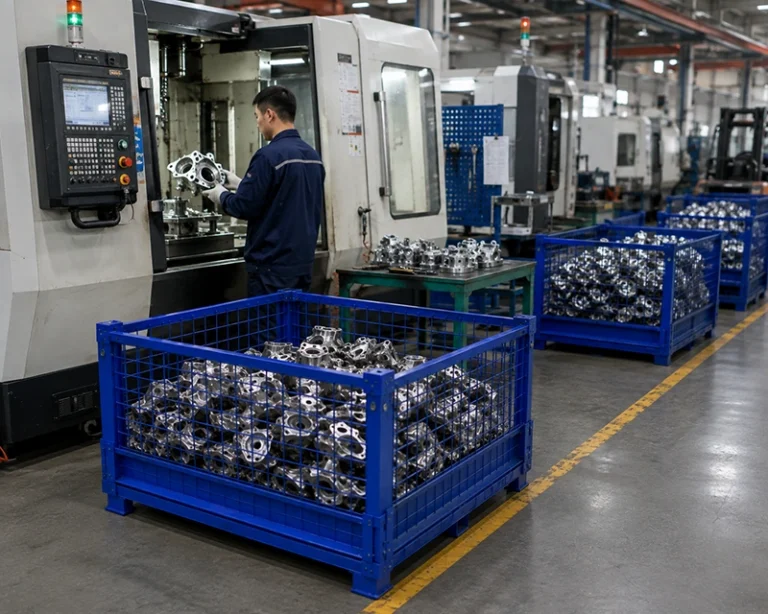
One box for WIP staging, line-side transfer, and visual inventory
Sebox keeps work-in-process in one visible metal pallet box instead of spreading parts across benches, carts, and floor space.
For machining and assembly cells, the simplest layout is one box per part family or one box per operation. The fixed-base version is the default choice for forklift and pallet-jack handling. If your crew must push parts between nearby stations, a caster base can be specified as an option, but it is not standard on every unit.
The mesh body supports visual inventory without unpacking. Supervisors can check fill level from the aisle, while the half-drop front gate helps access lower layers when the box is stacked. This product family is suited to rigid metal parts and WIP staging; it is not a sealed tote for liquids, dust-tight storage, or fragile scratch-sensitive contents.
- Centralize WIP by operation or part family
- See stock level through the mesh sides without opening the box
- Use a fixed base for forklift and pallet-jack handling
- Add casters only for short, smooth-floor station-to-station transfer
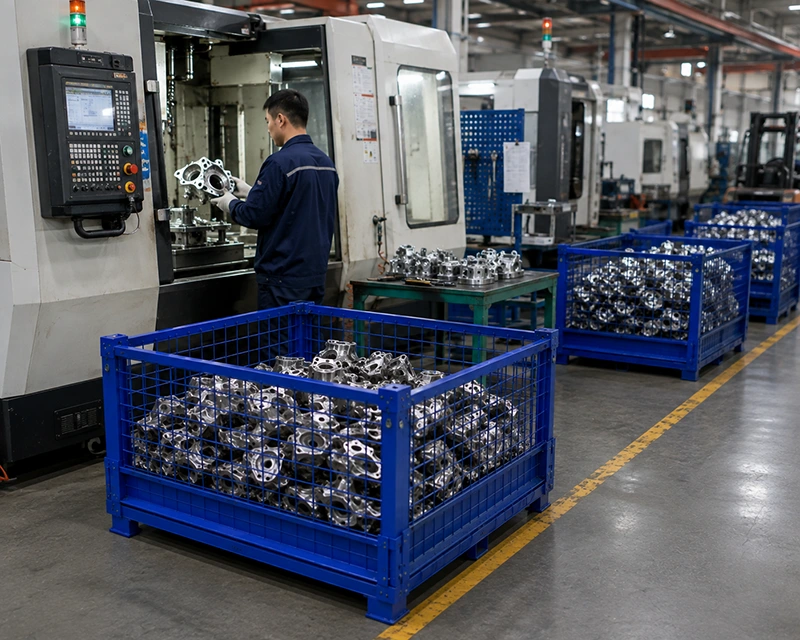
Choose the base and access style that match your flow
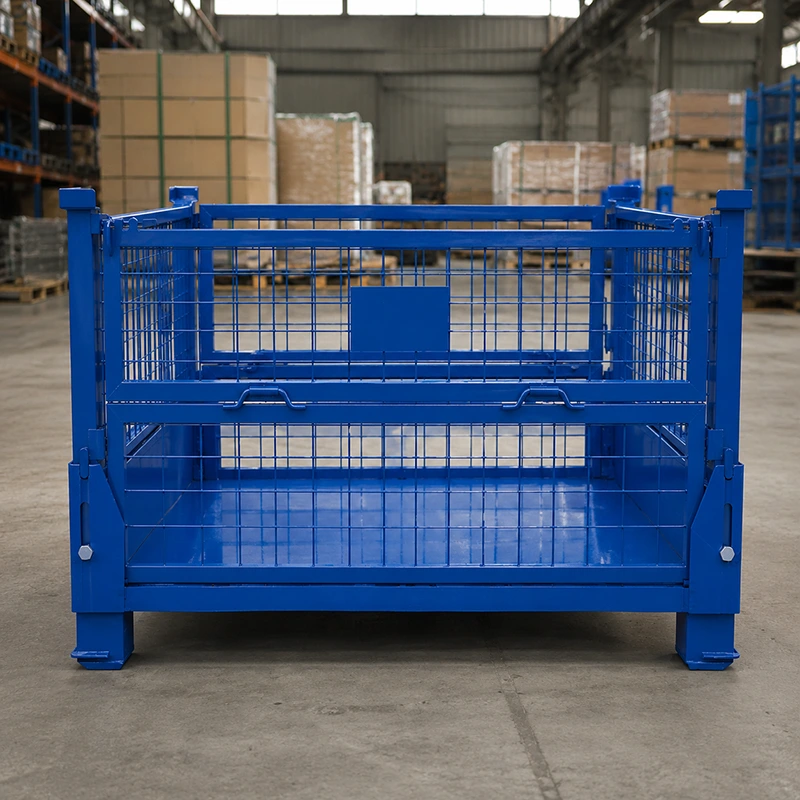
Fixed base
Standard stackable WIP box
Best for stable staging, forklift moves, and pallet-jack handling inside the cell.
- Forklift-ready handling
- Stackable frame for floor or rack staging
- Simple choice when manual push transfer is not needed
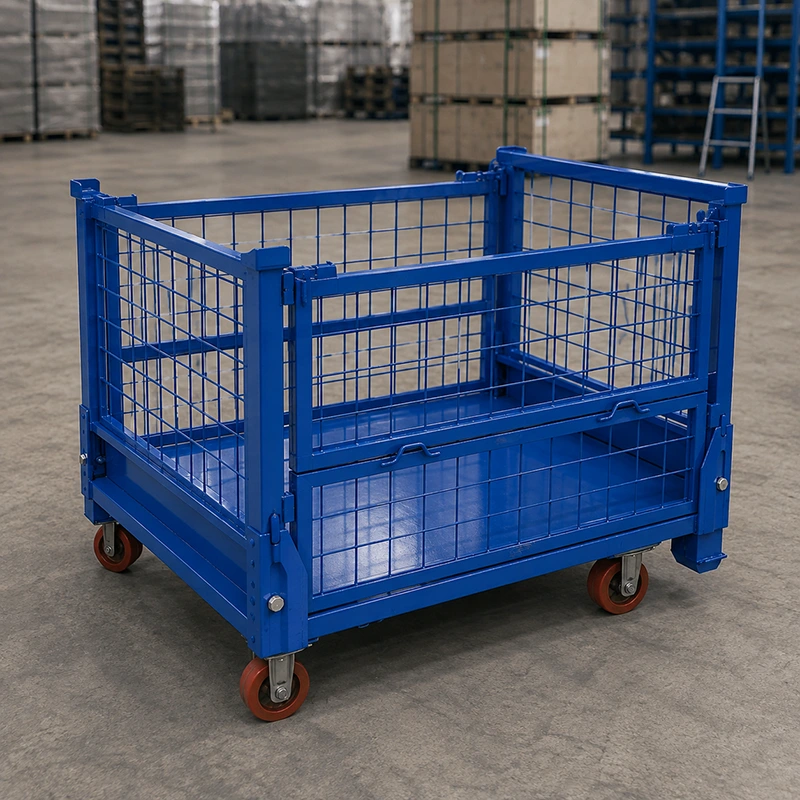
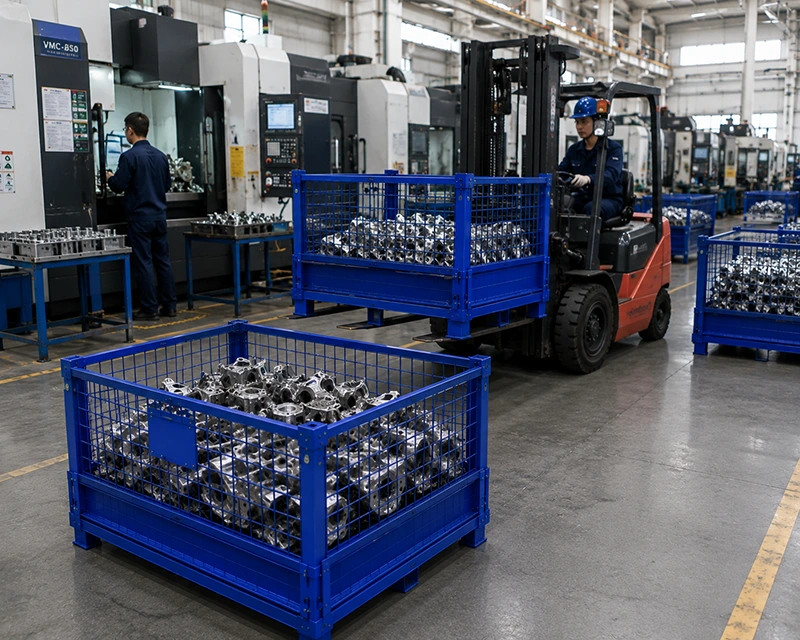
Caster option
Mobile line-side transfer version
Use this when the box must move between CNC, inspection, and assembly stations.
- Short-distance push transfer on smooth floors
- Keep WIP near the machine without repacking
- Not a default choice for every unit
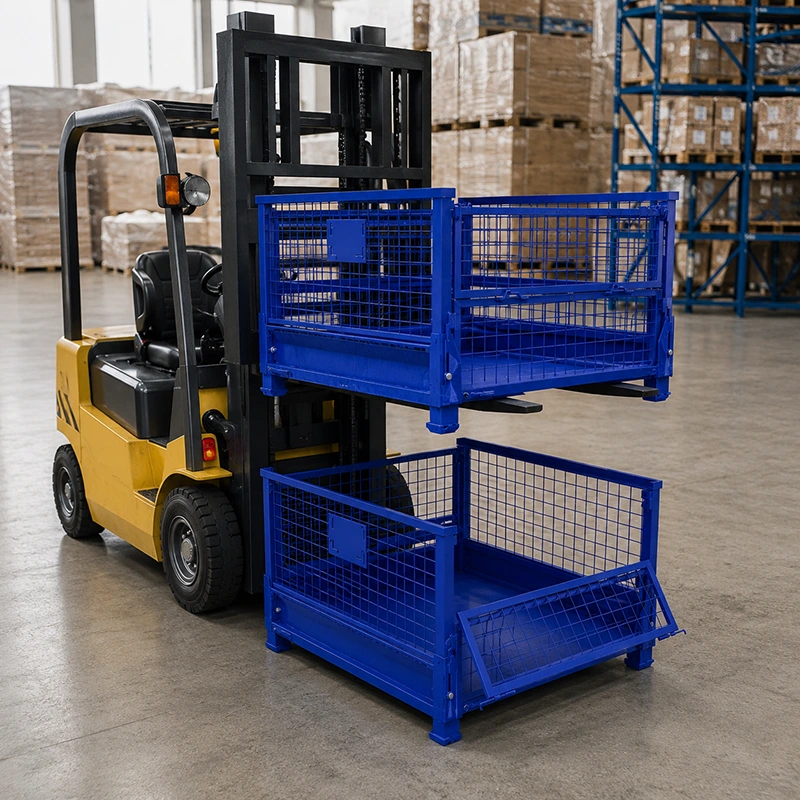
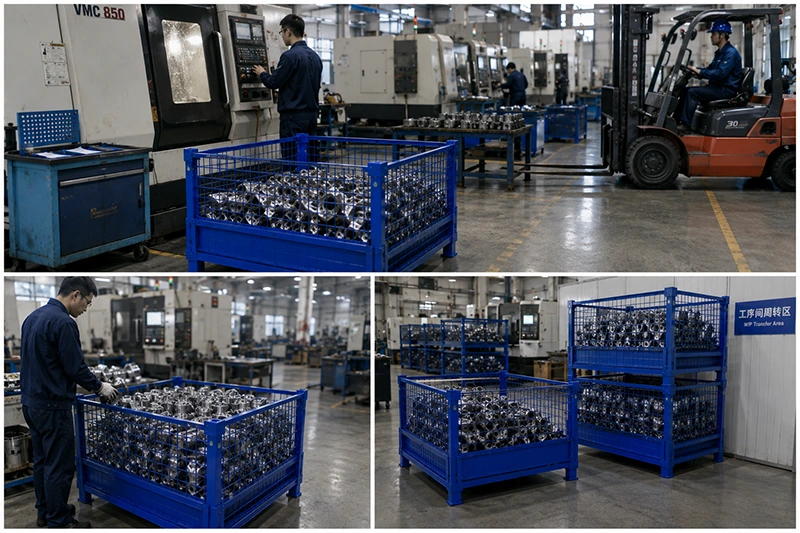
Access option
Half-drop front gate for faster picking
The front gate helps operators reach lower layers even when the box is stacked.
- Faster replenishment at the line edge
- Better access when boxes are stacked
- Useful for visual picking and WIP control
It solves scatter, counting gaps, and ad hoc transfer in one flow
Visible inventory
The mesh side walls let supervisors see how much WIP is inside without opening the box, which supports faster count checks and fewer interruptions.
Stable mechanical handling
The fixed-base structure supports forklift and pallet-jack handling, so parts can move from machine to staging lane without loose cartons or shrink wrap.
Optional mobility, not forced mobility
If your shop needs short push transfer between nearby stations, casters can be added as an option. If not, keep the box on the simpler fixed base.
Better floor discipline
One container per part family makes the WIP lane easier to control, reduces floor scatter, and keeps the cell ready for replenishment or dispatch.
A simple setup for machining WIP staging
Map the flow
List the moves from CNC to deburr, inspection, assembly, and dispatch so the staging points are fixed instead of improvised.
Assign one box per part family
Keep each Sebox dedicated to one operation or one part family. That makes visual inventory, replenishment, and traceability easier.
Choose the base
Use the fixed base for forklift and pallet-jack handling. Specify the caster option only when operators must push the box over a short distance on a smooth floor.
Set the access rule
Use the half-drop front gate when stacked boxes still need picking from the lower layers, then keep the lane clear for the next replenishment cycle.
Questions shops ask before they standardize WIP staging
How do we unify WIP staging?
Use one Sebox per part family or per operation, label it clearly, and keep it at the point of use. That replaces scattered bins with a single visible staging lane.
Can the caster version replace forklift handling?
No. Casters are an optional add-on for short, smooth-floor transfers inside the shop. Long moves, rough floors, and heavy dispatch should stay on a fixed base with forklift or pallet-jack handling.
How does the mesh help inventory control?
The open mesh makes fill level visible from the aisle, so supervisors can check WIP status without opening the container and interrupting the line.
When should we choose another container?
If your parts need dust-tight protection, liquid containment, or extra scratch protection for delicate surfaces, a sealed or padded container is a better fit than a mesh pallet box.