
Sebox Returnable Packaging Loop | Empty Backhaul Volume & Folded Height
Sebox
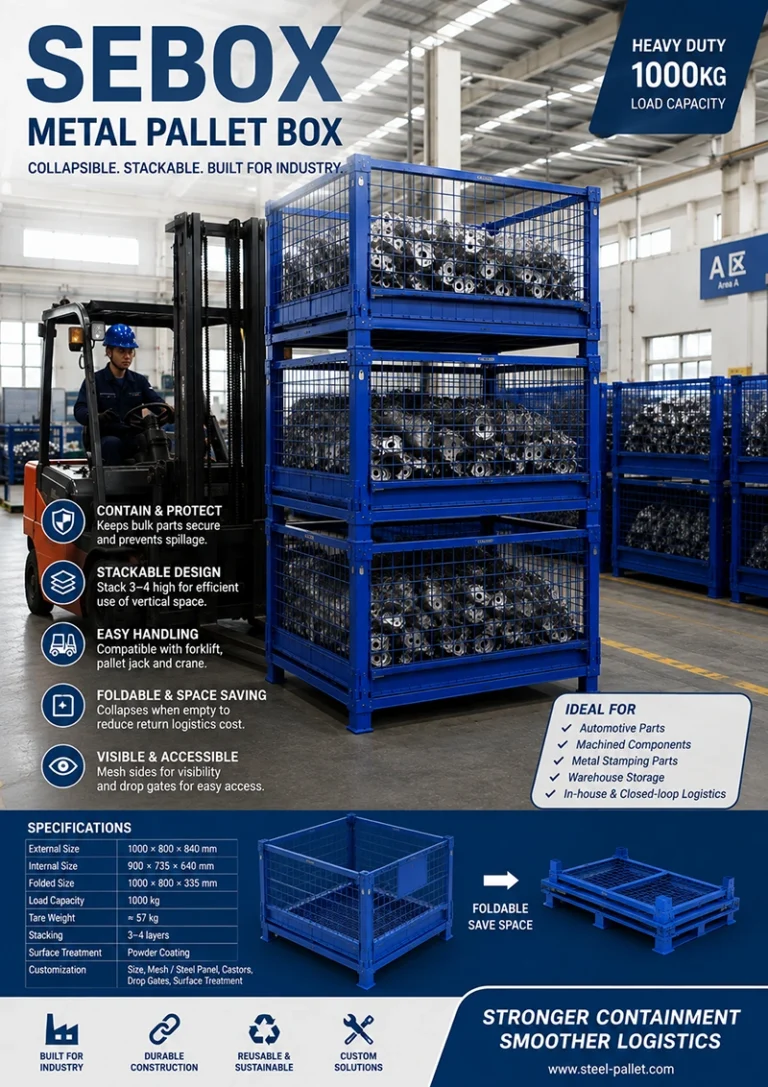
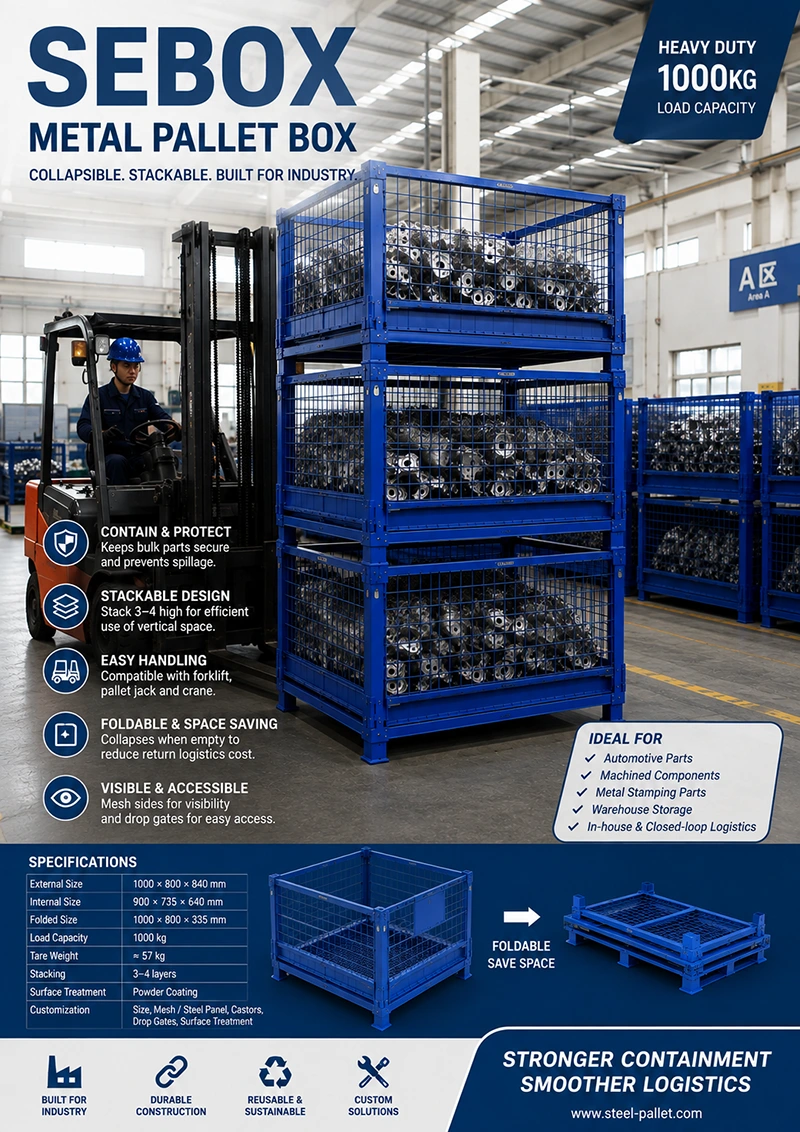
Sebox folds to 1000 × 800 × 335 mm, reducing empty-return volume for reusable packaging loops while cutting carton waste, disposal, and backhaul space.
Why a foldable return bin changes the economics of empty backhaul
When a reusable packaging loop sends empty units back, the empty cube is part of the cost. Sebox folds to 1000 × 800 × 335 mm, so one empty unit occupies about 0.268 m³ before stacking and pallet planning.
That smaller return cube helps warehouses and logistics teams reduce empty-truck space, lower temporary storage pressure, and keep reusable packaging inside the loop instead of treating it like disposable dunnage. Compared with single-use corrugated cartons, the value is not only in space saved. You also avoid repeated carton purchases, carton disposal, and the breakage risk that comes with repeated repacking.
- Folded empty size: 1000 × 800 × 335 mm, or about 0.268 m³ per unit.
- Reusable steel construction supports closed-loop transport instead of one-way carton consumption.
- Mechanical handling with forklift pockets keeps the return leg efficient.
- Model-specific folded dimensions should be confirmed when a variant uses a different configuration.
Choose the returnable packaging format that matches your loop
Containment-first
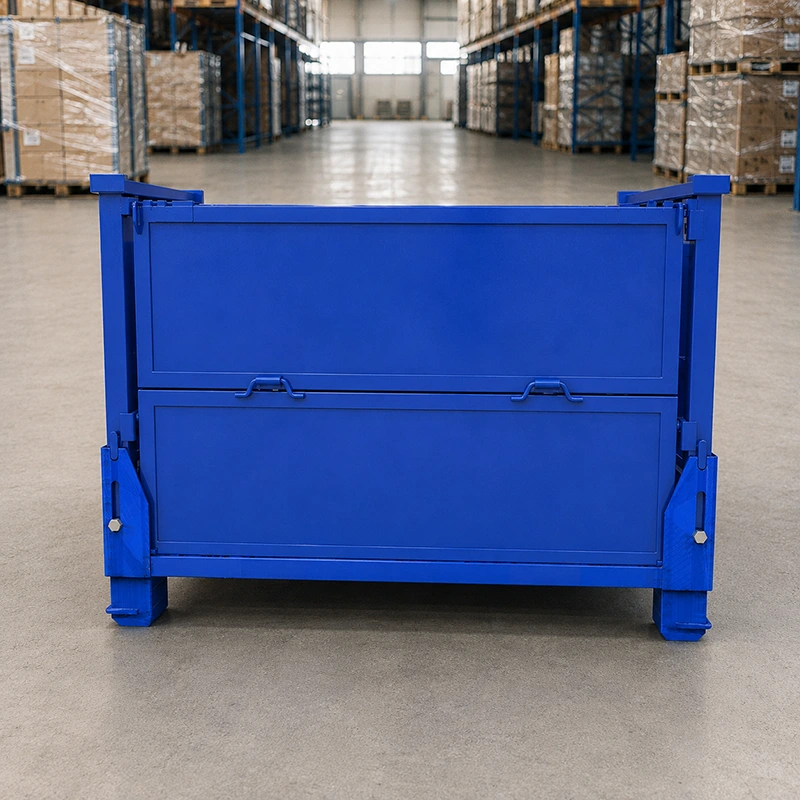
Solid-panel foldable stillage
Use this format when parts need tighter side containment, cleaner stacking, and less exposure during the empty return leg. It is a strong fit for reusable packaging loops that handle mixed metal parts or higher-contact loads.
Best for: tighter containment
Return logic: fold down when empty, keep the reverse trip compact
Note: confirm the exact model if the folded height differs from the canonical unit
Visibility-first
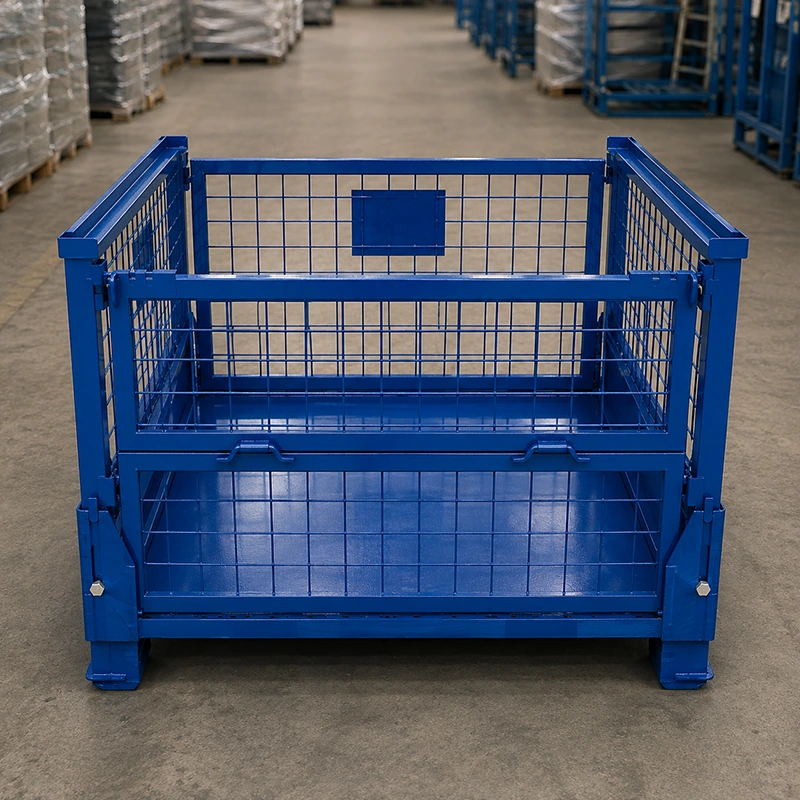
Half-drop gate mesh stillage
Choose the mesh version when visual inventory, partial access, and quick checks matter. The open structure helps operators verify contents without opening the box, which is useful in warehouse and line-side circulation.
Best for: visible inventory and quicker checks
Return logic: keeps the loop reusable while reducing handling time
Note: model-specific folded dimensions should be confirmed before final packaging design
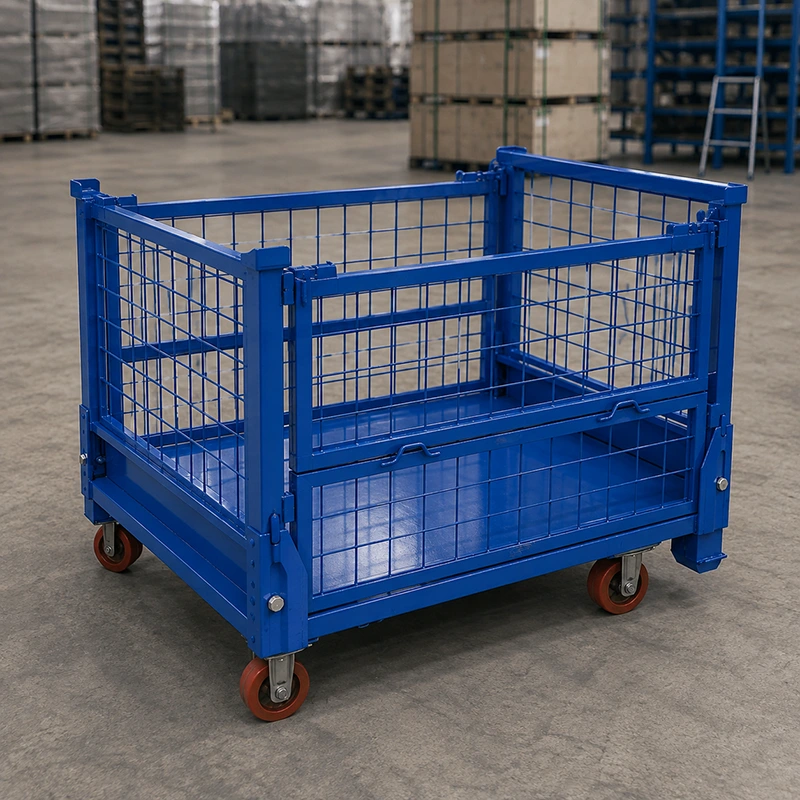
Internal shuttle
Castor-equipped movable stillage
Use casters when the unit spends more time as an in-plant shuttle than on the road. It is practical for temporary buffering and line-side movement, but it is not the first choice when the return leg is long-distance and every extra part adds complexity.
Best for: internal handling and temporary buffering
Return logic: easy movement inside the plant, compact when folded for storage
Constraint: casters can be unnecessary for pure backhaul optimization
Where Sebox saves more than a disposable carton
Empty volume control
The folded box occupies a known return cube, so warehouse teams can plan truck loading, aisle storage, and reverse logistics with less guesswork.
Reuse instead of waste
Single-use cartons turn every outbound trip into a new packaging purchase. A reusable steel box stays in circulation across many loops, which reduces carton spend and disposal pressure.
Mechanical handling
Forklift pockets and pallet-style handling reduce manual lifting on the empty return leg and make the loop easier to standardize.
Use it when the loop is real
Sebox fits best when the packaging comes back, is inspected, and re-enters service. If your shipment is one-way with no return control, a disposable carton may still be simpler.
How to compare Sebox against one-way cartons
Measure the empty trip
Count how many empty units return each cycle, what space they occupy, and whether they need to be stacked or palletized before loading.
Match the packaging mode
Choose solid-panel, mesh, or caster-equipped handling according to containment, visibility, and internal movement needs.
Confirm the folded model size
If a variant folds differently, tag the exact model before finalizing the return cube and truck loading plan.
Compare lifecycle cost
Review carton purchase, damage replacement, disposal, and reverse logistics together. The reusable loop should win on more than just box price.
Answers for returnable packaging planners
How much space does one folded empty Sebox take?
At the canonical folded size of 1000 × 800 × 335 mm, one unit occupies about 0.268 m³ before any nesting or higher-level stacking plan is applied.
What does the folded size mean in practice?
It is the empty-return condition. Instead of sending a full-height box back, the unit is folded to a lower profile so the return cube is much smaller than the loaded state.
Where does reusable steel beat one-way cartons?
It saves on repeated carton purchases, carton disposal, and repacking damage. It also makes the reverse leg easier to standardize because the return format is stable and mechanical handling friendly.
When is Sebox not the right choice?
If the shipment is truly one-way, the product is very light, or the return route is not controlled, a disposable carton may be simpler. Sebox is for loops where the box comes back and goes out again.