
Stack Rack 可堆叠货架:无横梁高密度堆叠方案
derack
Stack Rack beamless stacking page for warehouse planners: 3-layer to 4–5-layer planning, upright load transfer, forklift handling, nesting return storage, and clear limits versus beam racks.
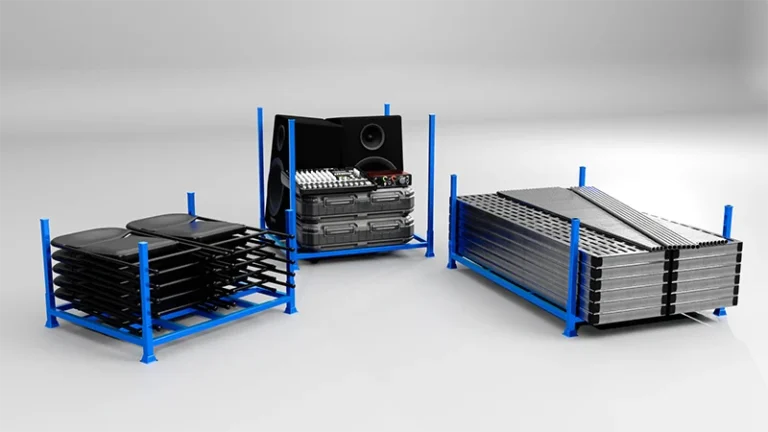
No beam, but still ready for 3-layer warehouse stacking
When fixed beam racks feel too heavy and floor stacking feels too low, Stack Rack becomes the middle option.
It turns flat floor storage into a modular vertical system by transferring load through interlocking uprights and a steel base. The cargo is supported by the structure, not crushed by the stack above.
- Beamless stacking for faster deployment and less installation complexity.
- Typical projects start at 3 layers and can be engineered to 4–5 layers in standard conditions.
- Empty frames can nest, which cuts return volume and reduces empty-yard clutter.
- It is stronger than floor piles, but it is still weaker than a beam rack when absolute rigidity is the priority.
Tell us your warehouse area and cargo volume for a stacking plan
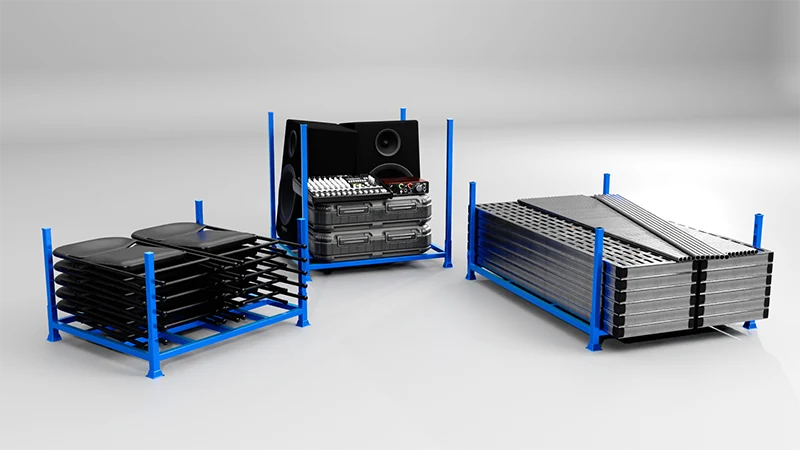
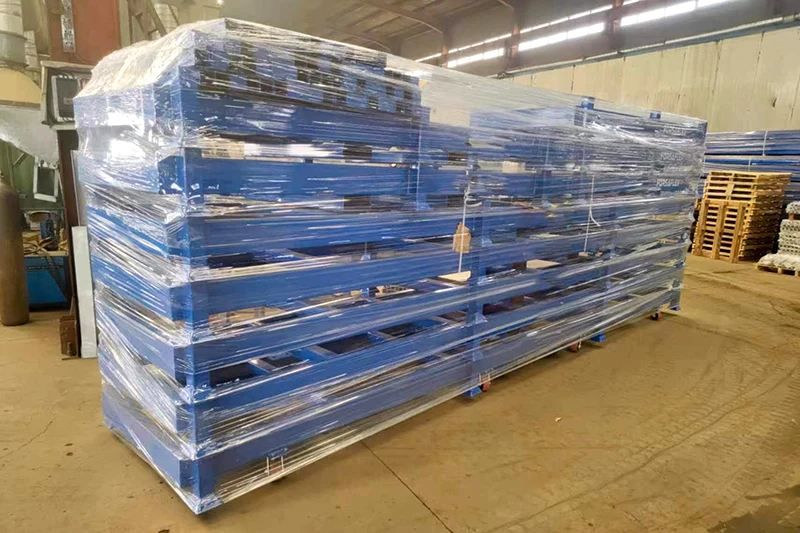
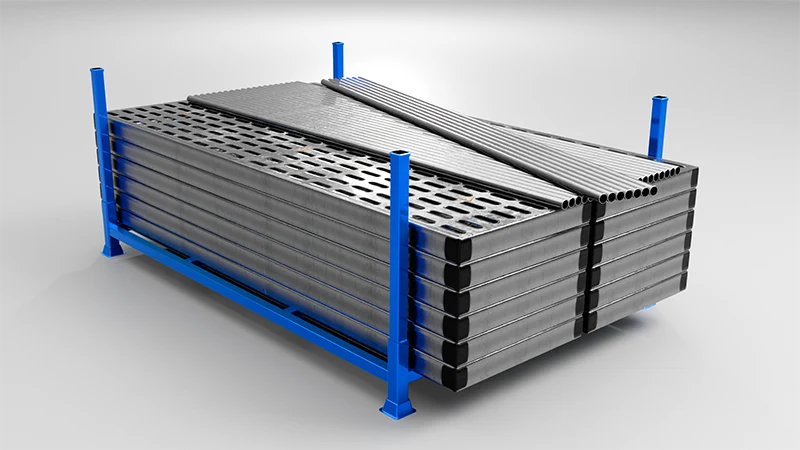
Three common ways to deploy a beamless stack rack
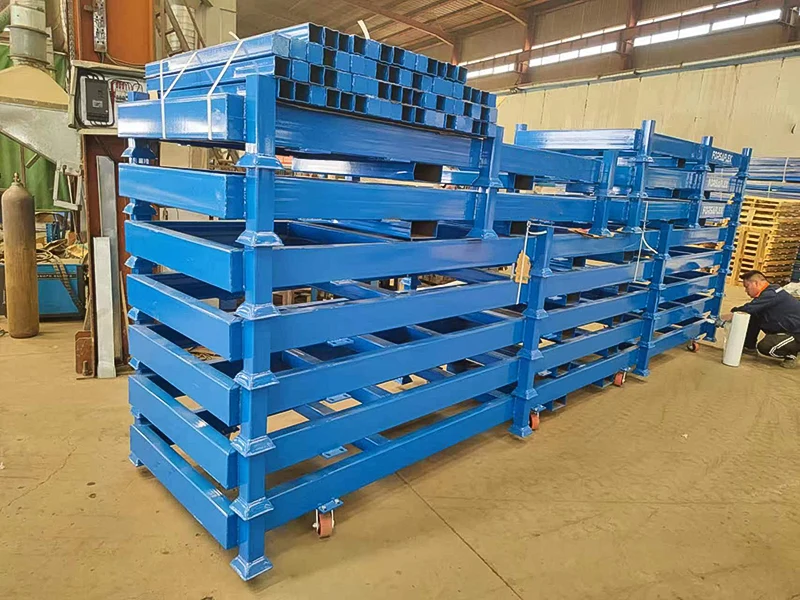
General-purpose
Standard stack rack
Use this when you need a fast middle ground between floor piles and installed beam rack lanes.
- Best for batch storage and forklift handled turnover
- No beam installation and no floor anchoring
- Good starting point for 3-layer planning
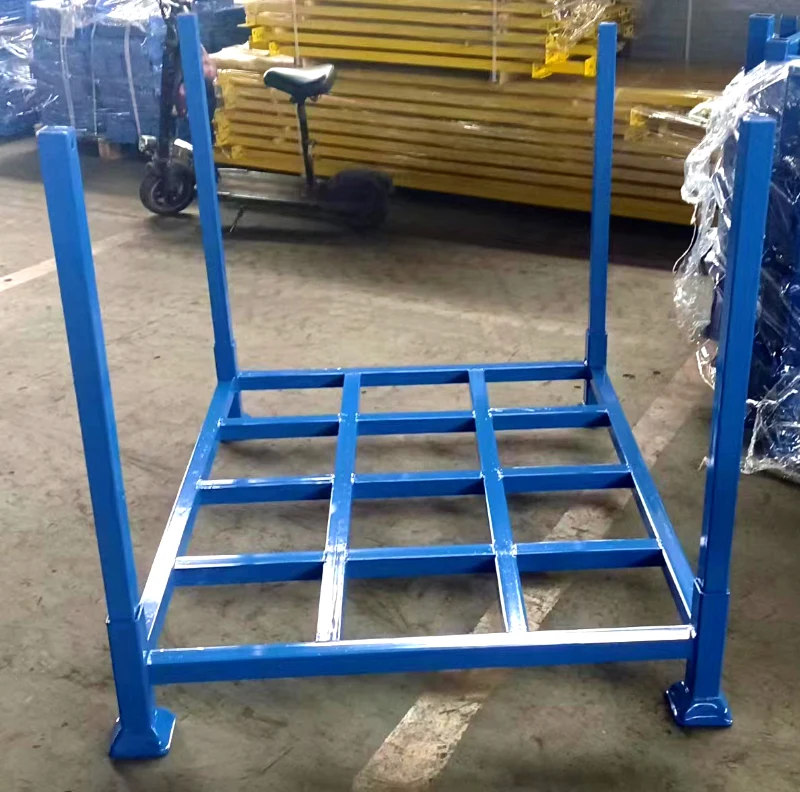
Long-span
Long-span stack rack
Choose this for long goods that need continuous side support and a larger supported footprint.
- For bars, tubes, panels, and other elongated cargo
- Helps keep long goods aligned during storage
- Useful when floor stacking would leave too much unsupported span
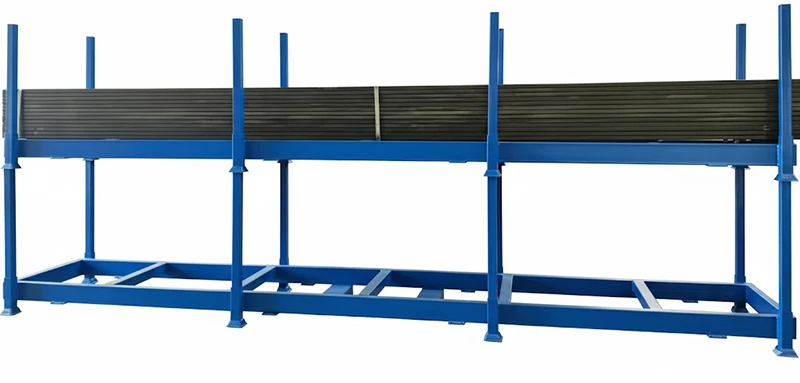
Structure
Nestable return rack
Use this when empty return volume matters and you want a cleaner reverse-logistics loop.
- Empty frames nest for compact return storage
- Helpful for reusable packaging loops and yard control
- Good fit when you want density without fixed construction
What makes Stack Rack stable enough for real warehouse use
Load path goes into the posts
The stack is locked by the uprights and base structure, so the cargo below is not asked to carry the stack above it.
Vertical space becomes usable
Instead of stopping at floor pile height, standard projects can reach 3 layers and often 4–5 layers, which can mean roughly 100%–150% more usable capacity than flat stacking, depending on cargo and aisle limits.
Forklift handling stays simple
Stack Rack is built for batch handling and straightforward forklift access, not for continuous random picking.
Know the boundary
It is not as rigid as a beam rack. If you need the highest possible structural stiffness, full-random access, or automation-grade density, beam rack or another system can be the better choice.
From warehouse data to a stack rack layout
Send the cargo profile
Share warehouse area, cargo dimensions, net weight, handling rhythm, and whether the load is palletized, boxed, or long goods.
Confirm the stacking boundary
We check the right layer count, upright arrangement, and whether the project should stay at 3 layers or move toward a 4–5 layer layout.
Check forklift flow and nesting
We validate entry direction, aisle width, and empty-return nesting so the system works on the floor, not just on paper.
Receive the proposal
You get a layout recommendation, product selection, and a clear answer on whether Stack Rack is enough or whether beam rack is the safer fit.
Questions warehouse planners ask before choosing Stack Rack
How does it stay stable without a beam?
The posts interlock with the base and transfer load directly into the steel structure and the floor. That is why the rack can stack vertically without depending on the cargo below. Still, it is not as rigid as a beam rack.
How much more vertical space can it use?
Compared with floor stacking, Stack Rack lets you move from low piles to a 3-layer setup and, in standard projects, toward 4–5 layers. In practical planning, that often means roughly 100%–150% more usable storage density, but the final number depends on cargo height, aisle rules, and handling limits.
What is the per-layer load?
We do not publish a fake universal tonnage. The safe load is a project result: cargo footprint, post count, base geometry, and lifting method must be checked together before the load per layer is confirmed.
When should I choose a beam rack instead?
Choose a beam rack when you need maximum rigidity, very frequent random access, or a storage system that must keep highly variable cargo under tighter control. Stack Rack is the better middle option, not the universal answer.
Need a recommendation for your warehouse? Send us your warehouse area, cargo volume, cargo size, and daily turnover rhythm. We will tell you whether Stack Rack is the right fit and which layout boundary you should not cross.