
Stackable Wire Mesh Container for Warehouse Floor Storage and Order Distribution
Stbox
Stackable wire mesh container for warehouse floor storage and order distribution. Compare stacking limits, floor-load checks, pallet-jack and forklift handling, and fixed-rack boundaries for Stbox.
Turn warehouse floor space into a movable storage plan
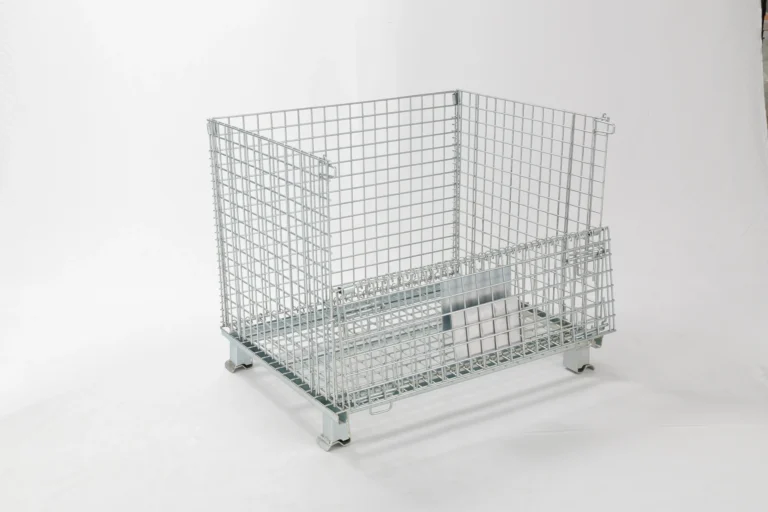
When fixed warehouse racking is full during peak season, Stbox lets you hold inventory on the floor, stack the cages within an engineered height limit, and move a complete load to the next distribution point.
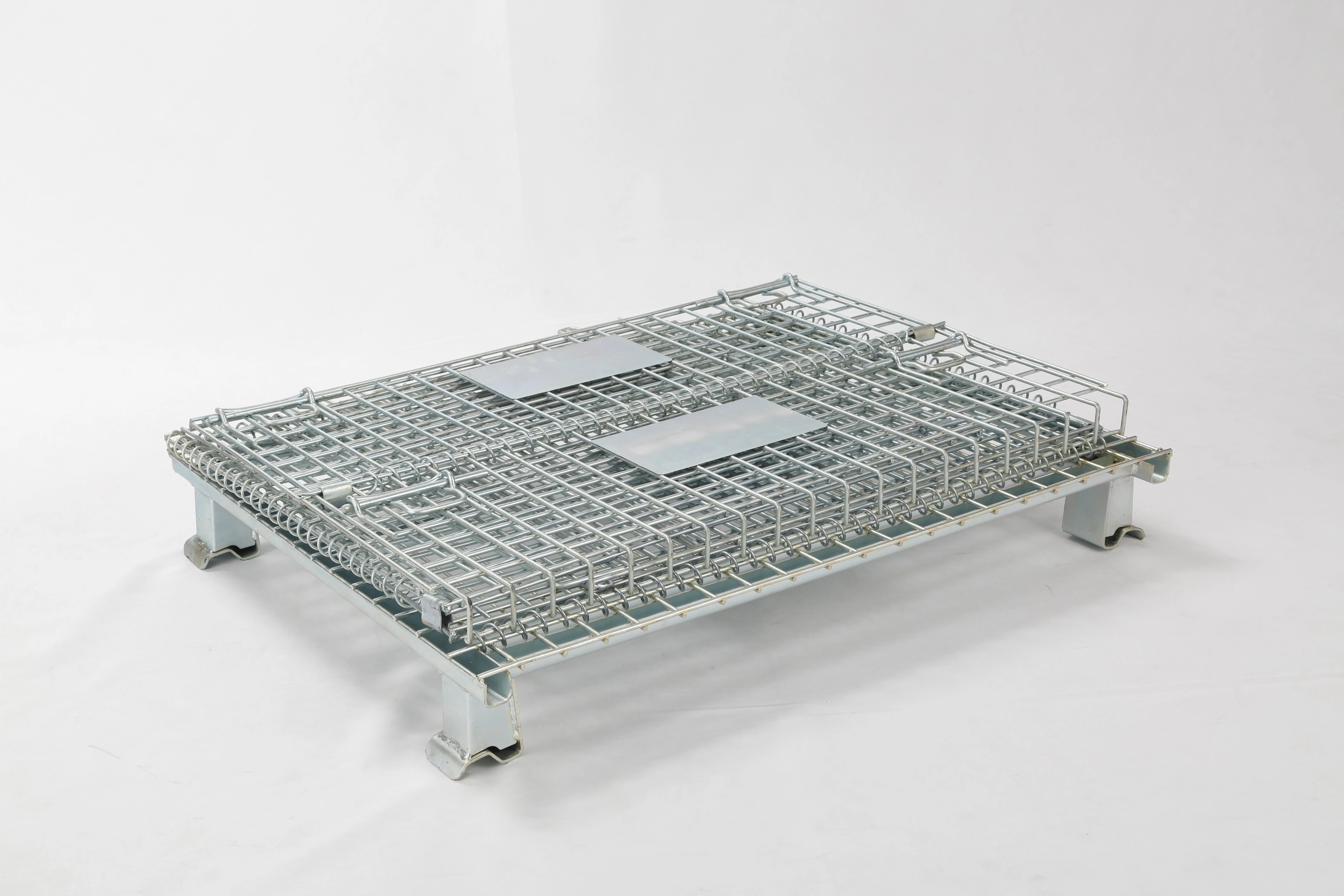
Stbox is a collapsible crate for industrial parts, order staging and short-distance warehouse distribution. Its welded steel mesh gives operators visual access to stock, while the half-drop gate supports manual picking without repeatedly emptying and reloading the container. When empty, the cage folds down to reduce return and buffer-storage volume.
- Project reference: the 15059 configuration is 1000 × 800 × 840 mm, with 50 × 50 mm mesh, Q235 steel and a recorded 6 mm full-size wire specification.
- Load reference: 1400 kg per cage is recorded for that project configuration. It is not a universal rating for every Stbox size or base design.
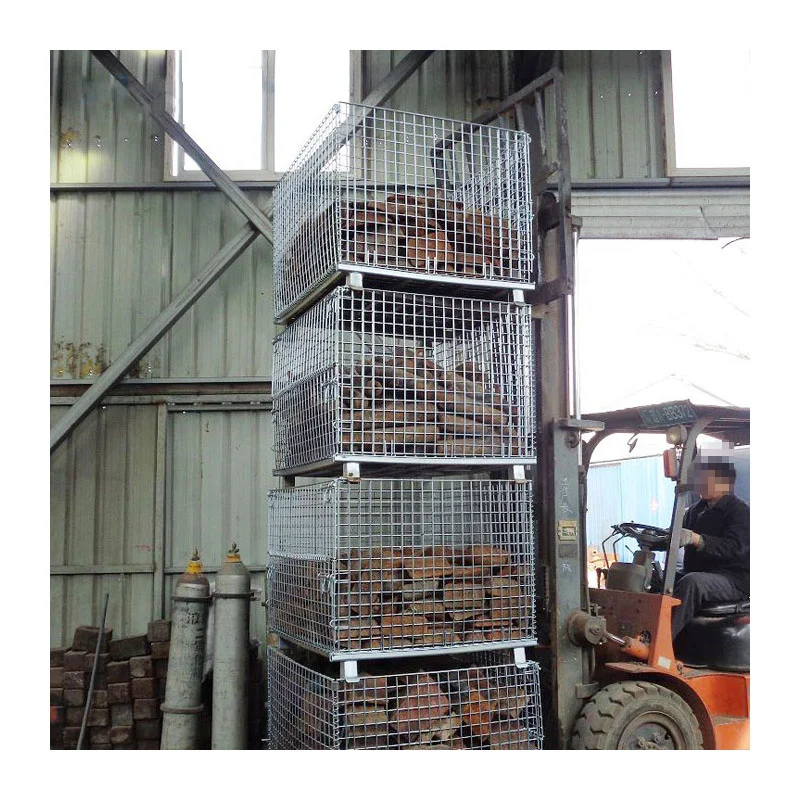
- Stacking reference: the 15059 proposal allows four-high stacking, with the upper stacked cage load restricted to no more than 2000 kg under the project instruction.
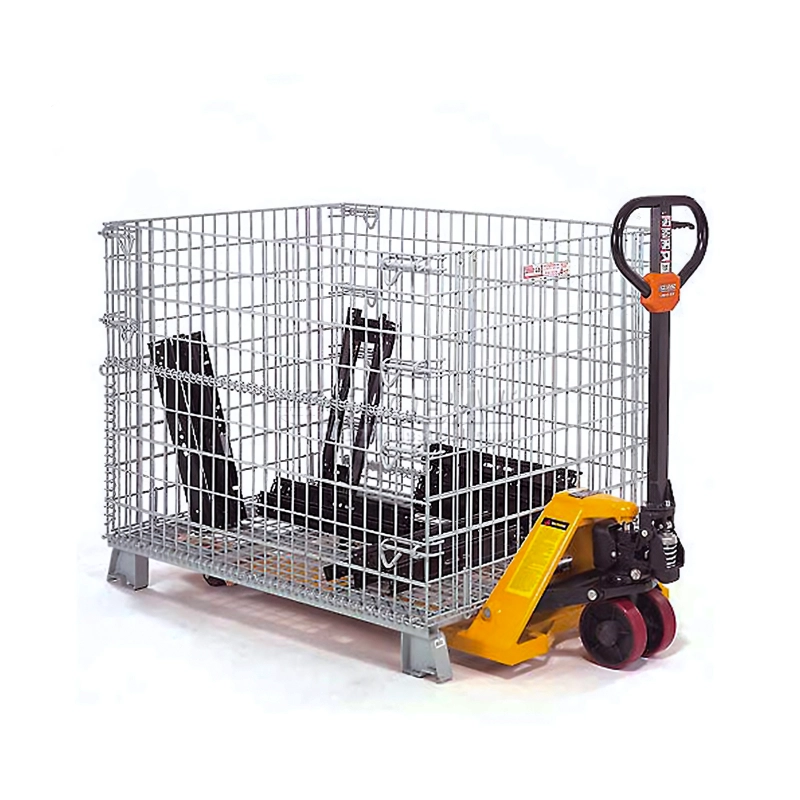
- Handling: both forklift and manual pallet-jack use are specified for the 15059 project; fork-pocket clearances and equipment limits still require drawing and site confirmation.
- Finish choice: cold-galvanized and hot-dip-galvanized versions were both requested for quotation. The selected coating and environment must be confirmed before order.
Choose the cage layout that matches your floor workflow
PICKING ACCESS
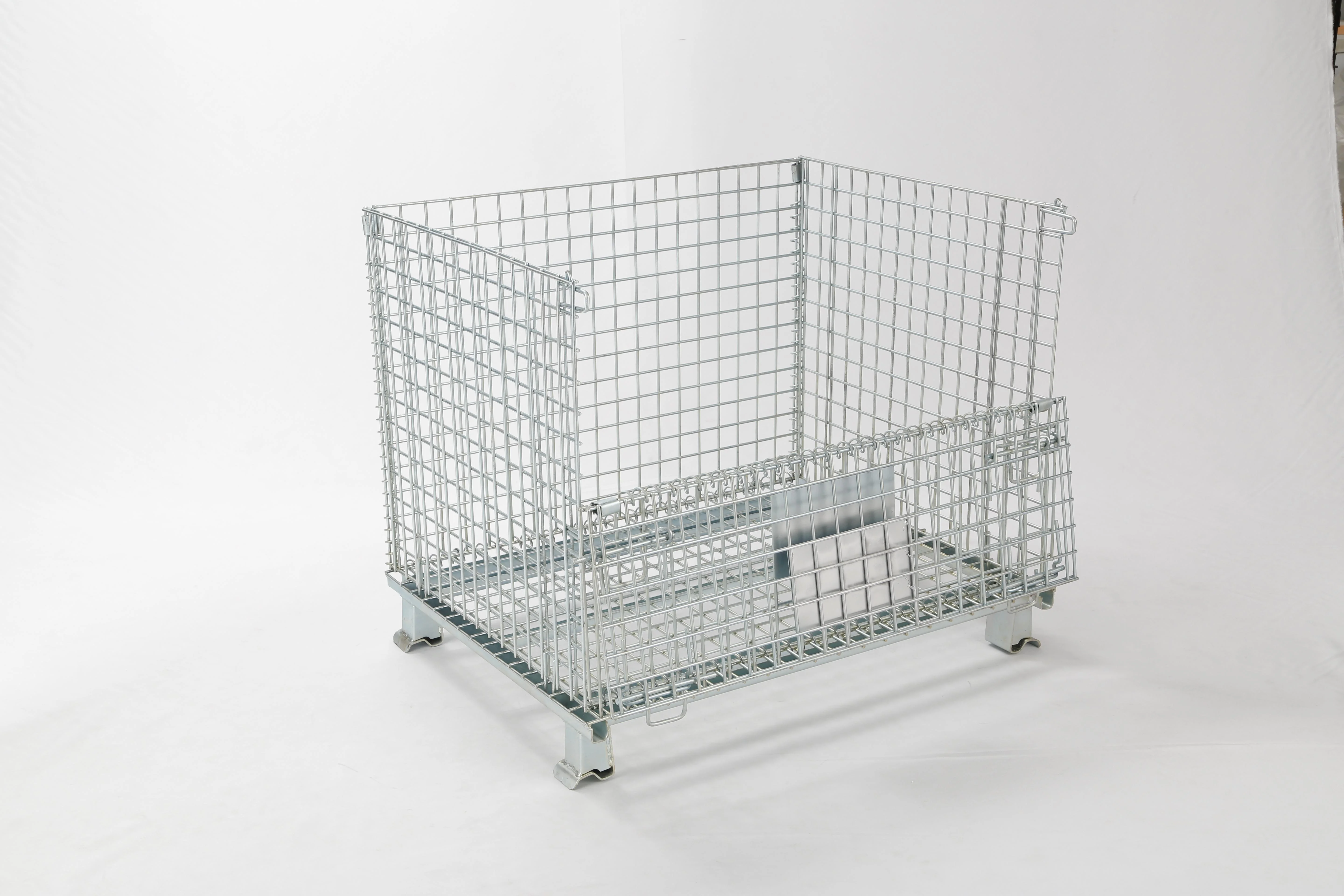
Half-drop gate for order distribution
Use the lowered front gate to identify and pick parts from a staged cage while keeping the remaining load contained. Gate direction, opening position and working clearance are confirmed from the final drawing.
MOBILE UNIT
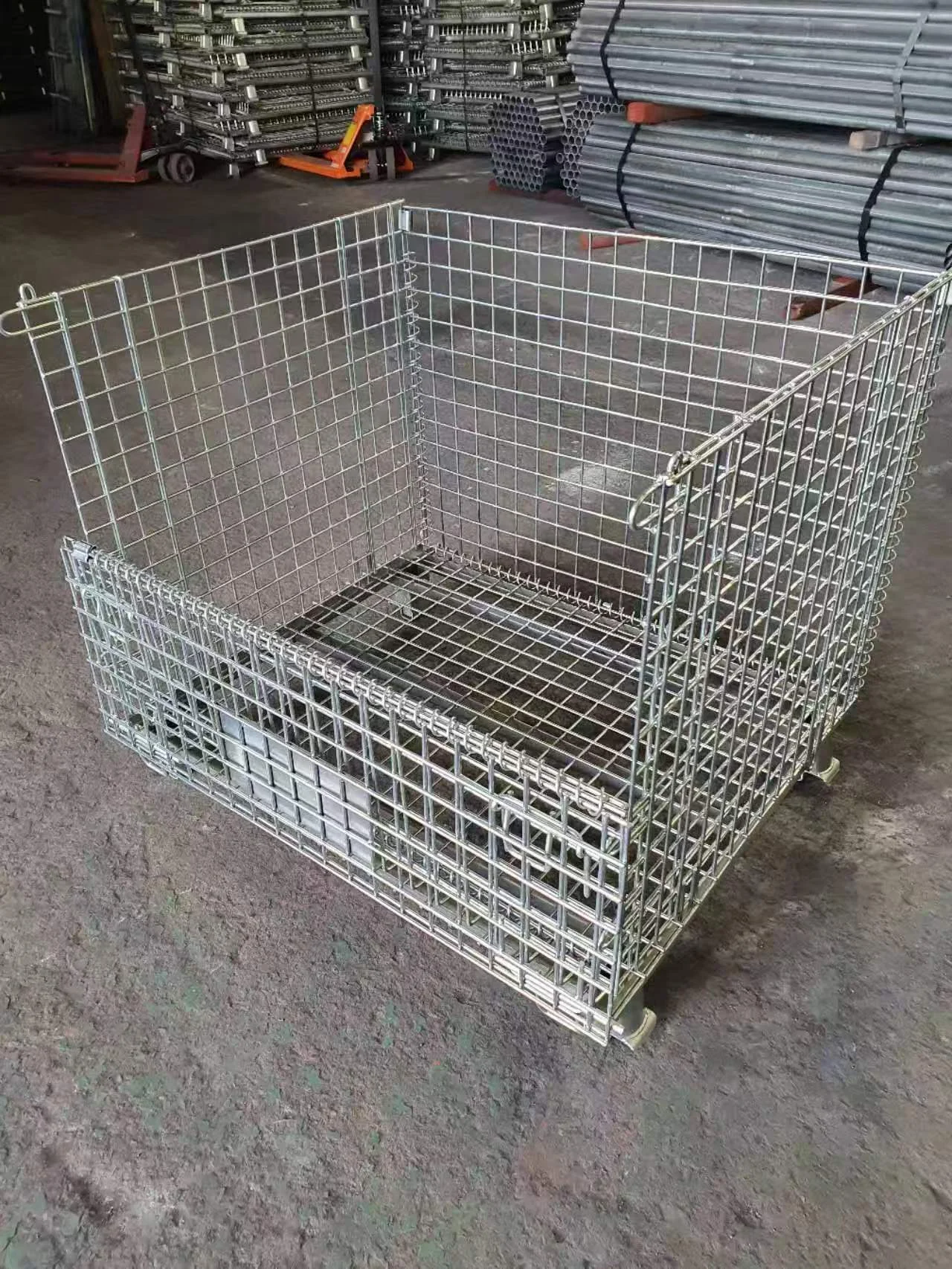
Forklift and pallet-jack handling
The 15059 project calls for both forklift and manual pallet-jack use, allowing a filled cage to move as one unit for short-distance distribution. Equipment capacity, fork size, entry direction, load center and turning space must be checked before release.
EMPTY STORAGE
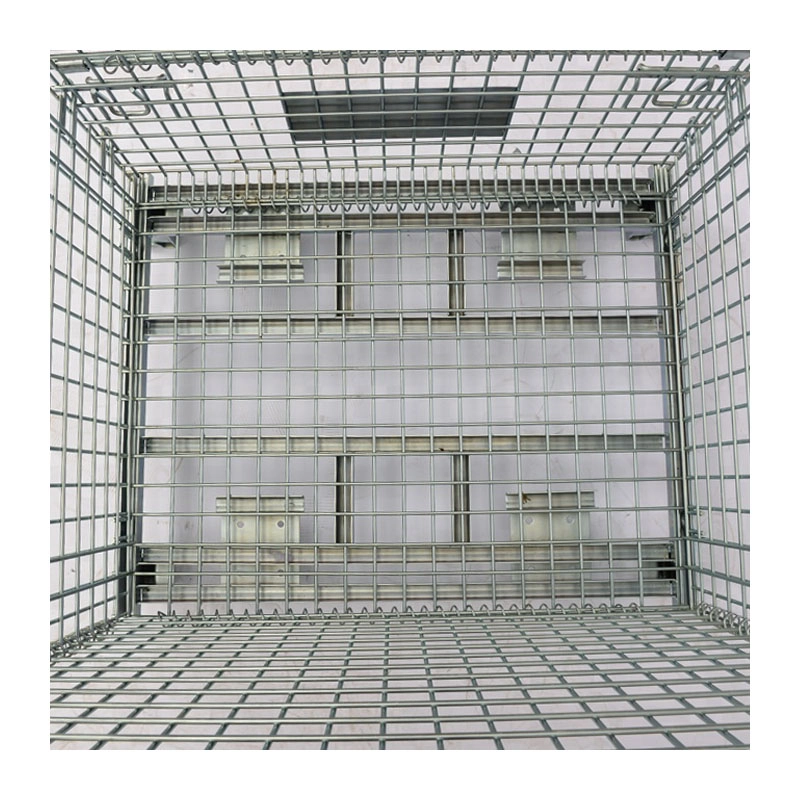
Collapsible return and buffer storage
Fold empty cages when demand moves to another zone or when return transport is being planned. Folding height, bundle quantity, packaging and container loading are project-specific rather than a single standard value.
A container system—not a fixed rack substitute
Stack by verified cage limits
For the 15059 reference, four-high stacking and the 2000 kg upper-load restriction are project requirements. Do not use a cage’s single-unit rating to calculate a four-level stack.
Move the inventory as a unit
Forklift or pallet-jack handling can take a filled cage from receiving to a floor buffer, picking lane or dispatch zone without decanting the parts into another container.
Use the mesh for visual control
50 × 50 mm welded mesh supports quick identification and airflow for suitable industrial parts. Small, delicate or scratch-sensitive items may need a PP corrugated-board liner.
Keep the rack boundary clear
Stbox is a mobile unit container for floor storage and distribution. It is not a fixed rack, and its stacking rule cannot be replaced with a warehouse-rack shelf-load rating.
Plan the stack before you buy the cage
Map the operating load
List SKU weight, dimensions, load distribution, center of gravity and whether the stated value is static, dynamic or uniformly distributed.
Check floor and clear height
Provide the slab’s allowable load, floor condition, aisle layout and clear height. The design must account for the combined weight and concentrated reactions at the cage feet.
Match the handling interface
Confirm forklift and pallet-jack capacity, fork dimensions, entry direction, minimum turning space and the required fork-pocket clearances from the final base drawing.
Release the project specification
Lock dimensions, gate position, base reinforcement, coating, liner or lid, stack height, packaging and inspection points before production and quotation approval.
Answers before you plan dense floor storage
How many layers can Stbox be stacked?
The 15059 project configuration records up to four layers, but this is not a universal Stbox promise. The stack height must follow the selected size, base design, load distribution, floor condition and final engineering confirmation. For 15059, the upper stacked cage load is restricted to no more than 2000 kg under the project instruction.
Can the same cage be moved by a pallet jack and a forklift?
Yes, both handling methods are specified for the 15059 configuration. However, the actual fork-pocket clearances, entry directions, equipment capacity, load center and floor condition must be checked against the final bottom-frame drawing. Do not infer universal four-way access from a product image alone.
How do I know whether my floor can carry the stack?
There is no safe answer from cage capacity alone. Compare the slab’s approved load rating with the combined cage self-weight and cargo weight, then review concentrated loads at the stack feet, floor flatness, joints, edge distances and dynamic handling forces. Send the floor rating or slab information for a project check.
How is this different from a fixed warehouse rack?
A fixed rack creates a permanent storage structure with its own beam and upright design. Stbox is a movable container that holds a load, can be picked through its drop gate, and can be moved as a unit. Choose Stbox for flexible floor buffering and distribution; choose fixed racking when engineered, permanent vertical storage is the primary requirement.
Are the 1400 kg rating and 1000 × 800 × 840 mm size standard?
They are the recorded values for the 15059 project reference, not a combined standard rating for every Stbox variant. Other project records use different dimensions and load definitions. The purchase specification must state the exact size, load case, mesh, wire, reinforcement and inspection basis.
Which options should I discuss for small or sensitive parts?
Discuss a PP corrugated-board liner when parts could fall through 50 × 50 mm mesh or rub against steel. A lid or locking cover can be considered for containment or access control, while casters are a separate mobile variant. These options can change handling, center of gravity, floor loading and stacking rules, so they require project confirmation.