
Stbox Structure Strength: Approx. Φ6 mm Wire and 50 × 50 mm Mesh
Stbox
Evaluate Stbox as a wire mesh container with approximately Φ6 mm steel wire and 50 × 50 mm mesh. Understand caliper QC evidence, mesh-fit limits and why load claims need project verification.
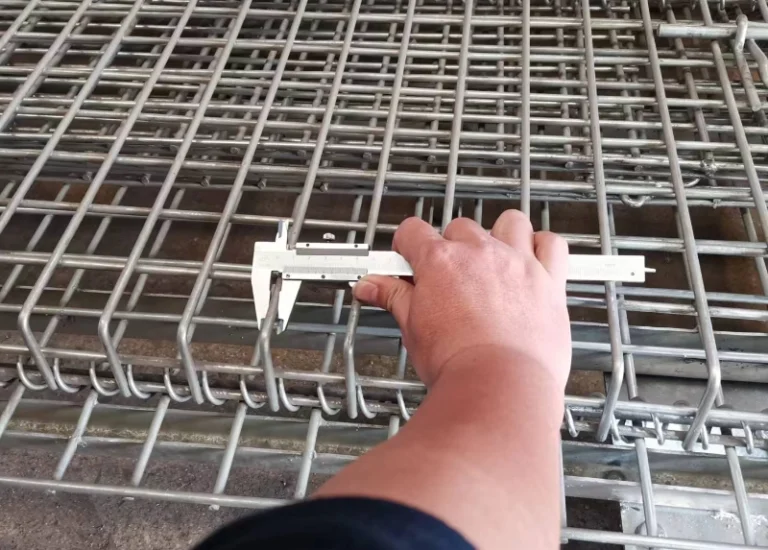
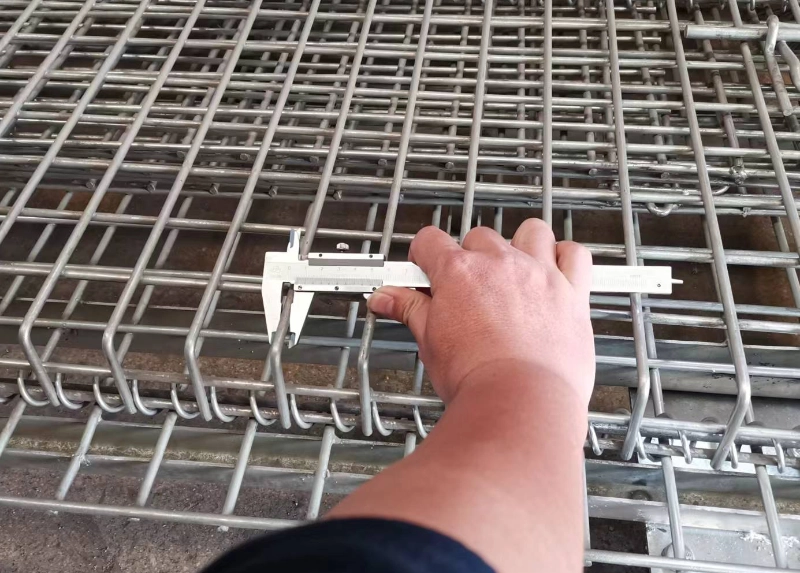
Full-size wire. Visible facts.
Stbox is specified around approximately Φ6 mm steel wire and a 50 × 50 mm welded mesh grid—so the containment structure can be checked, not inferred from a sales label.
The wire gauge and mesh opening work together: the steel wire provides the physical frame for repeated industrial handling, while the 50 × 50 mm grid keeps stored parts visible and ventilated. The exact wire diameter, tolerance, frame details, load rating and finish remain project-controlled items and must be confirmed against the final drawing and inspection records.
- Approx. Φ6 mm wire: a measurable construction detail, not a substitute for a complete load declaration.
- 50 × 50 mm mesh: suitable for many visible parts-storage workflows, subject to a minimum-part-size and drop-risk review.
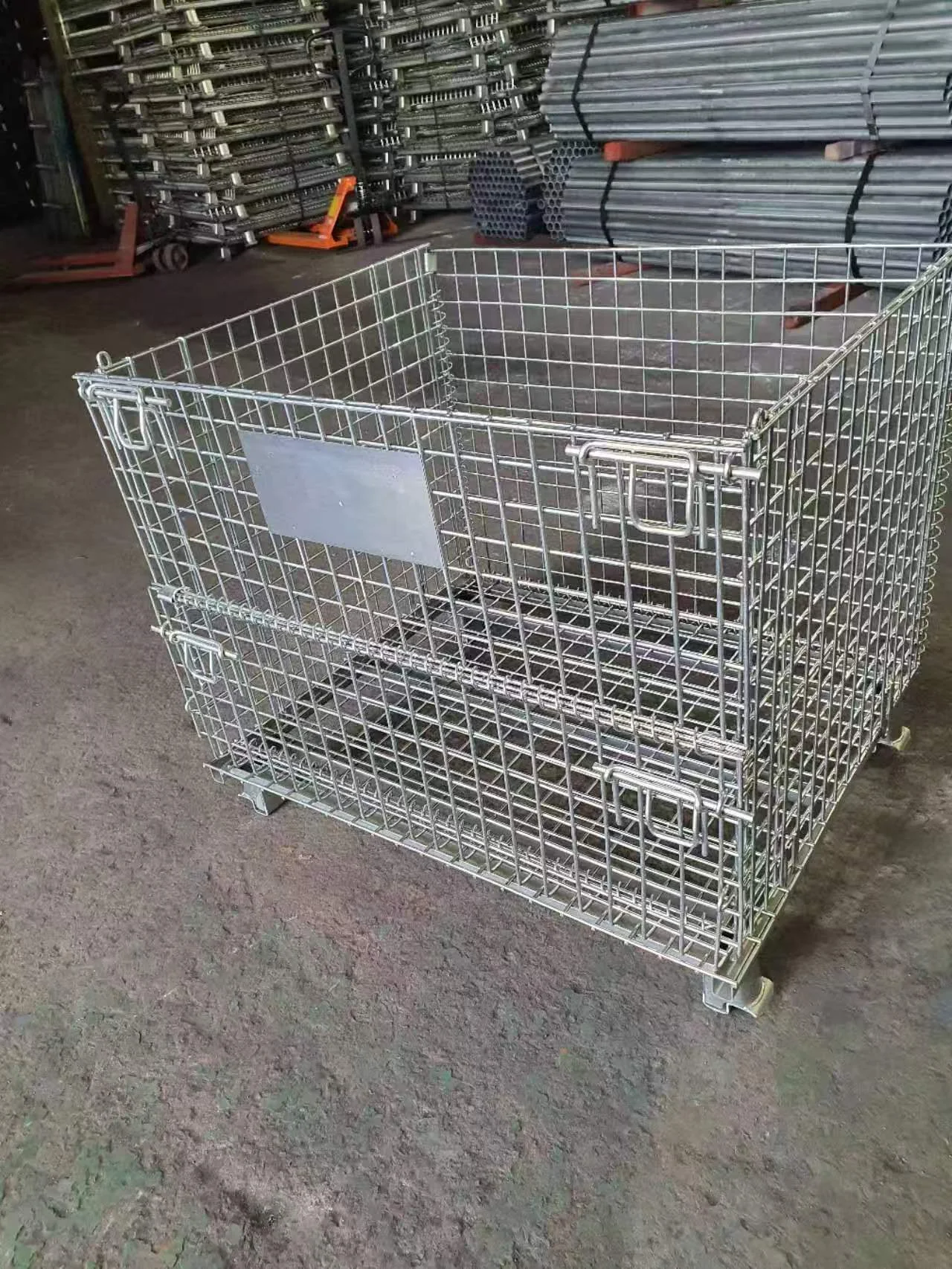
- Welded steel cage: collapsible, stackable and designed for forklift or pallet-jack handling when the approved base and operating limits are followed.
- Quality-control boundary: the caliper image shows a measurement method; it is not batch certification or a universal test report.
Choose the containment level your parts require
BASELINEOpen 50 × 50 mm grid
Use when parts are large enough to remain contained and operators benefit from visual stock checks and airflow.
 STRUCTURE
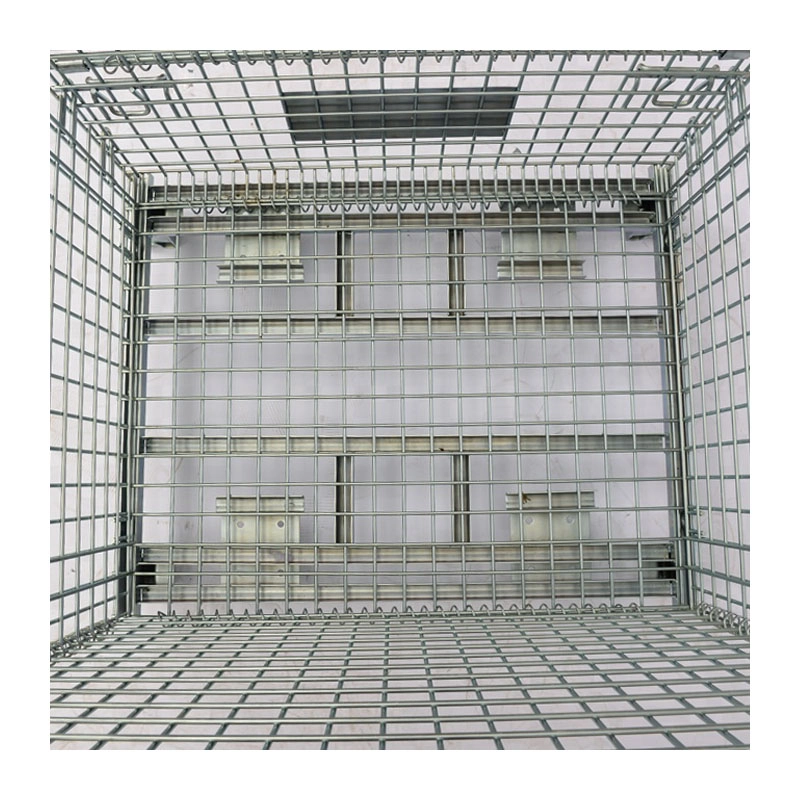
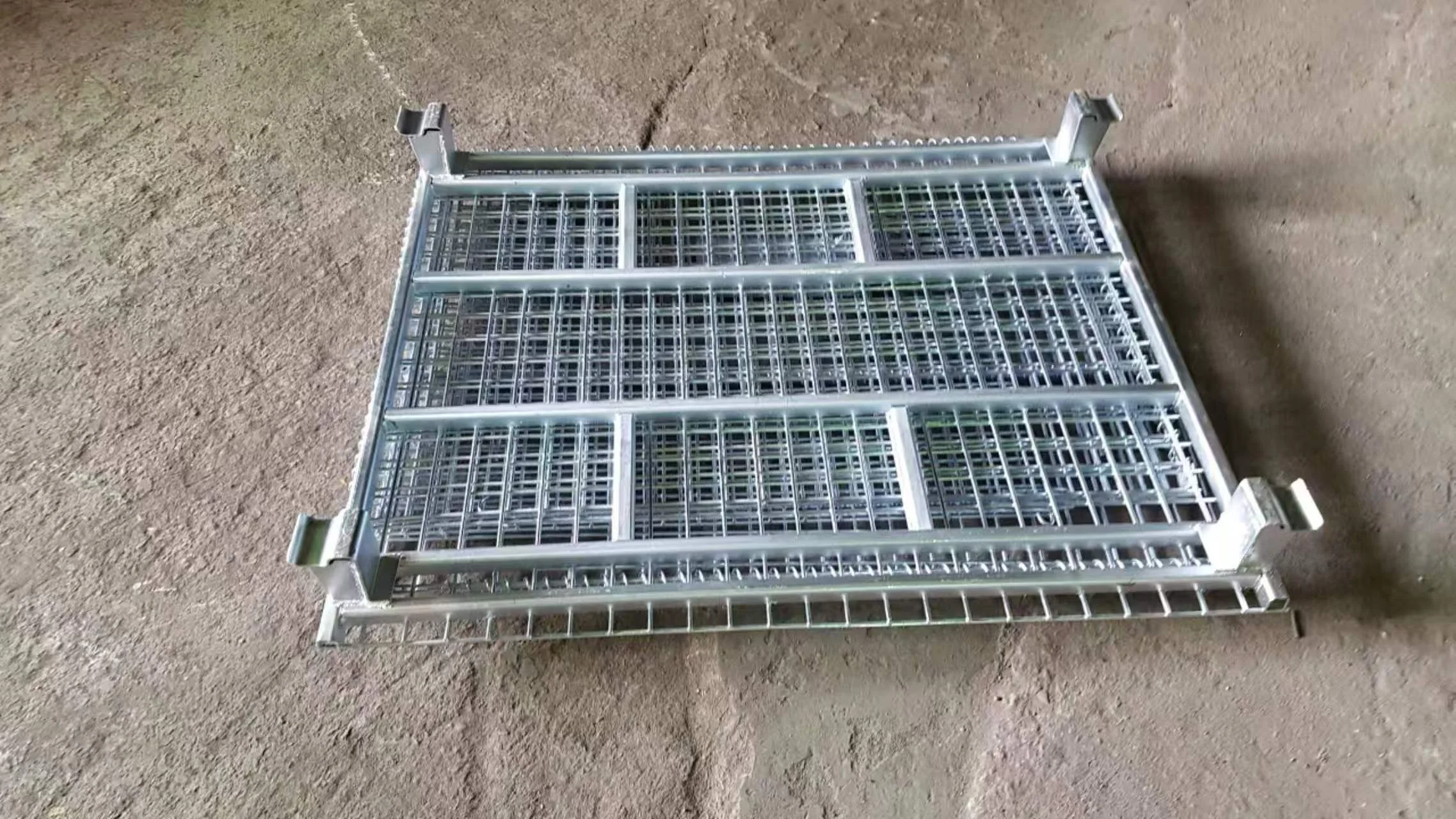
Reinforced base configuration
For heavier or repeatedly handled loads, review the base, channels, welds, feet, load distribution and stacking condition as one system.
 PROTECTION
Small or surface-sensitive parts
If a component could pass through the mesh, snag, fall or rub against steel, assess a PP liner, lid or other containment option.
Thin wire can make a heavy claim look cheaper than it is
Measure the wire
A declared load is meaningful only when the wire gauge, frame, welds, base and load case are specified together. “Heavy duty” alone is not a specification.
Check the opening
A 50 × 50 mm grid improves visibility, but it is not automatically suitable for every part. Compare the smallest component dimension with the escape and impact risk.
Read the whole base
Channel reinforcement, bottom plate, stacking feet and weld quality affect how a loaded container behaves. The visible mesh is only one part of the load path.
Keep evidence in scope
The caliper photograph documents a quality-control activity. It does not certify every batch, replace incoming and finished-product records, or establish a universal rating.
Turn a wire-size claim into an auditable purchase brief
Define the load case
State unit load, distribution, centre of gravity, static or dynamic handling, forklift or pallet-jack use, and intended stacking.
Confirm the mesh fit
Provide the smallest part size, shape, snag points and drop consequence. Select open mesh or add a liner when containment requires it.
Lock the structure
Review the final drawing for wire diameter and tolerance, frame, welds, base reinforcement, feet, door and finish. Do not combine figures from different projects.
Agree the records
Specify the inspection points and documents required for your order. Treat the caliper image as an illustrative QC display, not as a batch certificate.
Questions to resolve before comparing quotations
Is Stbox wire really approximately Φ6 mm?
The product brief records approximately Φ6 mm as the core structural direction, with project records ranging around 5.8–6.0 mm and one project recording Φ6.0 ± 0.1 mm. Your final diameter and tolerance must be confirmed on the approved drawing and inspection plan.
What does the caliper photograph prove?
It shows a wire-diameter measurement being performed for quality control. It is a visual example of the control activity—not a certification statement for every batch and not a replacement for incoming-material or finished-product inspection records.
Can any part be stored in a 50 × 50 mm mesh container?
No. Review the smallest part dimension, shape, orientation, impact and drop consequence. Small, precision or easily scratched items may require a PP hollow-board liner or a different containment arrangement.
Why does thin-wire under-declaration matter?
Wire diameter affects the mesh’s physical section, stiffness and weld interface, but it cannot independently establish safe working load. A credible comparison checks wire, frame, base, welds, stacking feet, handling mode and documented load conditions together.
Does approximately Φ6 mm mean a universal 1,000 kg or 1,400 kg rating?
No. Those values appear in different project records with different dimensions and load definitions. They must not be merged into a standard Stbox promise. Confirm static or dynamic load, distribution, stacking limits and test method for your configuration.
What should I send for a structure review?
Send the part dimensions and weight, load distribution, handling equipment, stacking plan, opening direction, environmental exposure and required inspection records. We can then align the wire, mesh, base and optional liner or lid with the actual operating risk.