
Strack Empty Nestainer Rack for Return Transport and Seasonal Buffering
strack
Empty nestainer racks for return transport and seasonal buffering. Cut empty floor use by about 70–80%, confirm 100 mm nesting clearance, and recover staging space.
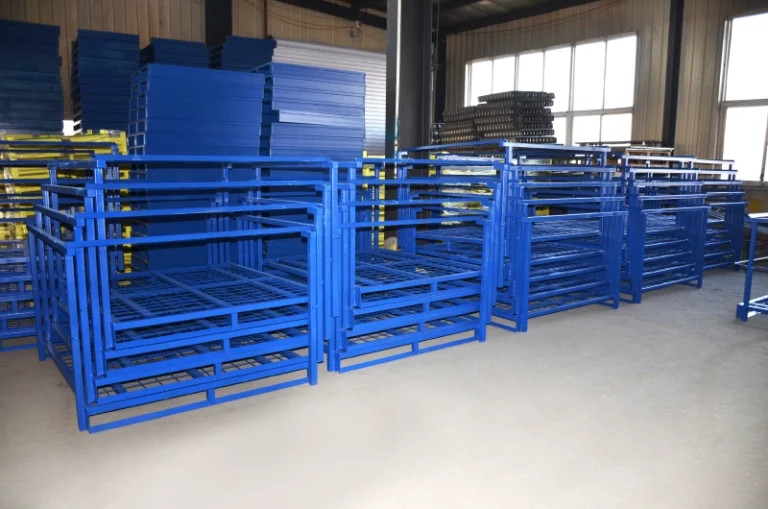
PDP-02 · Empty rack nesting for return transport and seasonal buffering
Empty nestainer racks that shrink floor use by 70–80%
When loaded, Strack works as a forklift-ready stackable rack. When empty, the frames nest into each other and recover floor space for staging, seasonal buffer zones, and return transport.
The reference project uses about 100 mm nesting clearance, but the final gap must be confirmed against fork tine thickness, pallet size, and the rack drawing for each project sample.
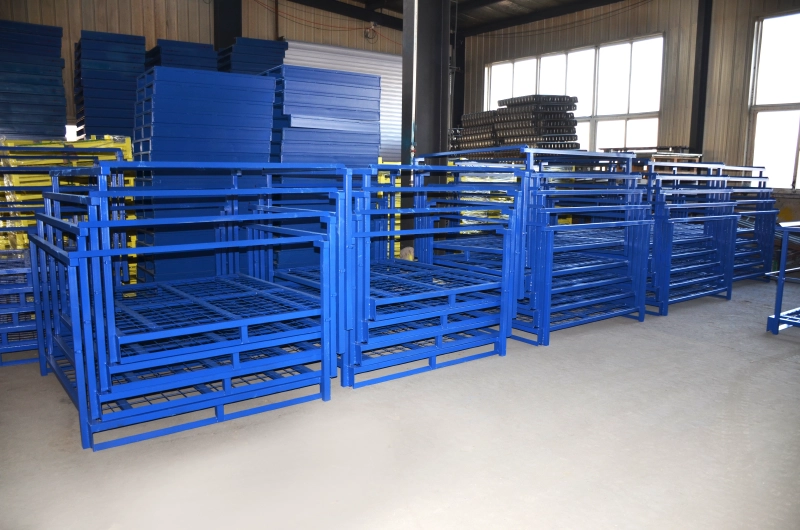
Empty nesting turns idle frames into a compact return-load.
Loaded Strack frames protect goods and stack in the warehouse. Empty Strack frames recover space when the job is done.
For exporters, 3PL operators, and seasonal manufacturers, the real gain is not only in storage. Empty racks take far less warehouse floor, can be packed more densely for return transport, and free staging space when peak volume lands on site.
- Sample nesting gap is about 100 mm, but the final gap is set by fork tine thickness and project drawing.
- Empty nesting can reduce occupied floor area by roughly 70–80% depending on the rack configuration.
- Denser empty loading means fewer deadhead racks per truck and lower return-trip handling pressure.
- Seasonal buffer zones stay open for pallet staging, line-side staging, and temporary warehouse changes.
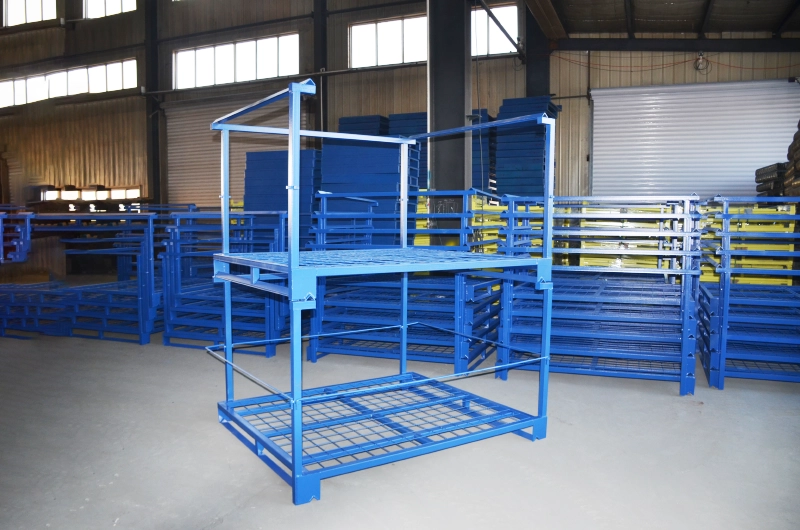
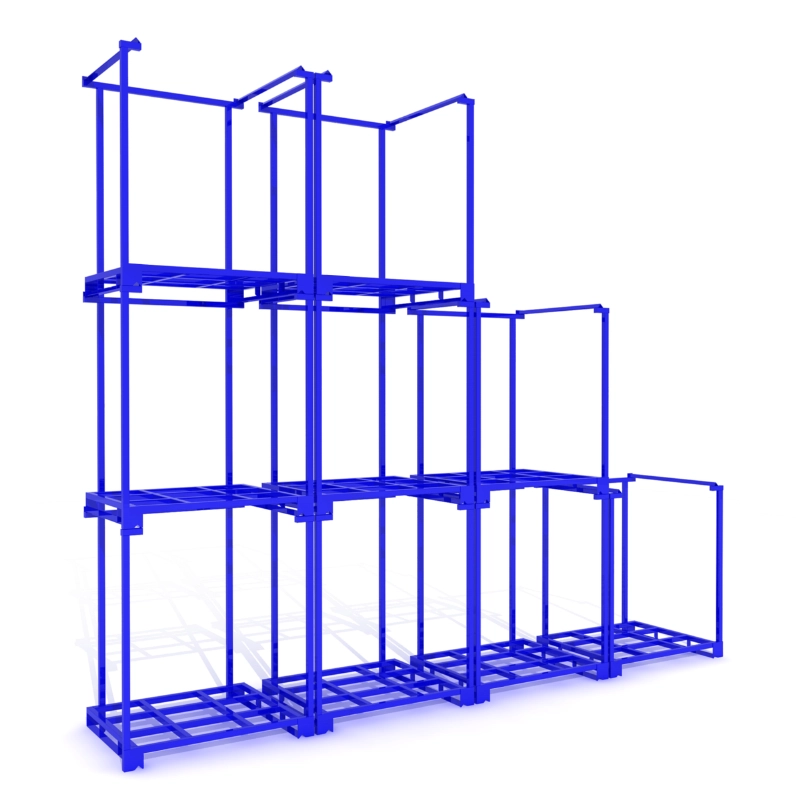
Loaded stacking, empty nesting, and the alternatives you may be comparing.
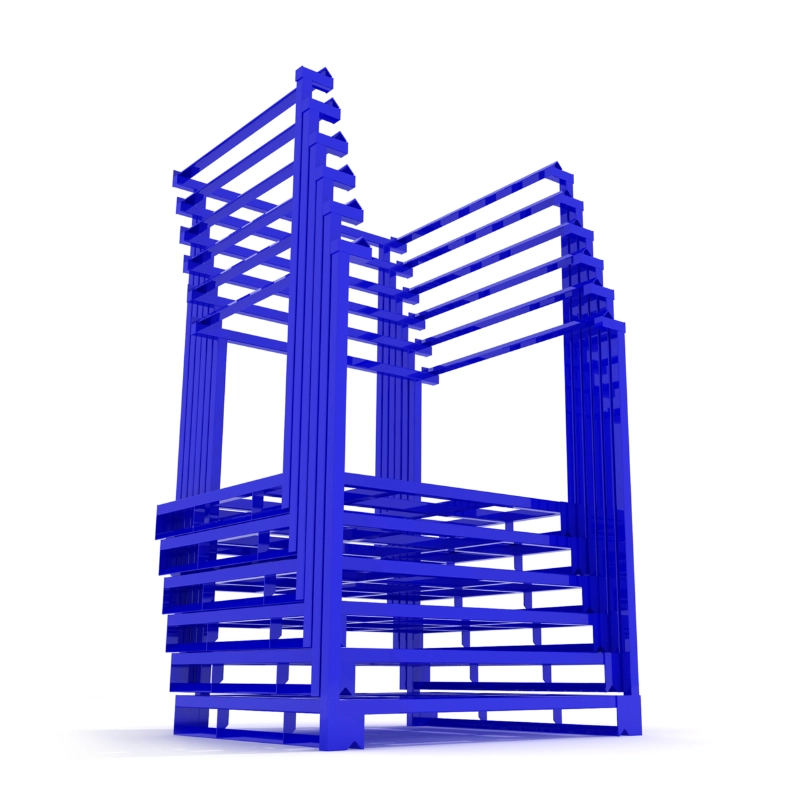
Empty nesting
Return transport mode
Use this when the racks come back empty after unloading. The goal is compact return volume, smaller storage footprint, and a cleaner buffer area.
Sample gap: about 100 mm.
Final fit: confirm fork tine thickness and the project drawing before production.
Loaded stacking
Storage mode
Use this when the rack is carrying palletized cartons, bags, or wrapped loads. This is the stacking side of the family, not the empty-return side.
Typical working envelope: 1000–2000 kg depending on configuration.
Good for staging, seasonal buffer, and temporary zoning.
Alternatives
Fixed rack or wire mesh cage?
Choose fixed pallet racking if you need an anchored system. Choose a wire mesh container if the load is small-part oriented. Choose Strack if empty return compaction matters.
Fixed rack: rigid, but not nestable when empty.
Wire mesh cage: useful for small parts, but not the same empty-return density.
What this solution changes for empty racks, storage zones, and return freight.
Free floor space fast
Empty frames nest into a much smaller footprint, so the rack area stops acting like dead inventory when the goods are gone.
Cut return volume
Denser empty loading means fewer frames per truck, which reduces deadhead handling pressure and can lower return-trip cost materially.
Keep staging flexible
Because the system is mobile and not fixed to the floor, you can reshape buffer areas as seasonal demand moves.
Project-controlled fit
The nesting gap is not a universal promise. Confirm fork tine thickness, load height, and sample geometry before you lock the drawing.
From empty-rack count to a project-specific nesting scheme.
Share the rack and route data
Send rack count, pallet size, load height, return route, and forklift tine thickness. If you have both loaded and empty-use photos, send them too.
We confirm the fit
We check the empty nesting gap, fork entry clearance, and whether the chosen variant should use open frame, side rails, or other containment.
We map the return pack count
We estimate how many empty frames fit per truck and how much staging floor you recover in the buffer zone.
Approve the sample and move to production
After sample confirmation, we lock the project drawing and move into production and shipping for the agreed configuration.
Questions buyers should ask before ordering an empty-nesting rack.
What does the 100 mm gap mean?
It is the sample nesting clearance seen in the reference case, used so fork tines can pass between nested frames. The final gap still has to be matched to fork tine thickness and the project drawing.
How much space can empty nesting save?
In the source set, empty nesting is described as saving about 70–80% of occupied floor space. The final ratio depends on rack height, gap, and the chosen configuration.
Does this always cut return freight by half?
It often cuts empty return volume sharply and can reduce return-trip cost by about half or better on a typical route, but the final result depends on truck loading pattern, distance, and how many empty racks you ship at once.
When should I choose a different solution?
If you need a fixed, anchored storage system, choose selective pallet racking or drive-in racking. If you need a small-part containment box, a wire mesh container may fit better. Choose Strack when mobile handling and empty-rack compaction are the priority.
What should I confirm before quoting?
Cargo type, pallet size, full load height, target stack count, required load weight, fork tine thickness, storage environment, and whether empty nesting is needed for return transport or seasonal buffering.
Send the empty-rack count, and we will map the nesting scheme.
Tell us the rack count, pallet size, load height, and fork tine thickness. We will confirm the nesting gap, return pack count, and staging footprint before production.
- Project sample nesting gap: about 100 mm
- Empty frames can nest to recover roughly 70–80% of floor space
- Useful for return transport, seasonal buffer, and temporary staging zones
Use the site contact form for a project quotation.