
Strack Nestainer Rack | Product Hub
strack
Strack product hub for nestainer rack, stackable rack, and pallet tainer buyers. Learn how forklift handling, load protection, and empty nesting work across open frame, side rail, grill, mesh deck, inverted Rerack, and cylinder-storage variants.
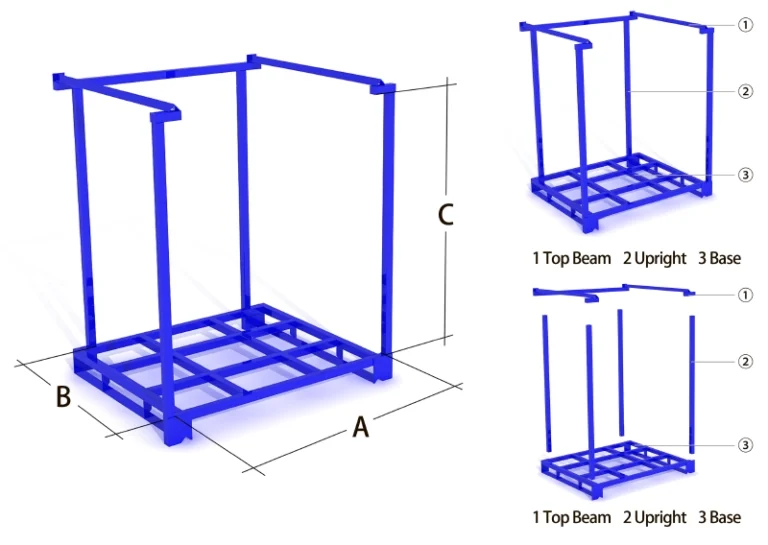
A forklift-moved unit-load carrier between floor stacking and fixed racking
Strack is a welded steel nestainer / stackable rack family for loads that need to stack safely, move as one unit, and nest compactly when empty.
It is not a fixed, anchor-required warehouse system and it is not floor stacking. The rack carries the load, keeps the bottom layer off the floor, and lets empty frames return in a much smaller footprint.
- Load protection: the frame takes the load instead of the floor, which helps reduce crush risk for cartons, bags, pails, and mixed unit loads.
- Space recovery: empty racks nest for storage or return transport, usually cutting idle footprint by about 70% to 80%.
- Forklift handling: the whole unit moves by forklift, so it suits block relocation, staging, and closed-loop transit.
- Family coverage: open frame, side bars, protective grills, wire-mesh deck, inverted Rerack, and cylinder-storage builds are all part of the same family.
Typical use cases include cold rooms, food warehouses, 3PL staging, manufacturing buffers, export packing, and any site that needs temporary zones without floor anchors or permanent aisles.
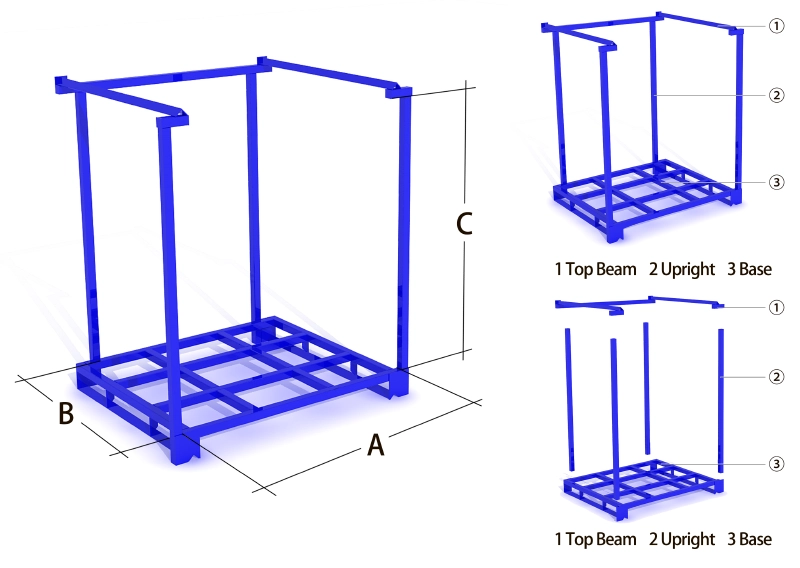
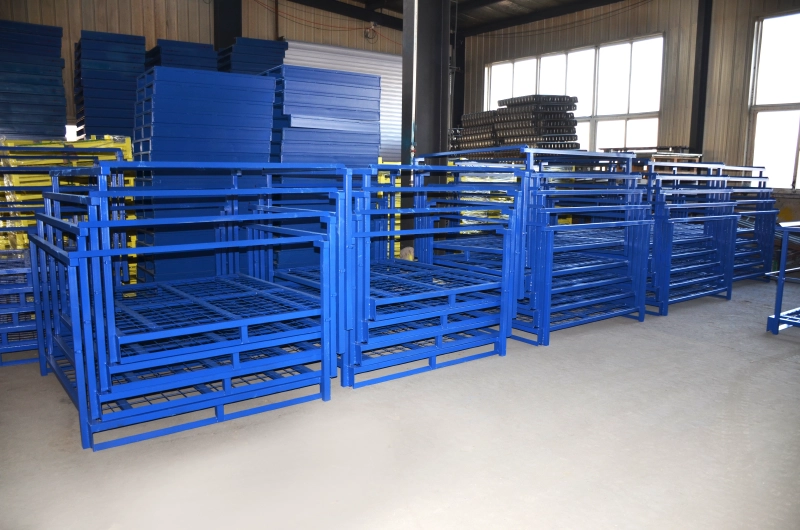
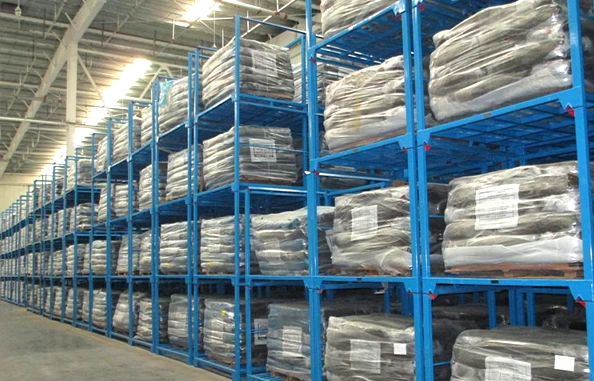
Choose the frame around the cargo, not around a fixed warehouse layout
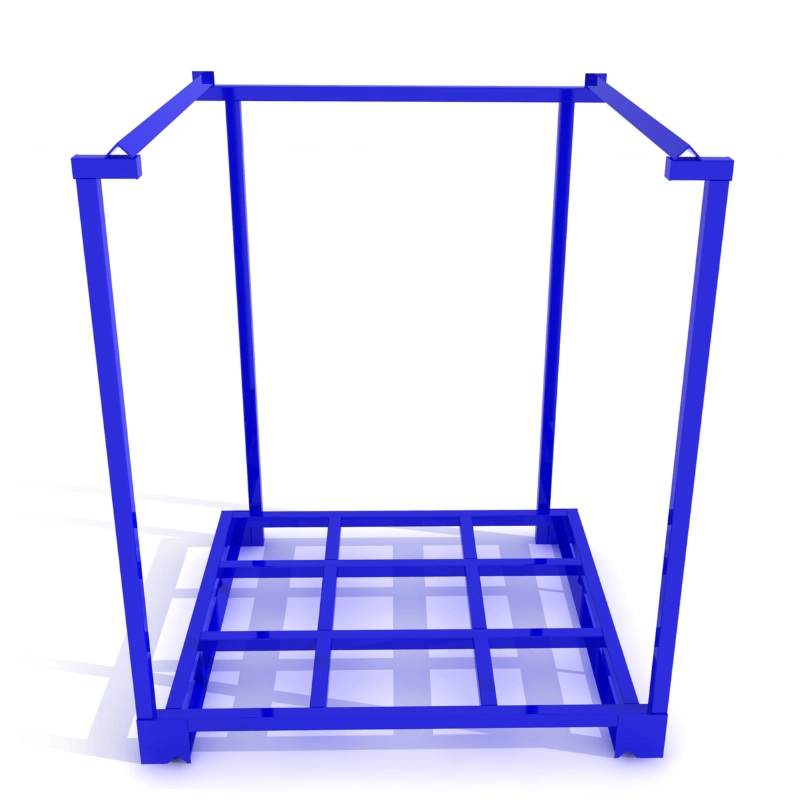
Open frame
Open frame nestainer
Use this for palletized cartons and wrapped goods when you want clean fork entry, simple stacking, and compact empty nesting.
Forklift-moved and reusable
Flexible staging and buffer storage
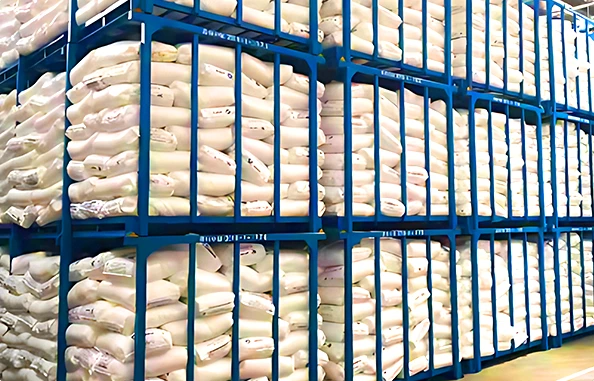
Side containment
Side rail and protective grill build
Choose this when woven bags, pails, or irregular loads can tilt, spread, or lean outward during storage or movement.
Better load control for soft cargo
Project-level containment options
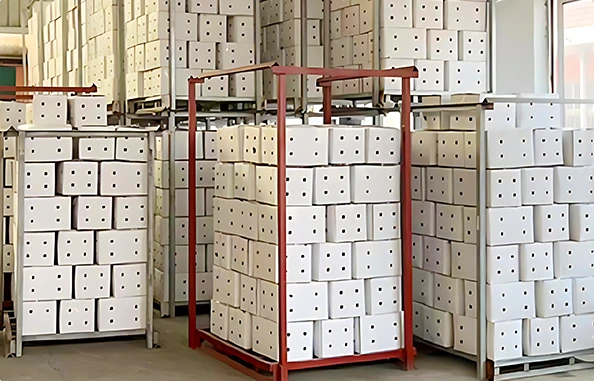
Cold room build
Inverted Rerack for cold room use
Use this for pallet-supported cartons and chilled storage where the stacking interface and empty nesting gap must stay stable and predictable.
Reference nesting gap about 100 mm
Suitable for pallet-supported boxes
Other family options include wire-mesh deck builds for small parts or leak-prone loads, and cylinder-storage builds with chains and dedicated containment for gas bottles. Those are selected by cargo behavior, not by a single universal SKU.
Built for load protection, empty nesting, and forklift movement
Load stays in the frame
The rack carries the unit, so the bottom layer is not taking direct floor pressure. That is the core difference versus direct floor stacking.
Empty racks shrink for return
When empty, the frames nest together and can recover roughly 70% to 80% of the floor space that would otherwise be occupied by loose idle racks.
Forklift handling fits changing layouts
Because the rack is moved as a unit, you can change zones without anchoring the floor, which is useful in cold rooms, 3PL staging, and seasonal buffering.
Containment matches the cargo
Open frame, side bars, grills, mesh deck, inverted Rerack, and cylinder storage are configuration choices, not separate buying logic.
Start from the cargo, then lock the frame and handling method
Share the cargo profile
Tell us the cargo type, pallet size, full load height, target stack count, required load weight, and fork entry style.
Match the containment
Pick open frame, side rail, grill, mesh deck, inverted, or cylinder storage based on whether the load is stable, top-heavy, soft, or leak-prone.
Confirm the operating conditions
Check cold-room use, humidity, return transport, empty nesting gap, and whether the rack will move by forklift in a closed loop.
Lock the drawing before the quote
Do not assume one universal size or rating for the whole family. Final details should follow the project drawing and the cargo envelope.
If you are comparing direct floor stacking, fixed pallet racking, post pallets, or wire mesh containers, send the cargo data and we will map the right frame family before you order.
Questions buyers ask before they choose Strack
What is Strack?
Strack is a welded steel nestainer / stackable rack family for forklift handling. It is used to stack unit loads safely and to nest empty frames in a compact form.
Is it a fixed rack or a warehouse cage?
No. It sits between floor stacking and fixed pallet racking. It is a mobile, reusable handling-and-storage frame, not an anchor-required system.
Which variant should I choose?
Use open frame for cartons or wrapped goods, side rail or grill for unstable loads, mesh deck for small parts or leak-prone items, inverted Rerack for cold room pallet loads, and cylinder storage for gas bottles.
Can it be used in cold rooms?
Yes, if forklift handling is available and the layout matches the room. Because the system is moved rather than floor-anchored, it works well for changeable cold-room zoning.
Do you publish one universal load rating or size?
No. This family is configuration-dependent. Confirm the cargo, pallet geometry, load height, stacking height, and fork entry before you finalize the drawing and quotation.
When is Strack not the right choice?
If you need permanent anchored aisles, fixed high-bay access, or manual handling without forklifts, a fixed warehouse system may be more suitable.