STRUCTURE SELECTION GUIDE
Choose the rack structure around your mold and changeover cycle
If you are comparing a three-post rack with a two-post rack, or deciding whether pneumatic assist is justified, start with the load position, mold weight, changeover frequency, and lifting method—not with a nominal shelf number.
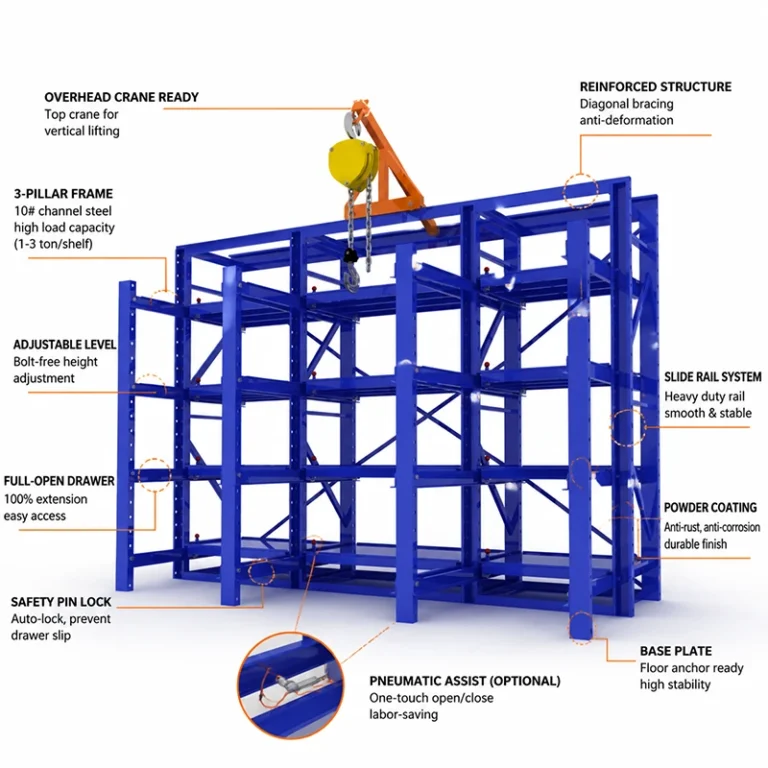
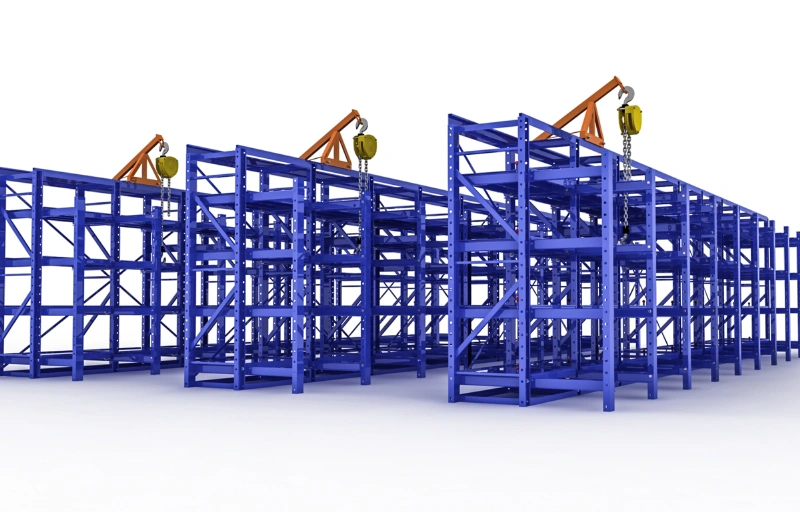
Erack is a heavy-duty drawer mold rack for injection mold, stamping die, and tooling storage. Its roll-out drawer is designed to expose the mold for vertical lifting by an overhead crane, electric hoist, or manual hoist. The three-post arrangement adds a front guide/support post at the drawer exit, so the extended drawer has support closer to the load instead of relying only on the rear frame. That geometry is useful when a heavy mold is fully extended and the forward load moment matters. Pneumatic assist is an optional drawer-drive aid: a cylinder and individual control button help overcome initial pull-out resistance and move a heavy drawer at a controlled rate. It does not replace the overhead lifting equipment used to raise or lower the mold. Final post arrangement, drawer construction, layer count, clear opening, and cylinder selection remain engineering-confirmed items based on your mold data and site conditions.
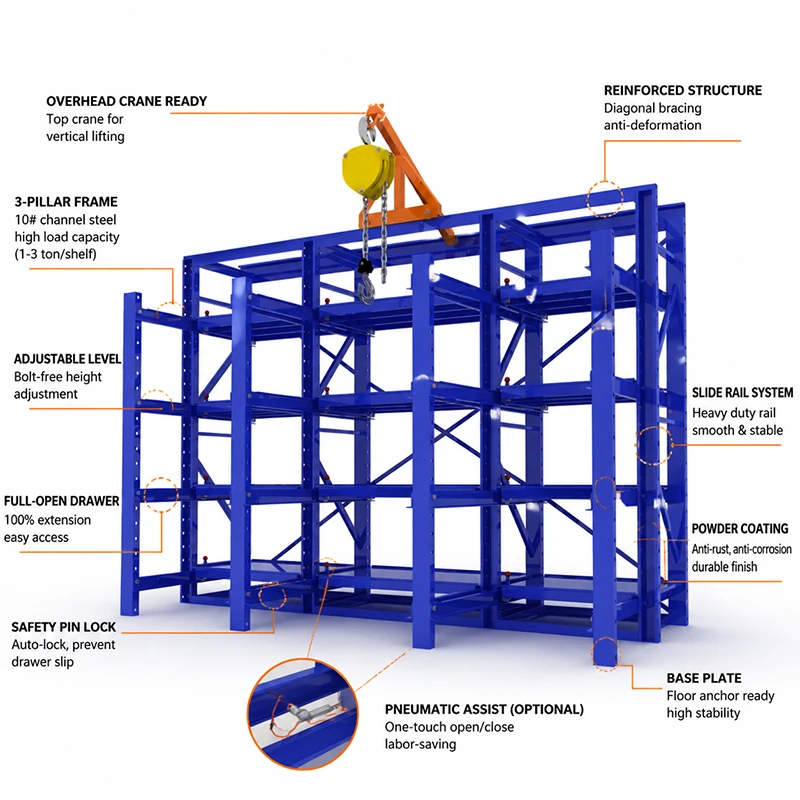
- Three-post full-extension support for heavy molds that are pulled fully forward
- Optional pneumatic assist for high-load or high-frequency drawer operation
- Drawer and layer layout matched to mold footprint, height, center of gravity, and crane clearance
- Safety pin, anchored base, and overhead lifting workflow treated as one operating system
Three practical configurations: structure, drawer drive, and lifting method
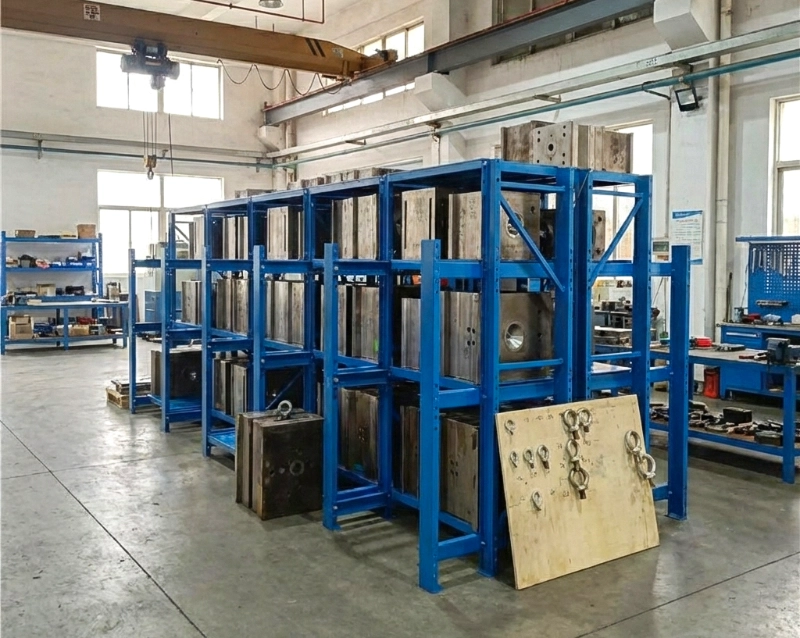
Three-post full-extension rack
Choose this when the mold is heavy, the drawer must open fully for vertical lifting, or forward load moment and access at the drawer exit are key concerns. The front support/guide post improves support of the extended drawer compared with a two-post layout, but the final stability check still depends on anchoring, load distribution, and approved engineering calculations.
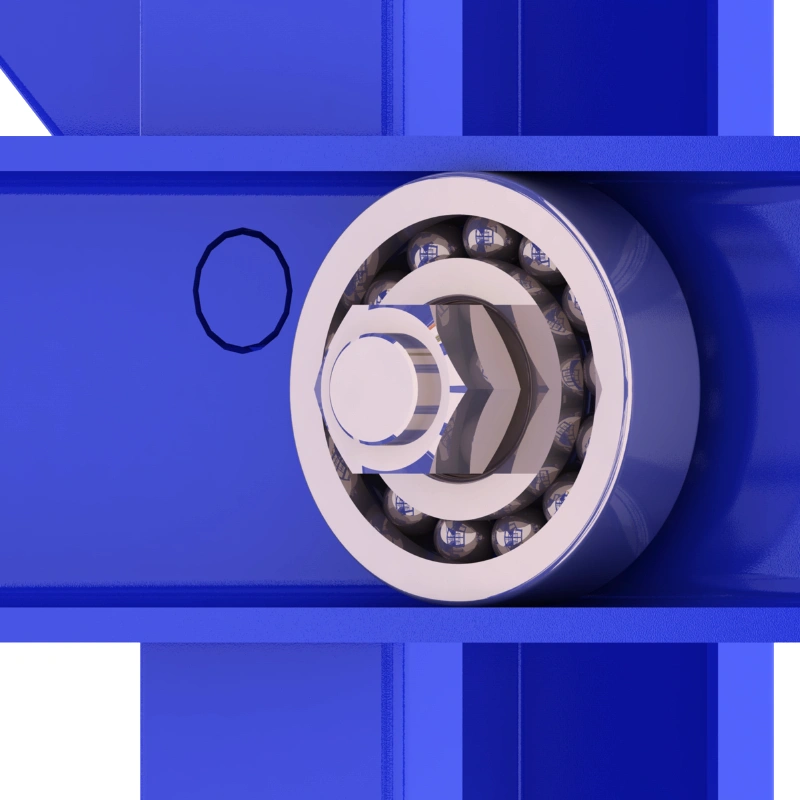
Manual drawer operation
Use the manual version when the planned mold load, drawer resistance, operator task, and changeover frequency have been reviewed and the operator can safely control the drawer. It is a drawer-drive choice only; the mold still requires a correctly selected hoist or overhead crane for lifting.
Pneumatic-assisted drawer operation
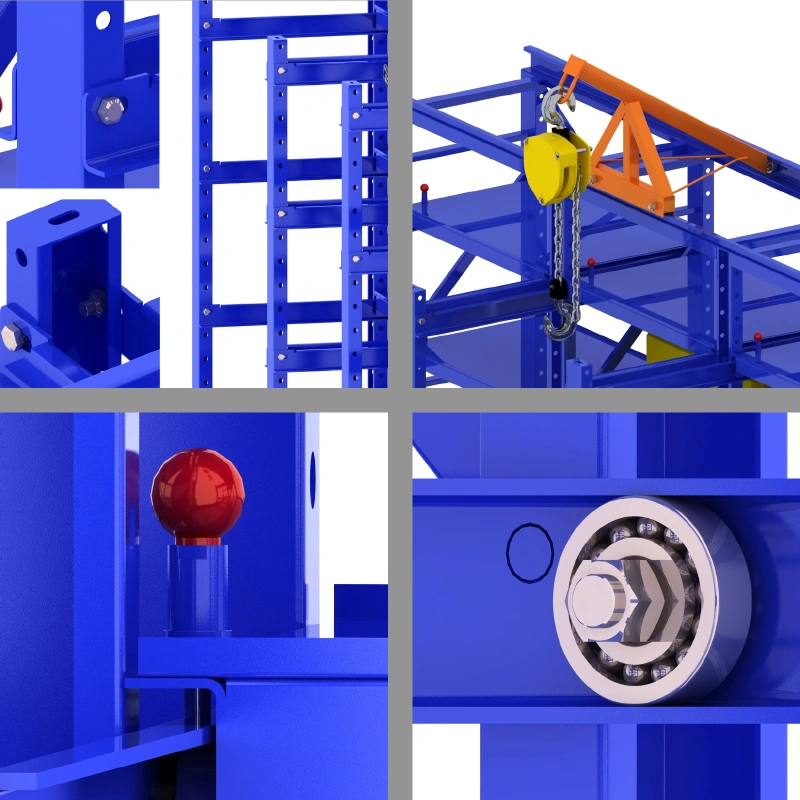
Consider pneumatic assist for heavier drawers, frequent changeovers, or workplaces where reducing manual pull force is a requirement. Each drawer can be controlled separately through a button, with cylinder speed adjusted through the air circuit. Confirm plant air pressure, filtration, routing, and the final cylinder specification before release.
Hoist or overhead-crane handling
A hoist is the lifting and transfer method, not a substitute for pneumatic drawer assist. Select an overhead crane, electric chain hoist, or manual hoist from the mold weight, center of gravity, lifting points, duty cycle, available headroom, and the applicable safety margin. Inspect the lifting path and equipment before handling.
Where the three-post and pneumatic choices change the job
Three posts address the extended-drawer load path
A two-post frame leaves the drawer projection farther from the main support when it is fully open. A three-post layout adds a front support/guide point, helping control the forward load moment and guide the drawer during full extension. This is a structural advantage for heavy, fully exposed molds—not a blanket approval to remove anchoring or exceed the confirmed load.
Pneumatic assist addresses initial pull-out force
The air cylinder helps overcome the drawer’s initial resistance and supports a more controlled opening movement. It is most relevant when mold weight, changeover frequency, or an operator-force limit makes manual pulling undesirable. It should be treated as optional assistance; the rack still needs correct bearing/rail setup, safety locking, and an engineered air connection.
The hoist choice protects the lifting step
After the drawer is fully exposed and secured for the operation, the mold is lifted from its center of gravity with a suitable overhead crane, electric hoist, or manual hoist. The hoist rating and lifting arrangement must be checked against the actual mold weight and site rules. Drawer drive and vertical lifting solve different problems.
Layer count and drawer size follow the mold envelope
Start with the largest mold length, width, height, weight, lifting points, and center of gravity. Set clear drawer width and length around the mold footprint, then set layer spacing for the mold height plus safe lifting and hand-clearance needs. Add the required top clearance for the hoist path and do not finalize dimensions from a generic rack image.
A practical selection path for engineers
-
1. Submit the mold data
Provide maximum and typical mold weight, length, width, height, center of gravity, lifting points, quantity of molds, and the number of changes per shift. Identify the heaviest drawer and the molds that must be fully exposed.
-
2. Compare two-post and three-post support
Review the fully extended load path, front projection, anchoring condition, drawer guide arrangement, and required safety controls. Choose the three-post form when the load and full-extension access require front support; keep the final configuration subject to engineering confirmation.
-
3. Decide the drawer drive
Use manual operation only after the expected pull force and work method are accepted. Add pneumatic assist when high load, frequent changeover, or a manual-force restriction justifies it. Confirm air supply, cylinder, control button, speed adjustment, and hose routing.
-
4. Confirm layers, openings, and site limits
Set layer count and clear drawer dimensions from the mold envelope and planned access. Verify hardened level flooring for anchoring, available crane coverage, top clearance, operating aisle, and the rule that only the approved drawer is opened during handling.
Questions to settle before you specify an Erack
Why is a three-post mold rack more stable than a two-post rack?
The third, front support/guide post places support closer to the load when the drawer is fully extended, reducing the unsupported projection and helping control the forward load moment. It improves the load path for heavy full-extension use, but stability also depends on the anchored base, load distribution, guide condition, safety pin, and engineering-approved configuration.
Does pneumatic assist mean the rack is fully automatic?
No. Pneumatic assist is an optional drawer-opening aid. A cylinder and individual button help push the drawer out and can be adjusted for controlled movement. The operator still follows the safety procedure, confirms the drawer lock and lifting position, and uses a suitable hoist or overhead crane to lift the mold.
When should I choose manual, pneumatic, or a hoist?
Choose manual drawer operation when the confirmed load and frequency allow safe operator control. Choose pneumatic assist when the drawer is heavy, changeovers are frequent, or reducing manual pull force is important. Choose an electric or manual hoist/overhead crane for vertical mold lifting; it is required by the handling workflow and is not interchangeable with pneumatic drawer assist.
How do I match the number of layers and drawer size to my molds?
Use the largest mold envelope and the actual load list. Match drawer clear width and length to the mold footprint, layer spacing to mold height and required clearance, and total rack height to the building and hoist envelope. Confirm center of gravity, lifting points, adjacent-machine clearance, and the heaviest load before dimensions are released.
Can I pull out several fully loaded drawers at the same time?
No. The operating procedure must define which drawer may be opened, and the previous drawer must be returned and secured before another loaded drawer is opened. Multiple extended loaded drawers can shift the system center of gravity and create a tipping risk.
What information should I send for a structure recommendation?
Send the mold weight range and maximum, length, width, height, lifting points, center of gravity, number of molds, changes per shift, desired layer count, available floor area, floor condition, crane or hoist details, and whether plant air is available. We will return a structure, drawer-drive, layer, and lifting recommendation for engineering confirmation.