
Rerack Upside-Down Stack Rack vs Removable-Post Stillage | Which One to Choose
Rerack
Rerack comparison guide: inverted welded stack rack vs removable-post stillage, with project sample weights, stacking use, robot palletizing base use, and selection boundaries.
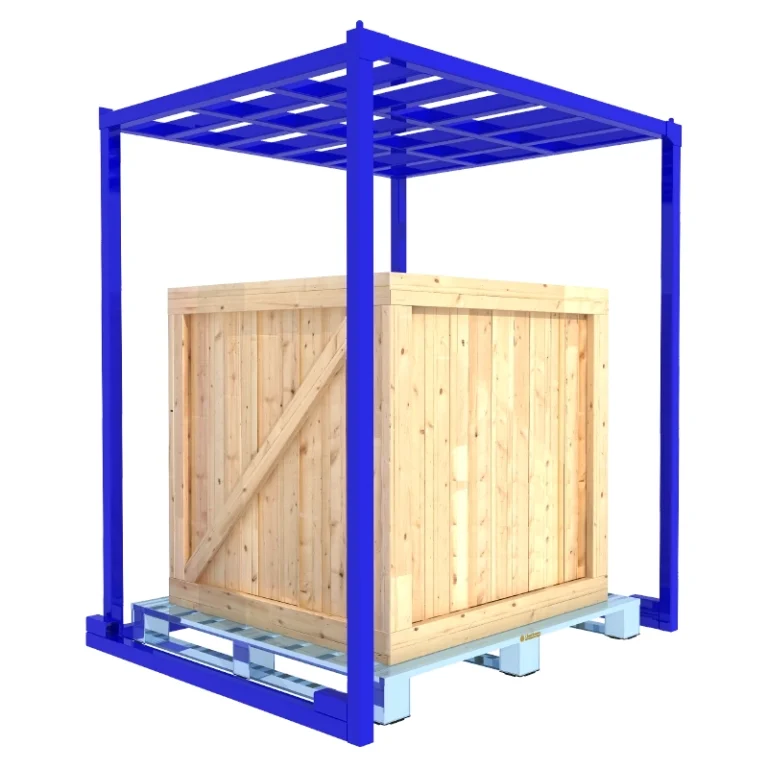
Choose the frame for the job, not the label
Need stable and lower cost? Choose inverted. Need flexibility and robot-base use? Choose removable-post.
Rerack is a custom project-built stack rack and stillage family. The inverted version is a fixed welded frame: more stable, lower cost, and empty racks nest cleanly when returned. The removable-post version is split into posts and base: the posts can be removed, the base can be reused as a robotic palletizing bottom tray, and tall loads may need two post pieces plus tie bars to control sway.
In one wet-wipes project, the reference setup used a 1100×1100 plastic pallet, 600kg per pallet, and 3-layer stacking. The sample self-weights were 61kg for the inverted version and 75kg for the removable-post version. Those numbers are project samples, not universal catalog weights.
- Choose inverted when you want a welded frame, higher perceived stability, lower project cost, and compact empty nesting.
- Choose removable-post when you need a flexible split structure, a reusable bottom base, or a frame that can support robot palletizing workflows.
- Confirm the drawing first because both versions are custom-built; self-weight changes with structure, size, and reinforcement.
- Related reading: PDP-01, PDP-03, BLOG-04.
Where the split really matters
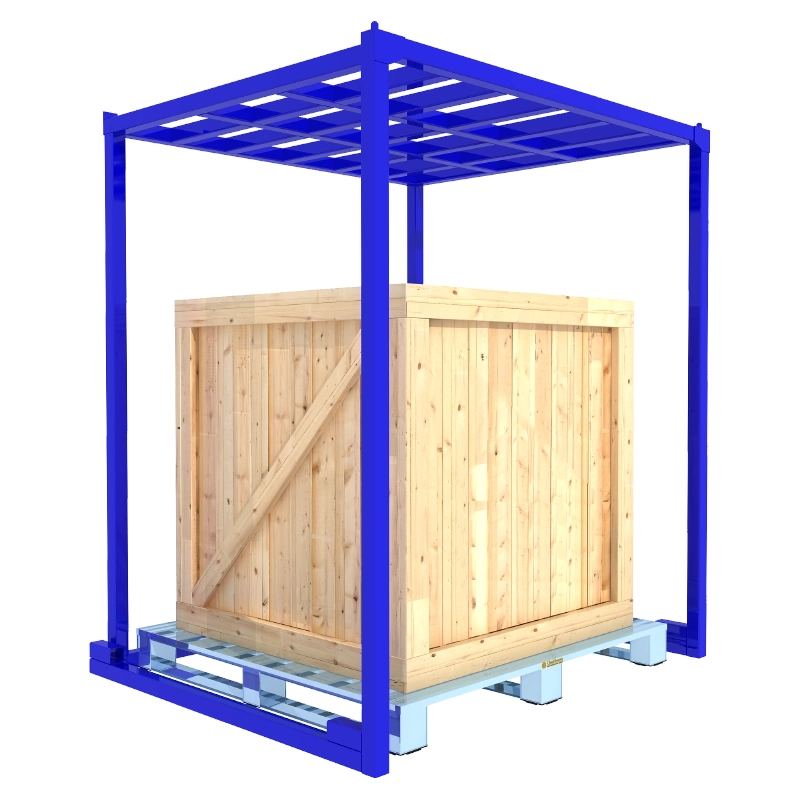
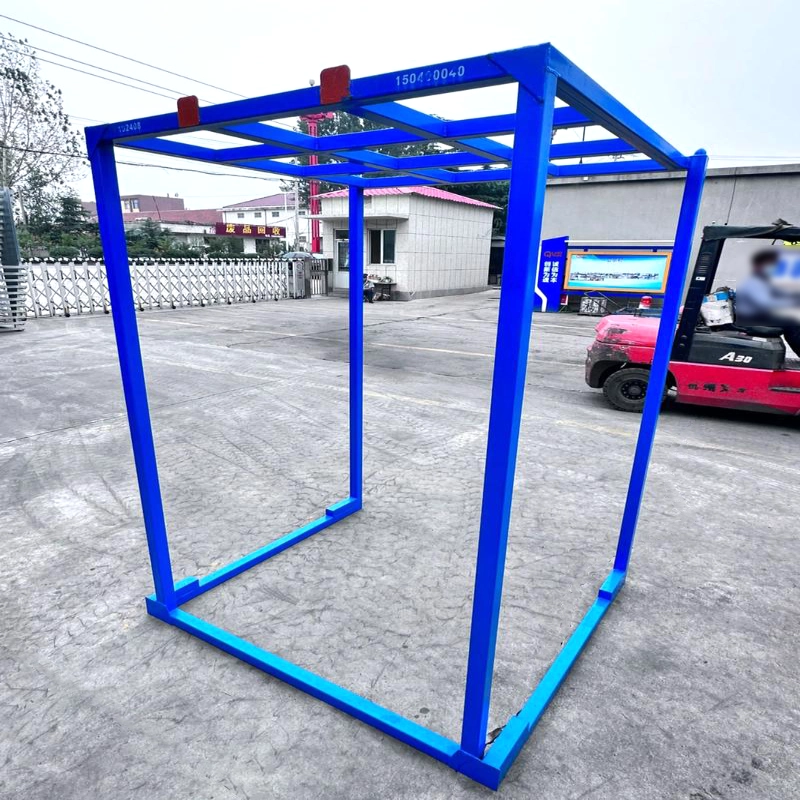
Inverted / welded
Inverted stack rack
Fixed welded frame, better rigidity, lower project cost, and easy empty nesting when the rack comes back empty.
- One-piece welded structure
- More direct stability for stacked loads
- Good fit when you want simpler fabrication and return nesting
- Best when the base does not need to be拆解 or reused as a separate pallet base
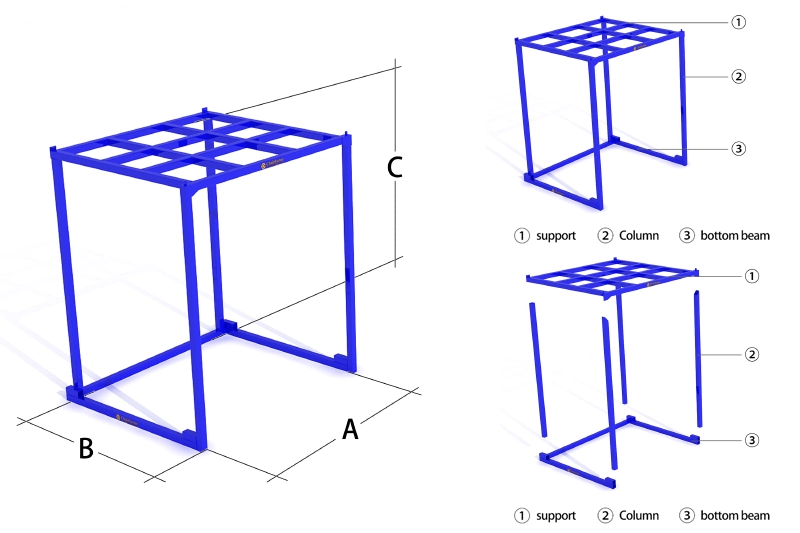
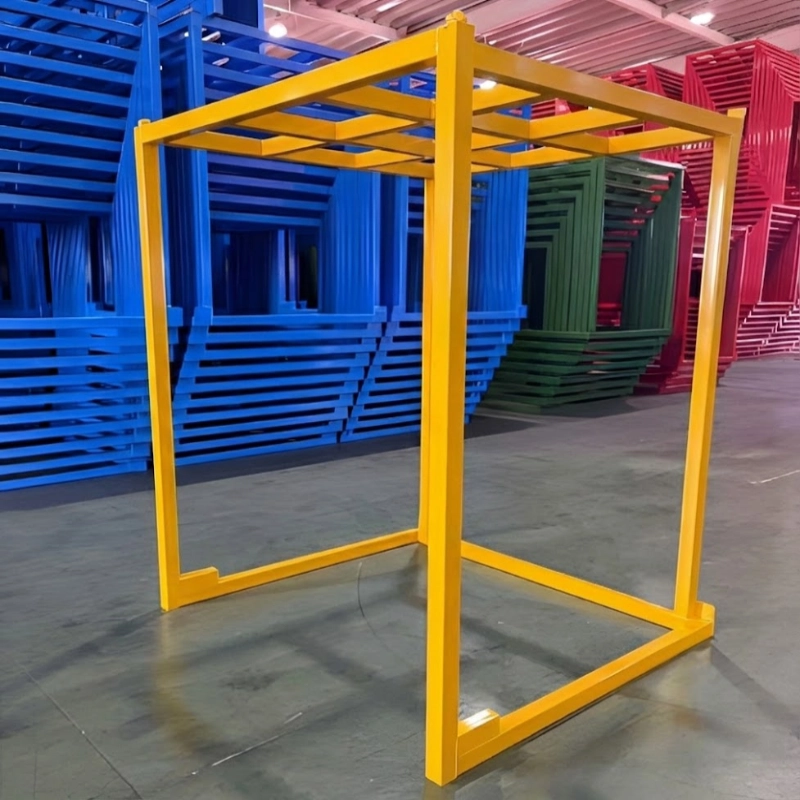
Removable posts / split frame
Removable-post stack rack
Split structure with removable posts. The bottom base can be reused as a robot palletizing tray, and tall loads can be reinforced with two post pieces plus tie bars.
- Posts can be removed for a split configuration
- Bottom base can support robotic palletizing workflows
- Tall goods need sway control through project-specific reinforcement
- More flexible when the same base needs to serve multiple handling stages
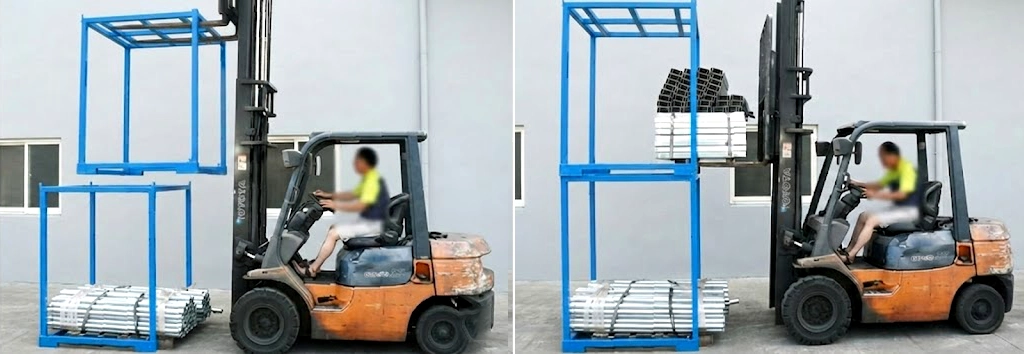
Project sample / confirm first
Project sample, not a universal rating
The 15106 project used 1100×1100 plastic pallets, 600kg per pallet, and 3-layer stacking. Its self-weight was 61kg for the inverted sample and 75kg for the removable-post sample.
- Project sample values only
- Self-weight changes with structure and reinforcement
- Do not use one drawing as a general catalog rule
- Confirm your own pallet size, load height, and handling path before choosing
Pick the structure based on how the rack works in your operation
Welded frame for the inverted option
The inverted rack is the simpler choice when the priority is a stable, fixed, lower-cost frame that still nests well when empty.
Split structure for removable-post use
When the rack must act as a reusable bottom base, the removable-post version gives you more handling flexibility.
High goods need reinforcement
For tall loads, the project logic is not “just add posts.” The 15106 sample used two post pieces plus tie bars to reduce sway.
Self-weight is not a fixed family number
61kg and 75kg are sample values from one project. Both structures are custom-built, so weight changes with size, steel section, and reinforcement.
A simple path for the purchase team
Send the pallet size and load height
Confirm the pallet footprint, the product height, and whether the goods sit flat or need a special support layout.
State the structure preference early
Tell us if you want the more stable inverted frame or the more flexible removable-post frame.
Check the handling chain
We confirm stacking layers, fork handling, return nesting, and whether the base must work as a robot palletizing bottom tray.
Request the swap if the boundary changes
If your load, automation plan, or return flow changes, submit the new structure preference and we adjust the drawing route.
Questions buyers usually ask before they switch a frame type
Are 61kg and 75kg standard weights?
No. They are sample self-weights from one project, not a universal product rating.
Which version is more stable?
The inverted version is usually the better fit when you want a fixed welded frame and a simpler stability path.
Which version fits robot palletizing better?
The removable-post version is the one to discuss first, because its base can be used as a bottom tray and the posts can be removed.
Is the 600kg, 3-layer example a catalog limit?
No. It is a project reference from the wet-wipes case. Always confirm your own pallet size, load height, and reinforcement needs.