Home>Products>Derack Post Pallet vs Selective Pallet Racking: How to Choose
🏭 Steelpallet · Factory Direct · OEM Available
Derack Post Pallet vs Selective Pallet Racking: How to Choose
derack
Compare Derack post pallets with selective pallet racking. Learn the stability trade-off, when Derack is unsuitable, how mixed layouts work, and what forklifts and pallets require.
Choose the storage system around the way your warehouse must operate—not around the name of the equipment. Derack is a demountable post pallet and stackable rack for unitized loads that need flexible relocation, protected stacking, or returnable transport handling. Selective pallet racking is a fixed, beam-based storage system designed for direct access to every pallet location.
Need 100% pallet selectivity and the most rigid fixed layout? Choose selective pallet racking.Need to move, rebuild, or stack storage units as demand changes? Choose Derack.
THE DECISION IN ONE VIEW
Different operating models, not interchangeable promises
Derack post pallet and stackable rack
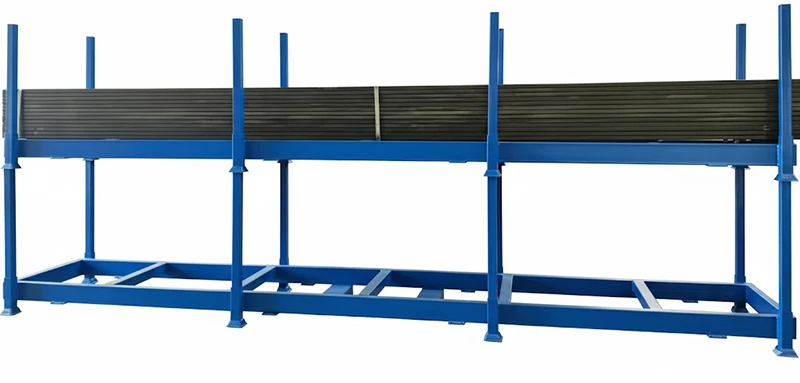
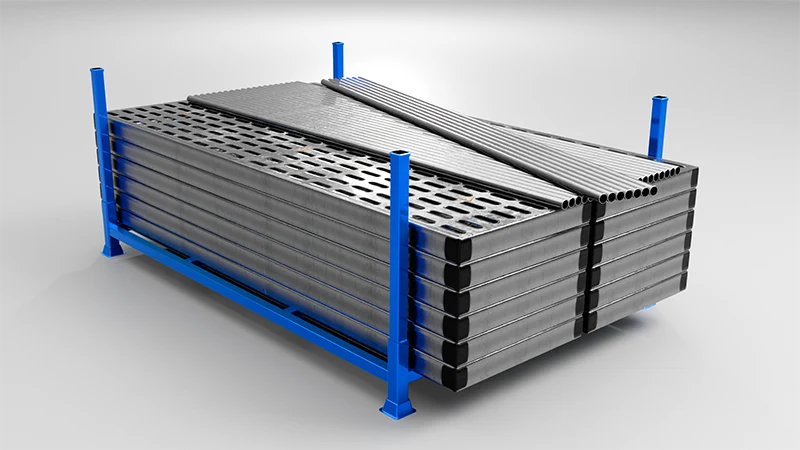
Removable posts and a steel base create a movable storage unit.
Units can be relocated or reconfigured without dismantling a bolted rack run.
Loaded units can be handled by forklift and stacked when the load, floor, and rack configuration are approved for that application.
Best for batch storage, seasonal capacity, returnable transport, long materials, panels, tires, or other loads that benefit from a dedicated support frame.
Selective pallet racking
Upright frames, beams, and pallet positions form a fixed warehouse structure.
Every pallet location is intended to remain directly accessible from an aisle.
Designed for disciplined aisle geometry, rack protection, load notices, and fixed layout control.
Best for high SKU variety, frequent picking, FIFO/LIFO control, and operations where location selectivity matters more than rapid layout change.
HOW DERACK WORKS
Vertical stacking without turning the load into the structure
Derack transfers the load path through its steel posts and base rather than asking the lower product to carry the full weight of the units above it. That distinction matters for materials that can crush, cake, bend, or lose shape under prolonged ground stacking.
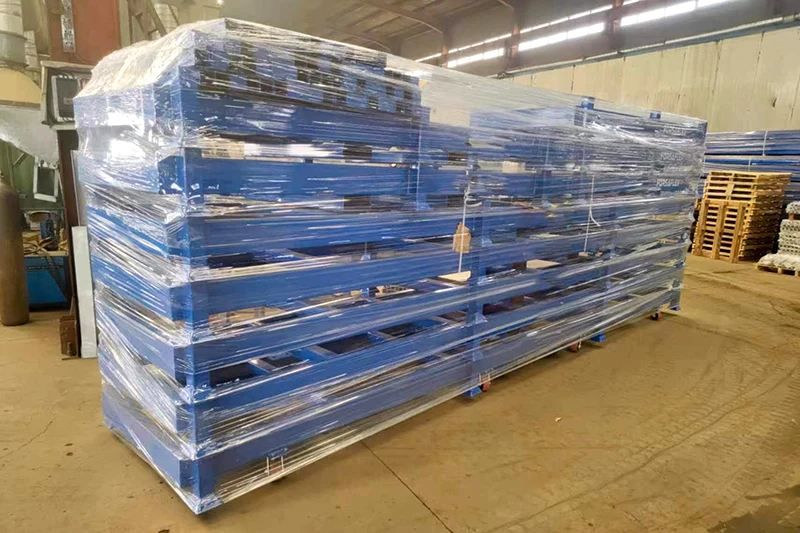
The removable-post format also changes the reverse-logistics equation: empty bases can be nested after the posts are removed, subject to the approved design, helping reduce empty-rack volume during return transport.
Structural details and dimensions must be confirmed against the load, stacking height, and handling method.
ANSWERING THE HARD QUESTIONS
Stability, access, and forklift requirements
How much less stable is Derack?
For a fixed, correctly installed storage run, selective pallet racking is the more rigid and stable option. It is connected as a rack system, follows a defined aisle layout, and is engineered around fixed beam levels and site conditions. Derack is inherently less rigid because each unit is a movable, demountable frame. It relies on a level floor, correct post engagement, compatible load distribution, approved stacking height, and controlled forklift handling. There is no universal percentage difference in stability: the result depends on the specific rack design, load center, floor condition, anchoring, and operating discipline. Do not use Derack where the requirement is absolute fixed-rack stability without a project review.
When should Derack not be used?
Do not select Derack as the default for warehouses that require 100% random access to individual pallets, continuous piece picking from multiple levels, or integration with automated shuttle equipment that expects fixed rack geometry. It is also a poor fit when the load is highly uniform, low value, already stable on a standard pallet, and the only buying criterion is the lowest initial purchase price. Derack must not be stacked beyond the engineered configuration, loaded before posts are fully engaged, or used on an unsuitable floor or with an unapproved load shape.
Can Derack and selective pallet racking be used together?
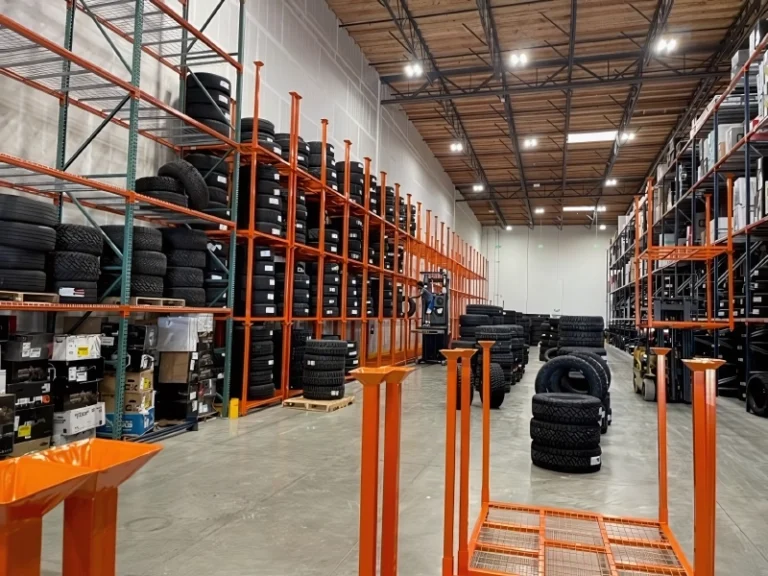
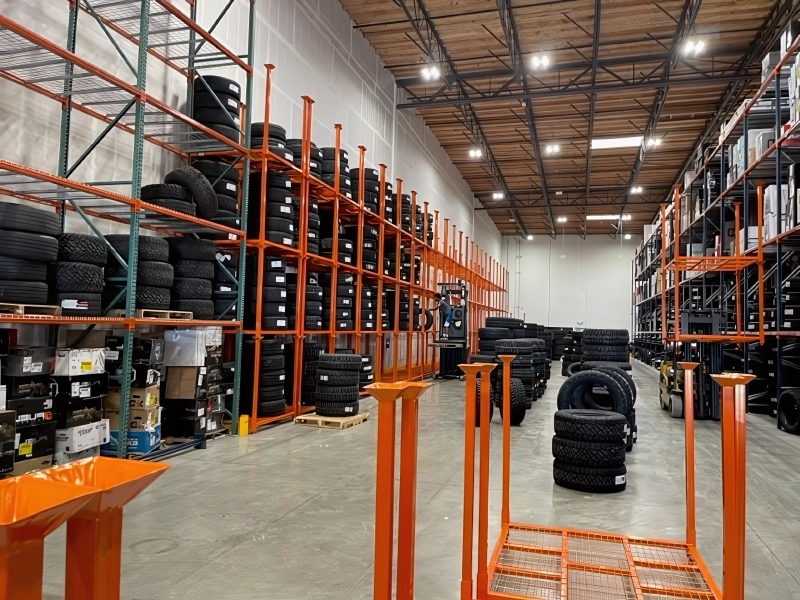
Yes. A mixed warehouse is often the practical answer. Use selective pallet racking for fast-moving SKUs, reserve stock, and orders that need direct pallet access. Use Derack for slower-moving batches, seasonal overflow, long or deformable materials, production-side staging, and returnable transport loops. Separate the operating rules: mark the two zones, keep the required aisles and clearances, train operators on the different load paths, and have the complete layout reviewed before stacking near fixed rack structures.
How do pallet dependency and forklift requirements differ?
Selective pallet racking normally depends on compatible pallets that sit on rack beams. Pallet dimensions, entry direction, bottom-board design, pallet condition, and beam loading all affect safe use. Derack can carry the load in its own steel base, so the rack becomes the handling and storage unit; this can reduce re-palletizing for suitable loads, but it does not remove the need to verify fork-pocket dimensions, load center, truck capacity, visibility, and landing accuracy. A forklift still has to pick, move, and place the Derack unit without side impact. Operator training and a site-specific handling assessment remain essential.
SELECT BY WAREHOUSE JOB
Which system fits your operating pattern?
Warehouse requirement
Preferred starting point
Why
Every pallet must be reachable without moving another load
Selective pallet racking
Dedicated locations and direct aisle access
SKU variety is moderate and batches are stored as units
Derack or a mixed layout
Choose flexibility where batch density is more valuable than 100% selectivity
Seasonal overflow and frequent layout changes
Derack
Movable units can be rearranged as volume changes
Long, deformable, panel, tire, or bulk-bag loads
Derack, subject to engineering review
Dedicated bases and posts can support the load without relying on product-to-product stacking
High-frequency order picking or fixed automation interface
Selective pallet racking or automated rack system
Stable geometry and predictable access are the primary requirements
PLAN THE WHOLE SYSTEM
Compare access cost, not just equipment cost
The right choice comes from the full operating model: floor area, aisle space, order profile, load damage, pallet turnover, forklift travel, empty-unit return volume, and the cost of changing the layout later. Selective racking can deliver the stronger access proposition; Derack can deliver a more flexible unitized storage and transport proposition. A lower purchase price is not automatically a lower total cost.
For Derack, the design review should confirm load geometry, base support, post count, stacking height, floor condition, fork access, container or vehicle constraints, and the permitted operating sequence. For selective racking, confirm pallet compatibility, beam levels, aisle width, rack protection, anchoring, and the required access percentage.
DERACK IN OPERATION
Flexible storage starts with controlled handling
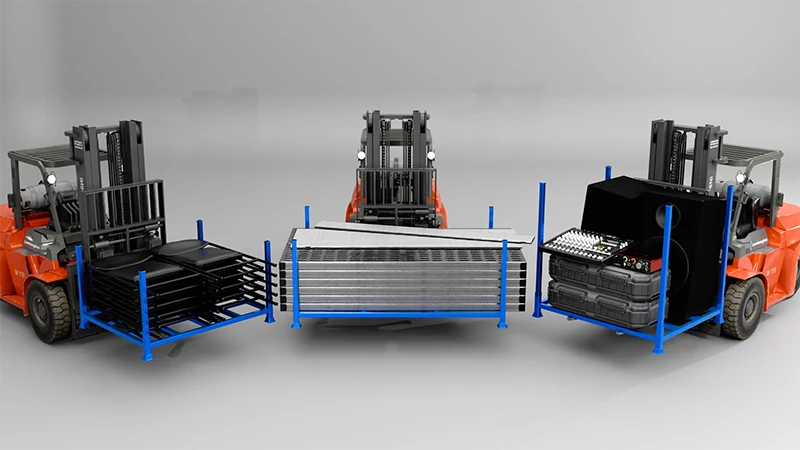
Unitized movement can connect production, storage, and dispatch when the load is configured for the rack.Remove the posts and nest empty units for more compact return storage, according to the approved design.Forklift capacity, fork-pocket fit, load center, and landing accuracy must be checked before operation.
NEXT STEP
Describe your warehouse type and get a combination recommendation
Tell us your load type, pallet or unit dimensions, average and peak volume, access requirement, forklift model, floor condition, and whether the storage area must change seasonally. We can help you identify where Derack makes sense, where selective pallet racking is the safer fit, and whether a mixed layout deserves a detailed review.