
Stillage comparison
If your buyer is searching for stillage vs wire mesh container, the real question is not just size. It is how the frame transfers load when the stack rises, and how much margin you keep when handling is not perfect.
The load path is the difference
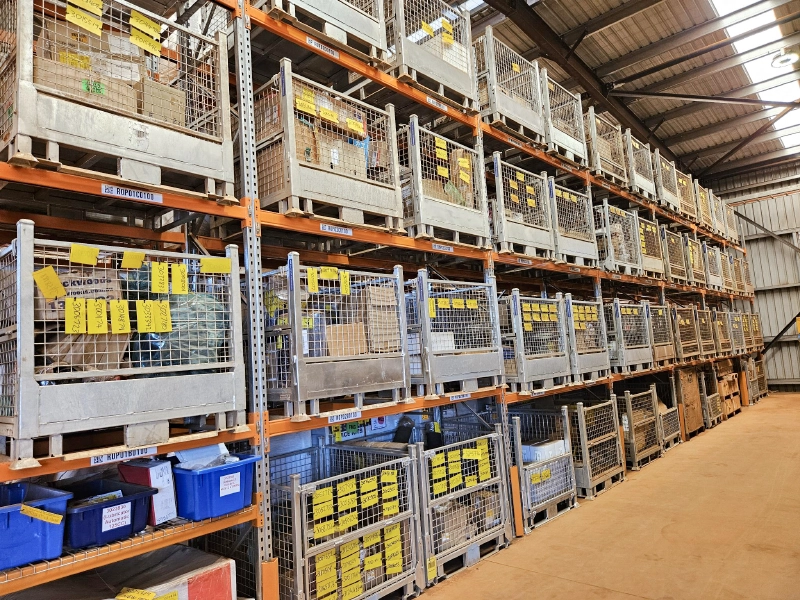
A plain wire mesh container mainly relies on mesh panels and frame rings to hold shape. That works well at lower stacking heights, but the panel itself is not a strong vertical column. As the stack gets taller, small flex in the wall, a slight twist in the gate, or uneven contact at the foot can add up quickly.
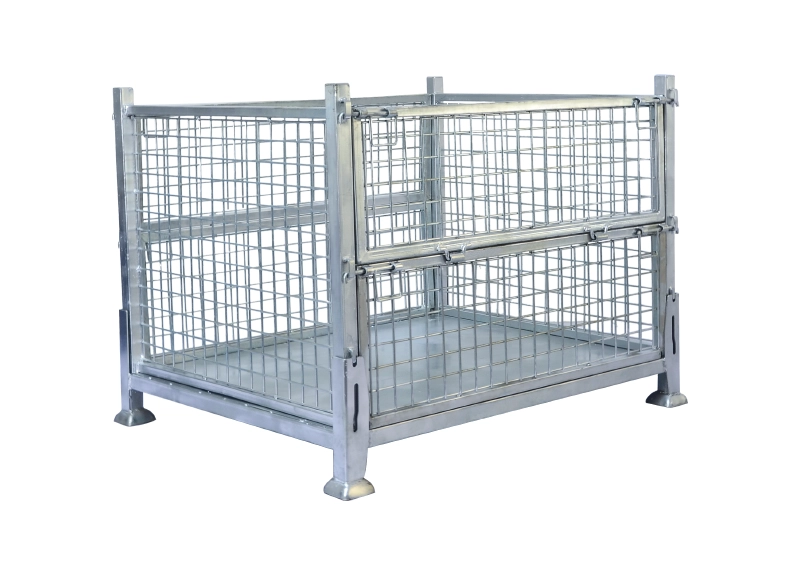
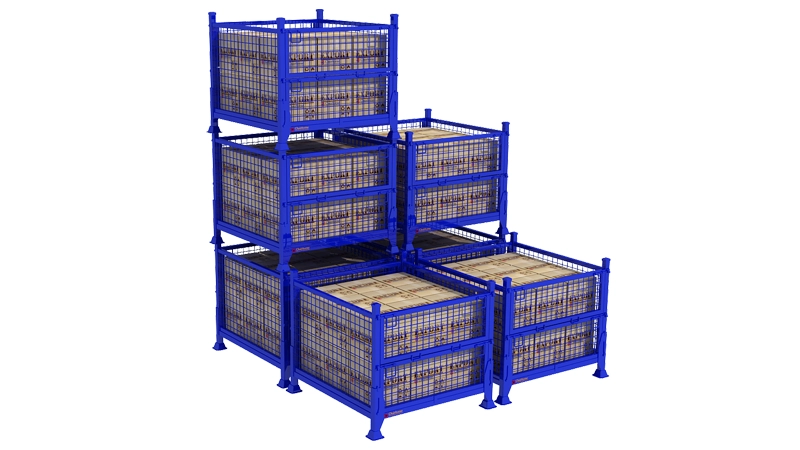
Mybox is built around steel tube uprights, so the stacking force moves through a clearer column path. The upright takes the compression work, while the mesh keeps parts contained. That is why the product brief can support a documented stacking height up to 5 m, always subject to load distribution and floor flatness.
Static load, dynamic load, and stack height are linked
The brief gives Mybox a 4,000 kg static load and a 2,000 kg dynamic load. Those numbers do not mean the box should always be filled to the maximum and stacked anywhere. They tell you two different things: how much the container can tolerate when parked in a stable stack, and how much it can handle when a forklift or pallet jack is moving it.
In practice, high stacking is not only about the number on paper. It also depends on how evenly the load sits inside the cage, how flat the floor is, how accurate the fork placement is, and whether the bottom feet land squarely on the unit below. That is why a taller stack benefits from a rigid upright structure and a clean foot-to-foot contact point.
When a standard wire mesh container is enough
A conventional wire mesh container still makes sense in several situations. If your stack is low, your parts are light, your floor is controlled, and the cage mostly stays at one level or on a rack with limited lift height, the simpler structure can be enough. It is a valid choice when the priority is basic containment rather than tall, repeatable stacking.
That said, once you need higher stacks, repeated forklift handling, or a mixed workflow where the same unit is stored, moved, and re-stacked often, the stronger column structure of Mybox gives more margin. It is not about saying the simpler cage is wrong. It is about matching the structure to the real operating risk.
Handling matters as much as the frame
High stacking also depends on daily handling discipline. Mybox is designed for pallet jack and forklift movement, and the lift behavior is part of the stability story. If the load is centered, the floor is flat, and the stack is built correctly, the taller column structure helps keep the container upright during storage and internal transfer.
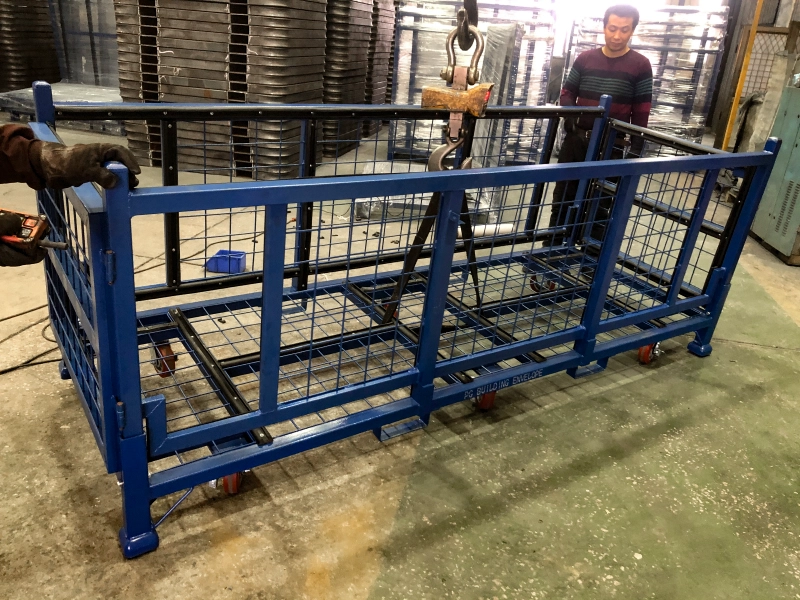
The crane test image below is not a promise of every possible site condition. It is a useful reminder that the product is built for industrial movement, not just static display. When you compare options, ask one question first: will the box only store goods, or will it also be lifted, moved, and re-stacked throughout the day?
How to choose between Mybox and a plain cage
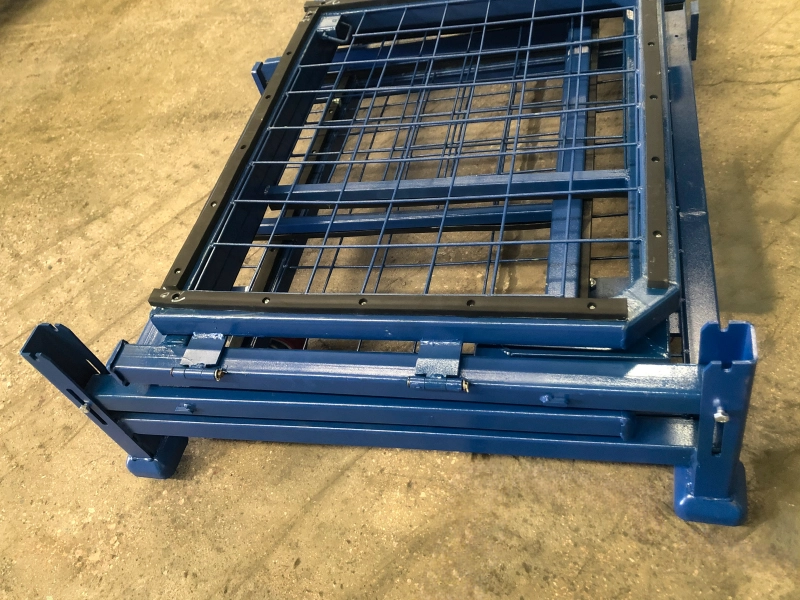
Choose Mybox when you need one or more of these conditions: higher stacking, a clearer load path, better stability under mixed handling, lower empty-return cost through collapsible storage, or a unit that can travel from warehouse to transport without repacking.
Choose a standard wire mesh container when the stack stays low, the handling is simple, and the goal is basic containment with lower complexity. Both can be valid. The difference is whether your workflow needs a container that simply holds parts, or a container that also carries the stacking load with confidence.
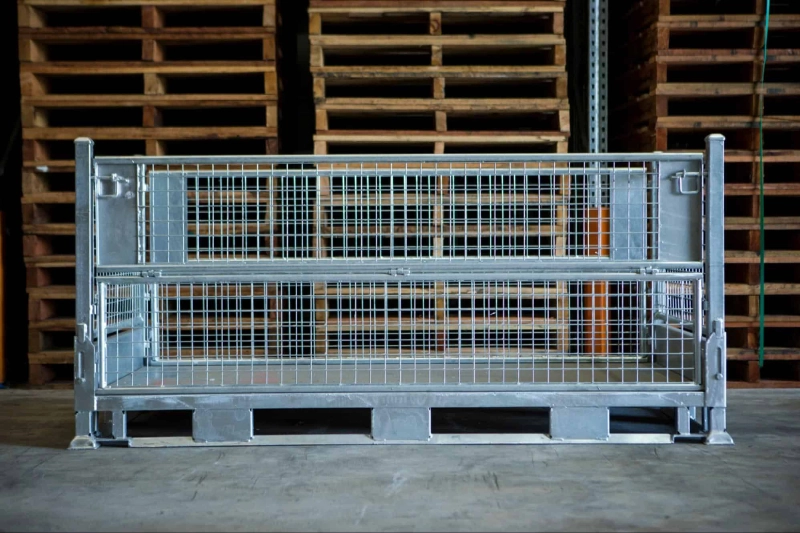
If you are comparing options for your next project, review the specification path first and then check the matching use case.
Need a Custom Storage Solution?
Speak directly with our technical engineers. We offer free structural designs, heavy-duty catalog evaluations, and quick B2B price quotations.
Request a Quote Now →