

For a factory logistics manager, the unit price of a storage container is only the first line of the calculation. The useful number is the cost of one controlled trip: purchase, loading, internal handling, empty return, inspection and eventual replacement. That is the total-cost-of-ownership view of a Stbox wire mesh container.
The practical claim is simple: buy once with the right return plan, then save on every cycle. The comparison below is a calculation framework, not a universal saving promise. Use your own quotation, freight rate, damage rate, labor cost and planned turns before approving a batch.
1. Purchase cost: rigid Q235 steel versus one-way packaging
A corrugated carton may be cheaper at the checkout counter, especially for a one-way shipment. A wooden crate can suit heavy or irregular cargo, but it adds handling weight and moisture-management work. A plastic pallet box may offer repeat use and easy cleaning, yet its price, repairability and rigidity depend on the selected model and supply chain.
Stbox starts with a different cost logic. Its Q235 steel frame, welded mesh panels, formed stacking feet and reinforced base are intended for repeated industrial handling rather than disposal after one trip. The purchase calculation is therefore:
cost per completed cycle = (purchase price + setup and inbound freight + planned repairs) ÷ verified usable turns.
At one turn, a carton can still win on cash outlay. At five, ten or twenty turns, the reusable cage has more opportunities to spread its purchase cost. The result depends on whether the cage survives those turns, how much labor is spent loading it, and whether your return route is full or empty. Do not compare a steel cage with an assumed lifetime; compare the quoted design with the number of turns your operation can document.

2. Empty return: folding changes the freight equation
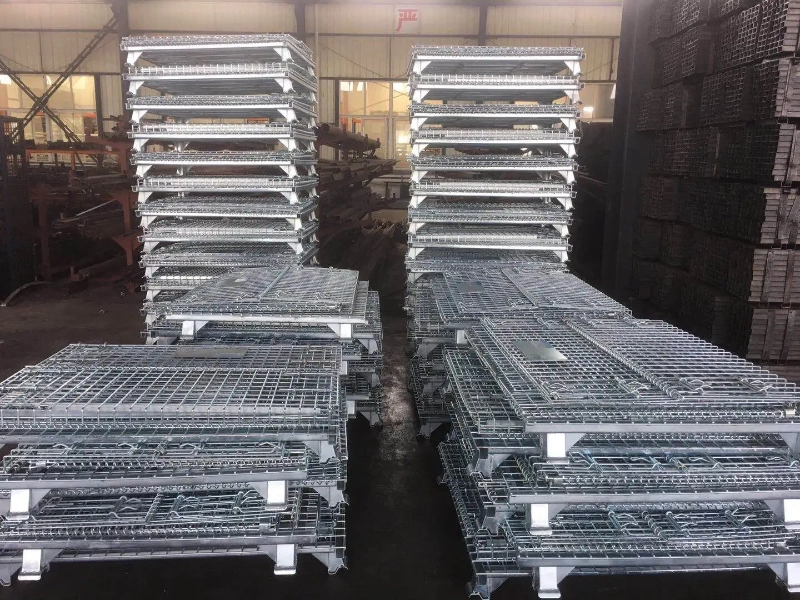
The second TCO stage begins when parts leave the plant and the containers come back empty. An assembled rigid cage occupies its full operating height. A documented Stbox project variant lists a 190 mm folded height, with ten folded cages arranged in one stack. The same project record lists an 800 × 1200 × 890 mm assembled format and a listed ten-unit stack envelope of 1240 × 1240 × 1600 mm. These figures belong to that drawing, not to every Stbox configuration.
For a quick screening calculation, compare the vertical envelope: 190 mm folded height versus 890 mm assembled height. On height alone, the folded unit is about 21% of the assembled height, or roughly 79% lower. That does not equal a guaranteed 79% freight saving: truck cube, stack stability, strapping, loading pattern, accessorial charges and route utilization still control the invoice. But it identifies where the saving can come from.
For each return lane, record: empty cages per vehicle, loaded cages per vehicle, return freight per trip, loading minutes, and damage found after unloading. A carton has no equivalent reusable return asset. A wooden crate or plastic pallet box may return repeatedly, but only if its nesting or folding geometry reduces the same transport constraint. The right comparison is therefore five, ten and twenty verified turns on the same lane—not a vague statement that steel is always cheaper.
3. Replacement cost: repair the weak point instead of replacing the whole fleet
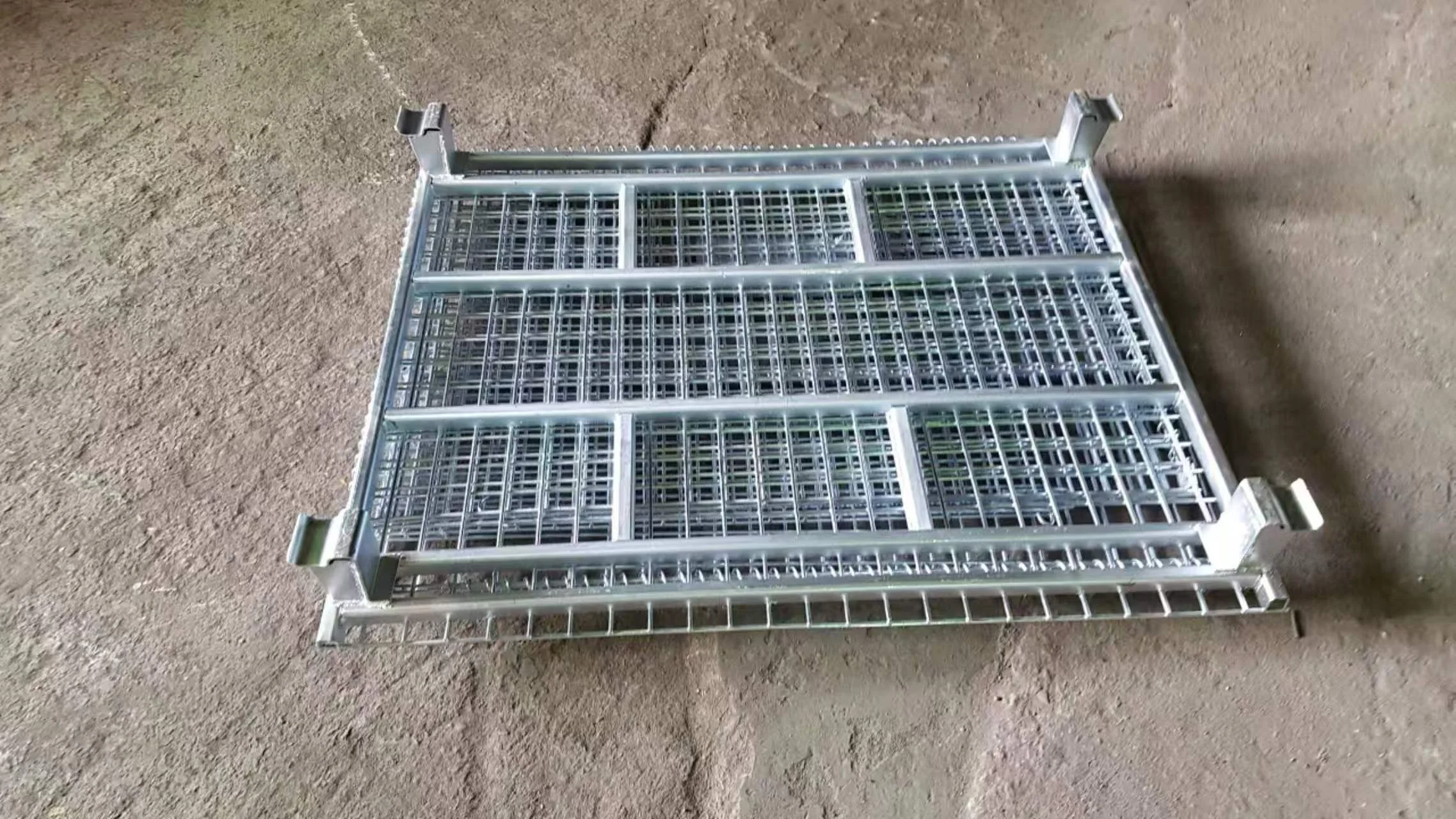
Long-term cost is often lost through uncontrolled replacement. A foot bends after repeated forklift contact; a mesh panel weakens at a high-impact position; or an old cage returns in a stack that is too bulky for the current lane. The answer is not automatically “buy the same cage again.” First separate the failure into base, foot, hinge, gate, mesh panel, finish and return-volume causes.
For a customer replacing deformed stacking feet or weakened mesh, request a drawing review and a replacement quotation for the affected configuration. The Stbox design evidence includes channel-steel base reinforcement and formed feet, while project variants specify different wire, load and stacking limits. Those parts address repeat handling, but they do not make an abused cage safe: inspect welds, base members and feet before reuse, and confirm that feet are fully seated before releasing any stack.
If the old cage is structurally sound but its return volume is now too large, a folding replacement may reduce the recurring freight line. If only the mesh is unsuitable for small or precision parts, a PP hollow-board liner may be more economical than a full replacement. If floor movement is the problem, casters may fit the process. Each option should be priced against its added purchase cost and the turns it will serve.
Who should run this calculation?
- Factory logistics teams: count loaded and empty turns separately, then add handling minutes and inspection rejects.
- Procurement teams: request the approved drawing, finish, mesh, wire, load plan and export packing rather than comparing an unnamed “standard cage.”
- Owners focused on long-term cost: compare the total after 1, 5, 10 and 20 turns with corrugated cartons, wooden crates and repeat-use plastic pallet boxes.
- Plants with damaged legacy cages: identify whether the economic fix is a replacement foot, mesh repair, liner, caster or a redesigned foldable return unit.
FAQ: when is a collapsible wire container not the right choice?
Is Stbox automatically cheaper than a carton?
No. For a single one-way movement, a carton may have the lower purchase price. Stbox becomes worth testing when the same asset completes enough documented turns and empty-return volume matters.
Can I apply the 190 mm folded height to every order?
No. The 190 mm figure is listed for the 13967 project variant. Dimensions, wire, load limits, finish and stacking instructions must be confirmed against the final drawing and quotation.
Need a defensible TCO comparison? Send the current cage drawing, return-lane details, expected turns and the failure points you are seeing. We can structure the Stbox quotation around the actual cycle—not just the unit price.
Request a Stbox cycle-cost review
See the Stbox product route · Learn about Steel Pallet · Read more logistics guidance
Need a Custom Storage Solution?
Speak directly with our technical engineers. We offer free structural designs, heavy-duty catalog evaluations, and quick B2B price quotations.
Request a Quote Now →