
Rerack selection guide
Upside-Down Stack Rack vs Detachable Post Stillage: Which Rerack Structure Fits Your Warehouse?
A practical comparison for warehouse planners who are choosing between a fixed welded upside-down stack rack and a detachable-post stillage. The right answer depends on stability, robot handling, empty return volume, and how much flexibility your cargo really needs.
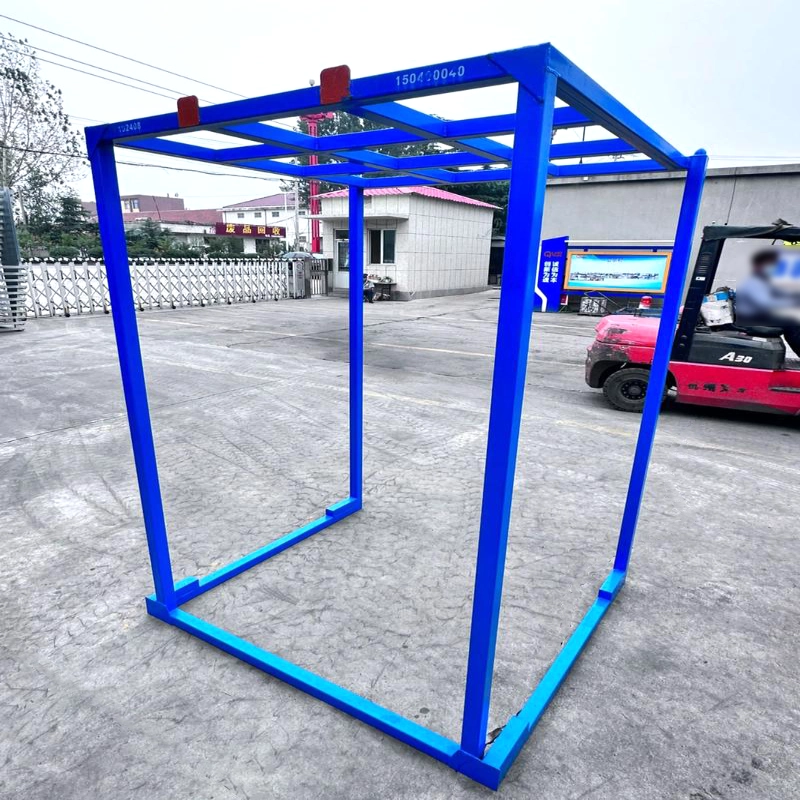
Warehouse teams often compare two stillage structures as if they were interchangeable. They are not. An upside-down stack rack is usually a fixed welded frame built for stability, lower manufacturing cost, and easy nesting when empty. A detachable-post stillage adds removable columns and extra connection hardware, which makes it more adaptable, but also more complex.
Fixed welded or detachable: the real structural difference
The upside-down structure is the simpler of the two. In practice, that means fewer joints to inspect, a more rigid frame under forklift handling, and a cleaner stacking rhythm when the same load pattern repeats every day. The detachable-post version is built for a different job: it can act as a robot pallet bottom, support changing cargo formats, or let you remove the columns when the application no longer needs them.
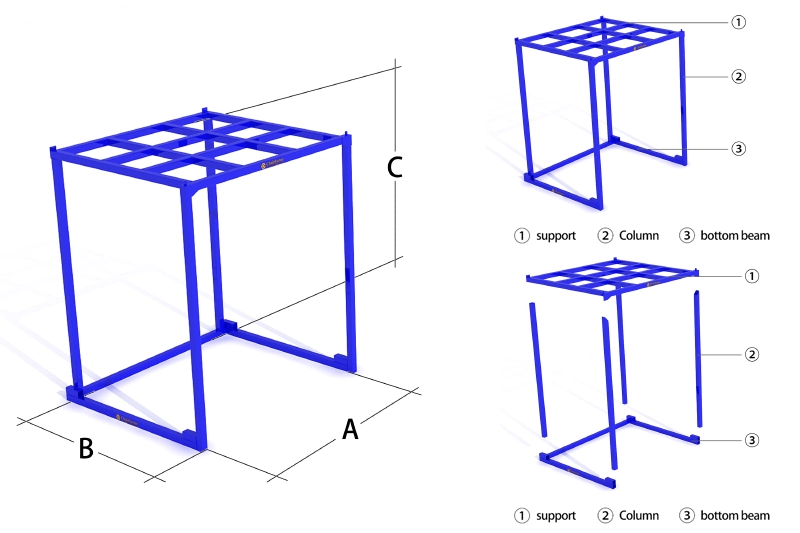
That difference shows up in real project weights too. In one sample set, the upside-down version weighed 61 kg, while the detachable-post version weighed 75 kg. Those are project samples, not a universal catalog rule. Weight changes with footprint, steel thickness, connection design, and any reinforcement you add for load control.
When the upside-down stack rack wins
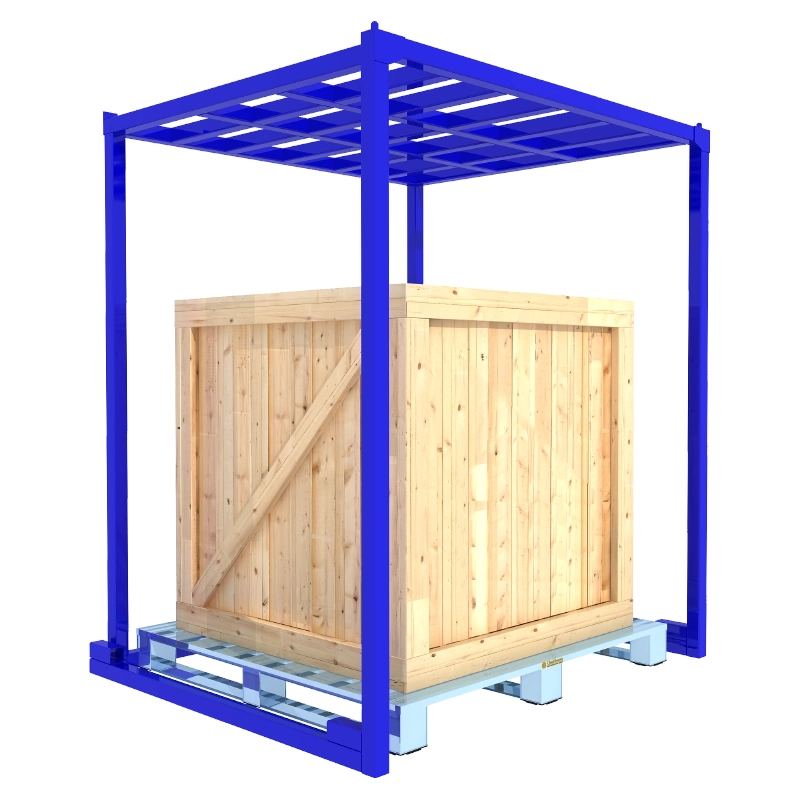
- Best for repeat loads: palletized cartons, crates, bagged goods, or any cargo that stays in the same format from inbound to outbound.
- Best for lower cost: the fixed welded frame usually costs less because it has fewer parts and less assembly complexity.
- Best for empty nesting: when the rack returns empty, it can be nested to reduce reverse logistics volume.
- Best for predictable handling: forklift loading is straightforward when the frame and load do not change often.
If your main goal is to stack racks for warehouse storage with the least fuss, the upside-down design is usually the cleaner buy. It is also the safer answer when the cargo does not need removable posts for downstream automation or format changes.
When the detachable post stillage wins
The detachable-post stillage makes more sense when flexibility is the priority. If the frame will become a robot pallet base, if the columns need to come off after a production cycle, or if the cargo changes from one project to the next, removable posts can pay back their added hardware.
- Best for automation interface: use it when the rack needs to act as a robot-ready bottom carrier in a palletizing or transfer line.
- Best for changing jobs: detachable columns are useful when one frame must serve multiple cargo formats.
- Best with reinforcement planning: high cargo, tall cargo, or mixed cargo often needs extra strengthening around the post and joint area.
- Best when reconfiguration matters: if you want a more modular stack rack system, this structure gives you more options.
That flexibility is the reason the detachable-post unit often carries a higher self-weight. It is not a defect; it is the cost of removable hardware and additional load paths. If you want a custom stack rack supplier to help you build that flexibility in, this is the branch to ask for.
What to specify before you ask for a quote
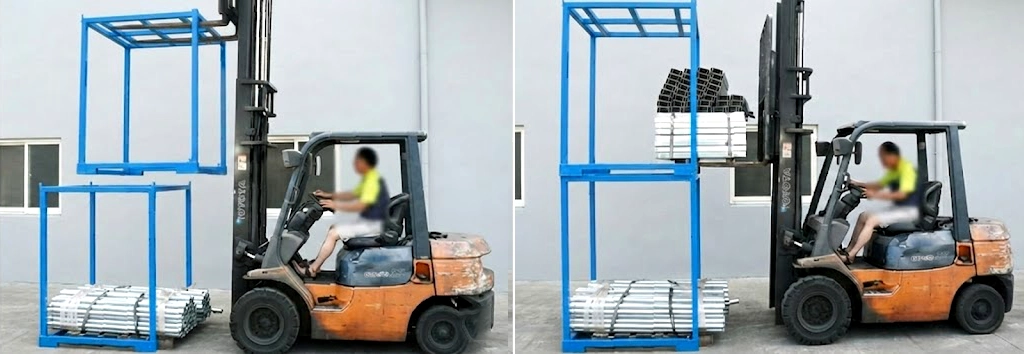
Before you request pricing, send five facts: pallet footprint, unit load, cargo height, forklift or robot handling method, and whether the rack must nest tightly when empty. Those five items usually decide whether you should choose an upside-down stack rack, a detachable-post stillage, or a reinforced custom build.
Do not choose either standard structure if you need a closed cage, loose small-part containment, or a fixed racking system that stays bolted in place. In those cases, the stack rack is the wrong tool, even if the cargo is heavy.
Bottom line: if you want stability, lower cost, and compact empty return, choose the upside-down frame. If you want flexibility, robot-ready use, or removable posts, choose the detachable-post version. If you want the product spec, go back to PDP-05. If you want a real project example, go to CASE-03.
Need a Custom Storage Solution?
Speak directly with our technical engineers. We offer free structural designs, heavy-duty catalog evaluations, and quick B2B price quotations.
Request a Quote Now →