
 |
Is your injection molding workshop floor cluttered with molds on pallets? Every minute your team spends searching for, clearing a path to, and carefully maneuvering a heavy mold with a forklift is a minute your production line isn’t running. This operational bottleneck directly impacts your output and profitability. It’s time to stop treating mold storage as an afterthought and transform it into a competitive advantage. |
Automated vs manual mould storage.
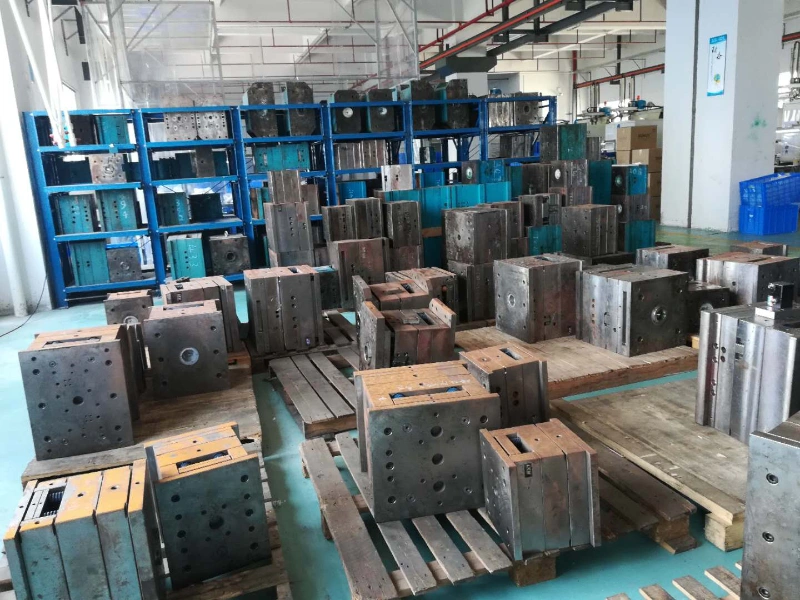
For any modern plastics manufacturing facility, the space around your injection molding, blow molding, or thermoforming machines is prime real estate. Yet, for many, this valuable area is dominated by a chaotic and inefficient system: manual mould storage. Heavy, expensive molds sit on wooden pallets, taking up vast amounts of floor space, exposed to potential damage, and creating a logistical nightmare during changeovers.
This traditional approach isn’t just untidy; it’s a direct drain on your operational efficiency and a significant safety risk. Let’s break down the hidden costs of sticking with manual methods and explore how a systematic, engineered approach can fundamentally transform your workshop.
The High Price of “Business as Usual”: The Flaws of Manual Mold Storage
Simply placing molds on the floor or on basic static shelving might seem like the cheapest option, but the compounding daily costs tell a different story. These inefficiencies directly erode your profit margins.
- Cripplingly Slow Changeovers: The core principle of SMED (Single-Minute Exchange of Die) is impossible with a manual system. A typical manual changeover involves a lengthy process: a 10-minute search for the correct mold, 20 minutes to clear obstructions, and another 15 minutes of delicate, high-risk maneuvering with a forklift. This downtime is a direct loss of production capacity.
- Wasted Production Floor Space: A forklift requires a massive turning radius, often demanding aisle widths of 12 feet (approx. 4 meters) or more. This means a huge percentage of your factory floor is dedicated to empty space, not value-adding machinery. In a high-rent industrial environment, this wasted square footage is a significant overhead cost.
- Risk of Asset Damage and Corrosion: An injection mold storage system needs to protect your assets. A single bump from a forklift can damage the precision sealing surfaces of a mold, leading to costly repairs and production delays. Furthermore, molds left on pallets are susceptible to moisture from the floor, leading to rust and corrosion that can compromise the final product quality.
- Workplace Safety and Ergonomic Hazards: Manually moving multi-ton molds, often with pry bars and sheer physical force, exposes your die setters and tool room technicians to a high risk of back and limb injuries. This not only affects employee morale but can also lead to costly workers’ compensation claims and audits.
The Engineered Solution: How Automated Racking Systems Drive Profitability
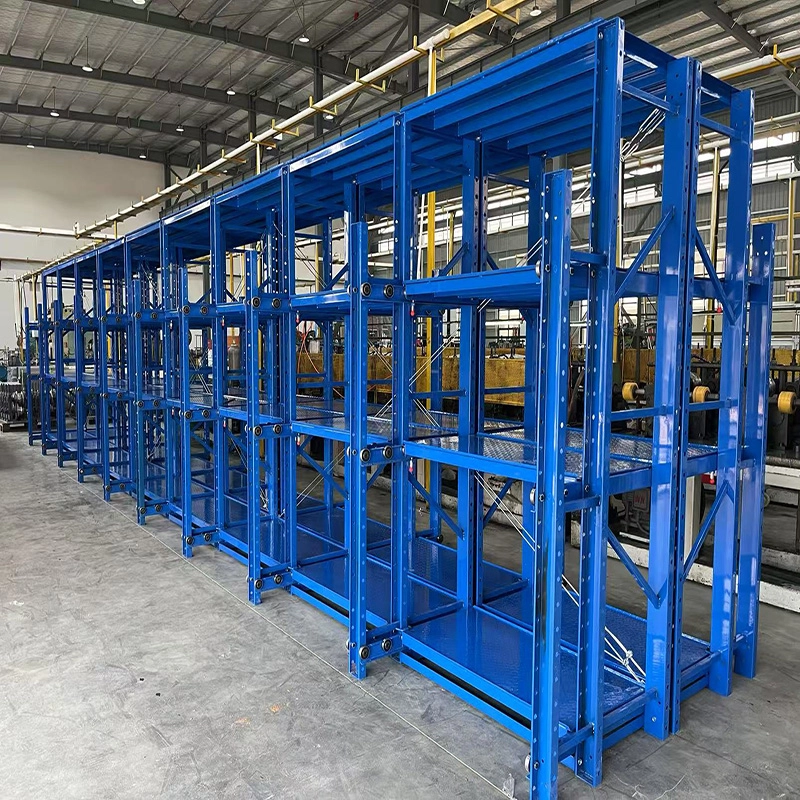
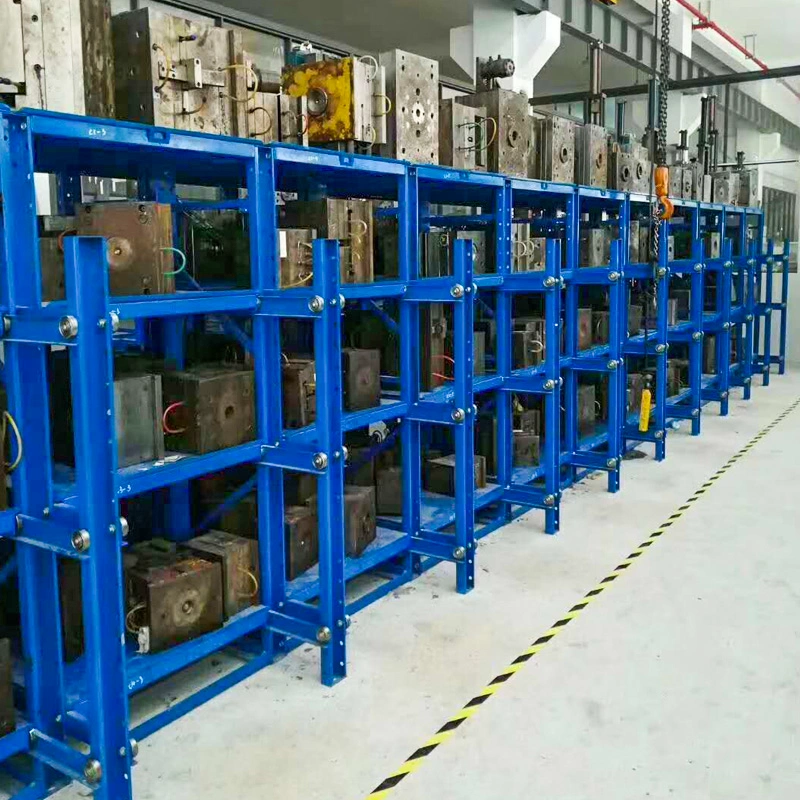
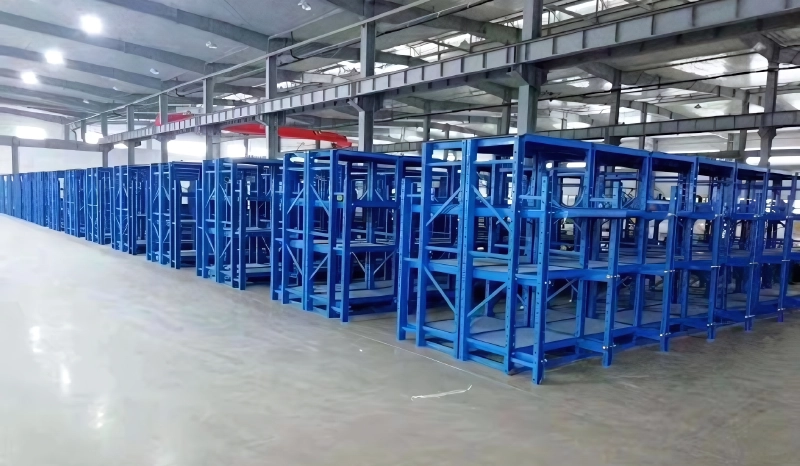
Transitioning to an automated or semi-automated mould storage solution like the Erack heavy duty mold racking system isn’t an expense; it’s an investment in efficiency, safety, and space optimization. The design is based on sound engineering principles that directly address the pain points of a plastics manufacturing workshop.
1. Unlocking Vertical Space & Slashing Footprints
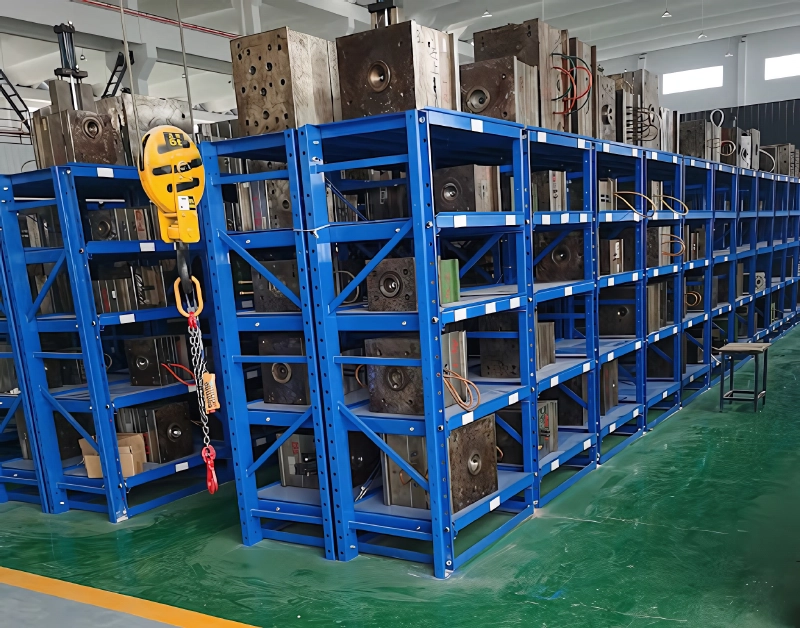
The core advantage is density. By utilizing vertical space, these systems can increase your storage capacity by up to 300% within the same footprint. The modular, three-pillar design, built from high-strength Q235B structural steel, provides the stability to safely store molds weighing up to 3 tons (6,600 lbs) per layer. This immediately frees up valuable floor space, allowing you to either add more production machines or create a safer, more organized workflow.
2. Achieving True Quick Mold Change with Integrated Crane Access
The game-changer for any die rack is its synergy with lifting equipment. The 100% full-open drawer structure is specifically designed for this. When a drawer is extended, it fully clears the rack’s frame, presenting the entire mold to your existing overhead crane or a dedicated chain hoist.
- Zero-Obstruction Lifting: The crane can lower its hook vertically onto the mold’s center of gravity. This eliminates the awkward and dangerous side-loading required with forklifts, completely removing the risk of collision with the rack structure.
- Reduced Aisle Width: Because a forklift is no longer needed for retrieval, aisle width can be drastically reduced from over 12 feet to as little as 4 feet, just enough for personnel access.
- Effortless Operation: Each drawer glides on high-precision Harbin roller bearings, converting sliding friction to rolling friction. This means a 2-ton mold can be moved with minimal physical effort. For the heaviest applications, an optional pneumatic assist system allows a single operator to open or close a fully loaded drawer with the simple push of a button.
3. Safeguarding Your Assets with Robust Engineering
Protecting molds worth tens or even hundreds of thousands of dollars is paramount. This protection is built into the system’s DNA.
- Corrosion Resistance: A rigorous 7-step surface treatment process, including acid washing, phosphating, and a 60-80μm powder-coated finish, creates an industrial-grade barrier against humidity and workshop chemicals, preventing rust and preserving your mold’s integrity.
- Multi-Layered Safety: Every drawer is equipped with a mechanical self-locking safety pin that automatically engages when the drawer is closed, preventing accidental roll-out. Additional manual pins ensure the drawer remains locked in the open position during lifting operations, meeting stringent OSHA safety standards. The entire structure is further reinforced with a cross-braced back-pull system, ensuring total stability even under full dynamic load.
The choice between manual and automated mold racks is more than a storage decision—it’s a strategic choice about your plant’s overall productivity and safety culture. By moving away from the chaotic, inefficient manual methods and embracing an engineered system, you don’t just store molds; you create a streamlined, high-efficiency production environment built for the future.
Frequently Asked Questions
1. Our plastic injection molds vary in weight from 500 lbs to 5,000 lbs. Can your system handle this range?
Absolutely. Our heavy-duty die rack shelving is designed with modularity in mind. Each drawer layer can be specified with different load capacities, typically ranging from 1 to 3 tons (2,200 to 6,600 lbs). We can configure a single rack to have higher capacity layers at the bottom for your heaviest molds and standard capacity layers higher up, optimizing both cost and functionality.
2. How exactly does this system improve our mold changeover (SMED) times?
The improvement comes from eliminating wasted motion and risk. Instead of a multi-step process involving a forklift, it becomes a simple, linear workflow: (1) The operator pulls out the correct drawer (in seconds). (2) The overhead crane lifts the mold vertically (in under a minute). The entire retrieval process is reduced from 30-45 minutes to less than 5 minutes, directly increasing your machine uptime.
3. Can these racks withstand the oils and humidity common in a plastics processing workshop?
Yes. This is a critical design consideration. The 7-step surface preparation, including a phosphate conversion coating and a thick epoxy powder coat, is specifically engineered to resist industrial environments. It prevents common issues like rust from humidity and degradation from hydraulic oils or cleaning agents, protecting both the rack and the expensive molds it holds.
4. We have an existing overhead crane in our facility. Can your mold racks integrate with it?
Our systems are designed to integrate seamlessly with standard factory overhead cranes. The key is the 100% full-extension drawer, which provides clear, unobstructed vertical access. During our consultation process, we assess your existing crane’s capacity and operational height to ensure the rack’s dimensions and layout provide a perfect, safe interface.
5. Our floor space is extremely limited. How can we be sure this is the right solution?
This system is ideal for space-constrained environments. By storing molds vertically in a high-density configuration and eliminating the need for wide forklift aisles, our clients typically reclaim 50% to 80% of the floor space previously dedicated to mold storage. This reclaimed space can be used for new production lines, maintenance areas, or simply to de-clutter the workshop for improved safety and workflow.
Need a Custom Storage Solution?
Speak directly with our technical engineers. We offer free structural designs, heavy-duty catalog evaluations, and quick B2B price quotations.
Request a Quote Now →