
|
In your plastic packaging facility, every square foot of floor space is a potential revenue generator. Yet, heavy injection and blow molds are likely occupying that prime real estate, creating bottlenecks during changeovers and posing significant safety risks. Storing multi-ton assets on wooden pallets is not just inefficient; it’s a direct threat to your production uptime and team’s well-being. |
The Hidden Costs of Floor Storage in a Plastics Manufacturing Plant
In the fast-paced world of plastic packaging—from PET bottle preforms to thermoformed PP cups—the efficiency of your mold changeovers dictates your profitability. While the hum of injection molding machines is the sound of money being made, the sight of molds cluttered on the floor is the picture of hidden losses. This traditional “storage” method, often seen as a temporary solution, quietly eats away at your bottom line through inefficiency, asset damage, and safety liabilities.
Pain Point 1: Valuable Floor Space Held Hostage
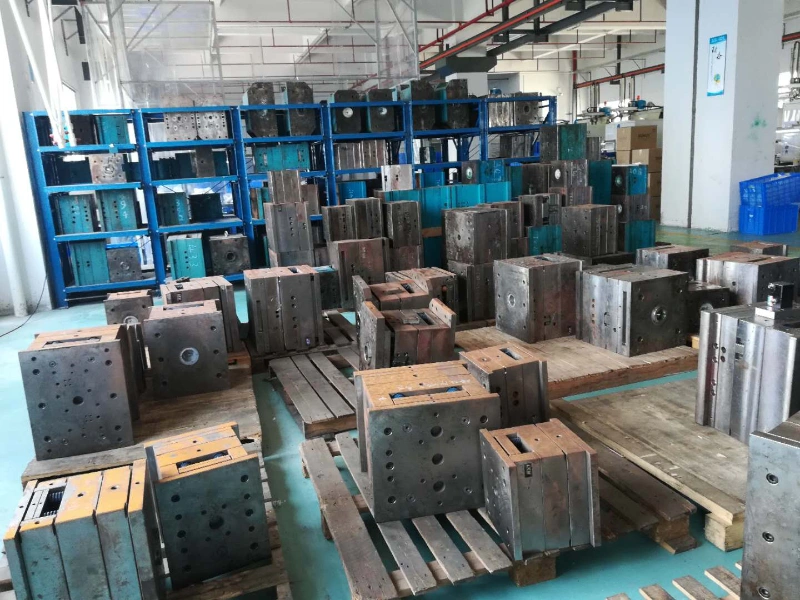
Consider the typical workshop layout. Molds for your PET bottles, jerry cans, and plastic drums are stored on pallets, scattered around the production area. Each pallet requires a wide berth for forklift access, consuming hundreds of square feet. This is floor space that could house another injection or blow molding machine, directly increasing your plant’s output capacity. Instead, it’s relegated to disorganized, horizontal storage, turning potential production zones into costly logistical hurdles. Aisle widths of 12 feet or more, necessary for safe forklift operation, become wasted space, directly impacting your factory’s productivity per square foot.
Pain Point 2: The SMED Killer—Chaotic and Risky Mold Changes
Your production schedule calls for a switch from 5-gallon drums to 1-liter oil bottles. This requires a specific blow mold. The process begins: first, the Die Setter must locate the correct mold. It’s often buried behind several others. Then, a forklift operator is called to carefully navigate the cluttered area, moving multiple multi-ton molds just to access the one required. This “mold shuffle” can take over an hour, leading to costly machine downtime. Furthermore, using pry bars to nudge a 4,000 Lbs mold or the inevitable bumps from a forklift can damage the mold’s precision parting line, leading to flashing on your finished products and expensive repairs for your tool room technicians.
The Engineering Shift: From Horizontal Chaos to Vertical Order with a Mould Rack
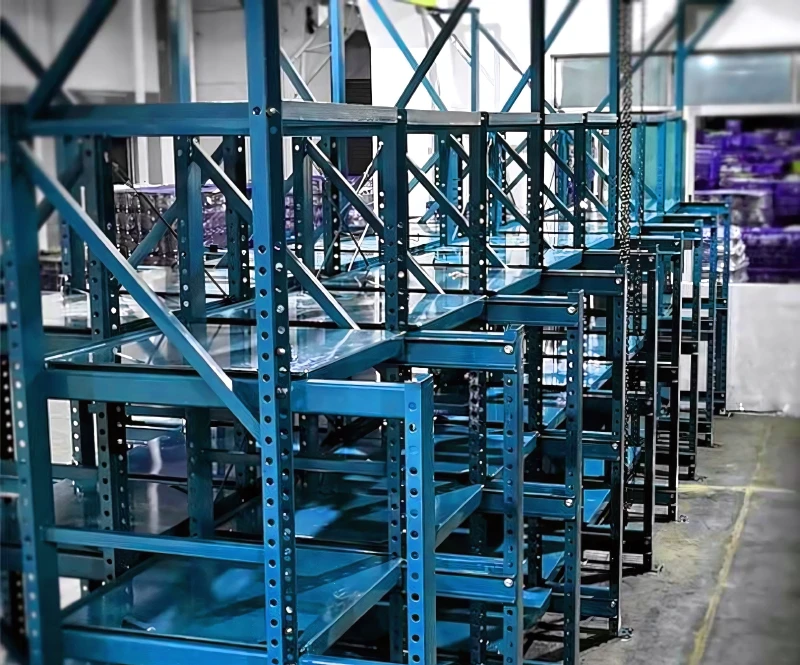
The solution lies in fundamentally rethinking how you store these critical assets. A purpose-built heavy duty mold racking system isn’t just shelving; it’s an engineered logistics tool designed to reclaim space, streamline workflows, and protect your investments.
Unlocking Vertical Space: The Power of Density
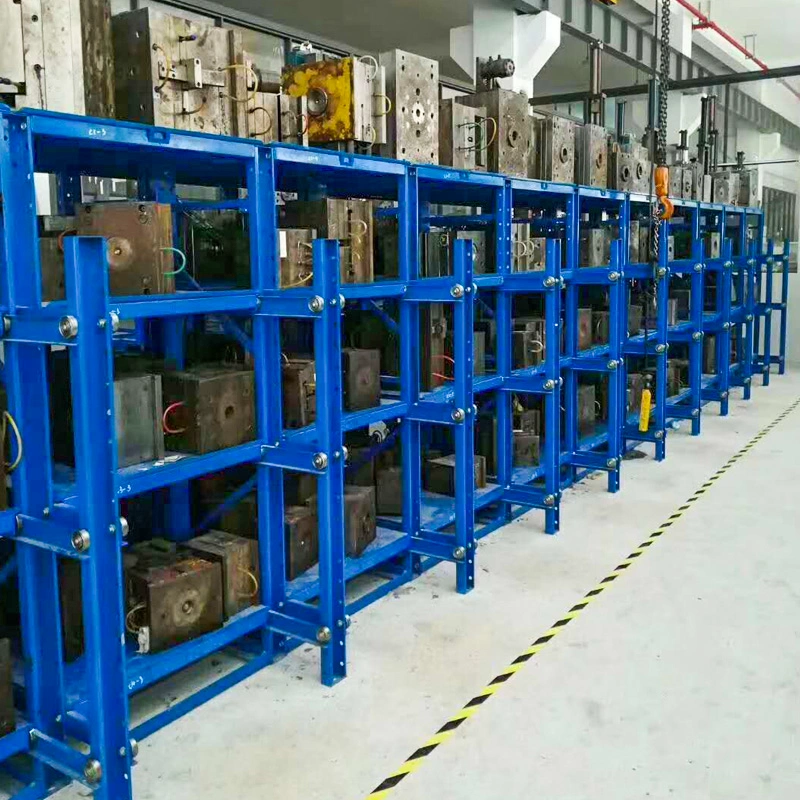
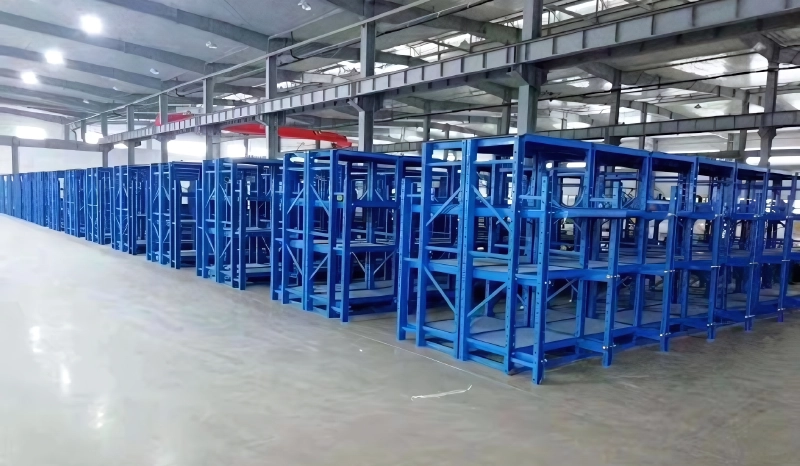
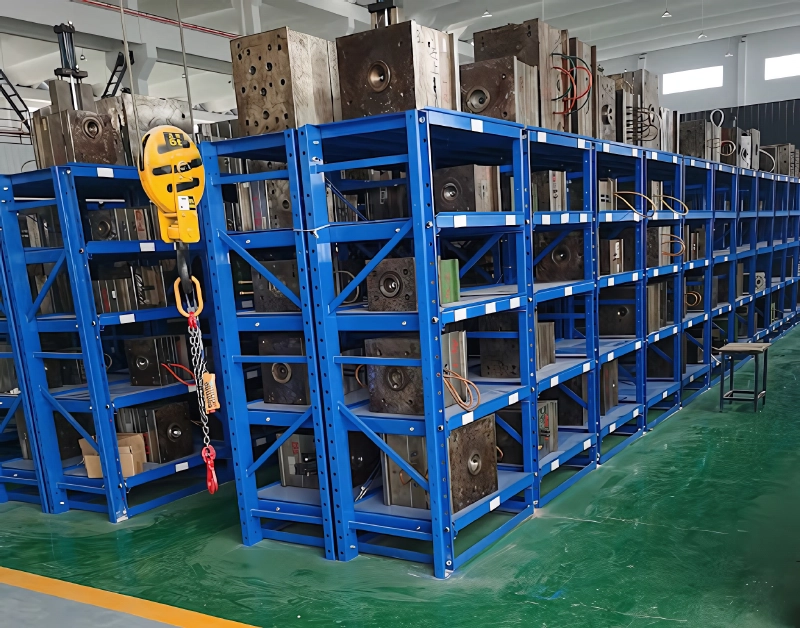
The core principle of a professional mould rack is to utilize your facility’s vertical height. By storing molds in individual, heavy-capacity drawers, you can reclaim up to 80% of the floor space previously lost to ground-level clutter. Our systems, built with high-grade Q235B structural steel, are engineered for this density. The modular主副架设计 (add-on modules) allows the system to grow with your business, whether you’re adding a new thermoforming machine or expanding your line of custom plastic containers.
Direct Access, Zero-Wait Changeovers
The game-changer for any production floor supervisor is the 100% full-open drawer structure. Each drawer, capable of holding up to 3 tons, rolls out completely on high-precision bearings. This feature is designed to work in perfect harmony with your existing overhead crane or chain hoist.
Here’s the new workflow:
- The operator walks to the designated slot.
- They pull out the drawer, exposing the entire mold.
- The overhead crane lowers its hook directly onto the mold’s center of gravity for a perfectly vertical, safe lift.
There is no more “mold shuffle.” No more waiting for a forklift. This transforms a 60-minute, multi-person task into a 5-minute, single-person operation, making true Single-Minute Exchange of Die (SMED) an achievable reality in your plant.
Optimize Your Mold Storage Today
Built for Safety and Asset Protection
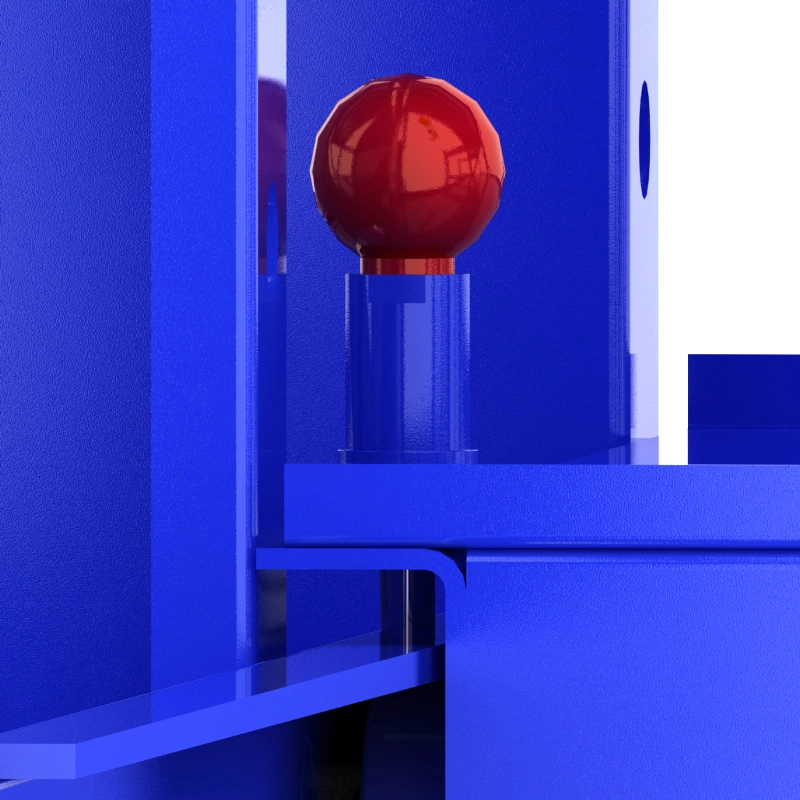
Your molds are high-value assets. Protecting them is paramount. Unlike a damp concrete floor, each drawer in our die rack provides a clean, dry, and isolated environment. The 7-step industrial surface treatment, including acid washing, phosphating, and a 60-80μm powder coating, creates a corrosion-resistant barrier that can withstand humid workshop conditions for over 15 years. Critically, each drawer is equipped with a mechanical self-locking safety pin. Once the drawer is pushed in, a physical pin automatically engages, preventing any possibility of it sliding out, even during accidental impacts—a safety feature that meets stringent OSHA and ANSI standards and gives your team peace of mind.
The Tangible Transformation: Before vs. After
Upgrading from floor storage to a dedicated mold rack system delivers measurable improvements across your entire operation. It’s an investment that pays for itself through enhanced efficiency, safety, and asset longevity.
| Metric | Before: Floor Storage | After: Erack Mould Rack System |
| Floor Space Occupancy | High. Example: 2,000 sq ft for 50 molds, preventing new machine installation. | Low. Same 50 molds stored in 400 sq ft, freeing up space for a new production line. |
| Mold Changeover Time | 60+ minutes. Involves searching, moving other molds, and risky forklift maneuvering. | < 5 minutes. Direct, single-person access with an overhead crane. |
| Asset Damage Risk | High. Rust from ground moisture, collision damage from forklifts, and scratches. | Minimal. Molds are isolated, protected from corrosion, and handled with vertical precision. |
| Worker Safety (EHS) | Poor. High risk of lumbar strain from prying, crushed limbs from shifting molds. | Excellent. Ergonomic operation eliminates physical strain and meets safety compliance. |
Frequently Asked Questions for Plastics Manufacturers
1. Our injection molds are over 4,500 Lbs (2 tons). Can a single operator really pull out the drawer?
Absolutely. Each drawer is fitted with high-precision roller bearings that convert sliding friction into rolling friction, drastically reducing the required force. For molds exceeding this weight, we offer an integrated pneumatic assist system, allowing an operator to open and close the heaviest drawers with the simple push of a button.
2. How does this mould rack integrate with our existing factory overhead crane?
The system is specifically designed for this integration. The 100% full-extension drawer brings the entire mold clear of the rack structure, providing the crane hook with unimpeded, direct vertical access. This eliminates the need for dangerous side-loading with a forklift and allows you to reduce aisle width to as little as 4 feet.
3. Our workshop floor space is limited, but we are adding more blow molding machines next year. Can this system adapt?
Yes. Our mould storage racks feature a modular, add-on design. You can start with a main unit and add extension units as your mold inventory grows. This allows you to scale your storage solution in line with your production expansion, ensuring a future-proof investment.
4. What prevents a heavy blow mold from sliding off the drawer if the rack is accidentally bumped or during movement?
We have a dual safety system. First, each drawer is equipped with a robust, automatic self-locking safety pin that secures it in the closed position. Second, the front and back of the drawer panel feature a raised lip, creating a physical barrier that prevents the mold from shifting or sliding off during movement.
5. The air in our PET bottle preform area can be quite humid. How does your rack’s surface hold up against rust?
Our racks undergo a comprehensive 7-step surface treatment process, including shot blasting, acid washing, and phosphating, before a thick layer of high-quality epoxy resin powder is electrostatically applied and cured. This creates a durable, non-porous finish that is highly resistant to oxidation and corrosion, ensuring your rack—and the expensive molds it holds—remain rust-free for over 15 years, even in challenging industrial environments.
Need a Custom Storage Solution?
Speak directly with our technical engineers. We offer free structural designs, heavy-duty catalog evaluations, and quick B2B price quotations.
Request a Quote Now →