🏭 Steelpallet · Factory Direct · OEM Available

Collapsible Wire Mesh Container for Machined & Cast Iron Parts
stbox

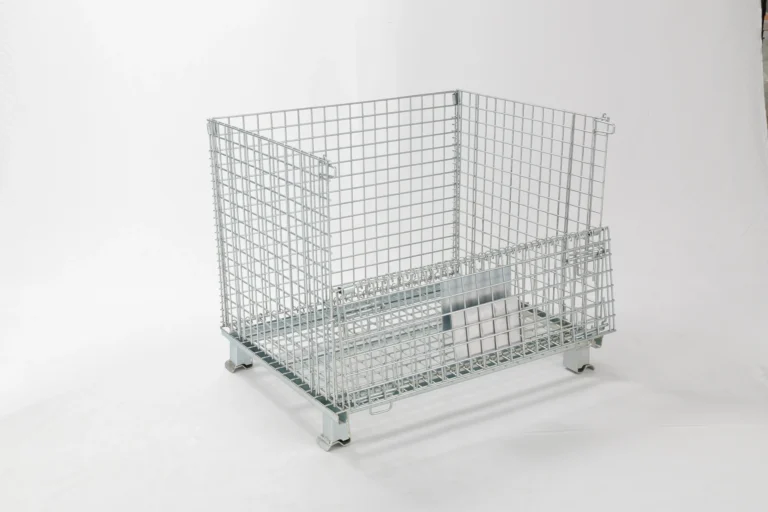
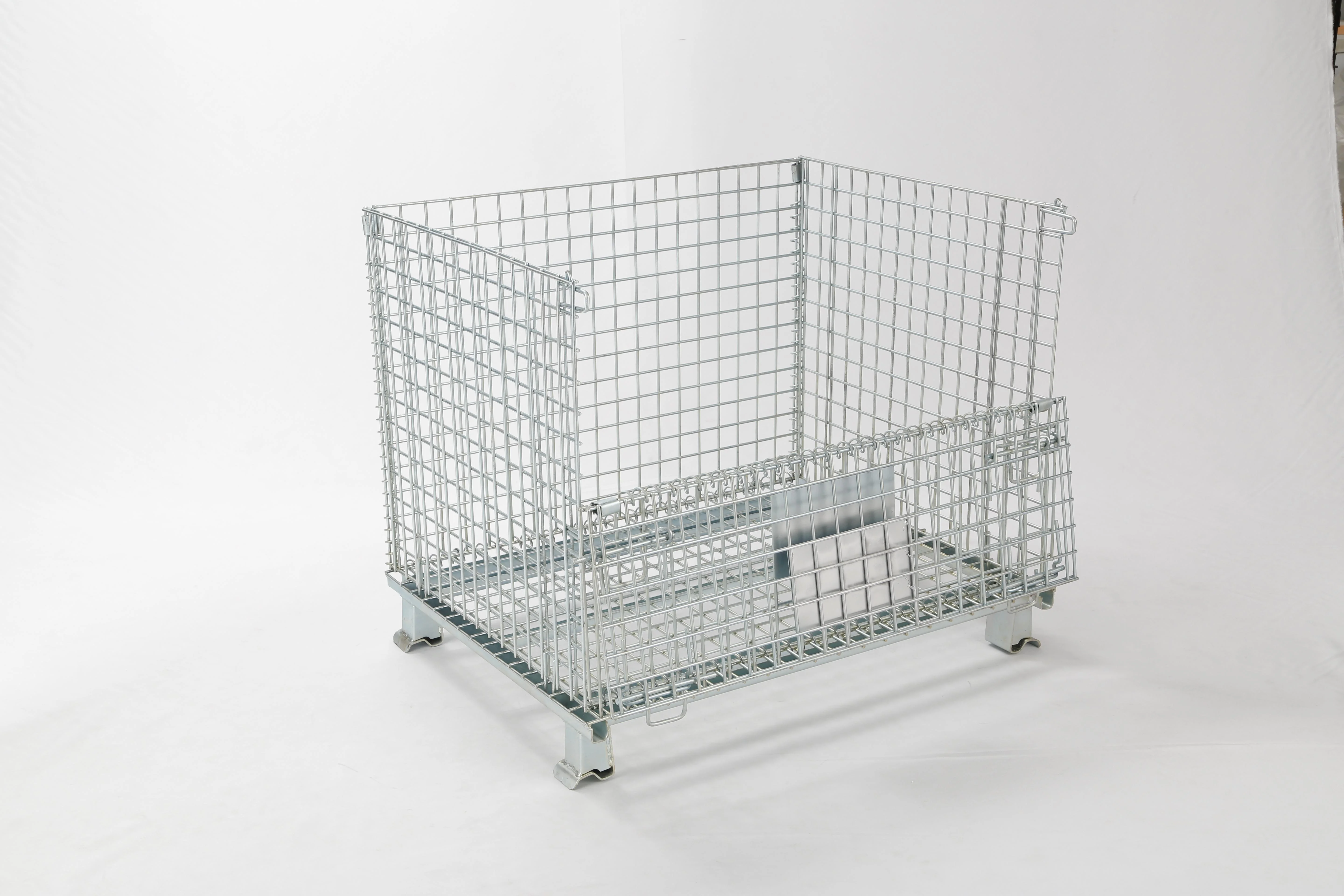
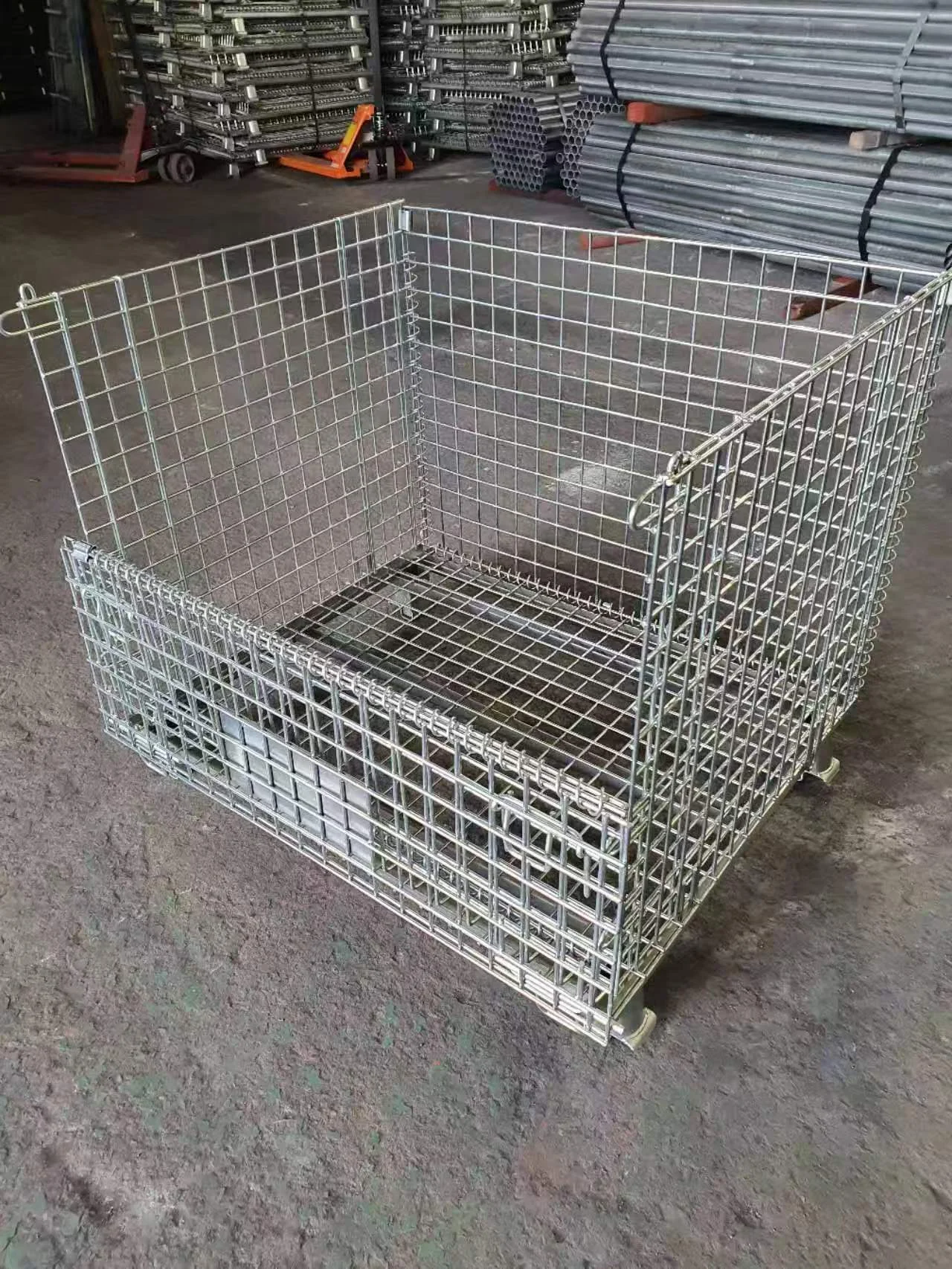
Collapsible wire mesh container for machined and cast iron parts: Q235 welded mesh, reinforced U-channel base, stacking feet, visible 50 × 50 mm mesh and project-defined load limits.

100%
Steel Quality
Heavy
Duty Rating
Custom
Sizes Built
Collapsible Wire Mesh Container for Machined & Cast Iron Parts

A rigid wire mesh container for repeated parts turnover

Cast iron parts crush cartons. Loose floor storage hides inventory and consumes handling space. Stbox converts the load into a stackable steel unit that can be moved by forklift or pallet jack, while the 50 × 50 mm welded mesh keeps the contents visible and ventilated.

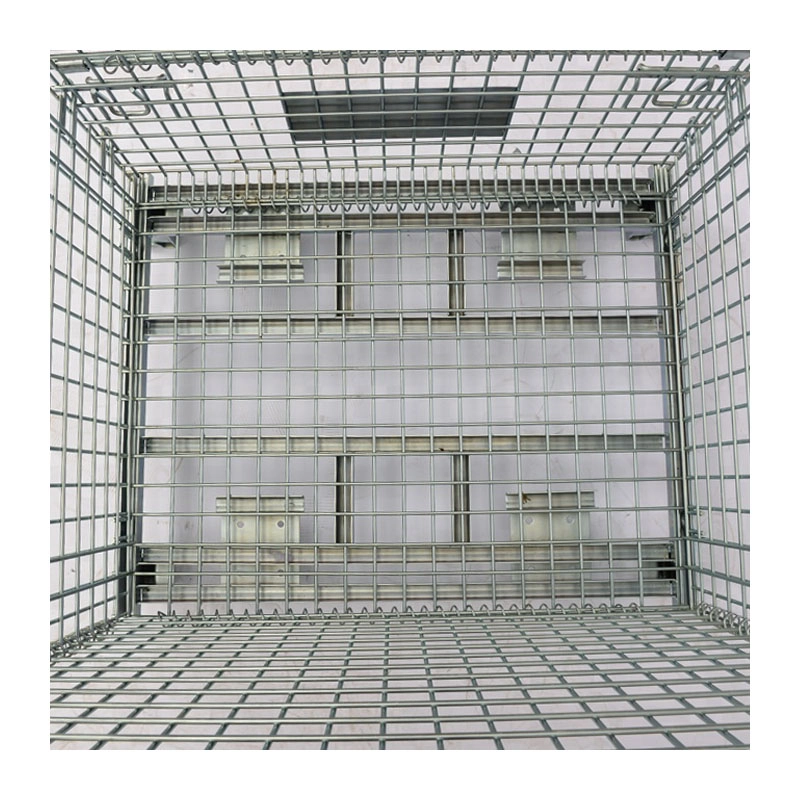
For machining, casting and metal-product plants, the working structure is Q235 welded mesh with a reinforced base, formed stacking feet and a front half-drop gate. The bottom U-channel reinforcement transfers distributed load through the base; the formed feet locate the next container when stacking. This is a project-engineered handling unit, not a universal load rating: final capacity depends on the selected drawing, load distribution, handling equipment and stacking condition.

  • Project load reference: opportunity 15059 records 1,400 kg per container for the 1,000 × 800 × 840 mm configuration.
  • Stacking reference: that same project records four-high stacking with total load on the upper containers limited to 2,000 kg.
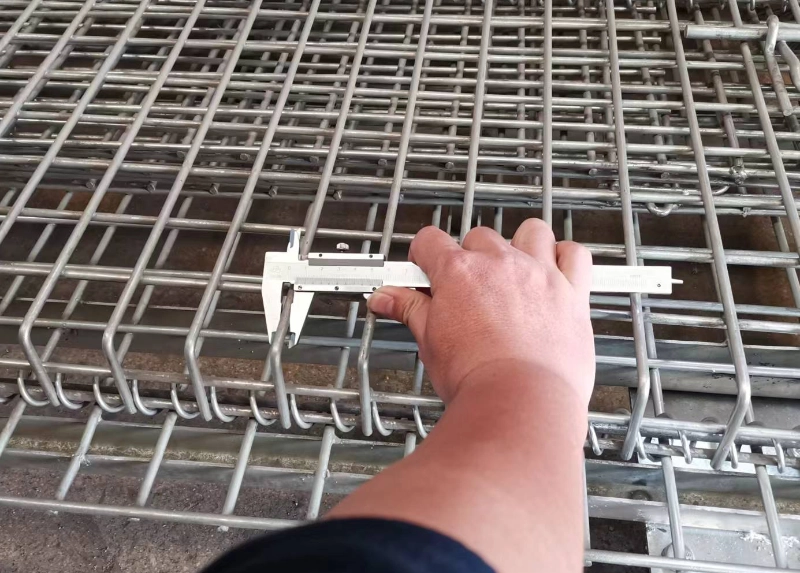
  • Visibility: 50 × 50 mm mesh supports visual stock checks and airflow around metal components.
  • Handling: the base is documented for forklift and pallet-jack use; fork openings, equipment rating and centre of gravity must be checked against the final drawing.
  • Protection option: a PP corrugated-board liner can be specified when small parts, precision surfaces or mesh contact create a containment or scratch risk.

Send part weight and quantity

Choose the container build by load, part geometry and workflow

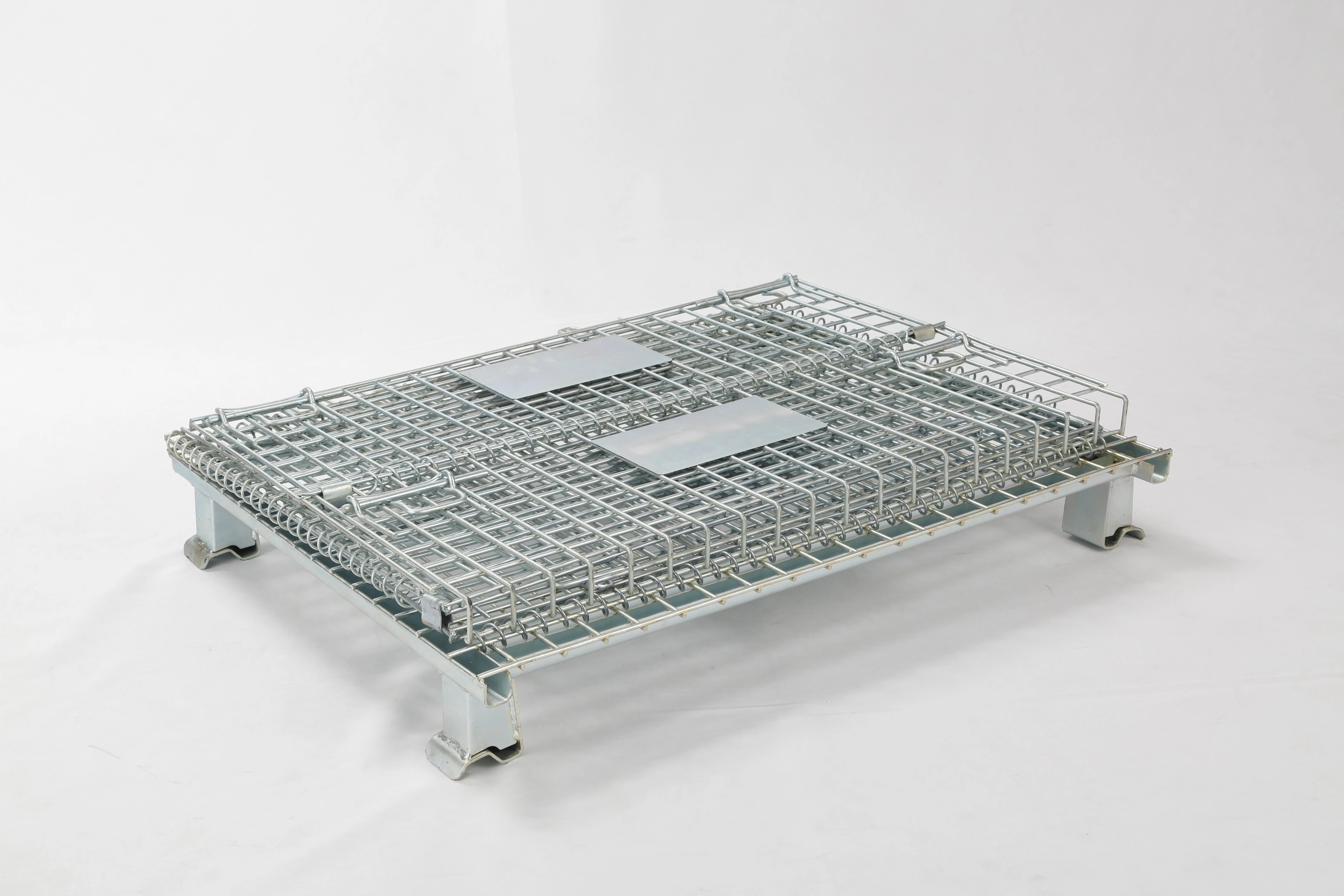
Collapsed galvanized steel wire mesh container in flat-folded configuration for space-saving empty storage.
EMPTY RETURN

Collapsible wire container for plant logistics

Use the assembled cage for parts storage and line-side WIP; fold it when empty to reduce return and staging volume. The folding height is project-specific—only the 13967 configuration is recorded at 190 mm, so it must not be applied to other dimensions.

  • Empty storage and return-volume reduction
  • Confirm fold method, bundle quantity and transport protection
  • Suitable for plants moving reusable containers between processes

Discuss empty-return logistics →

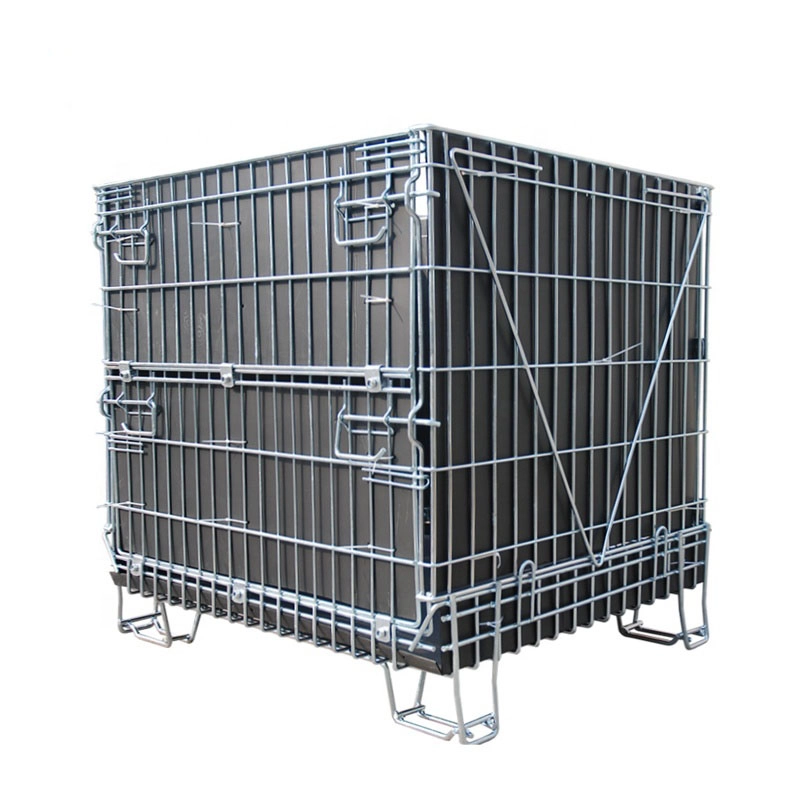
Stackable wire mesh stillage box with custom black corrugated plastic liner for precision component protection.
LINER OPTION

PP-lined build for small or finished parts

A 50 × 50 mm mesh is open enough for inspection and ventilation, but it is not automatically suitable for every part. A PP corrugated-board liner can help contain smaller pieces and separate precision surfaces from the steel mesh.

  • Review the smallest part dimension and orientation
  • Specify liner faces, thickness and fixing method in the quotation
  • Use the liner to address drop-through, abrasion or dust-contact concerns

Check mesh and liner fit →

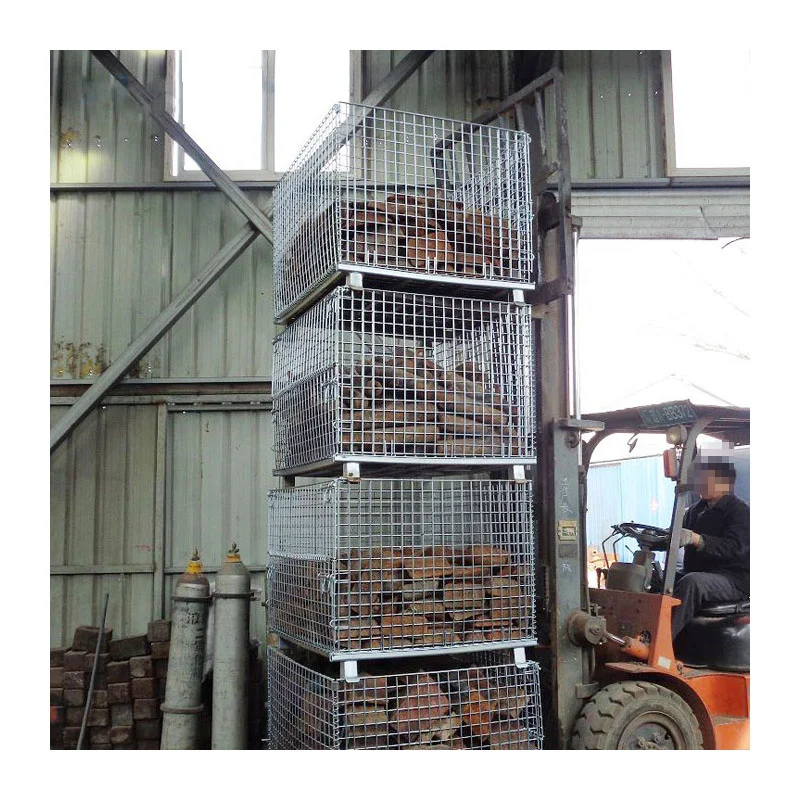
Forklift truck stacking four heavy-loaded wire containers to verify vertical compression strength.
LOAD-DEFINED BUILD

Stacking and handling matched to your load

For the 15059 project reference, the 1,000 × 800 × 840 mm cage is recorded at 1,400 kg per container and four-high stacking with the upper-container total limited to 2,000 kg. These are project figures, not a universal Stbox rating.

  • Confirm static or dynamic load and load distribution
  • Set the upper-load limit for the selected design
  • Verify feet, U-channel base, floor condition and equipment before stacking

Request a load review →

Replace uncertain floor storage with a visible, movable unit

01

Base reinforcement carries the handling path

Q235 welded mesh forms the cage, while the U-channel base reinforcement and formed stacking feet address the concentrated forces created by loaded handling and stacked units. The final reinforcement arrangement is confirmed by project drawing.

02

50 × 50 mm mesh makes inventory visible

Operators can see fill level and part mix without opening a closed box. Air can also pass through the mesh. Before approval, compare the opening with the smallest part and specify a PP liner if a part could pass through or be marked.

03

Half-drop access reduces reach-in work

The documented front drop gate creates a practical manual access point for loading and picking. Confirm opening side, gate geometry and aisle clearance when the cage is used beside machining or assembly stations.

04

Move full, fold empty

Forklift and pallet-jack handling are supported in the project materials, while the collapsible construction reduces empty storage volume. Do not treat a visual four-way entry or a caster version as a standard promise; verify the selected base and equipment interface.

A load review before a container quotation

1

Map the parts

Send the part type, single-piece weight, dimensions, sharp edges, surface sensitivity and the number of pieces per container. Include whether cylindrical parts can roll or rotate toward the mesh.

2

Set the load case

Confirm total contents weight, static or dynamic use, load distribution, forklift or pallet-jack model, aisle conditions and the required stack height. We then select the applicable project envelope rather than combine figures from different jobs.

3

Choose protection and finish

Decide whether the cage needs a PP liner, lid, lock, caster or a half-drop gate. Select electro/cold zinc or hot-dip zinc against the actual indoor, damp, outdoor or chemical environment; coating thickness and acceptance criteria are project items.

4

Approve the drawing

Before production, confirm dimensions, wire gauge, base reinforcement, feet, gate direction, load limits, stacking rule, packaging and inspection method on the final drawing and order confirmation.

Answers before you specify a wire mesh container

How much can one Stbox hold?

There is no single universal Stbox rating. The 15059 project reference records 1,400 kg per cage for a 1,000 × 800 × 840 mm configuration with 50 × 50 mm mesh, full-size 6 mm wire and Q235 material. Other project records show 1,000 kg per cage under different dimensions and load definitions. We need your part weight, quantity, distribution and handling condition before confirming the applicable load.

If I stack four high, how much can the upper boxes carry?

For the 15059 reference only, four-high stacking is recorded with the total weight of the upper containers limited to 2,000 kg. That does not mean every box above the bottom one may be loaded to 1,400 kg. Other project records use different upper-load limits. The final drawing must state the permitted stack height and upper-container total for your selected build.

Will my parts fall through the 50 × 50 mm mesh?

It depends on the smallest cross-section, orientation and whether a part can roll or turn. Larger machined and cast components may be suitable, but no supplier should guarantee containment from the mesh size alone. Send the smallest part dimensions or a photo; specify a PP corrugated-board liner when small parts, burrs, finished surfaces or dust require a barrier.

What dimensions and finishes are available?

Recorded project configurations include 1,000 × 800 × 840 mm, 1,050 × 1,050 × 1,000 mm and 800 × 1,200 × 890 mm. They are separate project variants, not a combined standard specification. Electro/cold zinc and hot-dip zinc options are also project-dependent; confirm the selected dimensions, coating target and environment on the quotation.

Can I use both a forklift and a pallet jack?

The 15059 technical proposal identifies both forklift and pallet-jack handling. Equipment capacity, fork dimensions, entry direction, load centre, floor condition and operating clearance still need review. Inspect the feet, base channels, welds and mesh after impacts; isolate any cage showing distortion, cracked welds or unstable feet.

When is Stbox not the right container?

Choose another configuration or add protection when the contents require a dust-tight or theft-resistant enclosure, when the smallest parts can pass through 50 × 50 mm openings, when surfaces cannot contact steel, or when the selected floor and handling equipment cannot safely support the load. A lid, lock, liner or different container may solve those conditions after review.

Request Pricing Details


    Request Quote List

    Your quote request list is empty.

    Unlock Professional Blueprint Drawings

    Please provide your business contact information to retrieve original CAD/DWG drawings and engineering calculations.