
Derack for Manufacturing Workshop WIP Storage: Safer Stackable Material Racks
derack
Derack steel post pallet and stackable rack solution for safer manufacturing WIP and raw-material storage, forklift handling, 5S control and stillage coordination.
Stop treating unstable floor stacks as storage.
When work-in-process or raw materials sit on mixed, damaged wood pallets, one uneven load, pallet defect or forklift contact can start a leaning stack.
Derack turns each load into a defined steel handling unit. Its base carries the material while removable posts transfer the load path through the rack structure and into the floor. That separates the stability of the stack from the compression strength and condition of the material below.
- Why a wood-pallet stack can fail: uneven pallets, soft or damaged boards, inconsistent load geometry, floor irregularities and side impact can shift the centre of gravity.
- How the posts help: the post-and-base interface creates repeatable vertical alignment; locating feet help the upper rack seat in position instead of relying on loose pallet-to-pallet contact.
- Forklift handling: the rack is moved as a unit through its fork pockets. Operators still need a level approach, clear aisle and confirmed seating before placing another level.
- Stillage coordination: use stillage for enclosed, caged or returnable transport needs; use Derack where stackable post support, open access and direct forklift stacking are the stronger requirements.
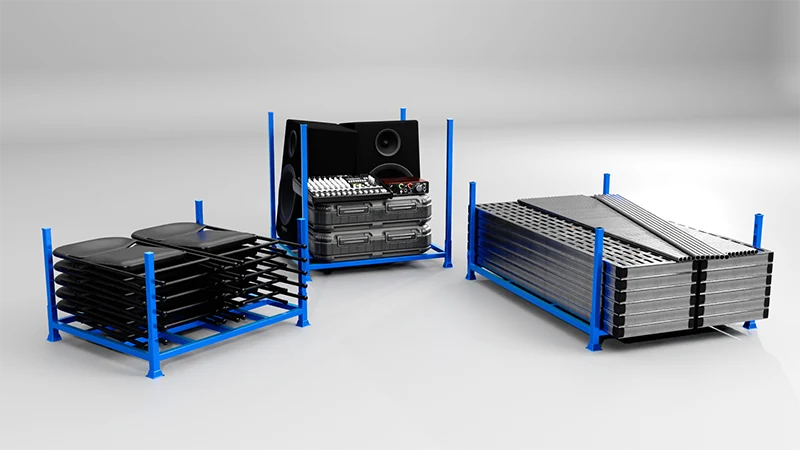
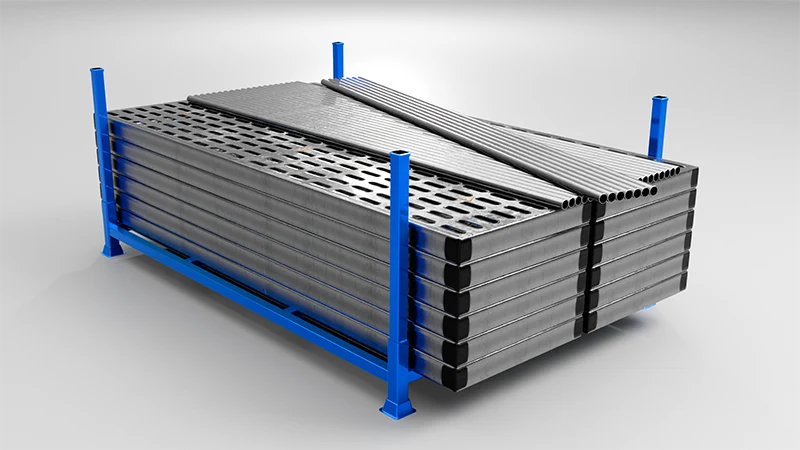
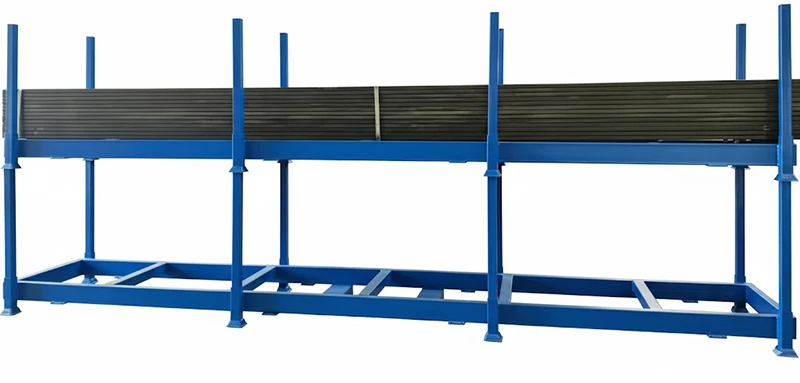
One rack family, different workshop jobs.
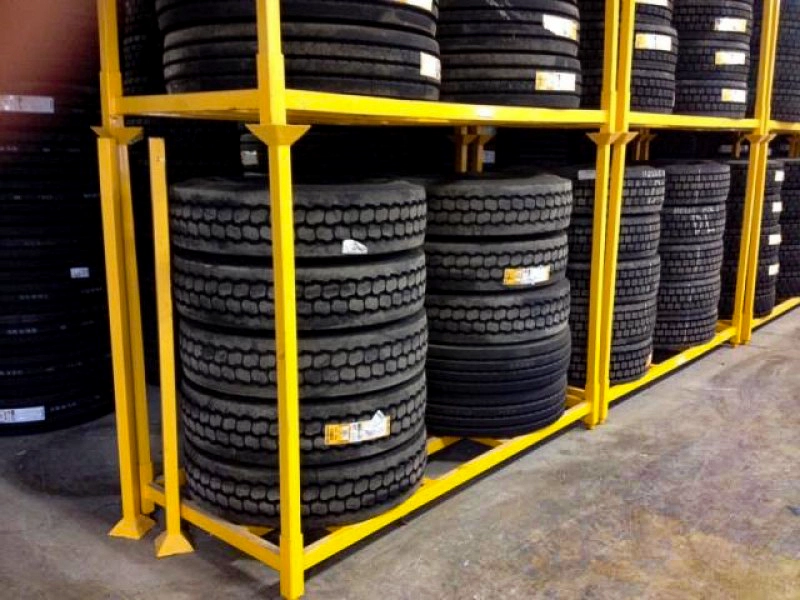
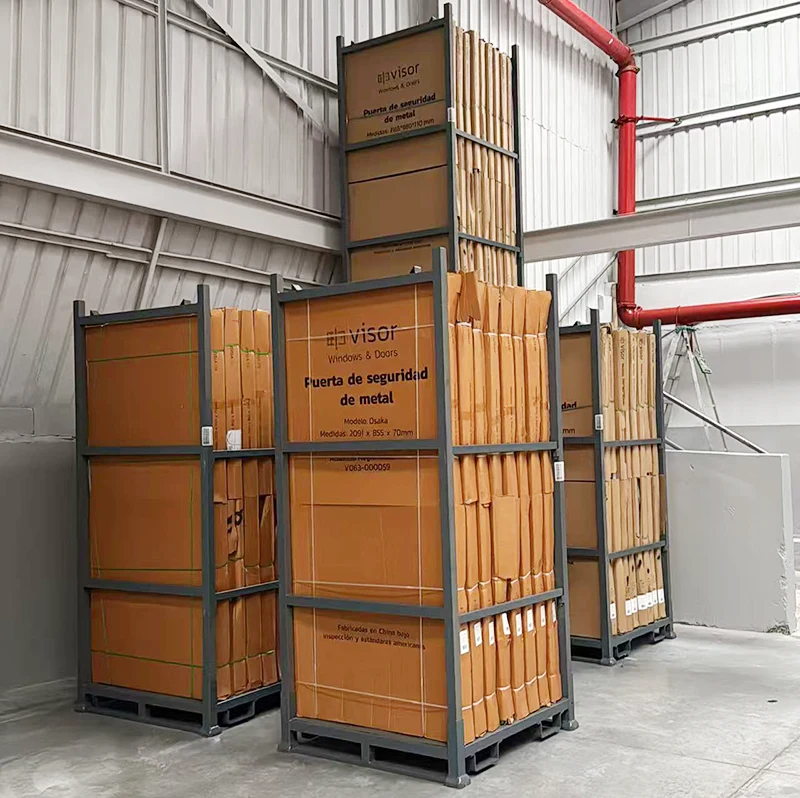 BOXED WIP
Side-panel rack for contained loads
Useful for boxed components, totes or work-in-process that needs lateral containment while remaining forklift accessible.
 LONG MATERIAL
Long-material support configuration
For bars, profiles or other elongated WIP, the post count and support spacing must follow the material length, stiffness and contact points.
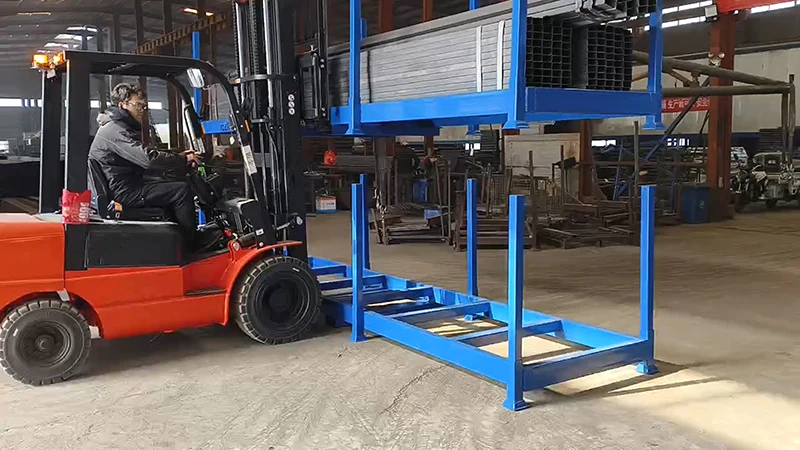 FORKLIFT UNIT
Unitized WIP movement
Move a defined batch from line-side staging to the workshop buffer without rebuilding an unstable pallet stack at every handoff.
What changes after the stack becomes a rack unit.
Repeatable vertical alignment
Locating feet and post interfaces create a defined seating relationship between levels. This helps control sway and misalignment; it does not replace a rated load plan or safe operating procedure.
Load path away from the goods
The posts are intended to carry the load from the upper frame down toward the floor. The actual permissible load depends on the selected design, material and operating conditions.
Forklift-first access
Fork pockets make the rack a handling unit. Approach squarely, keep people clear, confirm the base is fully seated and never place a second level on an incomplete connection.
5S visibility
Defined rack footprints make WIP quantities, lanes and quarantine areas easier to mark and inspect than mixed pallets placed wherever floor space remains.
A practical workshop rollout.
Map the material
Share dimensions, weight, centre of gravity, packaging, access side and whether the load is WIP, raw material or finished goods.
Separate the jobs
Choose post support, side containment, stillage or another method by load behaviour—not by pallet appearance alone.
Set the operating rule
Define forklift approach, stack height, inspection points, exclusion zones and the condition that stops further stacking.
Measure the change
Track near misses, aisle compliance, WIP search time, floor footprint and damage before scaling the layout.
Can Derack fit your safety and 5S boundary?
Why do wood-pallet floor stacks become unstable?
A floor stack depends on the condition and levelness of every pallet, the consistency of each load and the position of the combined centre of gravity. Damaged boards, uneven loads, a sloped floor or side contact can reduce the margin before leaning or sliding. The exact failure mechanism must be checked on site; a generic “one cause” explanation is not a safety assessment.
How do the posts reduce leaning?
The base, posts and locating feet establish a repeatable vertical interface between units. That gives the stack a defined structural path and helps keep levels aligned. It is not permission to exceed the engineered rating, mix incompatible frames or stack on a visibly damaged component.
How does a forklift pick and place Derack?
The operator enters the fork pockets, lifts evenly, travels with the load stable and approaches the destination squarely. Before another rack is placed above, the lower unit must be level, intact and fully seated. Site traffic rules, training and the final handling instructions remain the controlling requirements.
Should we use Derack or a stillage?
Use a stillage when the load needs a cage, fixed perimeter or returnable container function. Derack is better suited when the priority is vertical stacking through post support, open forklift access and a defined base for WIP or raw materials. Some plants use both: stillages for contained parts and Derack units for larger or stack-sensitive loads.
When is Derack not the right choice?
It may be a poor fit for small, fast-pick SKUs requiring constant random access, fully automated shuttle systems with incompatible interfaces, or simple rigid cartons that already stack safely at low cost. It also needs review where the floor, aisle clearance, forklift capacity or load geometry cannot support the planned arrangement.
What should we send for a workshop proposal?
Send load photos, maximum and typical dimensions, weight, quantity per batch, WIP turnover, forklift type, available aisle width, required stack height, floor condition and any 5S or safety-audit findings. We can then discuss the suitable Derack configuration and where stillages or fixed industrial stacking racks should remain in the process.