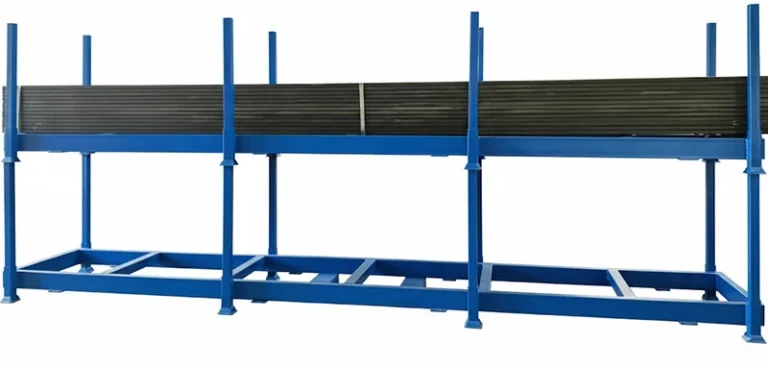
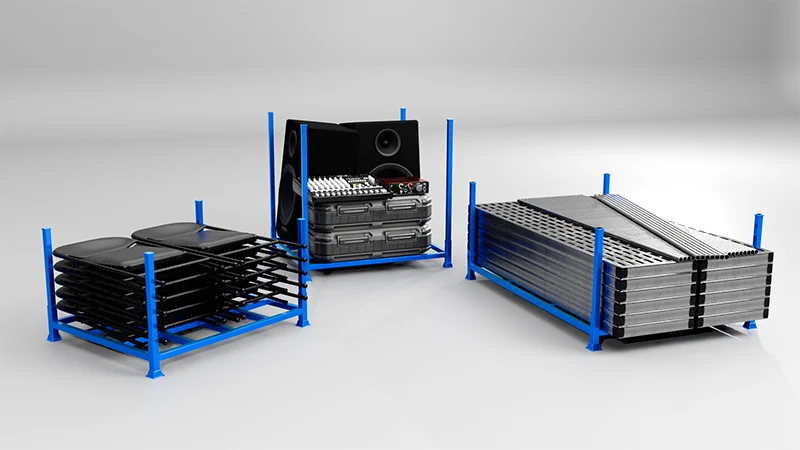
Folding stack rack
Best when the job is low-height, the rack returns locally, and a simple fold-down motion is enough. It is convenient, but tall builds can run into inward-fold interference.

Choose between Derack and folding stack racks based on height, transport volume, maintenance effort, and empty return handling.
selection guide
When the stack gets taller or the return trip gets tighter, the real question is not only how the rack stores goods, but how it moves, returns, and stays workable on site.
Derack is a demountable post rack. The posts are removed rather than folded inward, so tall structures can stay practical without inward-fold interference. A folding stack rack is often convenient in low-height, simple turnover jobs because the frame stays integrated and can be quicker to handle on site. The right choice depends on stack height, transport volume, and how often the rack must return empty.
Best when the job is low-height, the rack returns locally, and a simple fold-down motion is enough. It is convenient, but tall builds can run into inward-fold interference.
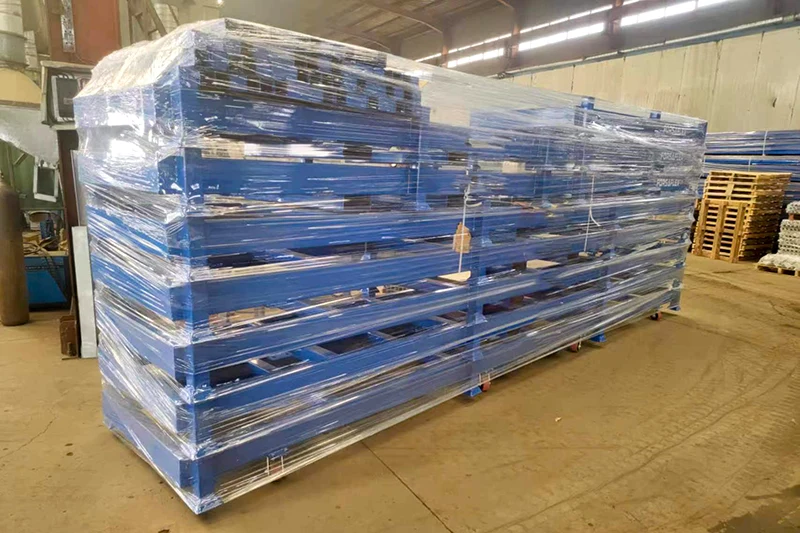
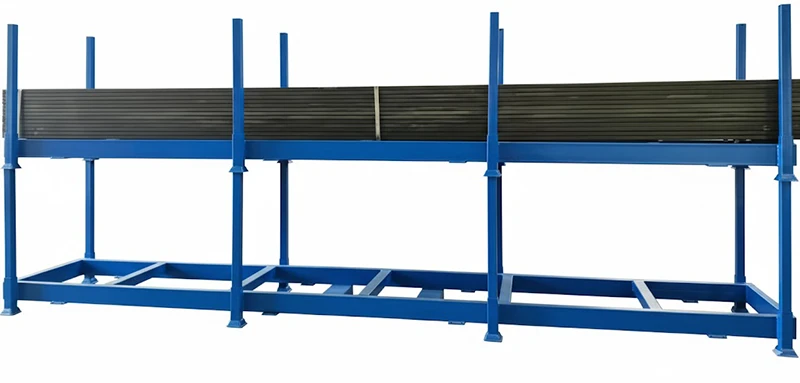
Best when the structure must be taller, or when reducing return volume matters. Remove the posts, stack the frames, and keep transport compact.
Because the posts come out instead of folding inward, Derack avoids the height-interference issue that can appear in folding frames.
When the posts are removed and the frames are nested, empty racks occupy less space in transport and temporary storage.
Derack fits jobs that need temporary storage zones or shifting warehouse layouts, because the rack can be moved, dismantled, and rebuilt by project need.
Folding racks usually bring more hinges and moving joints to inspect, while Derack shifts attention to post tracking and lock-point management. Both need control; the risk profile is just different.
Check the clear height of the goods and the planned stack height. If the frame must stay tall, the inward-fold path becomes the first constraint to test.
If empty racks will travel back often, compare how much compact nesting can reduce space and handling cost.
Choose folding when the job is low-height and simple. Choose Derack when the stack must stay tall, or when transport volume is the main pressure point.
Inspect hinges, latches, posts, and contact points on a set schedule. For Derack, make sure removable posts are stored, counted, and matched to the rack set.
A folding stack rack relies on an inward folding motion, while Derack uses removable posts. That is why Derack can stay practical when the structure needs more height.
When the application is low-height, the turnover is simple, and quick in-place handling matters more than compact empty return.
When the structure needs to be taller, or when reducing the return-trip volume of empty racks matters to transport and storage planning.
A folding rack usually has more moving joints and latch points to inspect. Derack has separate posts, so the main risk is post tracking and set management. The better choice depends on which risk your team can control more reliably.
Use this page to decide the structural direction first, then compare the broader selection path on PDP-01 and PDP-08 before you finalize the build.