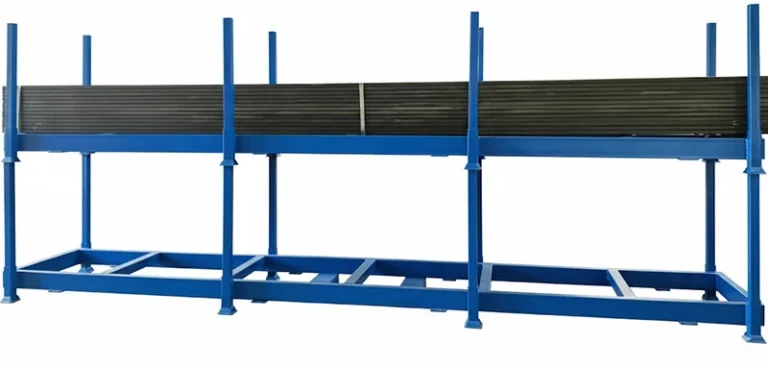
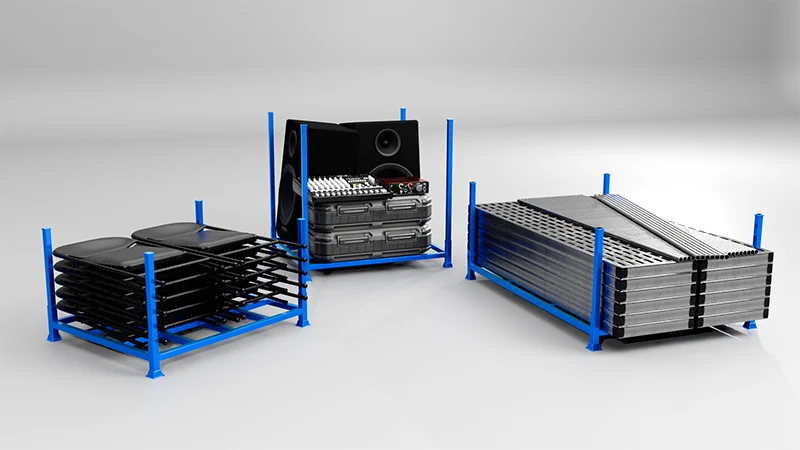
Estante dobrável
Melhor quando o trabalho é de baixa altura, a estante retorna localmente e um simples movimento de dobrar é suficiente. É conveniente, mas construções altas podem sofrer interferência de dobra interna.

Escolha entre Derack e estantes dobráveis com base na altura, volume de transporte, esforço de manutenção e manuseio de retorno vazio.
Guia de seleção
Quando a pilha fica mais alta ou o retorno fica mais apertado, a verdadeira questão não é apenas como a estante armazena mercadorias, mas como ela se move, retorna e permanece funcional no local.
Derack é uma estante desmontável com postes. Os postes são removidos em vez de dobrados para dentro, para que estruturas altas possam permanecer práticas sem interferência de dobra interna. Uma estante dobrável é frequentemente conveniente em trabalhos de baixa altura e giro simples, pois a estrutura permanece integrada e pode ser mais rápida de manusear no local. A escolha certa depende da altura da pilha, volume de transporte e frequência com que a estante deve retornar vazia.
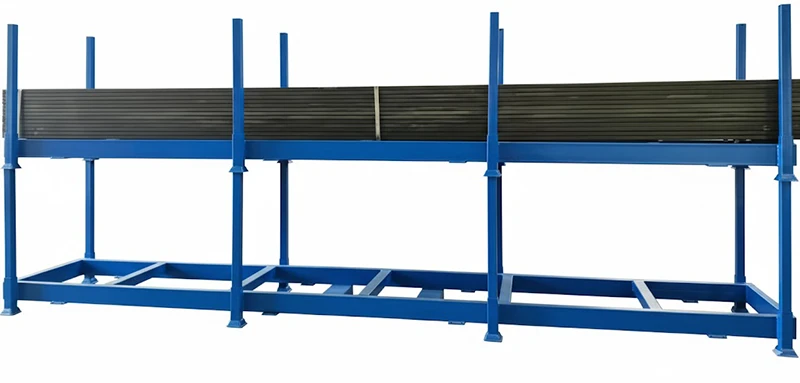
Melhor quando o trabalho é de baixa altura, a estante retorna localmente e um simples movimento de dobrar é suficiente. É conveniente, mas construções altas podem sofrer interferência de dobra interna.
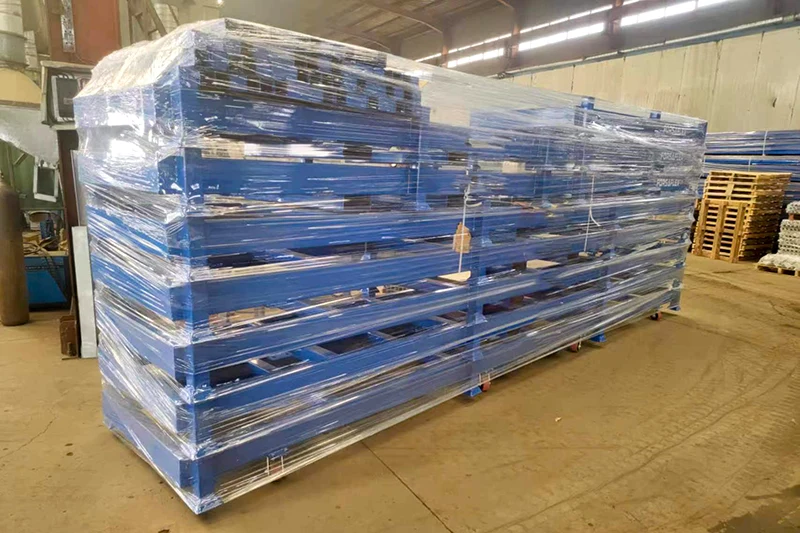
Melhor quando a estrutura precisa ser mais alta ou quando reduzir o volume de retorno é importante. Remova os postes, empilhe as estruturas e mantenha o transporte compacto.
Como os postes saem em vez de dobrar para dentro, o Derack evita o problema de interferência de altura que pode aparecer em estruturas dobráveis.
Quando os postes são removidos e as estruturas são aninhadas, as estantes vazias ocupam menos espaço no transporte e armazenamento temporário.
Derack adapts to jobs that need temporary storage zones or changing warehouse layouts, as the rack can be moved, disassembled, and rebuilt as the project requires.
Folding racks usually bring more hinges and moving joints to inspect, while Derack shifts attention to post tracking and lock point management. Both need control; the risk profile is just different.
Check the clearance height of the goods and the planned stack height. If the structure needs to stay tall, the internal folding path becomes the first restriction to test.
If empty racks frequently travel back, compare how much compact nesting can reduce space and handling cost.
Choose folding when the job is low-height and simple. Choose Derack when the stack needs to stay tall or when transport volume is the main pressure point.
Inspect hinges, locks, posts, and contact points on a set schedule. For Derack, ensure removable posts are stored, counted, and matched to the rack set.
A folding rack relies on an inward folding movement, while Derack uses removable posts. That is why Derack can remain practical when the structure needs more height.
When the application is low-height, turnover is simple, and fast on-site handling matters more than compact empty return.
When the structure needs to be taller or when reducing the return volume of empty racks is important for transport and storage planning.
A folding rack usually has more moving joints and lock points to inspect. Derack has separate posts, so the main risk is post tracking and set management. The best choice depends on which risk your team can control more reliably.
Use this page to decide the structural direction first, then compare the wider picking path on PDP-01 and PDP-08 before finalizing the build.