
Galvanized Wire Mesh Container for Semi-Outdoor and Outdoor Parts Staging
Stbox
Galvanized wire mesh container options for outdoor and semi-outdoor parts staging: compare ≥8 μm electro-galvanized, about 10 μm cold-galvanized and about 10–40 μm project records, then set coating acceptance by environment.
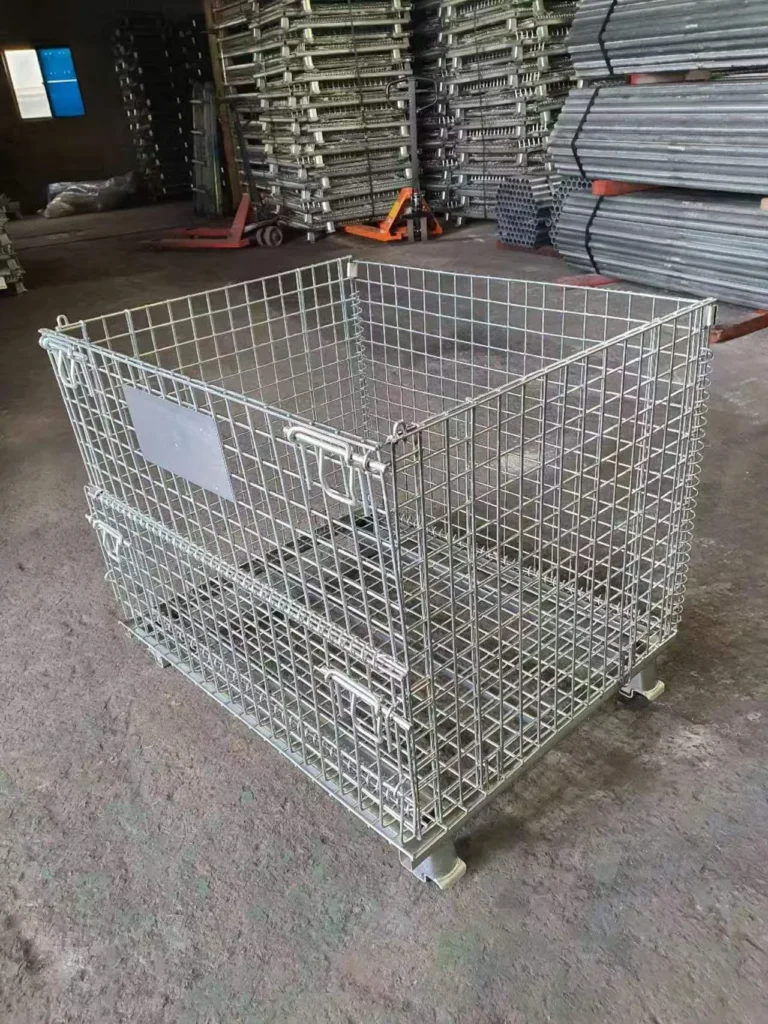
Choose the zinc layer after you define the yard
A galvanized cage is not automatically an outdoor solution. Stbox is a collapsible wire mesh container for industrial parts staging, but the right surface record depends on whether your stock sits indoors, under a roof, in a damp area, or fully exposed.
For a semi-outdoor or outdoor parts staging project, confirm the exposure before fixing the quotation: rain and drainage, condensation, standing water, salt spray, chemical contact, cleaning agents, handling damage and the service expectation. The available project records include electro-galvanized at ≥8 μm, cold-galvanized at about 10 μm, and a cold/hot-galvanized quotation record of about 10 μm/40 μm. These are project options, not one universal Stbox specification or a blanket rust-life promise.
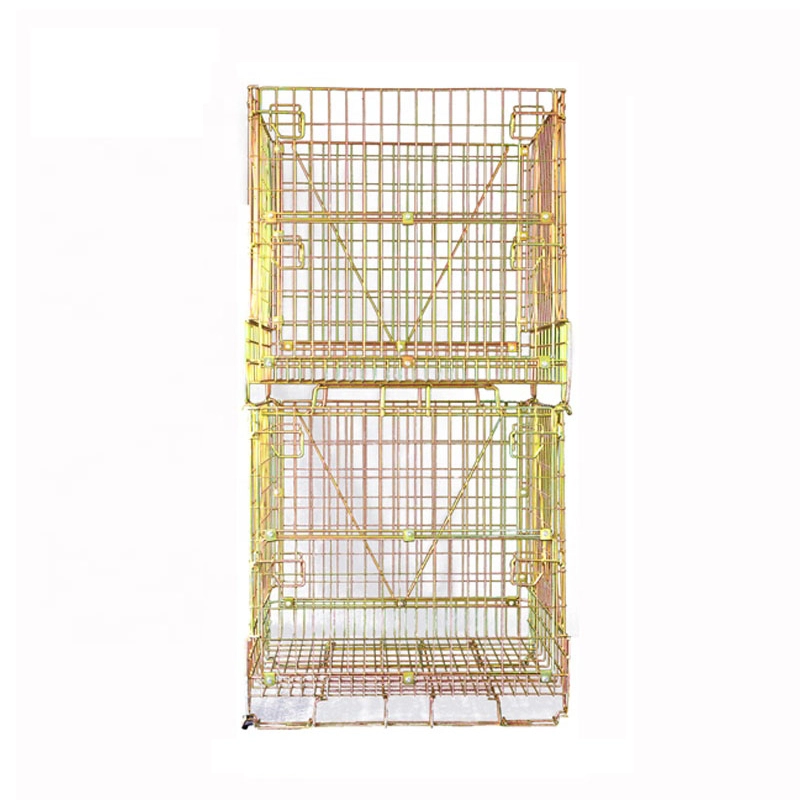
- Q235 welded wire mesh container with a collapsible structure for empty return and storage.
- 50 × 50 mm mesh is recorded across projects; check the opening against your smallest parts before ordering.
- Half-drop gate supports manual access to stored components; gate side and opening direction follow the approved drawing.
- Forklift and pallet-jack handling are documented project uses; confirm fork openings, load centre and equipment before full-load operation.
- Bottom reinforcement and stack feet support repeated handling, subject to the selected project drawing and load rules.
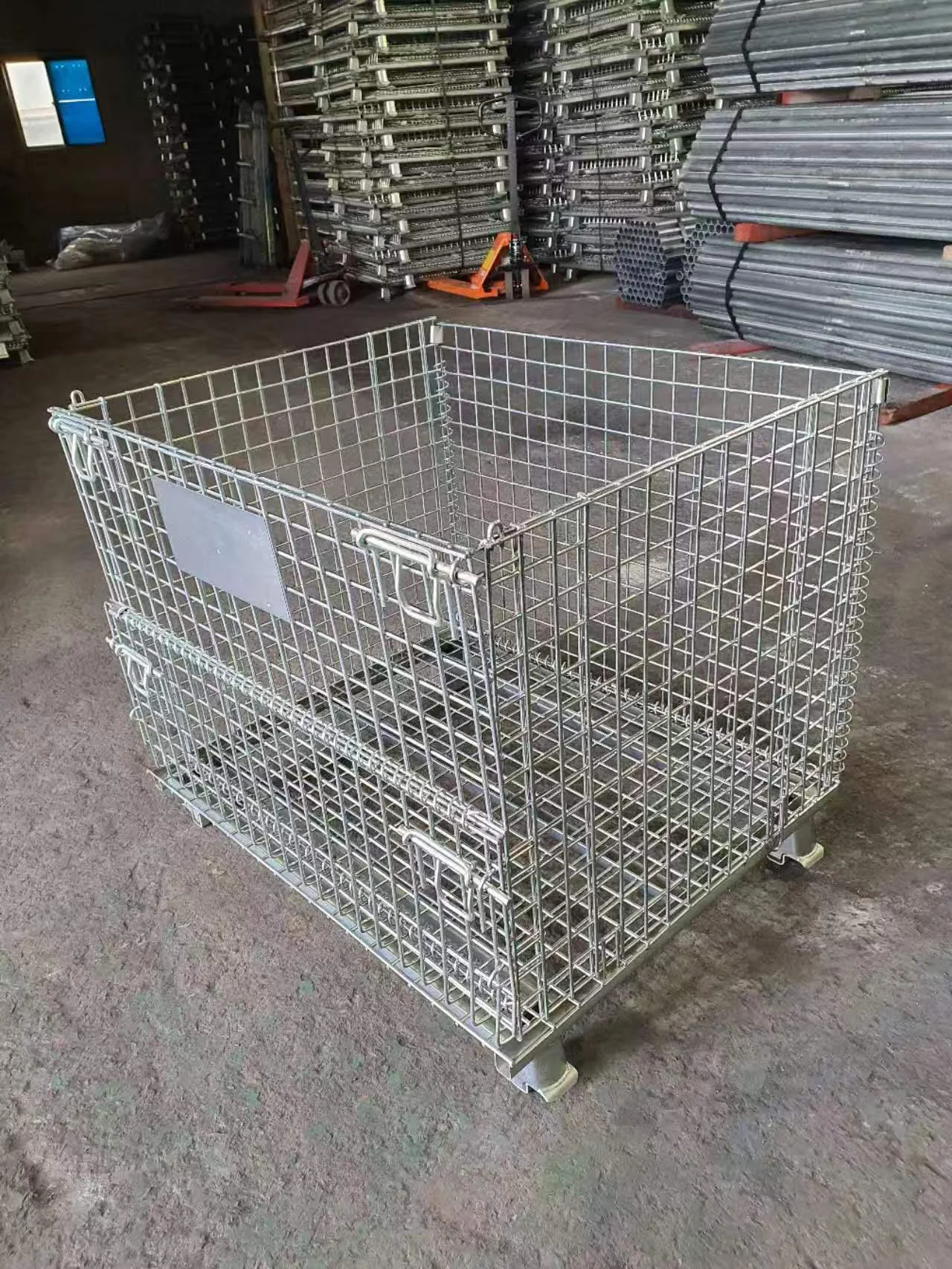
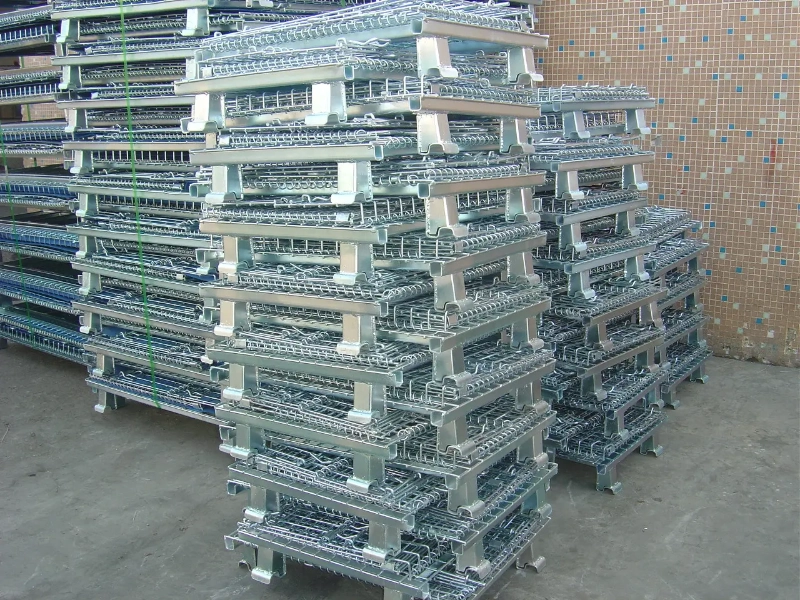
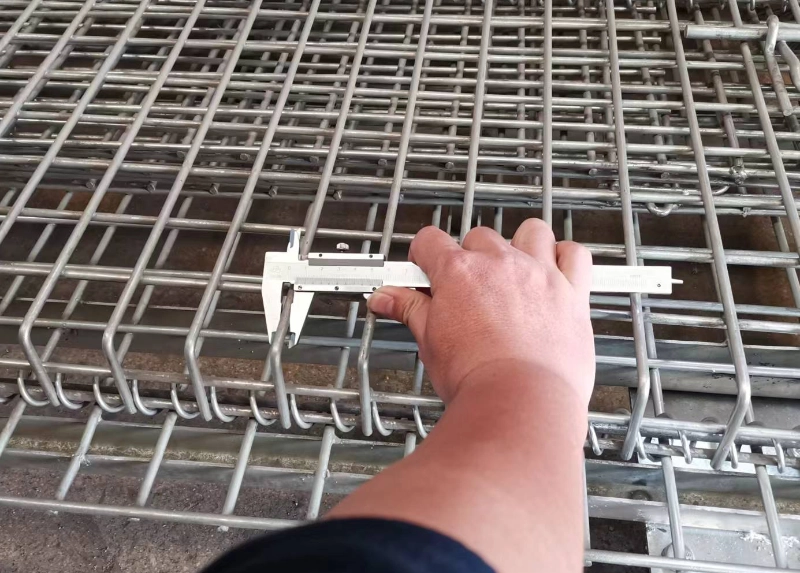
Three coating records, three questions to settle
≥ 8 μm RECORD
Electro-galvanized
A 13967 project records electro-galvanizing with a zinc layer of ≥8 μm and describes use in an open yard against rainwater. Use this record only when the project environment, exposure pattern and inspection wording match; it is not a universal long-term outdoor guarantee.
ABOUT 10 μm RECORD
Cold-galvanized
Cold-galvanized Stbox is recorded at about 10 μm in the 15059 and 15217 project materials. It can be considered for general warehouse circulation or a controlled semi-outdoor area only after the actual wetness, condensation and damage risks are reviewed.
ABOUT 10 / 40 μm RECORD
Hot-galvanized option
The 15059 quotation records cold and hot galvanizing at about 10 μm / 40 μm. Confirm which value belongs to each process in the final offer. A thicker record may be considered for greater exposure, but it does not by itself establish a salt-spray grade, chemical resistance or service life.
Solve the handling problem without hiding the corrosion decision
Visible inventory
The welded mesh lets operators identify parts without opening a solid box. For small, delicate or dust-sensitive components, assess whether a PP hollow-board liner is needed.
Fold for the return leg
When empty, the cage folds down to reduce storage and return-transport volume. The 190 mm folded height is recorded for the 13967 configuration only and must not be applied to every size.
Built around movement
Project records support forklift and pallet-jack handling. Safe operation still depends on even loading, centre of gravity, fork dimensions and smooth lifting rather than on the cage name alone.
Audit the coating
Set the zinc-layer target, measurement method, sampling location, minimum local value and repair rules in the purchase documents. Do not accept “galvanized” as the complete corrosion specification.
A practical coating-selection workflow
Describe the exposure
Tell us indoor, covered semi-outdoor or fully exposed use; include rain, condensation, drainage, humidity, salt spray, chemicals and washing routine.
Match the cage variant
Confirm dimensions, gate side, mesh, wire, load definition, stacking arrangement and handling equipment. The three project sizes and load records cannot be merged into one standard model.
Write the zinc target
Choose the applicable project record—≥8 μm, about 10 μm or about 10 / 40 μm—and require the final quotation to state the process, target, measurement method and acceptance limits.
Approve before production
Review the engineering drawing, corrosion requirement and inspection wording before release. For long-term outdoor, damp, salt-spray or chemical service, obtain a project-specific corrosion review rather than relying on a generic life claim.
What to confirm before choosing a galvanized cage
Can I use this wire mesh container outdoors?
It can be considered for outdoor or semi-outdoor parts staging when the selected coating and operating conditions are matched. One 13967 record describes electro-galvanized ≥8 μm use outdoors against rainwater. That project description must not be expanded into a long-term rust-prevention promise for every coating or climate.
Should I choose electro, cold or hot galvanizing?
Start with exposure, not the process name. Electro-galvanized ≥8 μm is a documented project record; cold-galvanized about 10 μm appears in two project records; and 15059 records a cold/hot quotation at about 10 μm / 40 μm. For persistent wetness, salt spray or chemicals, the final process and corrosion requirement need project confirmation.
How do we set the zinc thickness and acceptance standard?
Put the target and unit in the order documents, then define the coating process, test method, measuring points, minimum local result, coverage and uniformity, visible defects, touch-up treatment and document supplied with inspection. The current records do not establish one universal salt-spray class or acceptance standard.
Are the listed dimensions and capacities standard for every Stbox?
No. The source records describe 800 × 1200 × 890 mm with a 1000 kg dynamic-load record, 1000 × 800 × 840 mm with a 1400 kg single-cage record, and 1050 × 1050 × 1000 mm with a 1000 kg single-cage record. They are separate project configurations. Confirm the drawing, static or dynamic load definition, distribution, stacking height and upper-load limit.
What is not suitable without additional confirmation?
Do not use the base specification as an automatic solution for continuous immersion, standing water, salt spray, chemical exposure, food-contact use, dust-tight containment or security control. Assess coating, liner, lid, lock, drainage, maintenance and handling requirements separately.
What should I send for a coating recommendation?
Send the exposure location, covered or open storage, wet/dry cycle, salt or chemical contact, target use period, cleaning method, parts and weight, required dimensions, stacking plan, handling equipment, quantity and delivery location. We will return a coating option and an inspection wording for confirmation.