
Every export cycle starts with the same purchase: another crate. A wooden motorcycle crate is quoted by surface area, roughly 90 CNY per square meter as a design reference, and it gets consumed along the way. It protects one bike once, then ends up in a landfill, broken panels, or a scrap heap waiting for a skip. None of it comes back to you.
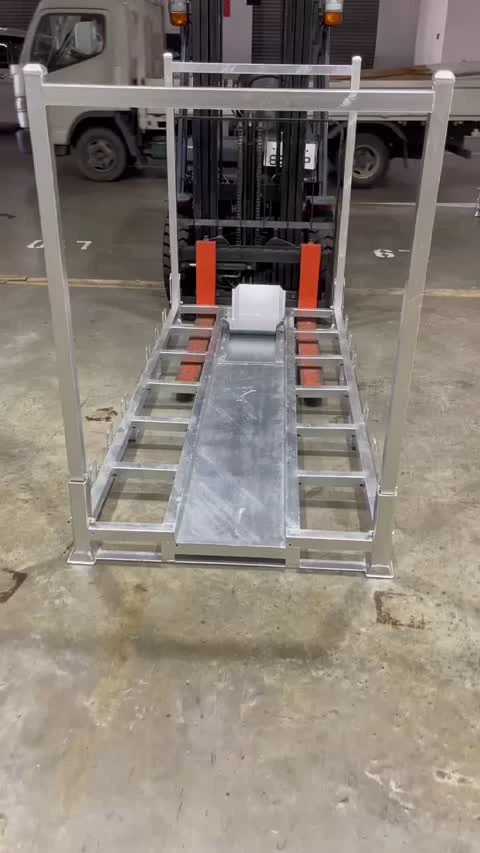
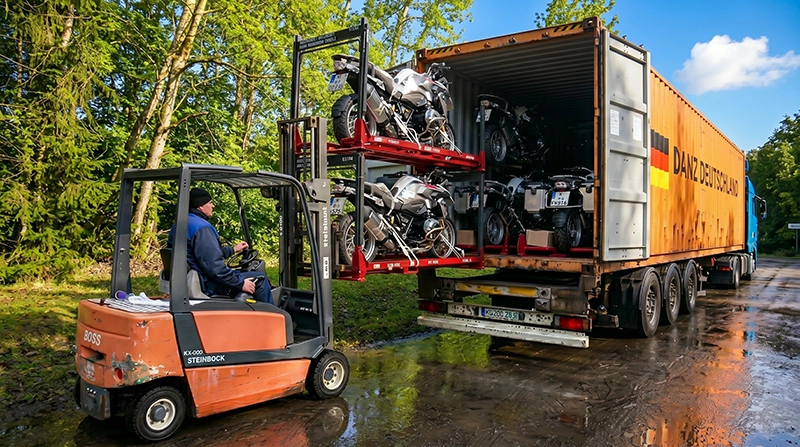
A reusable motorcycle shipping rack is bought once and works for the next shipment too. The Mtrack steel platform carries the bike as a forklift-movable unit, stacks under a second tier when the structure allows, and returns as a folded or knocked-down base instead of an empty box. The point is not that steel is stronger than wood. The point is that one of them gets thrown away after every trip.
What a single-use wooden crate really costs per shipment
The 90 CNY per square meter reference is a panel-area price, so the invoice arrives with the geometry of your crate: the bigger the bike and the more clearance you want around it, the more square meters of panels, battens, and blocks you buy. Then the crate is used, once. If the destination dealer damages a panel while opening it, the crate is finished even if the bike arrives intact.
There are three hidden costs behind that single invoice. The first is the repeated purchase: ten shipments mean ten crate purchases, ten sets of labor hours, and ten disposal costs at the far end. The second is the cubage and weight of the packaging, which reduce what you can load. The third is the treatment and documentation burden that solid wood packaging carries in many markets: check the entry regulations for your destination, because they apply to the crate, not the motorcycle.
Where the reusable rack changes the arithmetic
Mtrack is a steel motorcycle platform, not a catalog item with a code. The wheel channel, ramps, front-wheel locating or locking, U-strap hooks, two- or four-way fork entry, and stackable posts are configured to your bike's footprint, your forklift, and your container or trailer limits. That configuration is what makes the reuse idea practical: the rack locates the same bike the same way at cycle one and cycle forty.
The return trip is where a fixed rack would lose the advantage. With folding posts, plug-in posts, or a folding side plus a removable side, the loaded rack goes out as a complete unit and comes back as bases plus bundled posts. One registered design nested 12 empty racks into a 2,490 mm column. That is a design figure, not a standard, but it shows how the return trip is plannable rather than a wall of empty crates.
- The rack is reused: the same unit absorbs the next bike, the next container, the next season.
- The empty return is designed: folding or removable posts turn height into a compact stackable base.
- Handling is repeatable: fork openings, wheel position, and anchor points stay identical from cycle to cycle.
- Damage is inspectable: posts, pins, welds, and base members can be checked and repaired, unlike a crushed panel.
How many racks fit: 40HQ and 20ft figures that change with the design
On the outbound trip, registered Mtrack layouts reach 72, 88, and 90 racks in a 40-foot high cube container, and 28, 32, 35, or 56 in a 20-foot container. One further registered layout reached 135 racks in a 40HQ with a different rack size and a different loading direction. Read these numbers the way we do: as design results, not as an off-the-shelf specification. Rack footprint, post type, foldability, wheel chocks, packaging, and motorcycle loading direction all affect the count.
This is also why we will not convert a crate into a rack on paper. A crate is a single-use packaging measured in square meters; a rack is an asset measured in cycles. There is no fixed equivalence factor between the two, and quoting one would only hide the variables that determine your real cost. The quantity per container is confirmed against the final approved packaging, together with the technical drawing.
The cost lines that actually change
| Cost line | Single-use wooden crate | Reusable steel motorcycle rack |
|---|---|---|
| Purchase mode | Bought again on every shipment | One capital unit, reused every cycle |
| Reference price basis | About 90 CNY per square meter of panel | Quoted per rack from the approved drawing |
| After delivery | Consumed, not recovered | Recovered as a folded frame or bases with posts |
| Ritorno a vuoto | Nothing to return | Designed return volume, confirmed per project |
| Repeated handling | New build, new fit every time | Same fork entry points, wheel position, and tie-down points |
I carichi utili di progetto registrati si attestano a 250, 350 o 500 kg per pallet, soggetti a revisione del progetto, e i pesi a vuoto di riferimento vanno da 70 a 108 kg. Questi intervalli esistono perché la cremagliera è progettata su misura, non selezionata da un catalogo. Il vostro carico utile, il numero di piani e la finitura sono fissati sul disegno, e qualsiasi cifra di risparmio diventa reale solo dopo — che è il limite onesto di questo articolo. Quanto risparmia un ritorno a vuoto dipende dalla distanza, dalla tariffa del trasportatore, dall'utilizzo del container e da quante cremagliere potete recuperare per viaggio. Non pubblicheremo una percentuale che non possiamo supportare per la vostra rotta.
Quando la cassa in legno resta la risposta giusta
Una cremagliera riutilizzabile è una decisione a ciclo chiuso, e alcune spedizioni non sono un ciclo.
- Esportazione unidirezionale senza percorso di ritorno: nessuno rispedisce indietro la cremagliera, quindi diventa una cassa costosa.
- Frequenza molto bassa: una singola moto ogni pochi anni non giustifica un asset in acciaio.
- Nessun carrello elevatore o partner di movimentazione a destino: una cassa può essere smontata in loco, una cremagliera richiede attrezzature per essere spostata.
- Stoccaggio prolungato all'aperto: l'acqua stagnante all'interno di sezioni cave può avviare ruggine interna, quindi è richiesto stoccaggio coperto o una finitura concordata.
Se due o più di queste condizioni si applicano, acquistate la cassa e investite il budget nella protezione. Se le vostre moto tornano a casa, continuate a leggere.
Cosa inviarci per un piano dei costi basato sulla spedizione
Noi quotiamo in base al vostro schema di spedizione, non da un listino prezzi. Inviate il numero di spedizioni al mese o a stagione, il tipo di container che caricate (20ft, 40ft, 40HQ), l'ingombro e il peso della motocicletta, se la cremagliera ritorna a voi o al concessionario, il mercato di destinazione e come la cremagliera caricata deve essere movimentata a entrambe le estremità.
Con questi input possiamo dimensionare la cremagliera, definire il sistema pieghevole o smontabile per il ritorno a vuoto e confermare il numero di container sull'imballo approvato invece che su un'ipotesi. Iniziate con il sistema pieghevole in cremagliera pieghevole piatta per spedizioni a basso costo a vuoto, il piano di carico in cremagliera per motociclette impilabile per carico container 40ft, o la configurazione completa in cremagliera pieghevole all-in-one per carico, impilamento e logistica di ritorno.
FAQ
Una cremagliera riutilizzabile per motociclette è più economica di una cassa in legno già dalla prima spedizione?
No, e non lo sosterremo. La cassa è una fattura una tantum più piccola; la cremagliera è un'unità di capitale che si ripaga nel tempo su più cicli. Il punto di pareggio dipende dalla frequenza delle spedizioni, da quante cremagliere riuscite a recuperare per viaggio di ritorno e dalla tariffa del trasporto su quella rotta, quindi viene calcolato per progetto.
Potete dirmi esattamente quante cremagliere entrano nel mio container prima che io ordini?
Possiamo impegnarci su un numero una volta che siano fissati dimensioni della cremagliera, disposizione dei montanti o pieghevolezza, fermaruote, metodo di imballo e direzione di carico. Schemi registrati da 72 a 90 cremagliere in un 40HQ e da 28 a 56 in un 20ft mostrano la variabilità che queste variabili creano, non una promessa per il vostro carico.
Cosa succede alle cremagliere nel viaggio di ritorno?
I montanti si piegano, si estraggono, o un lato si piega mentre l'altro si stacca, così le cremagliere vuote viaggiano come basi più montanti raggruppati. Un progetto registrato ha nidificato 12 cremagliere vuote in una colonna di 2.490 mm. La disposizione esatta, l'altezza di impilamento e il tasso di recupero vengono concordati sul disegno prima della produzione.
Serve una Soluzione di Stoccaggio Personalizzata?
Parli direttamente con i nostri ingegneri tecnici. Offriamo progetti strutturali gratuiti, valutazioni di cataloghi per carichi pesanti e preventivi B2B rapidi.
Richiedi un Preventivo Ora →