
When a motorcycle pallet rack is moved as a loaded unit, the handling logic changes immediately. Instead of pushing, lifting, and re-tightening the bike or frame manually, the team works with a forklift-ready base, a wheel chock or guide rail, and defined tie-down points. This reduces contact steps, lowers exposure to scratches, and makes stacking movements easier to control in a warehouse, export yard, or dealership depot.
For warehouse and safety teams, the main question is simple: can the rack be moved without adding extra contact points? Ttrack was built on that idea. The indexed images show a welded steel base, fork pockets, wheel containment, protective columns, stackable corner interfaces, and a mesh deck that supports repeatable unit handling. The result is not a flat pallet that still requires guesswork. It is a motorcycle transport pallet and storage rack designed for forklift transfer and returnable use.
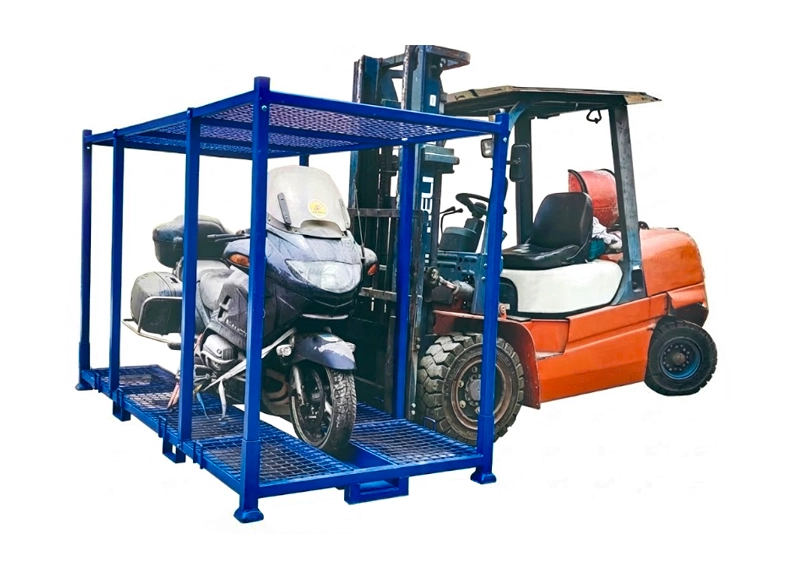
Why moving the entire rack reduces manual bruising and handling losses
The main gain is fewer human contact points. If workers have to roll, tilt, or guide a motorcycle step by step, each movement adds risk of crushing, panel friction, tire slippage, and fatigue. When the load is secured on a steel motorcycle pallet rack, the forklift takes over the heavy transfer. The rack becomes the movement unit, so operators do not need to keep touching the bike, rebalancing it at every stop, or guiding it manually across the floor.
This matters in three common situations: final line preparation, dealership depot storage, and export container loading. In all three, the team wants a repeatable load unit. The pallet base gives the forklift a clear entry path, while wheel containment and tie-down points prevent the motorcycle from shifting within the frame. The body moves less, the frame moves more predictably, and the handling path is easier to standardize.
Why a steady lift speed matters more than raw speed
Lifting fast is not lifting safely. A motorcycle rack has a higher center of gravity than an empty frame, and an abrupt start can shift the load toward the fork tips or make the bike sway inside the cage. That is why a smooth lift matters: insert the forks fully, keep the mast square, raise at a controlled speed, and travel only after the unit is stable. The goal is not to rush the move; it is to keep the load calm from floor to destination.
A controlled lift also protects the frame itself. The welds, fork pockets, and locating points are designed to work as a single structure. If the operator jerks the base or hits a floor joint at speed, the unit can twist and transfer shock to the bike's contact points. In practice, a slow, steady move is a scratch-reduction measure and a stacking safety measure at the same time.
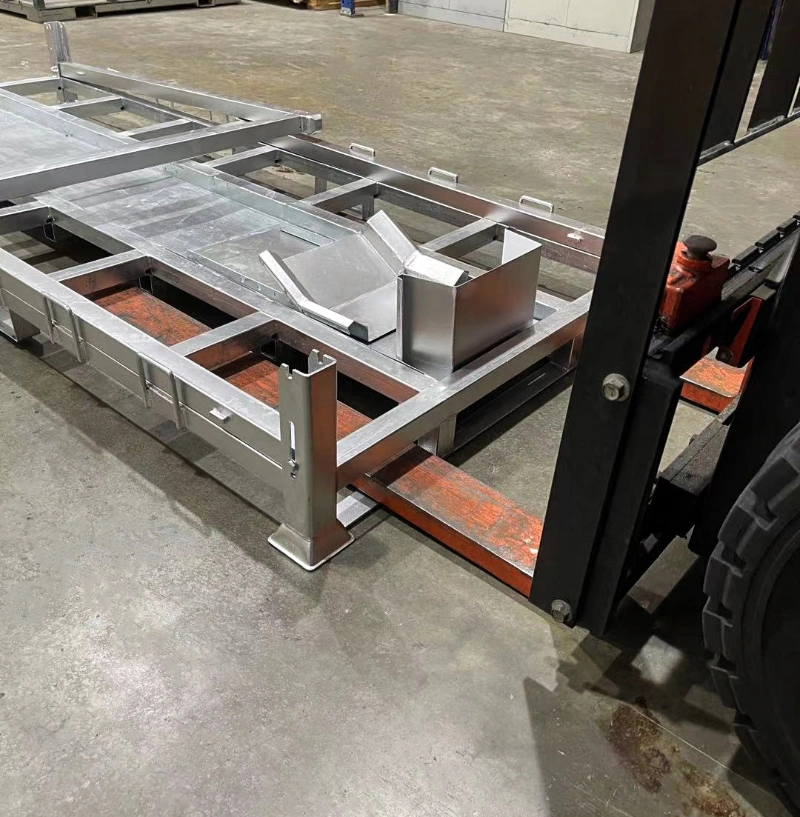
Como reduzir arranhões e pequenos danos durante a transferência
Scratches usually appear when a load is hand-guided, dragged on the floor, or touched too many times before reaching storage. The safest approach is to limit contact to the designed touch points: the wheel chock or guide rail, the tie-down points, and the load-bearing frame structure. That is why Ttrack's indexed images show the bike captured inside a steel base rather than resting loose on an open deck.
The deck and finish also matter. A mesh deck helps with drainage and inspection, while painted or galvanized steel improves durability in the right environment. The blog summary notes that the exact finish should be confirmed by quotation, because not every line needs the same corrosion package. The important part is that the rack remains reusable and the surface condition can be checked before the next move.
For safety teams, scratch prevention is not just about appearance. Paint damage can expose metal, loose straps can leave a bike unstable, and repeated handling can create hidden damage that only shows up later. A forklift-ready rack reduces those repeated touches and keeps the bike in a controlled unit.
Stacking safely: the checks that matter before releasing the load
Stacking is only useful when the frame is built for it and the team follows the approved arrangement. The indexed visuals show empty stacking examples of two, three, and four levels, which proves the platform is intended for vertical storage modes. But no one should assume a stacking height without verifying the actual configuration, floor condition, and load state for the job at hand.
- Make sure the upper locating feet are fully seated in the lower posts before the forks are withdrawn.
- Check the base, columns, welds, and corner joints for signs of bending or impact.
- Keep the load centered and do not allow the rack to move with partial fork insertion.
- Use level ground and slow travel speed for loaded movement.
- Não empilhe além da configuração aprovada apenas porque o quadro vazio se encaixa.
These checks are practical, not decorative. They reduce the chance of lateral shift, uneven seating, or unexpected tipping when the rack is lifted or nested. If a unit shows deformation, the safest action is to inspect it before reusing it, rather than returning it to the circuit.
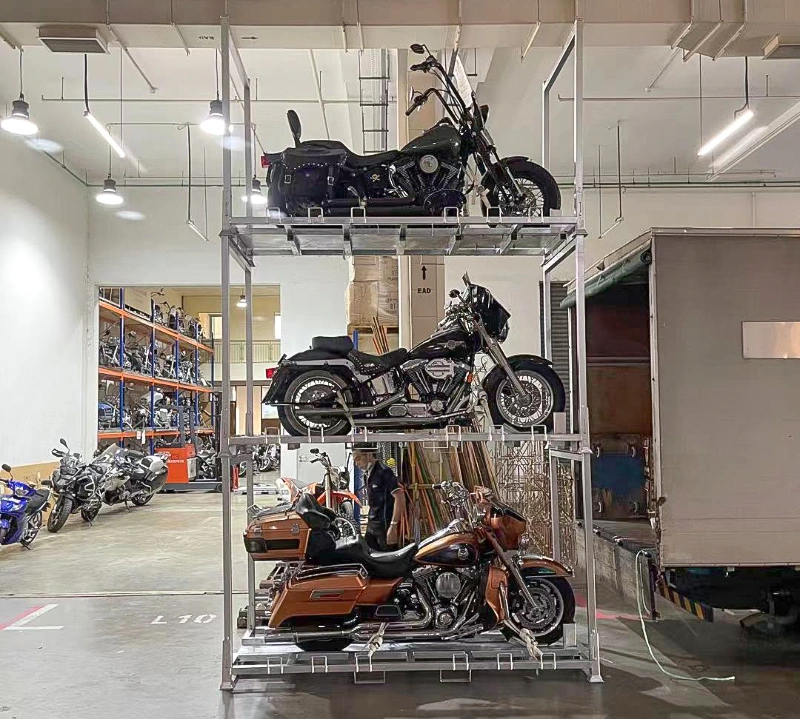
Where Ttrack fits and where it does not fit
O Ttrack se encaixa em operações que precisam de uma palete de embarque de motocicletas retornável: preparação de linha final, armazenamento em concessionárias, carregamento de contêineres de exportação, transferência por elevador de caminhão e exibição em showroom. Ele também se encaixa no ciclo de retorno de quadros vazios, onde quadros empilhados economizam espaço no chão e reduzem o volume de retorno. Nesses trabalhos, bolsos de entrada para empilhadeira, contenção de roda, pontos de amarração e junções de canto empilháveis oferecem à equipe um padrão de manuseio repetível.
Ele não se encaixa em todas as situações. Se a classificação de carga, o arranjo de empilhamento ou a condição do piso não estiver confirmada, a prateleira não deve ser tratada como um substituto universal para todas as tarefas de manuseio. Ela também não é uma palete plana genérica. Uma palete plana não contém a roda, não protege os lados e não oferece o mesmo caminho de levantamento controlado. Para equipes que precisam mover uma motocicleta como uma unidade única, essa diferença é o ponto principal.
Outro limite prático é o manuseio de impacto. Uma prateleira pronta para empilhadeira é feita para entrada controlada e deslocamento controlado, não para colidir com paradas, cair de altura ou receber lâminas de garfo pela metade na base. O método de manuseio deve corresponder à estrutura.
Cenas de aplicação que mais se beneficiam
- Preparação de linha final na fabricação de motocicletas
- Armazenamento em concessionárias e inventário
- Carregamento de contêineres de exportação com acesso repetível por empilhadeira
- Transferência por elevador de caminhão onde a carga deve permanecer bloqueada como uma unidade
- Armazenamento empilhado de alta densidade com logística de retorno de quadros vazios
- Exibição em showroom ou varejo premium onde a moto deve permanecer ereta e organizada
For buyers comparing options, the best next step is to compare product detail pages and then match the handling mode to the actual workflow. If your operation needs fewer manual touches, less scratch risk, and a safer stacking path, start with the forklift interface and, secondarily, the visual layout.
FAQ
Is some manual handling still required?
Only for setup, inspection, or repositioning of empty frames. Once the motorcycle is secured and the rack is ready for transfer, loaded movement should rely on the forklift interface rather than repeated manual contact.
Qual é a primeira verificação de segurança antes de empilhar?
Confirm the bottom unit is level, the top feet are fully seated, and the base shows no deformation. If these three points are not correct, do not release the load or add another level.
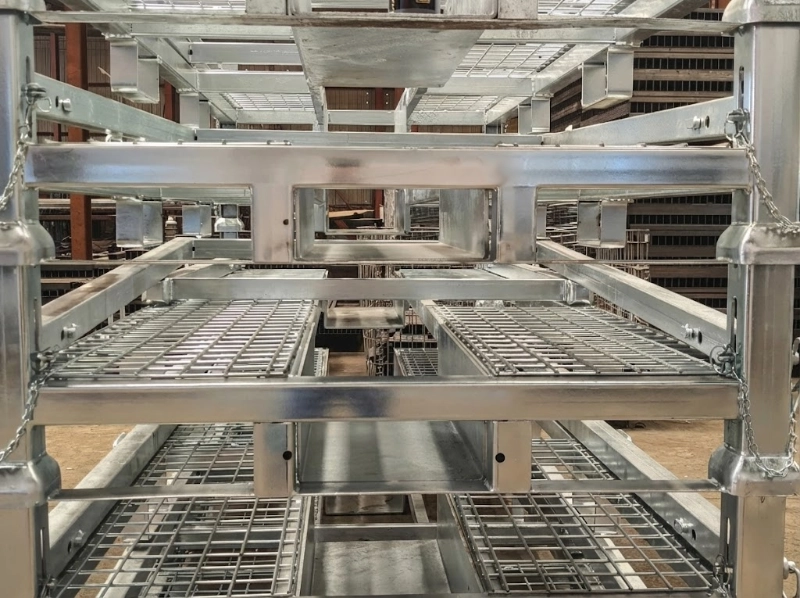
Se você está comparando modos de operação, revise as páginas de detalhes do produto, as atualizações de uso em campo e as fotos de empilhamento antes de escolher um padrão de manuseio para seu armazém.
Request a review of the handling layout.