
Wanneer een motorfietspalletrek als één beladen eenheid wordt verplaatst, verandert de behandelingslogica onmiddellijk. In plaats van de fiets of het frame met de hand te duwen, op te tillen en opnieuw vast te grijpen, werkt het team met een vorkheftruckklare basis, een wielblok of geleiderail en vastgestelde bindpunten. Dat vermindert de contactstappen, beperkt de blootstelling aan krassen en maakt stapelverplaatsingen gemakkelijker te beheersen in een magazijn, exporthaven of werkplaats van een dealer.
Voor magazijn- en veiligheidsteams is de sleutelvraag eenvoudig: kan het rek worden verplaatst zonder extra aanraakpunten toe te voegen? Ttrack is gebouwd rond dat idee. De geïndexeerde afbeeldingen tonen een gelaste stalen basis, vorkzakken, wielbevestiging, beschermende staanders, stapelbare hoekinterfaces en een gaasdek dat herhaalbare eenheidsbehandeling ondersteunt. Het resultaat is niet een platte pallet die nog steeds gokwerk vereist. Het is een motorfiets-transportpallet en opslagrek ontworpen voor vorkheftruckoverdracht en herbruikbaar gebruik.
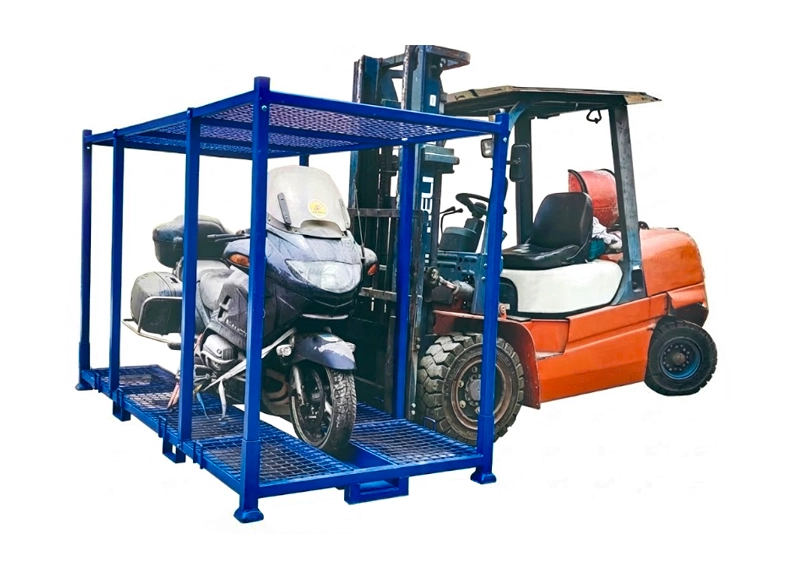
Waarom het verplaatsen van het hele rek handmatige beschadigingen en behandelingsverlies vermindert
Het belangrijkste voordeel is minder menselijke aanraakpunten. Als werknemers een motorfiets stap voor stap moeten rollen, kantelen of begeleiden, voegt elke beweging knijprisico, paneelwrijving, bandslip en vermoeidheid toe. Wanneer de lading is beveiligd in een stalen motorfietspalletrek, neemt de vorkheftruck de zware overdracht over. Het rek wordt de eenheid van verplaatsing, zodat operators de fiets niet steeds hoeven aan te raken, opnieuw in evenwicht te brengen bij elke stop, of met de hand over de vloer te sturen.
Dit is belangrijk in drie veelvoorkomende situaties: staging aan het einde van de productielijn, opslag in het magazijn van een dealer en het laden van exportcontainers. In alle drie wil het team een herhaalbare ladingseenheid. De palletbodem geeft de vorkheftruck een duidelijke insteekroute, terwijl de wielbevestiging en bindpunten voorkomen dat de motorfiets binnen het frame gaat zwerven. Het frame beweegt minder, de fiets beweegt voorspelbaarder en het behandelingspad is gemakkelijker te standaardiseren.
Waarom een constante hefsnelheid belangrijker is dan brute snelheid
Snel heffen is niet veiliger heffen. Een motorfietsrek heeft een hoger zwaartepunt dan een leeg frame, en een abrupte start kan de lading op de vorkpunten verschuiven of de fiets binnen de kooi laten slingeren. Daarom is een soepele lift belangrijk: steek de vorken volledig in, houd de mast recht, hef op een gecontroleerde snelheid en reis pas nadat de eenheid stabiel is. Het doel is niet om de verplaatsing te haasten; het is om de lading kalm te houden van de vloer tot de bestemming.
Een gecontroleerde lift beschermt ook het frame zelf. De lasnaden, vorkzakken en positioneringspunten zijn bedoeld om als één structuur te werken. Als de operator de basis rukt of een vloervoeg met snelheid raakt, kan de eenheid draaien en schokken overbrengen op de contactpunten van de fiets. In de praktijk is langzame en constante beweging tegelijk een maatregel voor krachtreductie en stapelveiligheid.
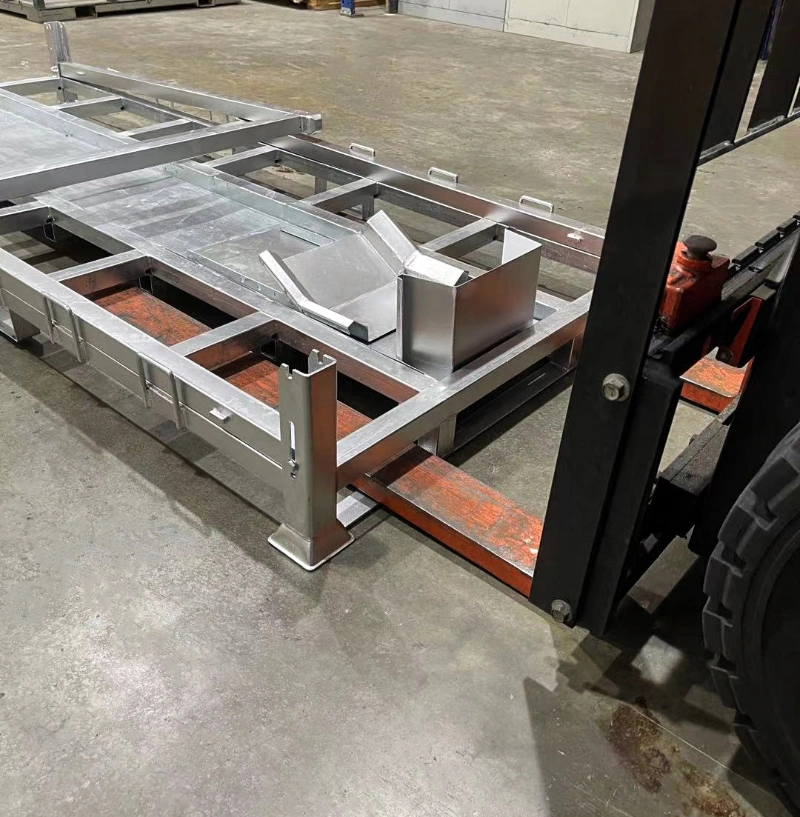
Hoe krassen en kleine schade tijdens overdracht te verminderen
Krassen ontstaan meestal wanneer een lading met de hand wordt begeleid, over de vloer wordt gesleept of te vaak wordt aangeraakt voordat deze de opslag bereikt. De veiligere aanpak is om het contact te beperken tot de ontworpen aanraakpunten: het wielblok of de geleiderail, de bindpunten en de dragende structuur van het frame. Daarom tonen de geïndexeerde Ttrack-afbeeldingen de fiets vastgelegd binnen een stalen basis in plaats van los op een open dek te rusten.
Het dek en de afwerking zijn ook belangrijk. Een gaasdek helpt bij drainage en inspectie, terwijl geschilderd of verzinkt staal de duurzaamheid in de juiste omgeving verbetert. Het blogbericht merkt op dat de exacte afwerking per offerte moet worden bevestigd, omdat niet elke lijn hetzelfde corrosiepakket nodig heeft. Het belangrijkste is dat het rek herbruikbaar blijft en de oppervlakteconditie kan worden gecontroleerd voordat de volgende verplaatsing plaatsvindt.
Voor veiligheidsteams gaat het bij krachtpreventie niet alleen om uiterlijk. Verfschade kan metaal blootleggen, losse banden kunnen een fiets onstabiel maken en herhaald opnieuw handelen kan verborgen schade veroorzaken die pas later aan het licht komt. Een vorkheftruckklare rek vermindert die herhaalde aanrakingen en houdt de fiets in één gecontroleerde eenheid.
Veilig stapelen: de controles die ertoe doen voordat u de lading loslaat
Stapelen is alleen nuttig wanneer het frame ervoor is gemaakt en het team de goedgekeurde rangschikking volgt. De geïndexeerde visuals tonen voorbeelden van lege stapels op twee, drie en vier niveaus, wat bewijst dat het platform bedoeld is voor verticale opslagmodi. Maar niemand mag een stapelhoogte aannemen zonder de werkelijke configuratie, vloerconditie en belastingstoestand voor de betreffende klus te controleren.
- Zorg ervoor dat de bovenste positioneringsvoeten volledig op de onderste palen rusten voordat de vorken vertrekken.
- Controleer de basis, staanders, lasnaden en hoekverbendingen op buig- of stootschade.
- Houd de lading gecentreerd en laat het rek niet reizen met een gedeeltelijke vorkplaatsing.
- Gebruik een vlakke ondergrond en een langzaam reissnelheid voor beladen verplaatsingen.
- Stapel niet verder dan de goedgekeurde configuratie alleen omdat het lege frame in elkaar past.
Deze controles zijn praktisch, niet decoratief. Ze verminderen de kans op zijwaartse verschuiving, ongelijkmatige positionering of onverwachte kanteling wanneer het rek wordt opgetild of gestapeld. Als een eenheid vervorming vertoont, is de veiligste handeling om deze voor hergebruik te inspecteren in plaats van deze terug in omloop te brengen.
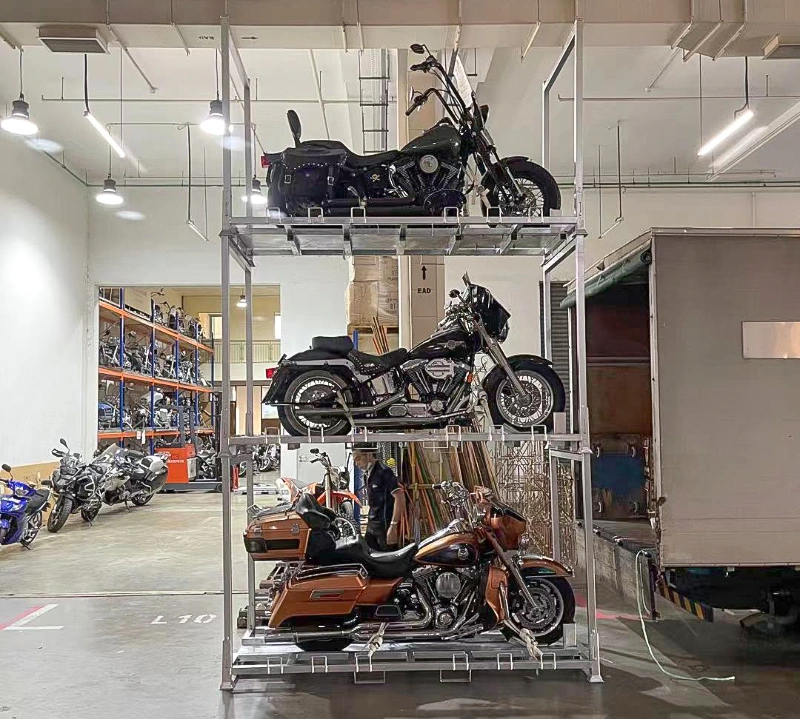
Waar Ttrack past, en waar niet
Ttrack past bij operaties die een retourneerbare motorfietsverzendpallet nodig hebben: eindlijn staging, dealerschap magazijnopslag, exportcontainerlading, vrachtwagenlaadklepoverdracht en showroompresentatie. Het past ook bij de lege-frame-retourlus, waar gestapelde frames vloerruimte besparen en retourvolume verminderen. Bij die taken geven vorkheftruckinvoeropeningen, wielbevestiging, bindpunten en stapelbare hoekverbindingen het team een herhaalbaar handlingspatroon.
Het past niet in elke situatie. Als de belastingsclassificatie, stapelconfiguratie of vloerconditie niet bevestigd is, mag het rek niet als universele vervanger voor elke handelingstaak worden behandeld. Het is ook geen generieke platte pallet. Een platte pallet bevestigt het wiel niet, beschermt de zijkanten niet en biedt niet hetzelfde gecontroleerde heftraject. Voor teams die een motorfiets als een enkele eenheid moeten verplaatsen, is dat verschil het hele punt.
Een andere praktische beperking is de stootbestendigheid. Een vorkheftruckgeschikt rek is gemaakt voor gecontroleerde invoer en gecontroleerd reizen, niet voor het crashen in stops, het laten vallen van hoogte of het half in de basis steken van vorkbladen. De handelingsmethode moet overeenkomen met de structuur.
Toepassingsscenario's die het meest profiteren
- Motorfietsproductie eindlijn staging
- Dealerschap magazijn- en voorraadopslag
- Exportcontainerlading met herhaalbare vorkheftrucktoegang
- Vrachtwagenlaadklepoverdracht waarbij de lading vergrendeld als één eenheid moet blijven
- Hoge-dichtheid gestapelde opslag met lege-frame-retourlogistiek
- Showroom- of premium retailpresentatie waarbij de fiets rechtop en netjes moet blijven
Voor kopers die opties vergelijken, is de beste volgende stap om de productdetailpagina's te vergelijken en vervolgens de handelingsmodus af te stemmen op de echte workflow. Als uw operatie minder handmatige aanrakingen, minder krasrisico en een veiliger stapelpad nodig heeft, begin dan eerst met de vorkheftruckinterface en daarna met de visuele lay-out.
Veelgestelde vragen
Is er nog enige handmatige handeling nodig?
Alleen voor installatie, inspectie of het herpositioneren van lege frames. Zodra de motorfiets is bevestigd en het rek klaar is voor overdracht, moet beladen verplaatsing vertrouwen op de vorkheftruckinterface in plaats van herhaald handcontact.
Wat is de eerste veiligheidscheck voor het stapelen?
Bevestig dat de onderste eenheid waterpas staat, de bovenste voeten volledig zijn geplaatst en de basis geen vervorming vertoont. Als deze drie punten niet kloppen, laat de lading dan niet los en voeg geen extra laag toe.
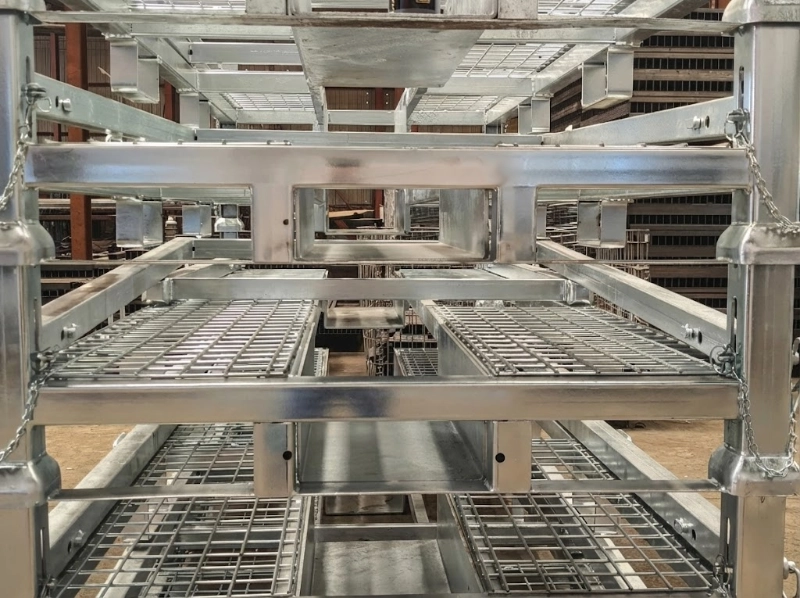
Als u handelingsmodi vergelijkt, bekijk dan de productdetailpagina's, de veldgebruiksupdates en de stapelfoto's voordat u een handelingspatroon voor uw magazijn kiest.
Vraag een handelingslay-out review aanHeeft u een op maat gemaakte opslagoplossing nodig?
Spreek rechtstreeks met onze technische ingenieurs. Wij bieden gratis constructieontwerpen, evaluaties van zwaar belaste catalogi en snelle B2B-prijsopgaven.
Vraag nu een offerte aan →