
When a factory needs to choose between a simple stacking rack and a stillage with access features, the first question is not "Which option looks more flexible?". It is "How will the load be placed, secured, stored, and removed?". For Mytrack folding stillages, the standard configuration is built around stacking posts at the four corners, a steel load base, and forklift access. Side doors, wheel fittings, rubber damping, and casters are customization options that require load details and engineering confirmation.
Quick answer: the basic Mytrack post pallet does not automatically include a side door. Four posts are usually sufficient for stable vertical storage. Add a side hinged opening when a product inside the load needs to be accessed without unloading the upper units; specify wheel fittings when a motorcycle or wheeled product needs controlled positioning; consider rubber strips when the contact surface needs additional protection. These items are not included by default on all units.
What the standard four-post configuration is designed to do
The basic Mytrack stackable metal stillage uses a rectangular steel base, four vertical posts, stacking interfaces, and forklift entry space. The open post pallet layout gives the forklift clear access to the base and allows units to be positioned in vertical storage. The folding structure also makes it easier to return empty units in a smaller volume: the posts can be folded or the frame rearranged for more compact storage, subject to confirmation of the specific model.
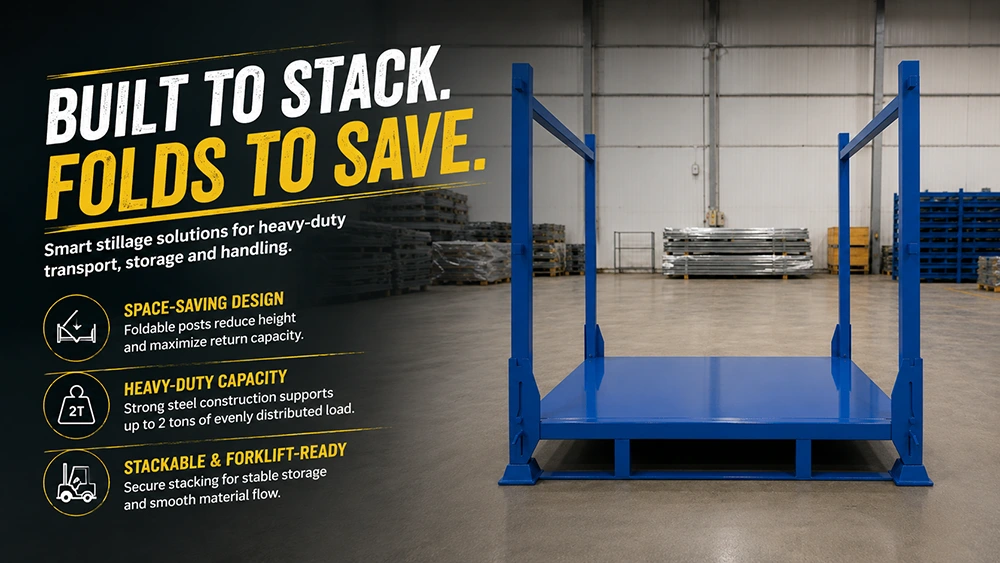
This is the correct starting point for boxed components, metal parts, and other loads that can be loaded from above or through the open sides. The image shows the confirmed four-post structure and the forklift pockets; it does not show a side door, wheel fitting, or damping strip. This distinction is important when comparing a standard quotation with a project-specific stillage.
When a hinged side door is justified
A hinged side stillage is useful when the handling sequence makes top loading inefficient. Examples include a long component that needs to be removed from the side, an inner layer that needs inspection while the units remain stacked, or a production line where operators need repetitive access at a fixed height. A side door can reduce manual reach and avoid disassembling a stack just to remove one item.
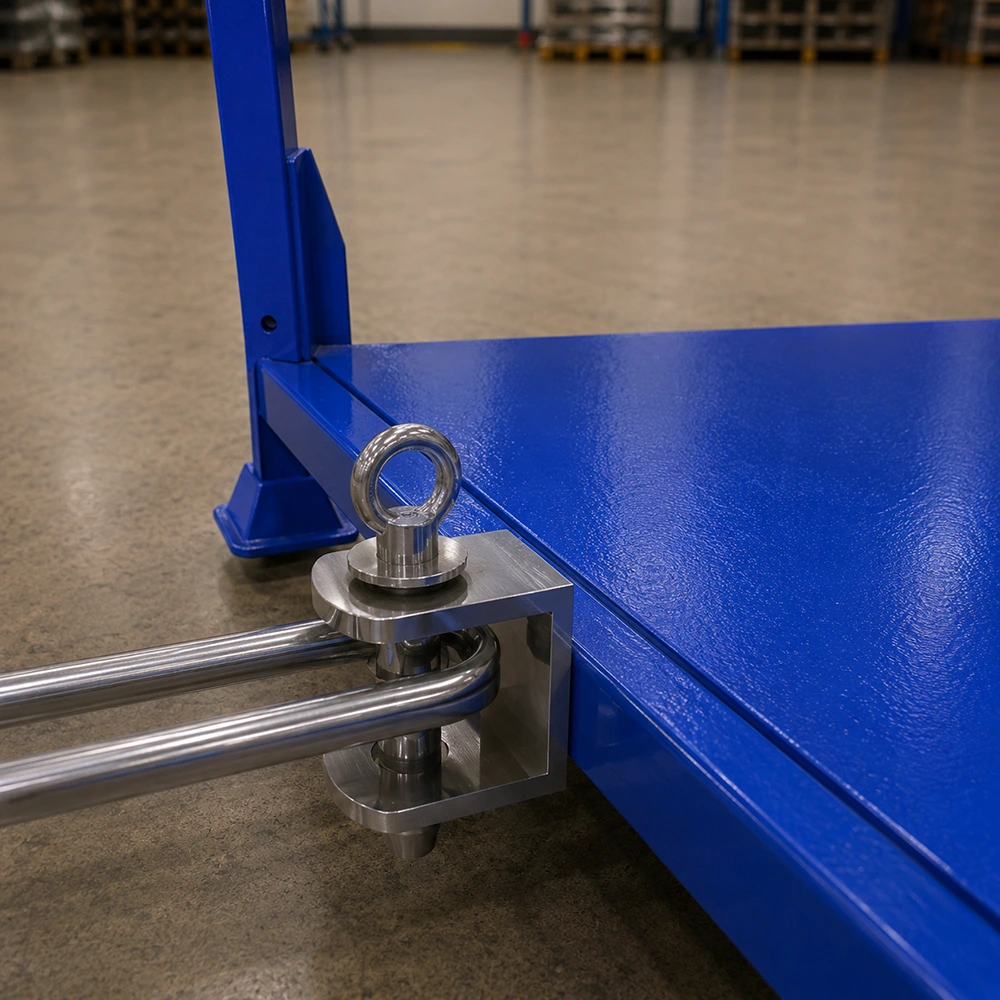
But a visible hinge detail is not proof that every Mytrack unit includes a side door. The optional arrangement requires an analysis of load weight, center of gravity, opening direction, latch position, clearance between stacked units, and how a forklift or crane will approach the structure. The photograph of the handrail tube and the retractable ring pin illustrates a possible hinged or removable access arrangement — not a basic model specification.
Wheel fittings, rubber strips, or a different load interface?
For motorcycles, carts, or items with defined wheels, a specialized wheel fitting can help position the load and reduce movement during transport. The fitting geometry must follow the wheel diameter, tire width, axle position, tie-down route, and the space needed for forklift or crane access. It should be designed together with the stillage base and the intended transport direction, rather than added as a generic cutout.
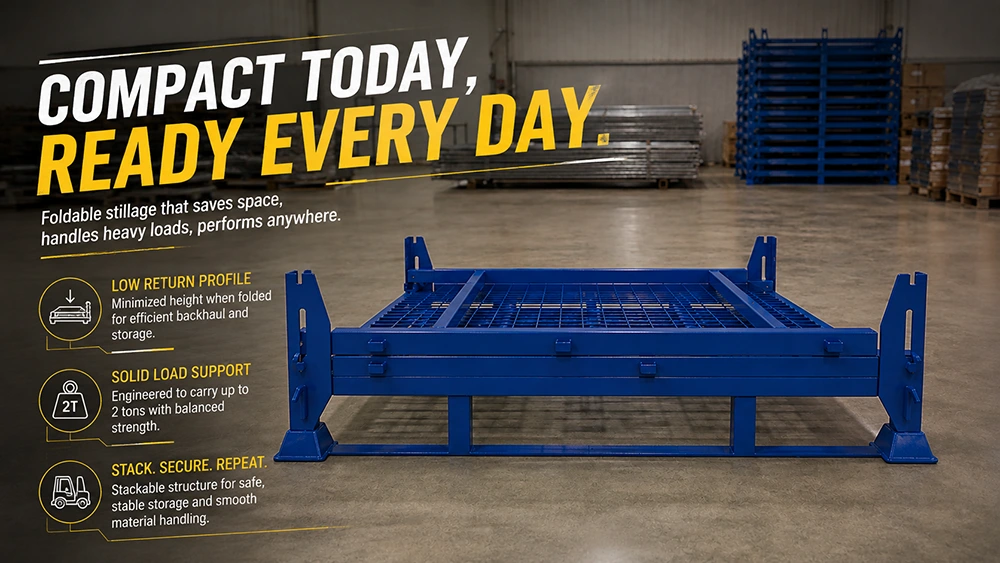
Rubber damping strips serve a different purpose. They can separate a painted, coated, or mark-sensitive product from the steel contact points and help control vibration. The engineering analysis must confirm the strip material, thickness, fastening method, compression under load, cleaning conditions, and whether the damping changes the usable internal dimensions. The image below documents stacking posts with fittings and a folding steel frame; it does not confirm a rubber strip or a specific load capacity for every project.
How to choose the configuration
- Choose the standard four-post stillage when the load is stable, top loading is acceptable, and forklift entry is the main handling requirement. This keeps the structure simple and focuses the design on stacking, access, and storage of the empty frame.
- Request a hinged side door when operators need to remove inner products from a stacked unit or when side loading is part of the production flow. Confirm latch safety, opening clearance, and access while the units are stacked.
- Request wheel fittings or profiles for motorcycles and other wheeled products that need repeatable positioning. Provide the wheel and tie-down information before the frame is finalized.
- Request rubber damping when surface protection or vibration control is a defined requirement. Identify the contact areas and the cleaning or outdoor use conditions so that the fastening method is suitable.
Frequently asked questions: the two decisions buyers make first
Does the basic Mytrack version include a side door?
No. The confirmed basic concept is a foldable and stackable post pallet, with posts at the four corners and forklift access. A side door or hinged rail is a conditional customization, not an automatic feature of every unit.
How can I add wheel grooves or rubber strips?
Submit the load drawing or photographs, dimensions, weight, center of gravity, handling method, stacking plan, and protection requirements. Engineering analysis can then recommend wheel groove geometry, cushioning locations, securing details, and any clearance changes before production.
Do you need to decide between stacking posts and access or protection features? Report the load — dimensions, weight, wheel or contact details, handling method, and stacking plan — to receive a Mytrack customization recommendation.
Report Your Load for a Configuration ReviewPrecisa de uma Solução de Armazenamento Personalizada?
Fale diretamente com nossos engenheiros técnicos. Oferecemos projetos estruturais gratuitos, avaliações de catálogos de alta capacidade e orçamentos rápidos para B2B.
Solicite um Orçamento Agora →