
Ttrack Tire Rack vs Floor Stacking | Folding Rack, Standard Shelf, Dedicated Rack
Ttrack
Compare Ttrack folding tire rack, floor stacking, standard shelves, and dedicated tire racks. See when each option fits storage, stacking, return flow, and container loading.
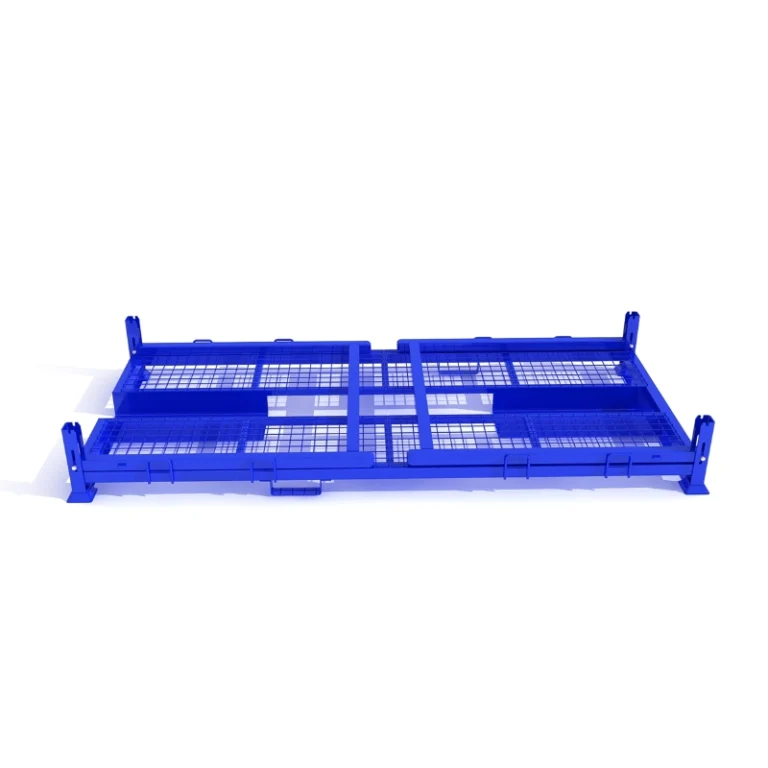
Compare Ttrack, floor stacking, standard shelves, and dedicated tire racks
If your team is searching for tire rack vs floor stacking or tire pallet vs racking, the first question is not price. It is whether the tires need forklift movement, return trips, and controlled stacking.
This guide compares the documented Ttrack tire-rack branches with the common storage choices buyers actually use. The source notes cover two separate tire applications under the same Ttrack name; keep their parameters separate and confirm the final SKU before quoting.
| Option | Best fit | What it gives you | Main trade-off |
|---|---|---|---|
| Ttrack folding rack | Repeated forklift circulation, controlled stacking, returnable flow | Fold-down empty return, nested storage, and 4-high stacking in the documented branch | Needs a confirmed load plan and a defined tire size window |
| Floor stacking | Short dwell time, zero-capex buffering, emergency overflow | No rack purchase and quick drop-off handling | More contact points, weaker order control, harder counting, and lower space efficiency |
| Standard shelf | Hand-pick access and light, low-volume storage | Simple layout when items are handled one by one | Not designed to restrain tires; shift and slip risk stays higher |
| Dedicated tire rack | Stable tire-only programs with fixed volumes | Purpose-built geometry for one tire family and one flow pattern | Higher purchase cost and less flexibility when the mix changes |
- Forklift-friendly circulation when the rack must move loaded and empty.
- Fold-down and nested return storage on the documented folding branch.
- Clear separation between temporary floor stacking and reusable steel systems.
- Honest limits: load and tier counts are configuration-specific, not universal.
What the source files actually confirm
13696 branch
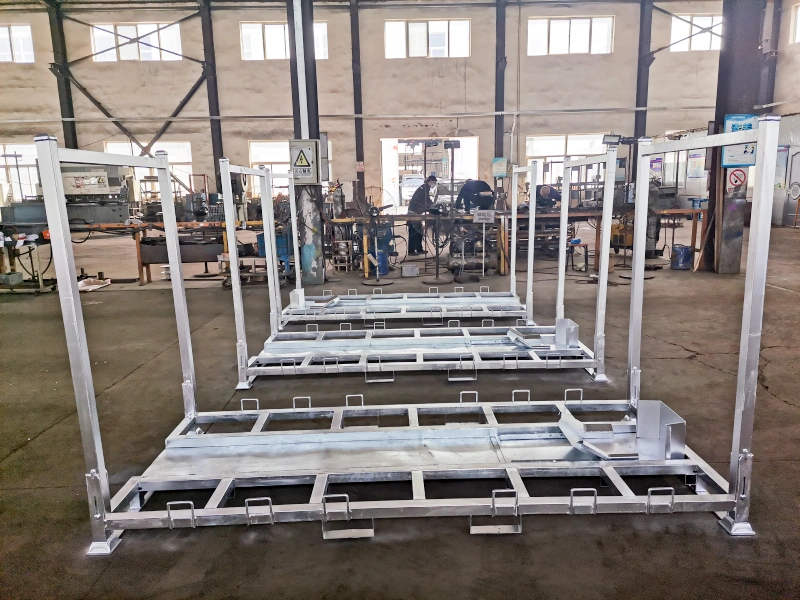
Folding stackable tire rack
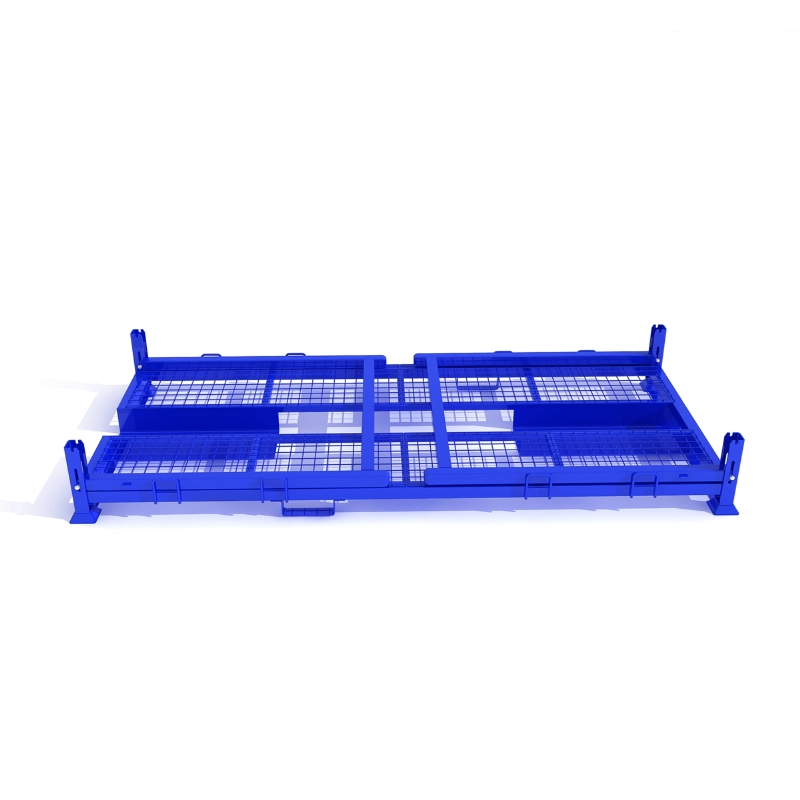
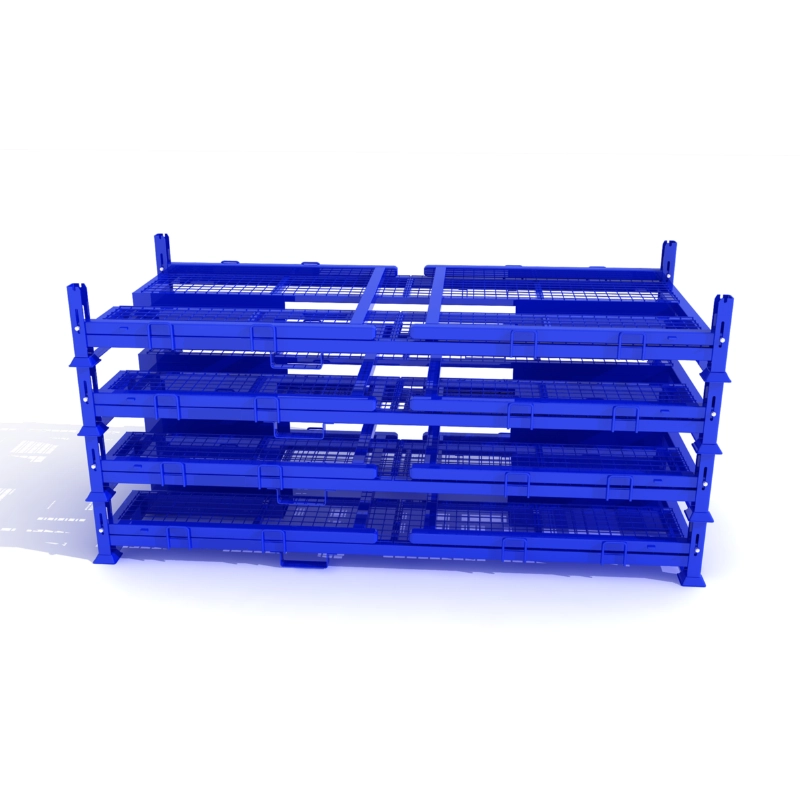
Outside post-to-post size 2230 × 1190 mm, overall height 1770 mm, tare 118 kg, unit load 1.5 t, recommended 4-high stacking, bottom steel plate, fold-down side frames, and nested empty storage. The packing note shows 72 units in a 40-foot high-cube container.
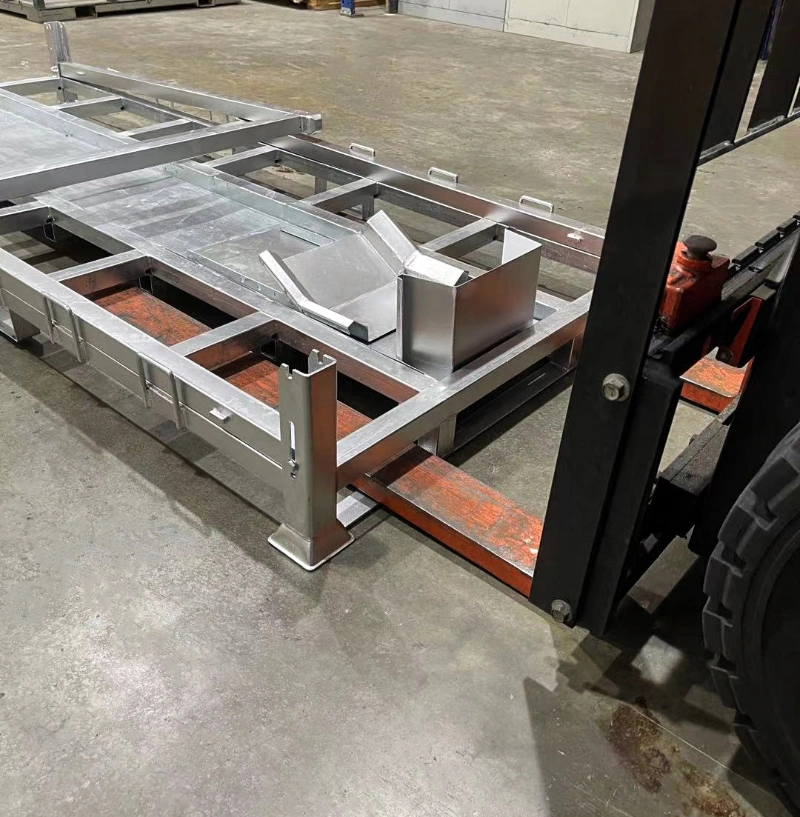
- Forklift entry holes
- Steel plate on the bottom
- Empty frames can fold down and stack
15417 branch A
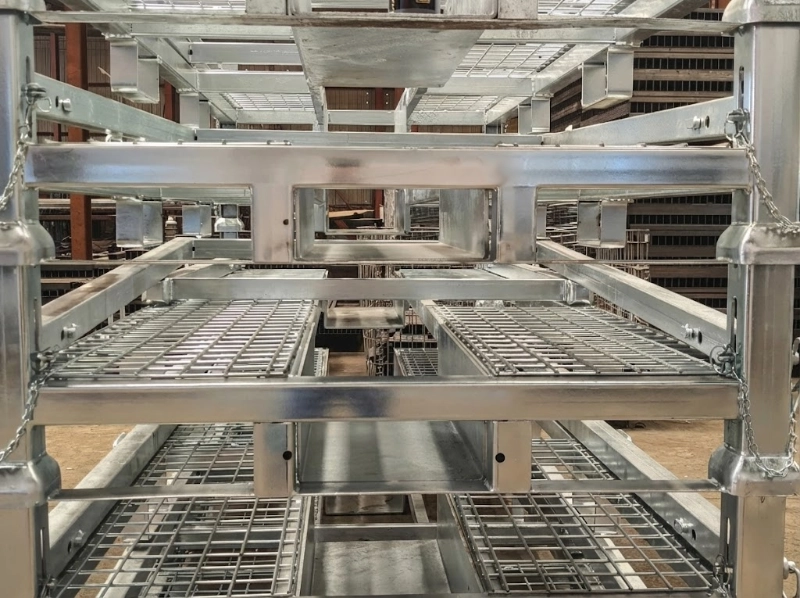
Car-tire / recovered-part basket
The source note revises the length to 2300 mm, lists a tare weight of 168 kg, and states 80 units in a 40-foot high-cube container. Treat this as a configured branch, not a universal Ttrack claim.
- Documented as a separate tire-pallet branch
- Keep it separate from the folding rack note
- Confirm tire size before production
15417 branch B
Truck-tire basket
The source note revises the length to 2300 mm, lists a tare weight of 105 kg, and states 35 units in a 20-foot container and 80 units in a 40-foot high-cube container. It also includes a separate customer requirement note for 2-3 tiers and up to 1000 kg; keep that as a case requirement, not a catalog promise.
- Configured branch with its own packing logic
- Do not merge with the folding rack figures
- Quote only after final layout review
Which option fits your tire flow?
Choose Ttrack when the rack must move
Pick it when forklifts move loaded units, empty frames come back, and the warehouse needs repeatable stacking rather than random placement.
Floor stacking is only for temporary overflow
It costs almost nothing up front, but it is messy, hard to count, and weaker on contact control. Use it for short dwell time, not for orderly circulation.
Standard shelves are not tire restraint systems
A shelf can hold boxes or hand-picked items, but tires still need a cradle or stop. Without that, rolling and shifting stay part of the process.
Dedicated tire racks win only when the program is fixed
If your tire size, volume, and flow are stable, a dedicated rack can be right. If the mix changes often, a folding returnable rack is usually easier to manage.
A simple four-step buying check
Confirm the tire profile
Send tire type, diameter, width, and the number of layers you want to keep in circulation.
Pick the branch first
Choose the folding rack branch or the configured basket branch before you talk about container counts or packaging.
Decide how the units return
Stretch film plus straps is the referenced packing method; if appearance matters more than cost, the source note also allows wooden-crate packing.
Lock the return route
Check whether the unit comes back folded, nested, or as a fixed system. That single choice usually decides the real life-cycle cost.
Packing note: the 13696 branch records stretch film plus straps, with 8 units per stack, 9 stacks, and 72 units in a 40-foot high-cube container. The packing note warns that film plus straps may not fully prevent scuffing, so choose wooden-crate packing when surface condition matters more than packing cost.
Questions buyers ask before they quote
What is Ttrack suitable for?
It fits forklift-handled, returnable tire storage where size, weight, and stack height are confirmed before production.
What is the problem with floor stacking?
It is cheap but uncontrolled: the stack is harder to count, harder to move, and more exposed to contact marks and mix-up.
Why is a standard shelf not enough?
A standard shelf is not a tire restraint system. If the tire can roll or shift, you still need a cradle, stop, or dedicated rack geometry.
When should you not buy any rack at all?
If the job is one-way temporary storage, the tire size is still changing, or the site has no forklift flow, do not force a rack purchase. Use the simplest temporary method until the process is clear.
Related pages: if you need the base rack, accessory details, handling notes, or export proof, continue to PDP-01, PDP-05, BLOG-06, and CASE-03 after this page.