
Cross-docking workflow
How to Use Portable Stack Racks in Cross-Docking Warehouses
Cross-docking moves fast only when the freight stays organized. A portable stack rack keeps inbound goods, short-term sorting, and outbound loading inside one movable unit, so the team does not rebuild the same load at every handoff.
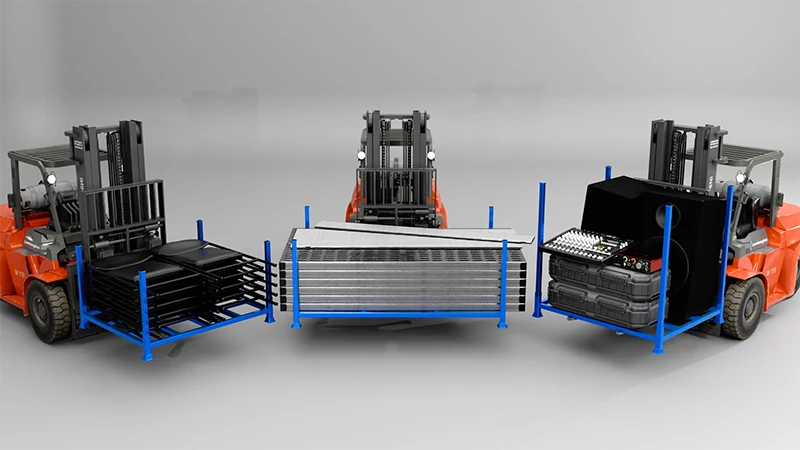
Why cross-docking needs a movable unit
In a cross-dock, the time window between receiving and outbound loading is short, but the flow is intense. If freight is dropped straight onto the floor, the team loses time to re-sort, re-count, and re-touch the same cartons. A portable stack rack solves that by keeping the load together in one frame that can move with the work.
That is why this kind of rack is useful in regional distribution centers and retail replenishment hubs. It gives operators a temporary staging unit that is still easy to move, rather than a fixed storage structure that sits in the way when the dock gets busy.
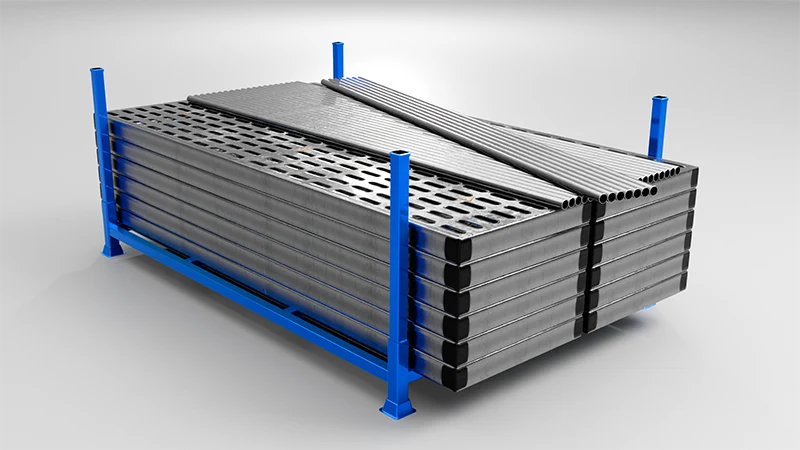
How inbound receiving connects to outbound loading
The cleanest process is simple: receive freight onto the rack, stage it near the dock, then move the same unit to the next truck. That workflow keeps SKUs grouped by route, store, or wave, and it reduces the amount of repacking required before loading.
For this reason, the rack should be selected for maneuverability first. In cross-docking, the value comes from flow control. The unit must roll or shuttle easily, hold a stable footprint while loaded, and keep the goods in place during a short transfer between doors.
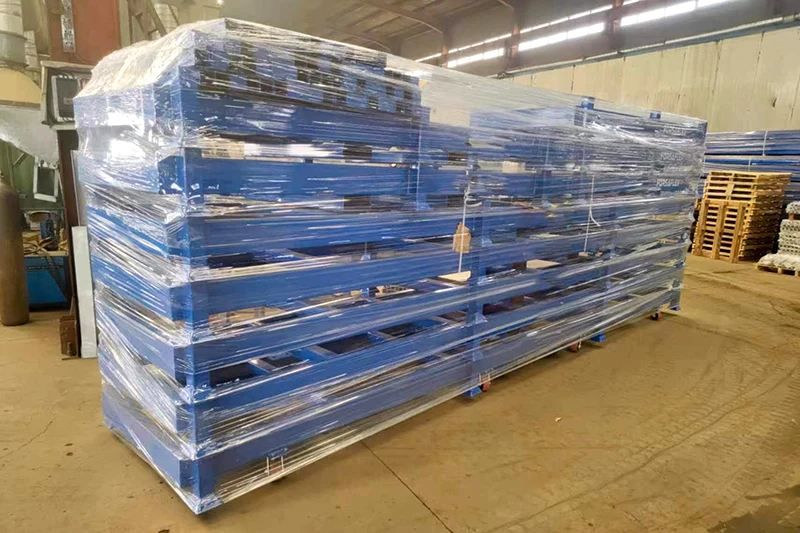
How return nesting saves space
Once the load leaves, empty frames should not keep consuming dock space. Nested return storage is the practical answer. By stacking or nesting empty portable stack racks compactly, the team frees the receiving area for the next inbound wave and lowers the space cost of reverse logistics.
This is the real benefit for cross-docking operations: the rack is large enough to work with freight, but small enough in return mode to stop empty equipment from becoming a second storage problem.
When this solution fits—and when it does not
- Best fit: regional DCs, retail replenishment, seasonal surges, and mixed-SKU waves that need short-term movable staging.
- Best fit: operations that want one unit to stay with the freight from receiving to loading.
- Not the best fit: flows that never need rehandling and can remain on a standard pallet.
- Not the best fit: unstable loads that exceed the safe handling envelope for a mobile frame.
If your bottleneck is time between doors, a portable stack rack is usually the right tool. If your bottleneck is simply storage volume with no movement, another solution may be enough.
Need a Custom Storage Solution?
Speak directly with our technical engineers. We offer free structural designs, heavy-duty catalog evaluations, and quick B2B price quotations.
Request a Quote Now →