
For importers, traders, and purchasing teams shipping empty wire mesh containers overseas, the packaging decision is rarely just a packing question. It is a trade-off between upfront export cost and the condition of the galvanized surface when the cargo reaches the destination.
For the Stbox collapsible wire mesh container, the practical choice is usually clear: stretch film with strapping for a lower-cost shipment, or wooden crates when appearance and handling protection justify an added cost. The right answer depends on your route, handling points, and tolerance for surface marks—not on a single universal packing rule.
Two export packing routes for empty wire mesh containers
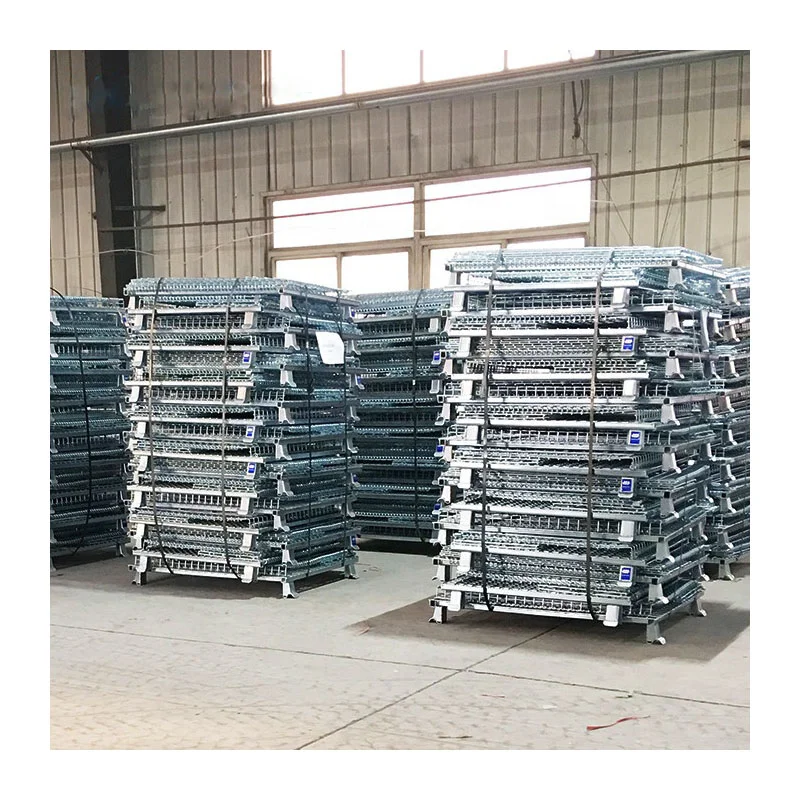
Stretch film plus strapping: this is the economical route for empty containers. The folded units are grouped, wrapped, and secured with packing bands so they remain together during loading and road freight. For the referenced project, this packing method carries no additional packing fee. It is suitable when the buyer mainly needs stable bundling, efficient handling, and low landed cost.
There is an important limitation. Film and straps hold the folded stack together, but they do not create a rigid impact shield. Forklift contact, shifting cargo, rubbing between steel edges, or contact with other freight can still mark the coating or create surface scuffs. Stretch film should therefore not be described as a way to completely prevent transport damage.
When does wooden crate packing make commercial sense?
Wooden crates add a physical barrier around the folded containers. They are the more defensible option when the shipment will pass through several handling stages, when the receiving customer has a strict coating or appearance requirement, or when the cost of a scratched batch would include sorting, touch-up, replacement, or delayed delivery.
The crate cost should be added to the purchasing calculation rather than treated as a free standard feature. A project reference is RMB 90 per square metre, but this is not a fixed quotation. The final amount must be checked separately against the crate’s external area, timber construction, loading method, destination requirements, and current purchasing price. In simple terms, the comparison is:
- Stretch film and strapping: no additional packing fee in the referenced arrangement, but higher exposure to rubbing and impact marks.
- Wooden crates: estimated packing cost = confirmed crate area × the separately quoted price; the project reference is RMB 90/m², subject to re-quotation.
- Commercial decision: compare the added crate cost with the likely cost of surface repair, inspection, or claims at destination.
Wooden crates are not automatically necessary for every empty shipment. If the importer accepts minor cosmetic marks and the logistics chain is controlled, bundled film-and-strap packing may be the better value. If the visible galvanized finish is part of the delivery acceptance standard, the crate route is easier to justify.
How much volume can folding save in the 13967 record?
The 13967 project record gives a specific reference, not a series-wide guarantee. The assembled unit is listed at 800 × 1200 × 890 mm, while the folded height is 190 mm. The same record states that 10 empty units form one stack measuring 1240 × 1240 × 1600 mm.
Using a simple external-volume comparison, ten assembled units represent about 8.54 m³ of summed geometric volume. The recorded ten-unit folded stack occupies about 2.46 m³. That is a reduction of roughly 6.08 m³, or about 71% on this calculation. Put another way, the folded stack uses around 29% of the summed assembled volume, before allowing for vehicle or container loading clearances.
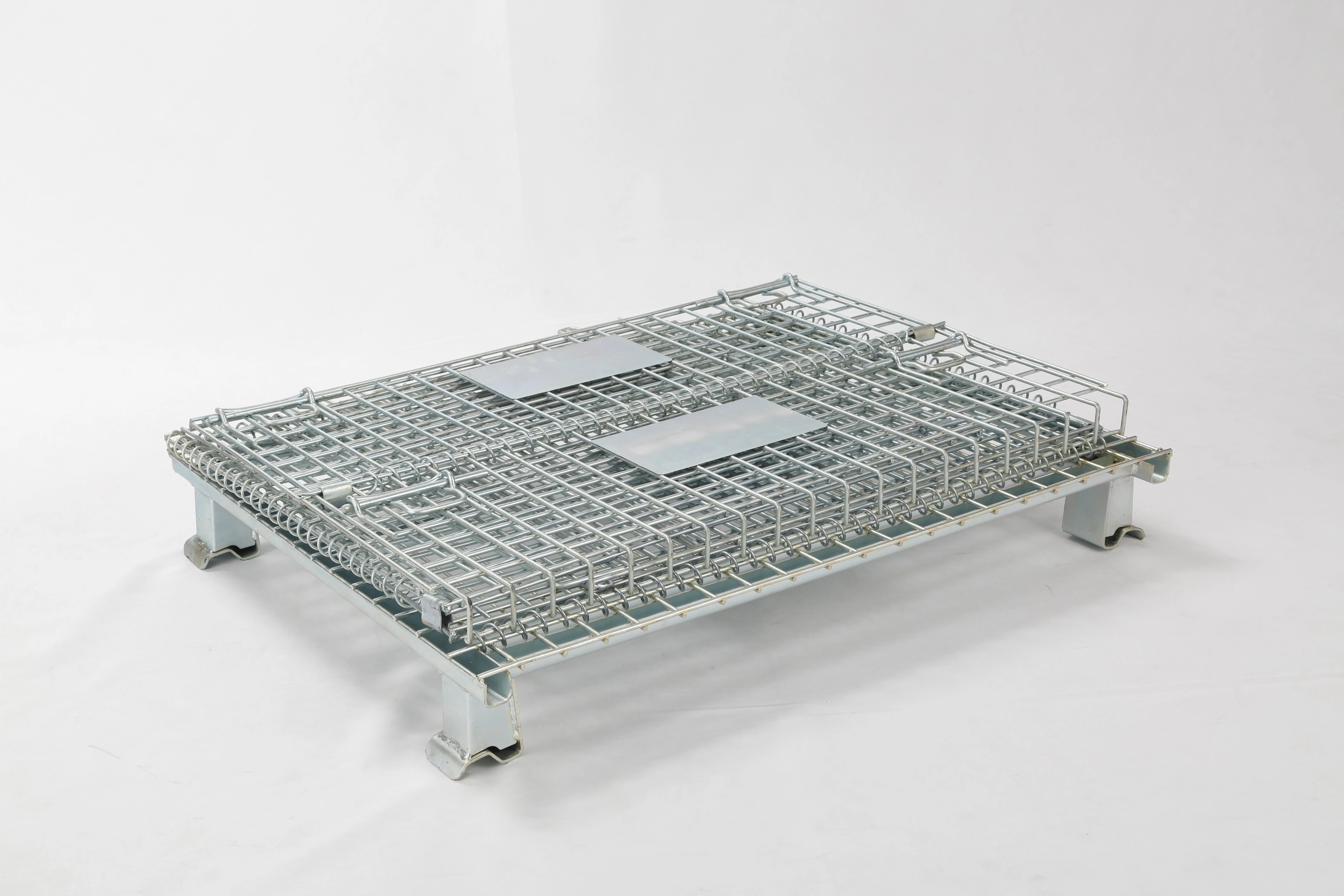
This saving changes the packaging decision. Because the units are folded, the buyer can spend part of the freight budget on a more protective crate without losing the main reverse-logistics benefit. However, the 1240 × 1240 × 1600 mm stack is a project reference for 13967. It must not be used as the folding height or empty-stack size for every Stbox configuration.
Choose the packing method by destination risk
- Choose film and straps when low upfront cost, compact empty transport, and acceptable cosmetic risk are the priority.
- Choose wooden crates when the receiving inspection focuses on galvanized surface condition or the route includes repeated loading and unloading.
- Confirm the folded stack first when calculating freight: folding dimensions, stack quantity, and handling clearance are project-specific.
- Confirm the handling rules before dispatch: for the 13967 record, forklift movement should be controlled and the feet must be fully seated when stacking.
Export packing FAQ
Is stretch film and strapping enough for an empty wire mesh container?
It can be enough when the buyer accepts normal transport scuff risk and the logistics chain is reasonably controlled. It secures the folded bundle but cannot fully prevent surface damage from impact or rubbing. If coating appearance is a receiving requirement, request a wooden-crate quotation instead.
Can you give the exact price difference between straps and wooden crates?
Not without the planned crate dimensions and quantity. The referenced film-and-strap arrangement has no additional packing fee. Wooden crates use a project reference of RMB 90/m², subject to separate confirmation, so the buyer should provide the order quantity, folded stack arrangement, destination, and arrival-condition requirement for a meaningful comparison.
Worried about scuffs on arrival? Send us your loading quantity and destination-condition requirements. We can compare the packing route and cost for your Stbox export shipment.
Need a Custom Storage Solution?
Speak directly with our technical engineers. We offer free structural designs, heavy-duty catalog evaluations, and quick B2B price quotations.
Request a Quote Now →