
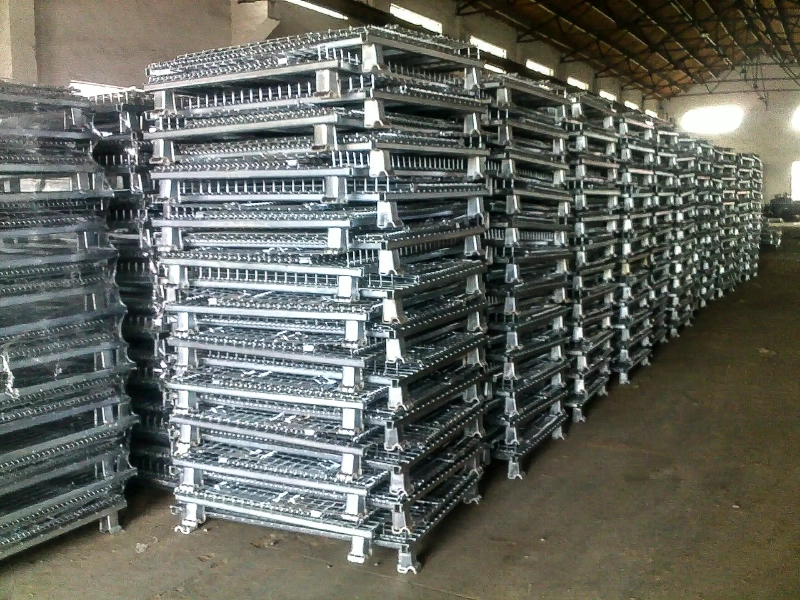
An empty wire mesh container that travels back as an assembled cage is mostly air: 800 x 1200 x 890 mm of frame around nothing. On a repeat automotive parts loop, that air is what you pay for on the return leg — the container is booked, the driver waits, and the volume is billed whether or not a part is inside. Folding changes that arithmetic, but only when the folded height, the stack count and the container loading plan all come from the same drawing.
This article answers the four questions a trade or logistics buyer asks before booking the back-haul: how tall the cage is when folded, how many folded cages make one stack, how many of those stacks a 40ft container really takes, and how film-and-strap packing compares with wooden crating. Every figure below stays attached to the project record it came from.
Folded Height: What the Recorded Project Shows
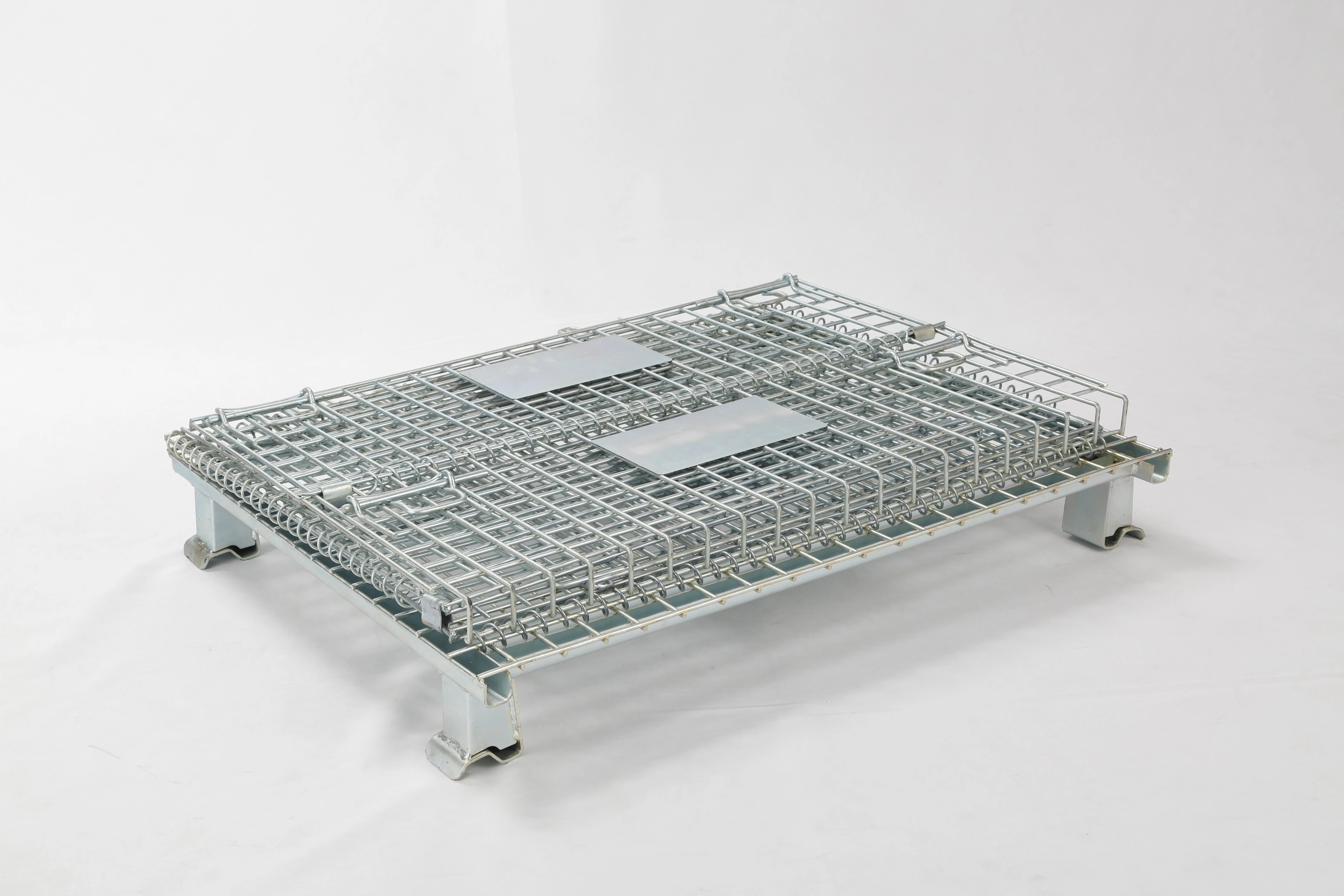
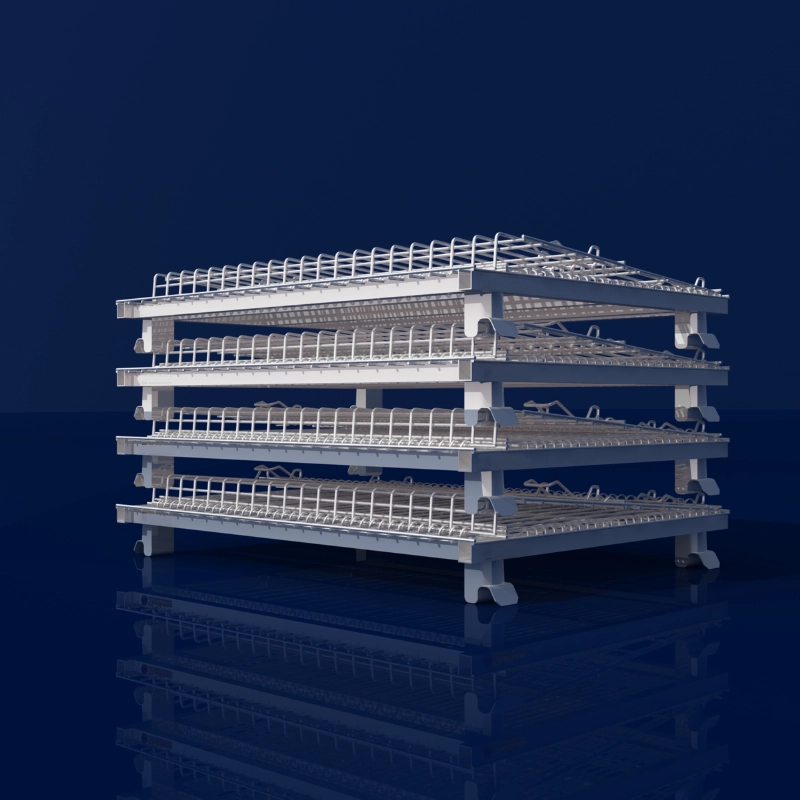
On the recorded 13967 project, the container measures 800 x 1200 x 890 mm assembled and folds to a 190 mm height, with ten folded units listed as one stack measuring 1240 x 1240 x 1600 mm. The folded panels lie on the base frame, the formed stacking feet support the folded side mesh, and the bundle is held by strapping rather than sitting on a pallet.
Two limits matter here. First, the 190 mm figure is a single project record: it is not the folded height of the whole range and must not be quoted for a 1000 x 800 mm or a 1050 x 1050 mm cage until the drawing confirms it. Second, the stack envelope of 1240 x 1240 mm is wider than one folded cage, because the bundle includes the folded side panels and the strapping clearance. When you calculate container floor or warehouse floor, use the stack envelope, not the single unit.
How Many Folded Containers Fit in a 40ft Container on the Return Leg?
Take the 13967 stack envelope and a 40ft high-cube interior of roughly 12.0 m long, 2.35 m wide and 2.69 m high. A 1240 x 1240 mm stack footprint repeats about nine times along the length and once across the width, so nine stacks stand on the floor. A second layer would reach 3,200 mm, above the interior height, so the stack stays single-layer. Nine stacks of ten works out at roughly 90 folded cages in a 40ft HC on this arithmetic. In a 20ft container, with about 5.9 m of usable length, four stacks fit on the floor: about 40 folded cages.
Read those two numbers as planning arithmetic from the recorded stack envelope, not as a shipping commitment. Dunnage, strap clearance, door-frame height, any pallet under the bundle and the way the last column is loaded all move the final count, and the loading plan has to be confirmed before the container is booked. What the arithmetic does show is the direction of the change: one 13967 cage occupies about 0.85 m3 assembled, but only about 0.25 m3 per cage inside the folded stack — roughly 70% less volume for the same unit.
Do not merge this with other loading counts. The 15059 project records 250 units in a 20ft and 638 units in a 40ft HC for its own configuration, which is a different cage with a different loading result. The two sets of figures belong to two different drawings and are not interchangeable; quote the number that matches the container you are buying.
Stretch Film and Strapping vs Wooden Crates: What Actually Differs
Two packing routes are normally quoted for a folded return bundle, and the differences that matter to a logistics buyer are weight, volume, inspection and moisture, not only the packing price.
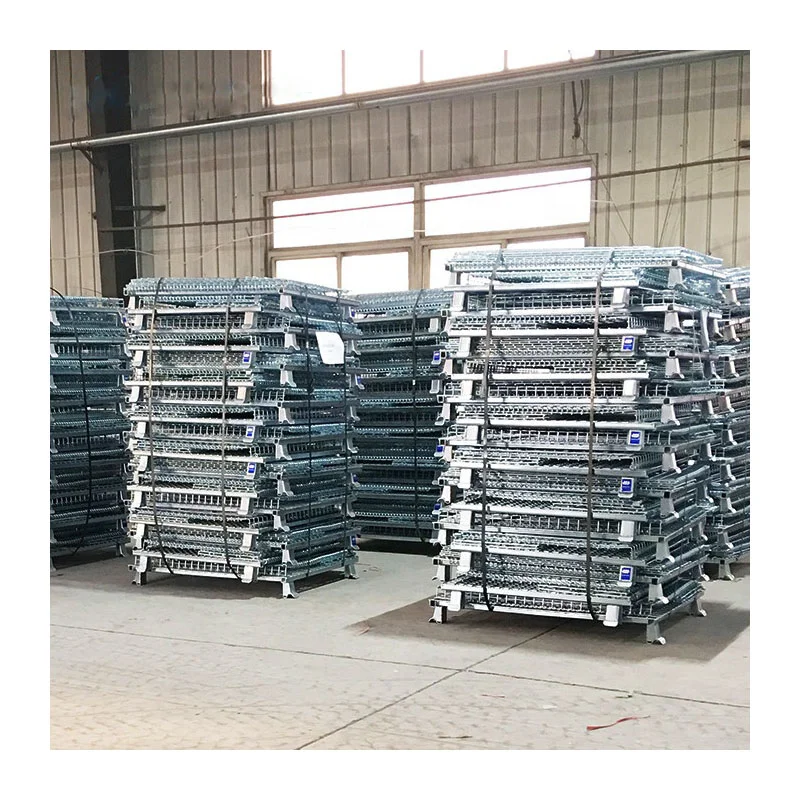
- Film and PET strapping: the bundle keeps its own stack form, adds almost no volume and only consumable weight, and leaves the cage visible so the receiver can count and inspect the stack without opening it. Strapping is also the form used for the recorded 13967 stack.
- Wooden crate: the crate carries its own purchase cost on every shipment, adds wall thickness and weight to each bundle, hides the contents from visual inspection, and can hold moisture against a coated cage in humid transit. Wood export packing also brings phytosanitary handling requirements.
- Weather and impact exposure: for an unsheltered destination, or a long sea transit with transhipment, the solid wall of a crate is a real protection argument. That is a trade-off the buyer owns, not a general rule.
- Cost comparison: no fixed ratio is claimed here. Film and strapping are consumables; crating is a per-shipment purchase. Ask for both quoted against your own bundle count and container fill.
What to Confirm Before You Book the Return Container
Six points decide whether a saving on paper survives contact with the loading bay.
- Folded height on your drawing — the 190 mm record belongs to one project, not to the whole range.
- Folded units per stack and the stack envelope width, because the envelope is what consumes container floor.
- Whether liners, lids or casters stay fitted on the return leg; fitted accessories change the folded height and the bundle form.
- Container type and door opening — 20ft, 40ft and 40ft HC give different usable length and height.
- Strapping and dunnage method, and who supplies it at each end of the loop.
- Who pays the return leg and who inspects the stack on arrival; a return bundle is only economical if the loop is actually closed.
Where This Return-Leg Arithmetic Fits
- Automotive parts loops where the same containers shuttle between plant and supplier.
- Contract manufacturing and electronics supply, where empty cages return on a fixed schedule.
- Machining and fabrication shops buffering work in progress and returning empties to a central store.
- Warehouse and distribution operations that put parts out on the floor and recover empties in batches.
- Export dispatch, where folded cages are strapped into columns for the outbound or return leg.
Folded Container Return: FAQ
How tall is a folded wire mesh container?
On the recorded 13967 project, 190 mm. That figure is documented for that project only; the folded height of a 1000 x 800 mm or 1050 x 1050 mm configuration has to be confirmed on the approved drawing before it is used in a loading calculation.
How many folded containers go in one stack?
Ten folded units on the 13967 record, listed as a stack of 1240 x 1240 x 1600 mm. The stack count is a project figure and depends on the folded height, the base frame and the strapping method.
How many folded cages fit in a 40ft container?
Using the 13967 stack envelope, about nine stacks — roughly 90 folded cages — in a single layer in a 40ft HC, because a second layer exceeds the interior height. The 15059 project records 638 units in a 40ft HC for its own configuration. These are two separate records and must not be merged or quoted across products.
Is stretch film cheaper than a wooden crate?
Film and strapping are consumables and add almost no volume or weight; a wooden crate is a per-shipment purchase that adds wall thickness, weight, moisture risk and an inspection barrier. No fixed percentage difference is claimed here — ask for both options quoted against your bundle count.
If you are planning an empty return leg, send the cage size, the folded height on your drawing, the container type and whether liners, lids or casters stay fitted. We will work the stack envelope and the container fill with you, and confirm what the drawing supports before any loading count is quoted.
Need a Custom Storage Solution?
Speak directly with our technical engineers. We offer free structural designs, heavy-duty catalog evaluations, and quick B2B price quotations.
Request a Quote Now →