
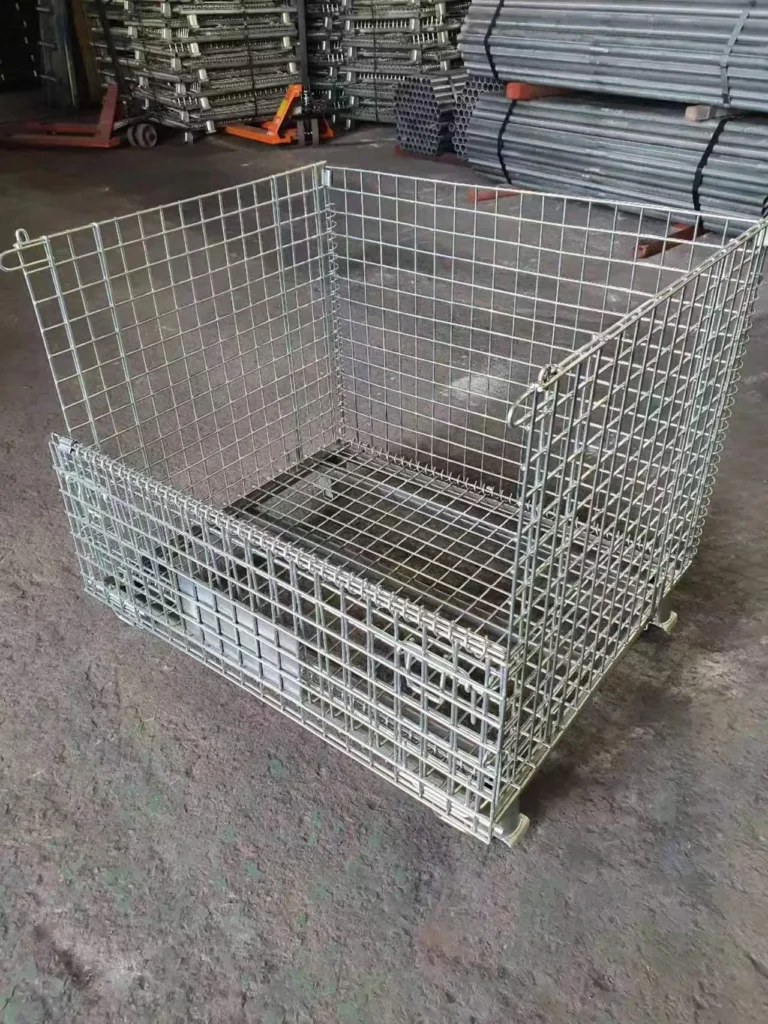
A line-side buffer only earns its floor space while the operator can actually reach into it. Stack the containers and fill them with castings, and the part the operator needs is often in the cage at the bottom of the stack. That turns a short pick into a truck call, a stack-down, a dig through the top container and a re-stack, with the line standing still through all of it. That stack-down, not the container price, is the cost that quietly eats a line-side store.
A drop-gate wire mesh container is built around that one moment. One face of the container carries a half-drop gate: the upper half of the front mesh panel unlatches and folds down, so the operator picks from the container face at working height while the stack above stays seated. The same cage still folds flat when empty and still takes forklift and pallet-jack handling, so the picking feature does not cost you the empty return leg. What follows is how the gate works in a line-side flow, what the 50×50 mm mesh does and does not do for inventory visibility, when small parts need a liner, and how to orient the gate face against the aisle.
How does a half-drop gate let you pick without lowering the stack?
On the documented configuration the half-drop gate is a single-face feature. The upper half of the front panel is carried on a helical hinge line, unlatches, and folds down through roughly 180° until it lies against the outside of the lower panel. The lower half of the panel, the base frame and the formed stacking feet stay exactly as they were. That matters more than it sounds: the load of a stack travels down through the feet into the base channels, so folding only the upper panel leaves the seat under the container above untouched. The operator reaches in over the lowered panel and takes the part, with no truck, no stack-down and no re-stack.
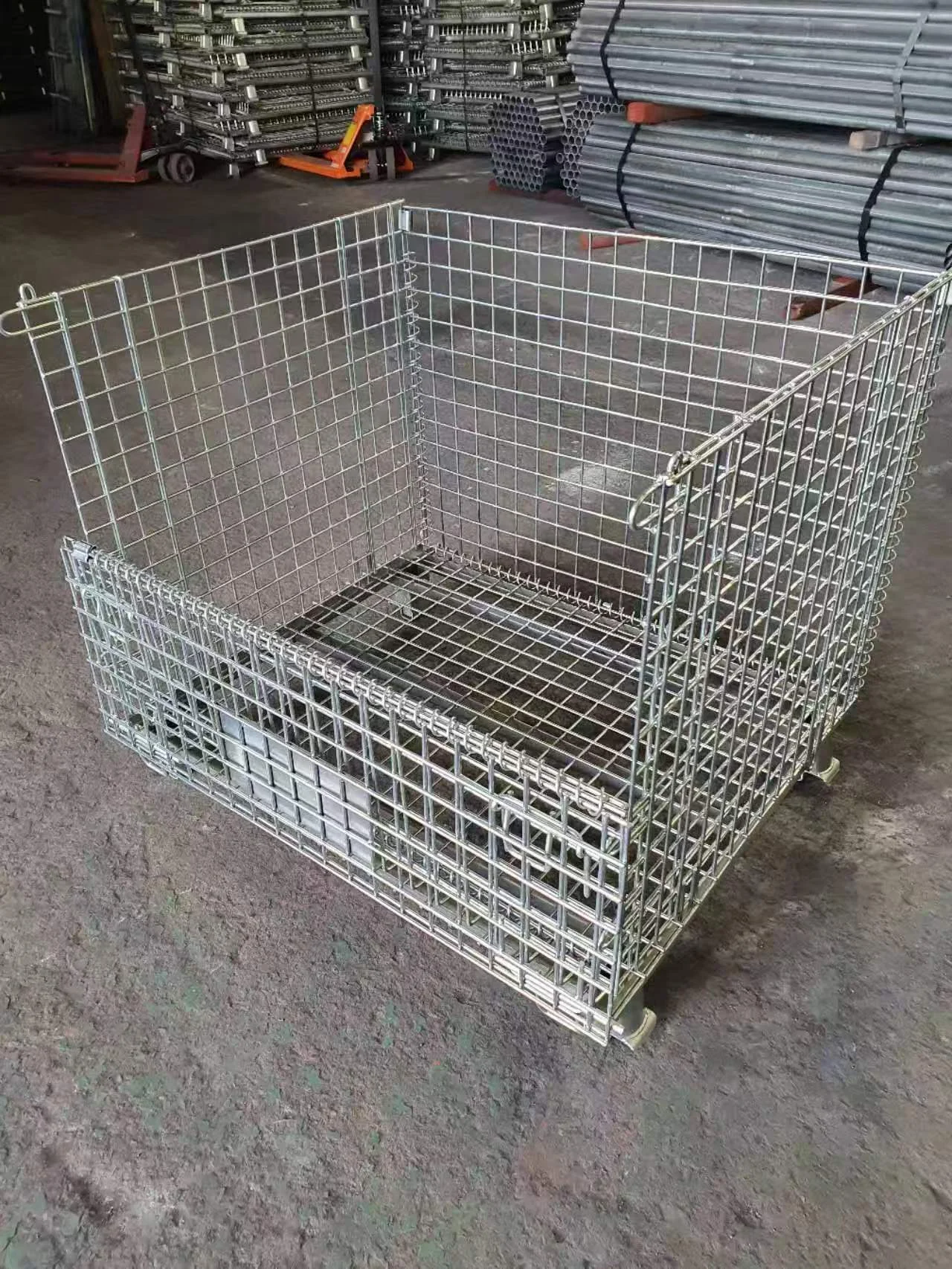
The pick sequence on the floor
- Walk to the gate face; nothing above or below the container has to move.
- Release the latch pins on the upper panel.
- Fold the upper panel down until it rests against the lower panel.
- Pick the part from the exposed face; the lower panel keeps retaining the remaining parts.
- Fold the panel back up, re-latch, and confirm the face is closed before the container is moved or stacked.
Where the gate stops helping
The gate is a picking access, not an unloading door and not a reach extender. If the part you need sits in a container stacked above your reach height, the panel still opens, but your arm does not get longer, so that level needs a platform, a step or a hoist. If the pick is a whole-container discharge, where the entire contents go to the line in one go, a half-drop gate adds a step to a job that a plain open container or a tilting frame handles faster. And if the container is going to be tipped or emptied by machine, the gate must be latched before the lift: an unlatched panel under a tipped load is an injury waiting to happen.
Does a 50×50 mm mesh give you a count you can trust?
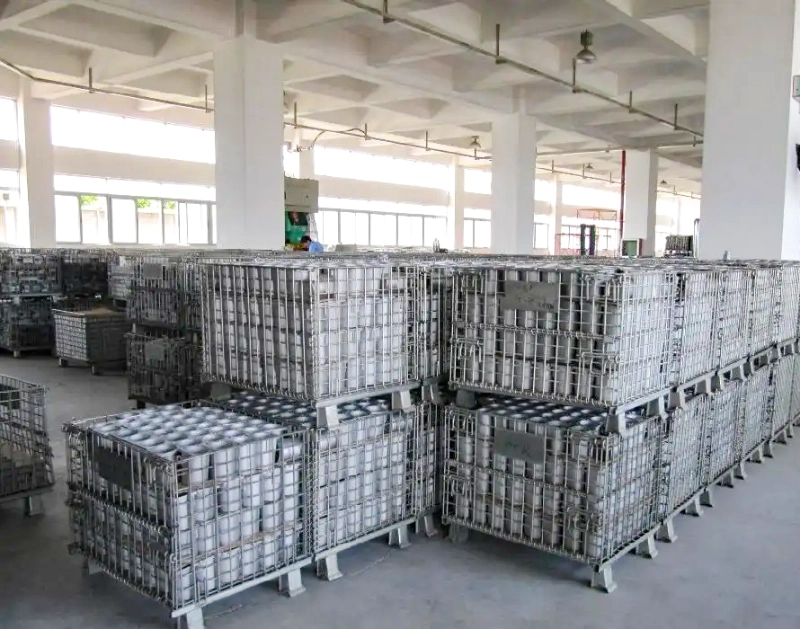
The mesh on the recorded projects is a 50×50 mm grid of welded steel wire, and it is the reason an operator can see into a closed container at all. Through the side panel or the open gate you can read the fill level, spot a container that is nearly empty before the line stops for it, and confirm that the buffer holds the part numbers it should. All of that happens without opening a lid, unlatching a panel or lifting a cage off a stack.
That is visual control, and it is genuinely useful between counts. It is not a count. Depth stacking hides every layer under the top one; identical small parts lying loose in bulk cannot be counted through a grid, however good the light; and one container holding mixed part numbers defeats the visual check completely. The workable line-side rule is to use the mesh view as a between-count check, keep one part number per container, keep a label or kanban card on the gate face at eye level, and still run the cycle count on its own schedule. Visual control cuts how often you have to open, dig and recount a container. It does not remove the count, and no mesh opening can promise zero inventory error.
Will small parts fall through the mesh?
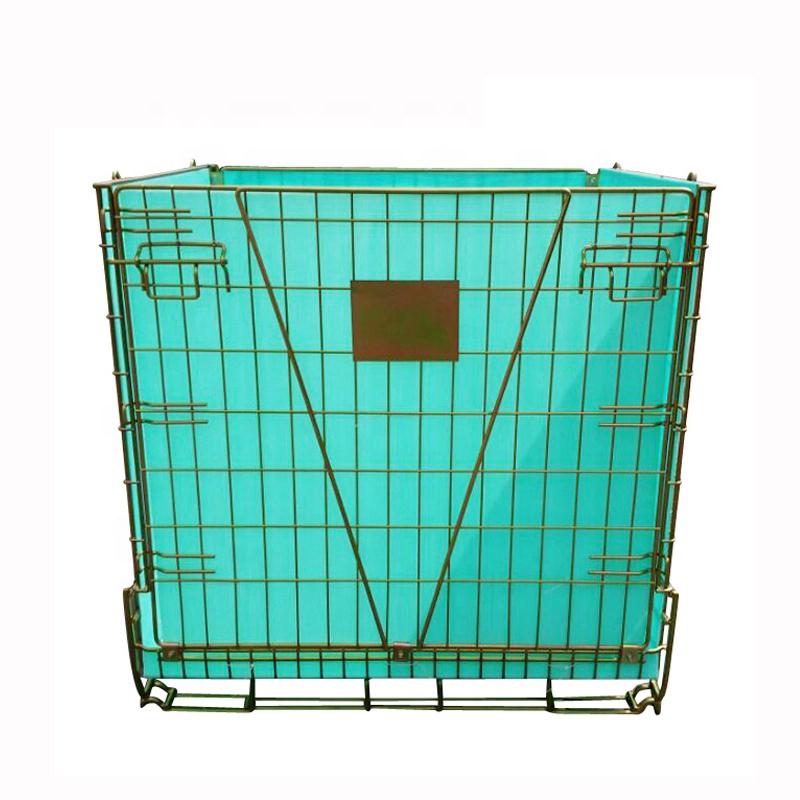
Mesh is a hole with a frame around it. A 50×50 mm opening holds back most industrial components and passes anything smaller than the opening: out through the side panel during handling, out of the gate when it is folded down, or onto the floor when the container is moved with a pallet jack. So the check is the smallest dimension of the smallest single piece you intend to store, not the average part and not the package size.
If that dimension can pass the opening, the plain mesh container is the wrong container for that part. The options are a PP hollow-board liner that turns the cage into a five-sided barrier, a mesh specification with smaller openings quoted as a variant, or a solid-walled container. Two consequences are easy to miss. A liner blocks the view through the mesh, so a lined cage gives up visual counting on the lined faces. And long thin parts can protrude through the open gate, so measure the gate swing zone and keep it clear of walkways and truck routes. If parts can bounce or be thrown out of an open top, a lockable lid variant closes the container.
Which way should the gate face?
Gate orientation is a layout decision, and it is far cheaper to settle before the order than after the first delivery. Four things to fix on the floor plan:
- Pick side: the gate faces the operator’s walking route, never a powered-truck lane. A panel that folds down into truck traffic is a collision, not a feature.
- Handling side: the recorded base accepts four-way forklift and pallet-jack entry, so the truck can approach from any face, which leaves the gate side free to be chosen for the picker instead of for the truck.
- Height: set the buffer so the containers whose gates are used for picking are the ones inside reach. A two-high stack with the gate on the lower container at pick height is the simplest arrangement; the upper container is stock, not a pick face.
- Movement: if the buffer is moved by pallet jack between stations, the gate comes back on a different side every time. Either mark the container orientation in the floor layout so the gate returns to the same side, or use a caster base variant and turn the gate to the station with the brakes set.
Configuration options and when each one fits. The variants below follow the documented configuration set and the indexed images; confirm the variant list on the drawing before ordering.
| Configuration | What it solves | When it is not the answer |
|---|---|---|
| Single-face half-drop gate, fixed base | Picking from a stacked container without a stack-down | Whole-container discharge, or parts stored above reach height |
| Half-drop gate with PP hollow-board liner | Small or precision parts that would pass through or rub on the mesh | Where the fill level has to stay readable through the mesh |
| Half-drop gate with caster base | A buffer that has to travel to the station | Routes where a rolling load is not under control |
| Lockable lid variant | Parts that can bounce out, or that need security | Frequent top loading, where the lid adds a handling step |
| Plain mesh container, no gate | Containment where picks only happen at stack-down | Any line-side flow where a pick must not wait for a truck |
Where a drop-gate container fits on a line-side store
- Machining cell buffer: one part number per container, gate toward the operator’s walk route, buffer sized to one shift.
- Assembly line-side store: two-high stack, gate on the lower container at pick height, upper container held as stock.
- Mixed-model changeover: label the gate face and keep the container liner-free wherever the fill level has to stay readable.
- Precision and electronic components: lined container with a lid where the smallest piece is under the mesh opening.
- Mobile buffer: caster base so the gate can be presented to the station, brakes set before the pick.
- Not for: whole-container discharge, loose parts smaller than the mesh opening without a liner, and parts whose length exceeds the open gate’s swing zone.
Frequently asked questions
How much picking time does a half-drop gate actually save?
It removes steps, not a fixed number of seconds: the truck call, the stack-down, the dig and the re-stack disappear for parts held in a container the operator can reach. What that is worth depends on your pick frequency, your stack height and how often the wanted part sits in the bottom container. Measure those three and the saving follows from your own cycle data; we do not publish a percentage that was not measured on your layout.
Can we stop counting and rely on the mesh view instead?
No. The mesh gives a fill-level and presence check between counts. Depth stacking, bulk small parts and mixed part numbers all break that check, so the cycle count stays on its own schedule and the visual view remains the fast check in between.
Can the container be moved or stacked with the gate folded down?
No. Fold the panel back and re-latch it before the container is lifted or stacked, and confirm the latch before the unit leaves the pick position.
If the line-side buffer is where your takt is being lost, send the part list, the smallest part dimension, the stack height you run and the aisle width. We will confirm the gate face, the container size and the liner decision against the drawing before you order, and the empty return leg of the same container is covered in the companion article on folding.
Need a Custom Storage Solution?
Speak directly with our technical engineers. We offer free structural designs, heavy-duty catalog evaluations, and quick B2B price quotations.
Request a Quote Now →