
A 1,400 kg wire mesh container looks like a simple capacity number, and four-layer stacking looks like a simple multiplier. Put the two together and the plan seems obvious: four cages, four times 1,400 kg, one very tall pile of steel castings. Then the load plan fails review — not because the cages are weak, but because the two numbers you combined were never measuring the same thing.
On the recorded 15059 project cage (1,000 × 800 × 840 mm, 50 × 50 mm mesh, 6 mm wire, Q235 steel), the same document states two figures side by side: 1,400 kg per cage, and an upper-cage total load of no more than 2,000 kg when stacked up to four high. Those are not competing ratings. One describes a single cage; the other describes the stack.
Per-cage load and stack load are two different measurements
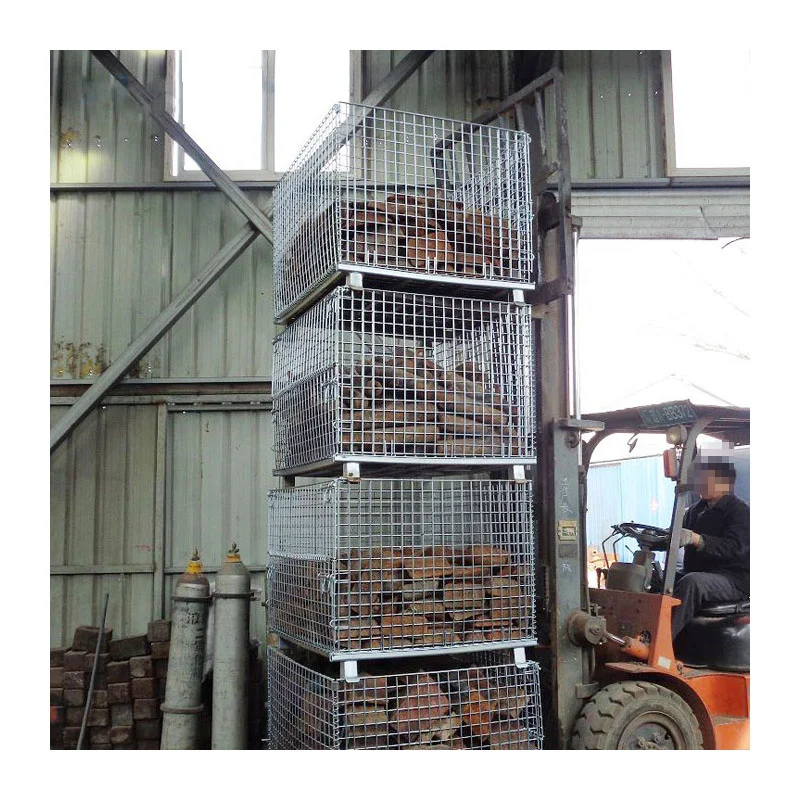
Per-cage payload is what you put inside one container: the castings, the mesh walls around them, and the base that carries them when the cage stands or is lifted. Stack load is what the bottom container has to support from everything placed above it. A four-high stack puts the entire weight of three loaded cages onto the bottom unit, transferred through the formed stacking feet and the base frame. That is why a stack limit is expressed as a total for the upper cages rather than as a repeat of the per-cage figure.
So when you read “1,400 kg” and “upper-cage total no more than 2,000 kg” on the same specification, you are reading a payload limit and a structural limit. Both apply at the same time. A cage can be perfectly within its own 1,400 kg payload limit and still be part of an over-loaded stack.
Why 1,400 × 4 does not equal 5,600 kg of usable capacity
Fill four cages with 1,400 kg of castings each and the upper three cages alone carry 4,200 kg — more than double the recorded 2,000 kg upper-cage total. The bottom cage then supports its own 1,400 kg payload plus 4,200 kg above it. Nothing in that arrangement matches the project record, even though every individual cage is inside its own payload limit.
The load path explains why the stack figure is the stricter one. Weight from the upper cages travels down through the formed stacking feet into the bottom cage’s base frame, its U-channel reinforcement and its corner feet — the same parts you inspect for deformation after repeated forklift handling. The upper-cage total is the number that keeps those components inside their design envelope; the per-cage payload only describes what the cage body carries on its own.
The two figures belong to a project, not to the whole product family
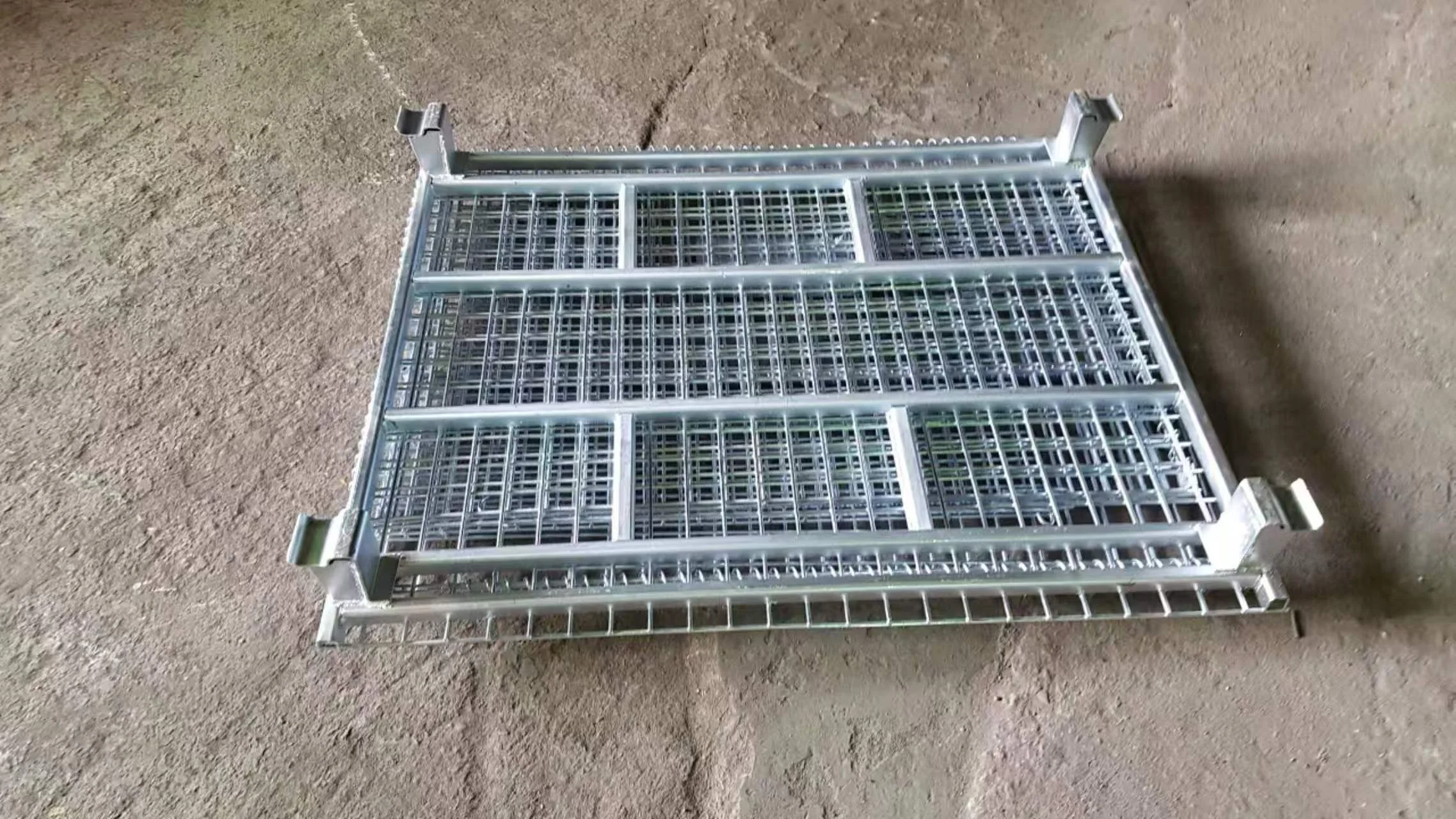
1,400 kg is the recorded payload for one specific cage — the 15059 project container. It is not a blanket rating for every collapsible wire mesh container. The permitted project records show how far apart the figures can sit, and each one has to be read on its own:
| Recorded project | Cage size | Payload per cage | Stacking figure |
|---|---|---|---|
| 15059 | 1,000 × 800 × 840 mm, 50 × 50 mm mesh, 6 mm wire | 1,400 kg | Up to four high, upper-cage total no more than 2,000 kg |
| 15217 | 1,050 × 1,050 × 1,000 mm, 50 × 50 mm mesh, 6.0 ± 0.1 mm wire | 1,000 kg | Up to four high, upper cage no more than 1,200 kg |
| 13967 | 800 × 1,200 × 890 mm, 50 × 50 mm mesh, 5.8 mm wire | 1,000 kg | Risk note recommends no more than four tiers and no more than 500 kg in each upper cage |
Three records, three different stacking figures, and in one case a design-review recommendation rather than a single headline number. That is exactly why a quotation and a drawing, not a catalogue number, decide whether your casting load can go four high.
Working out a casting stack that holds
Take a realistic casting loop: 1,000 kg of steel castings per cage, four cages on one footprint. Run the numbers before you order the stack height.
- Two high at 1,000 kg per cage: the upper cage total is 1,000 kg, inside the recorded 2,000 kg figure.
- Three high at 1,000 kg per cage: the upper total is 2,000 kg, sitting exactly at the recorded cap with no margin left for load variation or a heavier casting batch.
- Four high at 1,000 kg per cage: the upper total is 3,000 kg, which the 15059 record does not support.
- Four high with lighter upper cages: the upper total has to stay within 2,000 kg, so three upper cages averaging about 650 kg each is the arithmetic the record allows — provided the parts, the cage footprint and the aisle plan all accept that weight split.
None of these options is a compromise on the cage; they are the arithmetic of the stack. If a four-high stack at full payload is genuinely required, the right move is a design-level review against a drawing — not a heavier load plan.
What the same numbers do to the container loading count
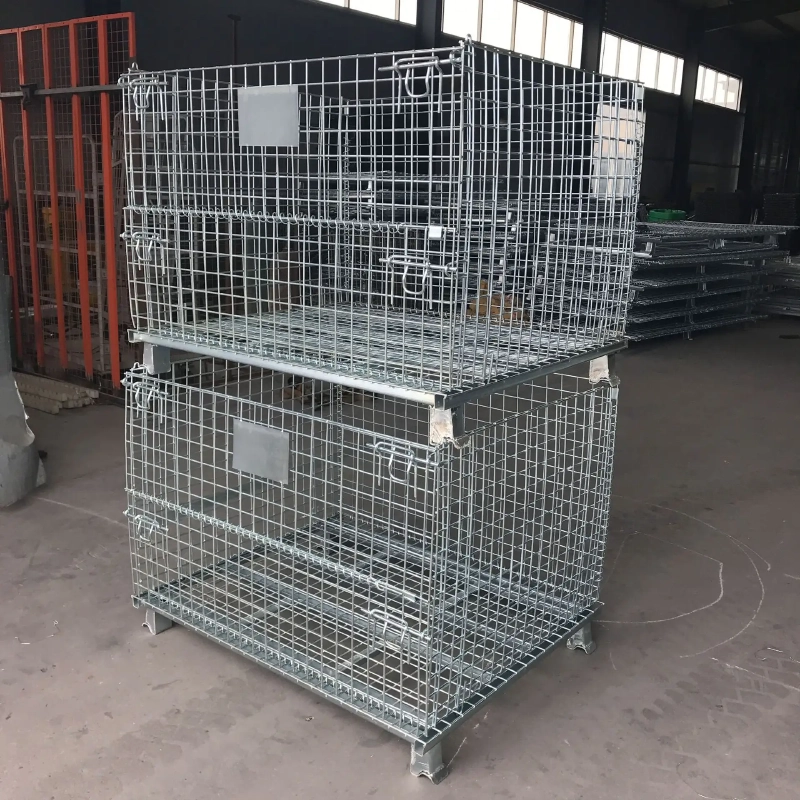
The 15059 record lists 250 pieces in a 20 ft container and 638 pieces in a 40 ft HC — quantities that belong to that cage and its packing arrangement, and the cage weighs 42 kg empty on that record. Those counts are a packing figure, not a promise that the same number of loaded cages travels in one container. Loaded cages are planned from the cage footprint, the stack height you are allowed to run and the usable internal height of the container; a loaded plan has to be built and checked separately.
Before you commit to a container plan, confirm with your supplier what the quoted quantity describes: empty folded cages strapped into bundles, or loaded cages at a stated stack height. The two plans rarely produce the same number, and the difference shows up as rework at the loading dock.
Where this load-planning approach fits
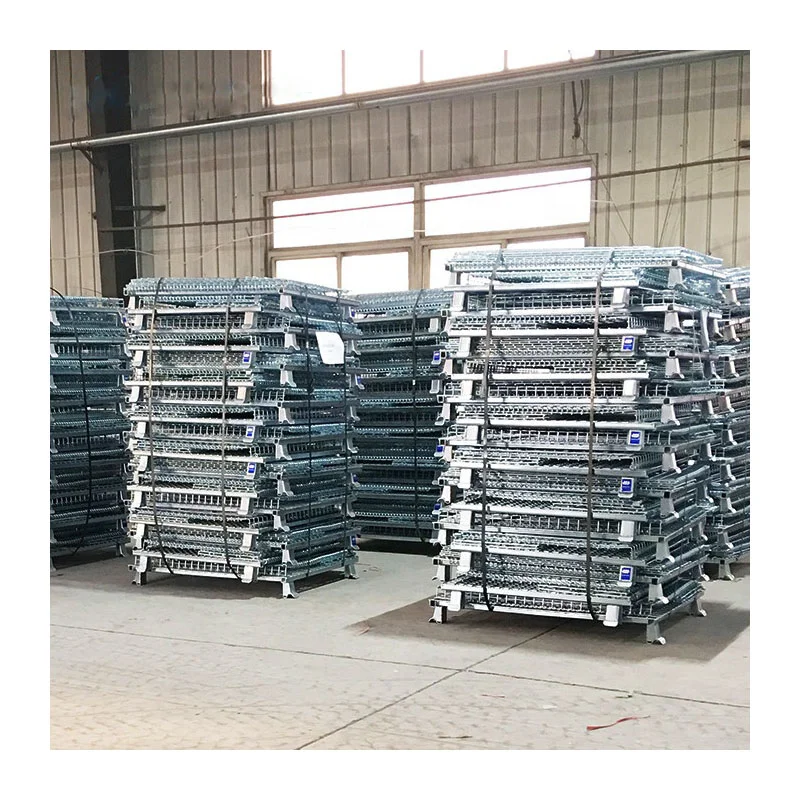
- Steel castings, machined workpieces and dense metal parts stored in stackable wire mesh containers at a defined per-cage weight.
- Work-in-progress buffering beside machining or assembly cells, where cages move by forklift or pallet jack.
- Mixed industrial parts storage where visibility through 50 × 50 mm mesh supports counting and inspection.
- Return loops where empty cages fold flat for the back-haul leg and the loaded leg runs on a fixed stack height.
If your parts are small, precision or easily scratched, a liner or lid is a documented option rather than a structural change — it protects the parts, and it does not change the stacking arithmetic above.
Questions buyers ask before fixing a stack height
Is 1,400 kg the standard load rating for every collapsible wire mesh container you make?
No. 1,400 kg is the recorded payload for one project cage — the 15059 container at 1,000 × 800 × 840 mm. Other records in the same product family show 1,000 kg per cage with different sizes and wire diameters. Treat every payload figure as a project figure and confirm it against the approved drawing for your configuration.
Are the 1,400 kg payload and the 2,000 kg upper-cage total contradictory?
No, they measure different things. The 1,400 kg is what goes inside one cage. The 2,000 kg is the total allowed in the cages above the bottom one. A four-high stack of four 1,400 kg cages places 4,200 kg in the upper cages, which is outside the recorded stack figure — that is the mismatch, not the two numbers themselves.
How many cages fit in one container?
The 15059 record lists 250 pieces in a 20 ft and 638 pieces in a 40 ft HC. Ask which packing state those counts describe — folded cages in strapped bundles or loaded cages on a defined stack plan — and have the loaded plan checked against the container’s usable internal height before you book freight.
What should I confirm before placing a batch order?
Four things: the payload per cage for your parts, the upper-cage total your stack height allows, the number of tiers the layout actually needs, and the finish. Cold and hot galvanizing are documented project options with stated thickness values; the acceptance criteria for a given coating belong to your project specification and should be confirmed in writing rather than assumed from a headline figure.
If you are sizing a stack of castings or other dense parts, start from the per-cage weight and the tier count, then have both figures checked against a drawing. You can review the full collapsible wire mesh container range for footprint, gate and finish options before you fix the load plan.
Need a Custom Storage Solution?
Speak directly with our technical engineers. We offer free structural designs, heavy-duty catalog evaluations, and quick B2B price quotations.
Request a Quote Now →