
How Does a Collapsible Cage Pallet Save 60–80% Space in Empty-Return Logistics?
See how a Mybox collapsible cage pallet can reduce empty-return volume by a typical 60–80% project range. Review folded dimensions, 40HQ loading calculations, caster and lid effects, and the tool-free folding sequence.
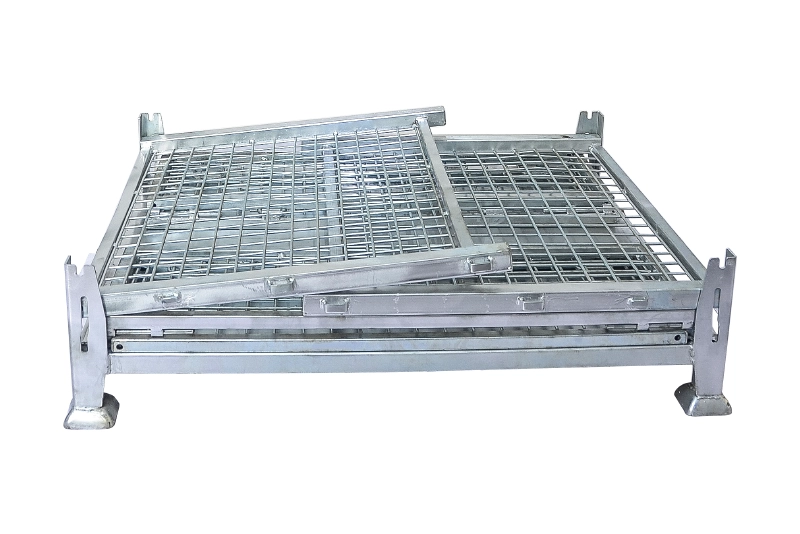
Fold the return footprint, not the reuse value
A collapsible cage pallet is designed to travel full on the outbound leg and compact on the empty return. For the project configurations shown here, the folded height is typically 330–370 mm, giving a 60–80% empty-return volume reduction as a planning range—not a guaranteed result for every size or configuration.
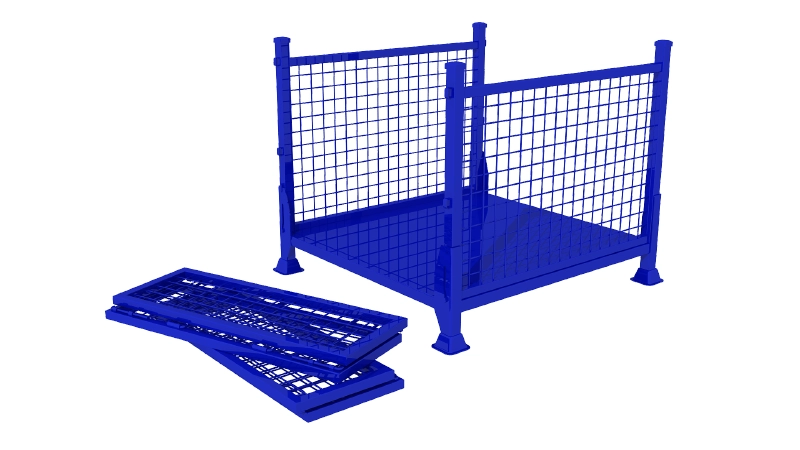
Mybox uses a tool-free folding sequence: release or open the door pin, remove the folding door, then pull out the side-door uprights and lay them down. The basic empty-return design uses a folded envelope of 1100 × 885 × 330 mm. A 1200 × 1200 × 1100 mm version folds to 1200 × 1200 × 330 mm. Those dimensions let an export or reusable-packaging team calculate return loading from the actual footprint instead of relying on a generic “space saving” claim.
- Project typical folded height: 330–370 mm, subject to the approved drawing.
- Volume planning: multiply folded length × width × height, then check the 40HQ floor pattern, stack height and securing method.
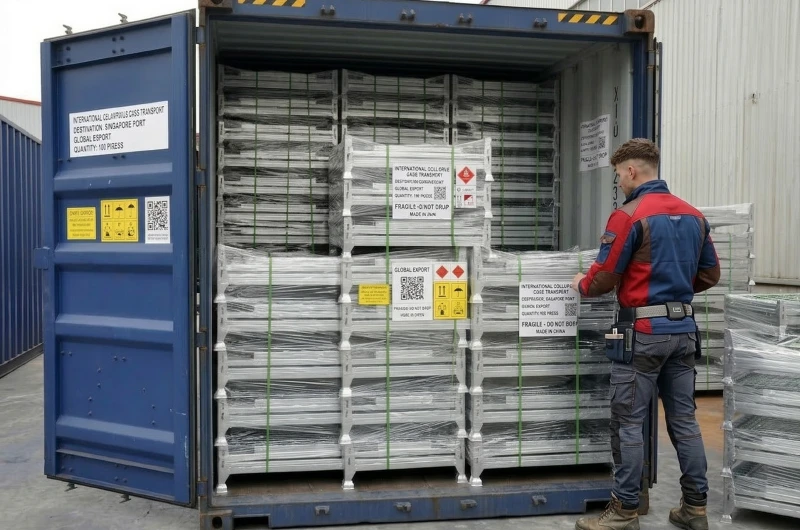
- Recorded project reference: agricultural project 15730 loaded 112/140 folded units in a 40HQ; this is project-measured data, not a universal loading promise.
- Configuration check: casters, lids, gates and handling clearances must be included in the final folded envelope.
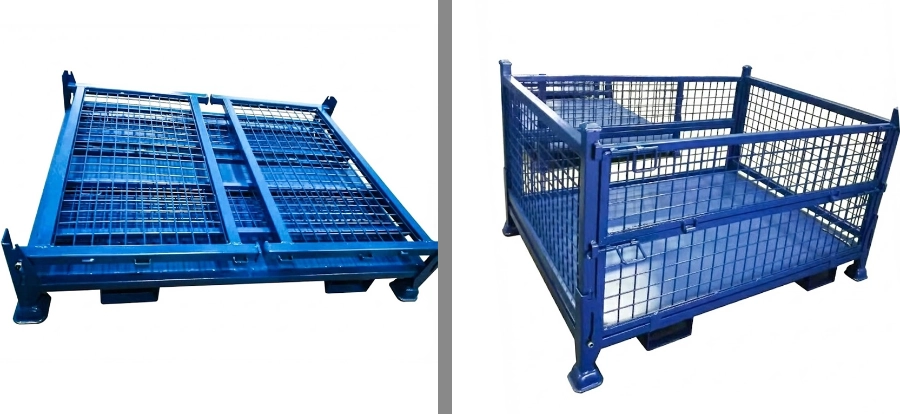
Choose the return format from the project envelope
BASE FOLDING DESIGN
Standard empty-return cage
Use this format when the priority is a simple fold-down cycle, forklift or pallet-jack handling, and a compact reusable package for the return leg.
- Folded reference: 1100 × 885 × 330 mm
- Tool-free manual folding sequence
- Confirm mesh, gate and stacking details by drawing
LARGE FOOTPRINT
1200 × 1200 project format
A square pallet footprint can suit a different load pattern or agricultural circulation loop. Its return plan must be calculated separately from the 1100 × 885 format.
- Assembled reference: 1200 × 1200 × 1100 mm
- Folded reference: 1200 × 1200 × 330 mm
- 40HQ quantity depends on the approved packing pattern
MOBILE OR LIDDED OPTION
Handling accessories, checked before packing
Casters with brakes can support local movement and picking; a lid can support a different protection or stacking requirement. Neither option should be added to a 40HQ calculation without checking the folded envelope.
- Casters stay part of the handling envelope and may change clear height
- A lid requires an agreed folded, nested or separately secured arrangement
- Confirm brake access, stackability and securing points for transport
The saving is created on the empty leg
Use the height calculation
For a 1100 mm assembled height and a 330 mm folded height, the idealized height ratio is 30%, or about 70% less vertical volume before pallet pattern and voids are considered. The 60–80% figure is a typical project range, not a per-unit guarantee.
Keep the outbound package reusable
The cage can travel with the load on the outbound leg, then return as a folded steel package. This is relevant when repeated empty returns, export container costs or one-way packaging waste are part of the purchase decision.
No tool is specified for the fold
The operating sequence is release the door pin, remove the folding door, and pull out and lay down the side-door uprights. Exact cycle time depends on the selected dimensions, doors, lid, caster arrangement and the operator’s site method.
Validate the real loading count
Use the folded dimensions and the selected securing method to build the container plan. Project 15730 recorded 112/140 units in a 40HQ; the difference between project layouts is why loading quantity should be confirmed against your drawing.
From a full outbound trip to a measured return plan
Define the loaded cycle
Confirm the cargo, access sides, assembled size, forklift or pallet-jack interface, and whether the box needs casters, a lid or a special surface treatment.
Release the door hardware
At the return point, open or release the door pin and remove the folding door. The design target is a manual sequence without a dedicated tool.
Fold the side structure
Pull out the side-door uprights and lay them down. Stack or secure the folded units according to the approved handling and transport instructions.
Check the actual 40HQ plan
Calculate footprint, folded height, layer count, aisle or restraint needs and the final count. Time one operating cycle at your site rather than using an unverified universal labor promise.
What to confirm before ordering
How do I convert the folded size into a 40HQ loading quantity?
Start with the folded footprint and height. For the 1100 × 885 × 330 mm reference, the geometric envelope is approximately 0.322 m³ per folded unit. For 1200 × 1200 × 330 mm, it is approximately 0.475 m³. Then calculate the floor pattern, allowable stack layers, container clearances and securing method. The usable count is the lower result from those checks, not a volume-only division. Project 15730 recorded 112/140 units in a 40HQ, so use the approved project packing drawing for the final number.
Do casters or a lid stop the cage pallet from folding?
They do not automatically remove the folding option, but they can change the folded envelope and the handling method. Casters remain part of the base and must be included in the clear-height check. A lid needs an agreed position during return—folded with the unit, nested, or secured separately. Confirm the assembled and folded dimensions for the exact caster, brake, lid and stacking-foot combination.
How much on-site labor does folding take?
The specified action is a tool-free manual sequence: release the door pin, remove the folding door, then pull out and lay down the side-door uprights. We do not present one fixed minutes-per-unit figure because size, accessories, operator method and site safety controls change the cycle. Request the operation video and time a sample cycle with your selected configuration before setting a labor standard.
Is 60–80% space saving guaranteed for every Mybox?
No. It is a typical solution range for the stated empty-return use case. A 330 mm folded height against a 1100 mm assembled height gives an idealized 70% reduction in the height component, while actual return volume also depends on footprints, voids, lids, casters, stacking and restraint. The final quotation should carry the project-specific folded dimensions and loading plan.
When is a collapsible cage pallet not the right fit?
It may not be the best choice when empty returns are rare, the package must be sealed or dust-tight rather than mesh-based, the load needs a fixed non-folding enclosure, or an automated handling system has not validated the folded and assembled interfaces. Send the cargo, route, return frequency and handling equipment so the configuration can be checked before purchase.
What should I send for a return-volume calculation?
Provide the assembled length, width and height; cargo weight and access requirements; expected empty-return frequency; target container type; stacking and securing rules; and any caster or lid requirement. We can then compare the 1100 × 885 and 1200 × 1200 reference formats—or develop a project-specific envelope—and return a loading calculation with the folding operation video.