
Which Insert Should I Choose for a Cage Pallet: Wire Mesh Panels or Solid Steel Plate?
Should your cage pallet use wire mesh panels or solid steel plate inserts? Compare visual inventory, dust and oil containment, and mixed configurations for Sebox stackable stillages.
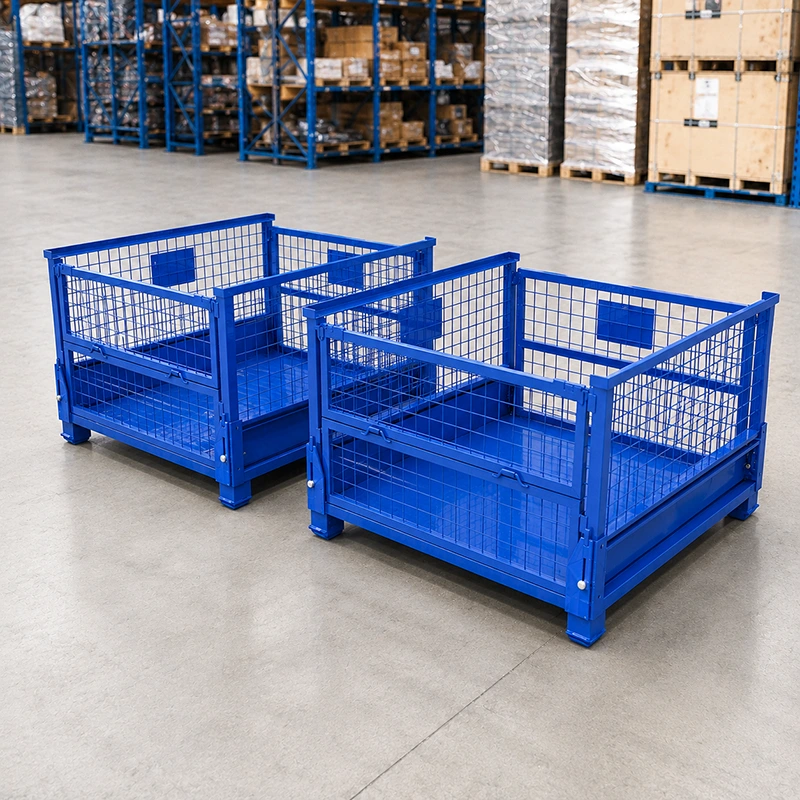
Choose the Right Insert for Your Cage Pallet: Wire Mesh Panels or Solid Steel Plate
Both inserts fit the same Sebox stackable stillage frame. The decision comes down to what you store, how you count it, and what must not escape the box.
Sebox cage pallets accept four side gates plus a base, and each panel can be specified as welded wire mesh or solid steel plate independently. Wire mesh gates and bases give you see-through inventory, air circulation and a lower tare weight. Solid steel plate gates and bases block dust, retain small loose parts and stop oil or coolant from reaching the floor. The four gates and the base can be mixed, so the box can be tuned to the part geometry and the counting method on the shop floor.
- Wire mesh inserts for visual stock checks without opening the box
- Steel plate inserts to retain fasteners, chips and oily components
- Mixed configuration — front, rear, sides and base set independently
- Same 1000kg+ chassis rating across all insert combinations
- Compatible with existing Sebox foldable stillage frames and casters
Three Insert Configurations for Different Warehouse Tasks
Mesh
Wire Mesh — 4 Sides + Base
Open welded mesh on every gate and on the base. Use when you need to count stock through the wall, drain coolant or let parts air-dry after wash.
Rear gate: mesh
Left & right sides: mesh
Base: mesh
Best for: bulky machined parts, air-dry parts, visible SKUs
Solid Plate
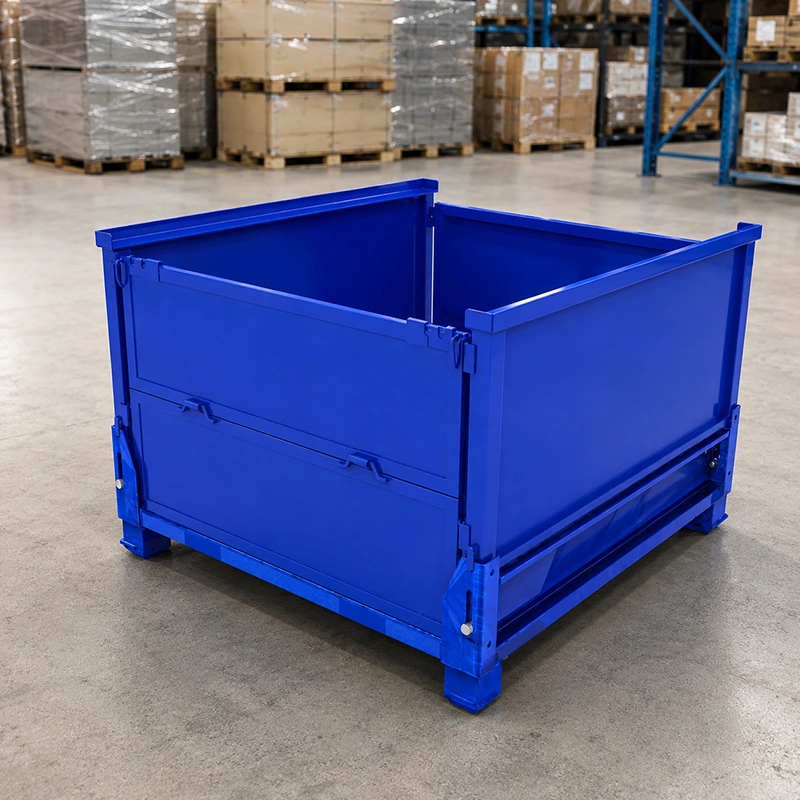
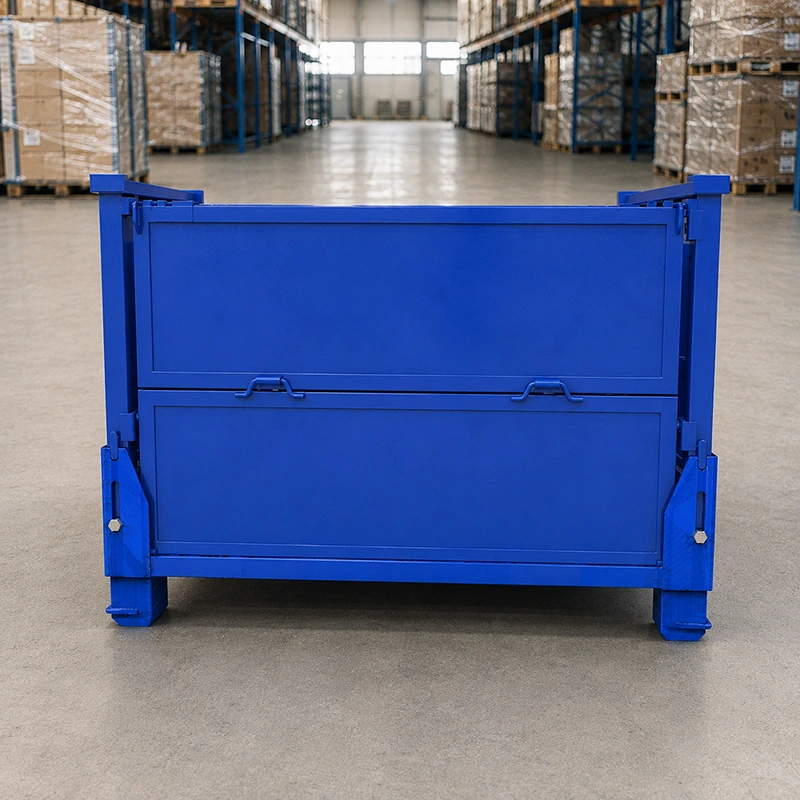
Solid Steel Plate — 4 Sides + Base
Fully enclosed panels on every gate and a sealed floor. Use for fine fasteners, oily components, dust-sensitive parts or any line where leakage onto the floor or onto the pallet below is unacceptable.
Rear gate: steel plate
Left & right sides: steel plate
Base: steel plate (sealed)
Best for: fasteners, oily parts, dust-sensitive components
Hybrid
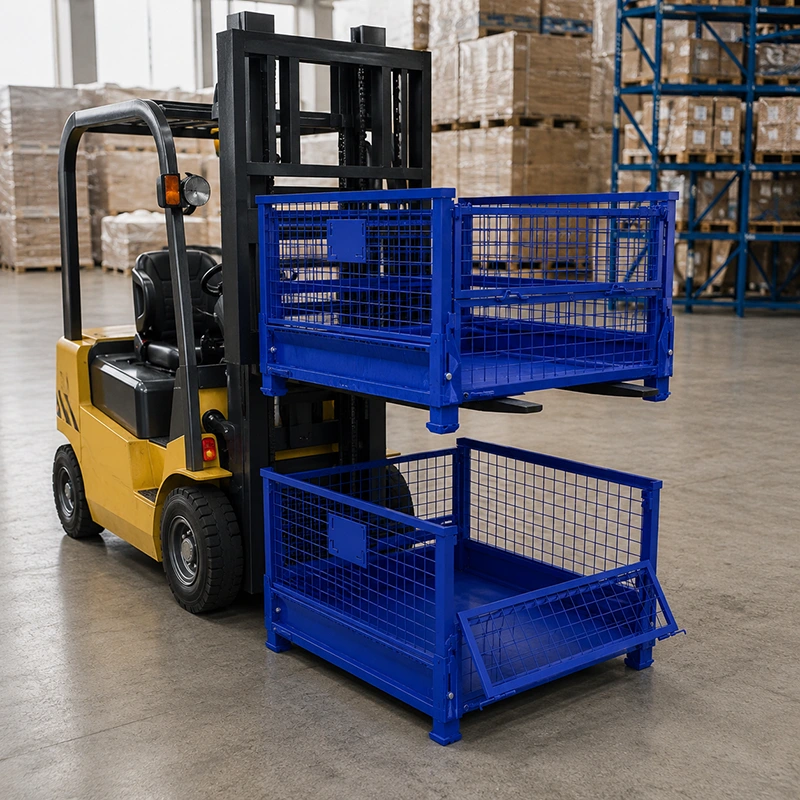
Mixed — Mesh Sides with Plate Base (or vice versa)
The most common order. Mesh walls keep stock visible while a solid plate base catches small parts and oil drips; swap panels later if the workload or the audit method changes.
Rear gate: mesh
Left & right sides: mesh
Base: steel plate (sealed)
Best for: mixed parts inventory, returnable loop with leak risk
Why the Insert Decision Drives Real Warehouse Outcomes
Visual Inventory Without Unboxing
Mesh walls let warehouse staff count SKUs at the pallet, scan barcodes through the panel and audit returns without lifting a single lid. Plate walls block that view and force a manual count every cycle.
Oil & Coolant Containment
Machined parts arrive oily or wet. A solid plate base keeps the fluid inside the box; a mesh base lets it drip onto the floor and onto the pallet below in a 4-high stack.
Small Parts Retention
Bolts, washers, O-rings and chips fall through mesh. Steel plate floors and partial plate skirts keep the part inside the stillage and stop the end-of-shift sweep that mesh-only boxes always need.
Re-Configurable After Purchase
Each gate is bolted to the same Sebox frame. Order one configuration today, swap a gate from mesh to plate next quarter, and reuse the frame — no new pallet purchase required.
Tell Us Your Material, Get the Right Insert Set
Submit Your Material Form
Tell us part size, count per box, oil or coolant presence, dust exposure and how the box is counted on the floor (visual scan vs full manual count).
Receive the Insert Recommendation
Our team returns a wire mesh vs steel plate recommendation for each of the four gates and the base, with reasoning tied to your material form and your audit method.
Approve Drawing & Sample
We confirm the layout drawing, share a production sample if requested, and lock the panel configuration before the production run starts.
Production & Delivery
Sebox stillages are built on the same Q235 frame, with inserts welded or bolted per your spec, then shipped in stackable form for returnable-loop logistics.
Wire Mesh vs Steel Plate — Common Questions
Which materials should I store in a wire mesh Sebox stillage?
Use wire mesh when the parts are large enough not to fall through (typical opening is 50×50mm or 50×100mm), when the parts benefit from air-dry after wash, and when the warehouse counts by visual scan or barcode read-through. Machined castings, gears, housings, sheet metal blanks and similar mid-to-large parts fit well.
When must I choose solid steel plate inserts?
Choose solid steel plate when the box holds small fasteners (M6 and below), oily or coolant-wet components, dust-sensitive surface finishes, or anything that must not leak onto the floor or onto the pallet stacked below. Plate panels act as a sealed tray.
Can I mix mesh and plate on the same Sebox cage pallet?
Yes. Each of the four side gates and the base is specified independently. The most common hybrid is mesh walls with a solid plate base — keep stock visible, but catch drips and small dropped parts. The reverse (plate walls, mesh base) is also available for parts that need air circulation but must contain dust.
Does the load capacity change between mesh and plate inserts?
The Sebox frame carries the rated load (1000kg+ class). Mesh inserts are lighter and add less tare, so the net payload can be marginally higher. Plate inserts add 4–8 kg per panel and act as a sealed tray. Either way, the chassis rating is unchanged.
Can I reconfigure a stillage after delivery if my inventory changes?
Yes. Sebox gates are bolted to the same frame. Order an additional set of gates in the other specification, then swap them on site. The base can be replaced in the same way. No new pallet is required for the change.