Manufacturing & assembly
Collect heavy, awkward or mixed parts in one reusable box between processes, reducing repeated repacking.
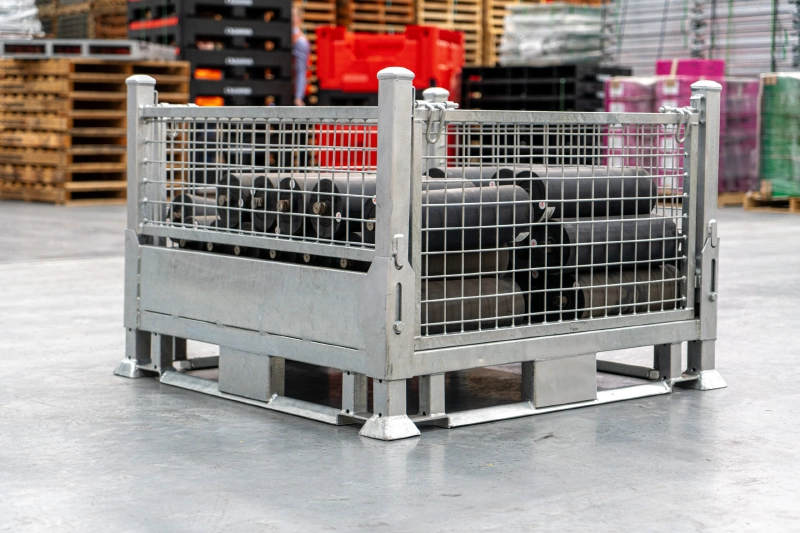

Mybox is a family of collapsible steel containers that carry parts as rigid boxes, stack when loaded and fold flat when empty. Mesh or plate sides, configurable doors and optional casters or lids. Get a specification.

Collapsible / Forklift & pallet-jack ready / Configurable / Built per application
Mybox is a family of collapsible steel containers for moving, storing and shipping industrial parts. Loaded, it is a rigid box a forklift or pallet jack can pick up and stack; empty, the side posts pull out and the panels fold down so the box collapses to a low height for return freight and storage. It brings awkward, heavy or mixed parts together in one reusable unit instead of repeatedly repacking them. Sides can be mesh or plate, doors can be configured for the way you pick, and options such as a lid, casters or lifting points are added where the application needs them. It is a container platform, not one fixed model — size, load and stacking are specified for your application.
Parts that arrive loose, in cartons or on open pallets are handled again and again — unpacked, counted, re-stacked and searched for. Cartons crush under weight and are discarded; an open pallet cannot contain small or mixed parts; and a fixed cage cannot be folded down when it goes back empty.
A collapsible steel box attacks the whole loop. It contains awkward or heavy parts in one rigid unit while in use, then folds to a low height so empties do not travel or store at full volume. Door and side options let it suit how the contents are actually picked, instead of forcing every part into the same opening.

The same container works assembled or folded — chosen by the stage of the loop.
A welded steel-tube base and upright frame give the box its rigidity. The base can be fitted with a mesh floor, a steel plate, locating features for a wooden pallet, or a profile that sits on beam racking. The frame carries the load and provides the corner posts that take a stacked box above.
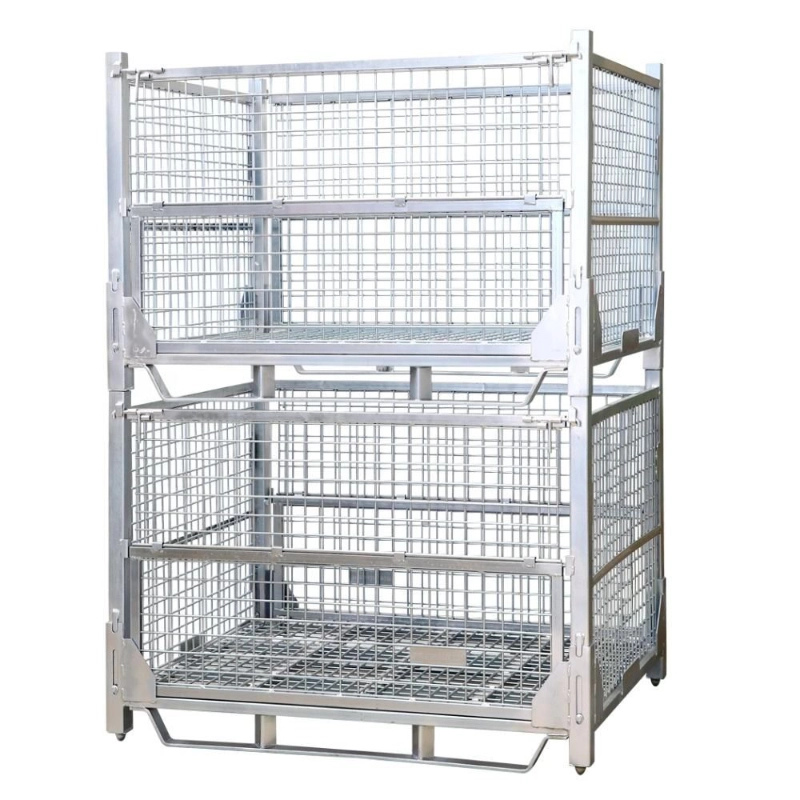
The base and corner posts carry the load and the stack.
Walls can be welded mesh or steel plate. Doors connect with hinges, latches and pins and can be arranged as a half-drop gate, a full opening, a removable panel or openings on several sides for frequent picking. Mesh keeps contents visible and ventilated; plate adds containment, dust and security where needed.
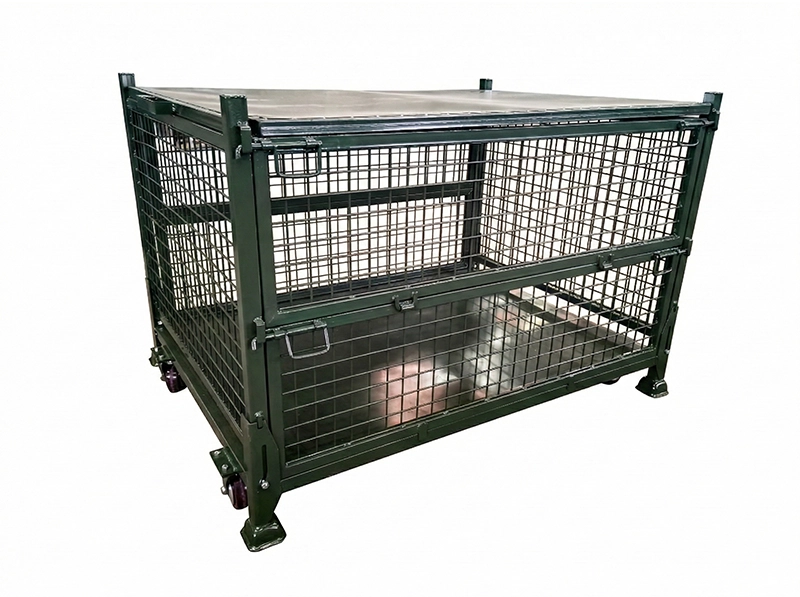
Door and side arrangements follow the way parts are taken out.
To collapse the box, release the door latches, lift out the side posts and lay the panels onto the base — the empty unit drops to a low height for stacking, storage and return. A forklift or pallet jack lifts the loaded box from the base; options such as casters, a lid or lifting eyes are added only where the application and the fold design allow them.
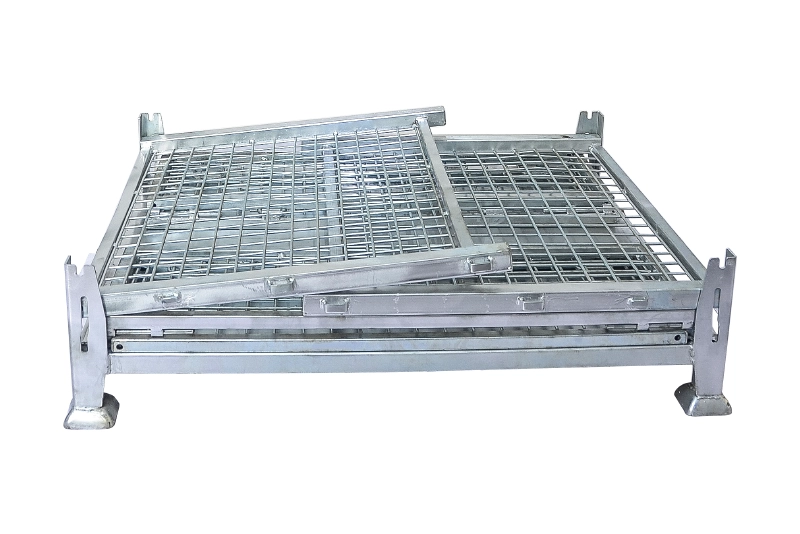
Empty, the panels fold onto the base for compact return.
The benefit of a Mybox appears across a full trip, not at one step. A typical loop looks like this — sizes and limits are set for your parts and equipment.
| Collect | Parts are loaded into the open box at goods-in or on the line; the door layout gives access for manual or machine loading. |
| Move | A forklift or pallet jack lifts the loaded box from the base and takes it to storage, the next process or the dock. |
| Stack | Loaded boxes stack on their own feet and posts within the stack height and upper-box load agreed for your configuration. |
| Return | Empties fold down to a low height, stack and ship back, cutting return volume and floor space. |
Mybox is specified around your parts, load and handling. The items below describe what can be arranged; exact dimensions, load and stacking are set for your order.
| Size & shape | Outer and inner size, low or high form, and standard or extra-long layouts are chosen for the parts and the handling equipment. |
| Wall type | Welded mesh for visibility and ventilation, or steel plate for containment, dust and security — selected for the contents. |
| Door layout | Half-drop, full, removable or multi-side doors are arranged for the direction and frequency of picking. |
| Base | Mesh floor, steel plate, pallet-locating or racking-compatible bases are chosen for the load and storage system. |
| Mobility & lifting | Casters, swivel/brake wheels and lifting eyes can be added where the fold design and the application allow. |
| Finish | Galvanised or coated finishes are specified for the environment; coating type and thickness are set to your corrosion requirement. |
Mybox suits processes where parts must be contained, moved and reused. Common starting points:
Collect heavy, awkward or mixed parts in one reusable box between processes, reducing repeated repacking.
Deliver components to the line in a box whose door layout is set for how operators pick them.
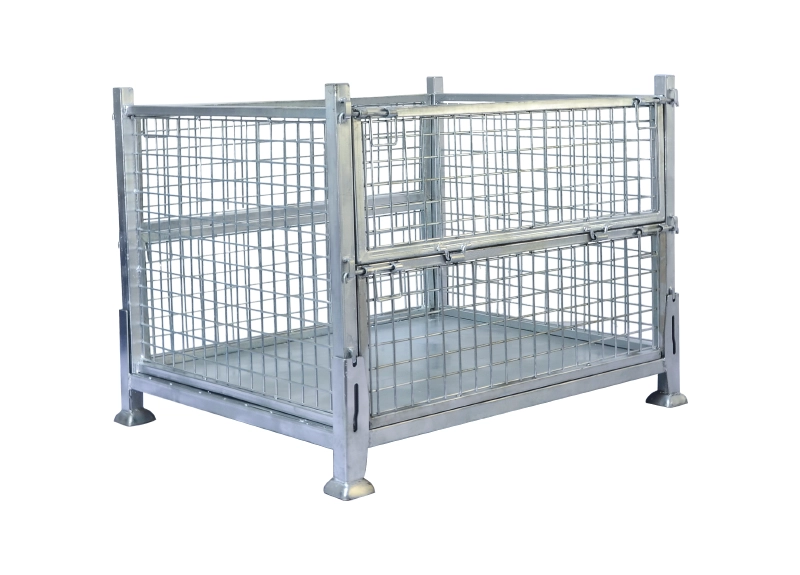
Extra-long and double-bay forms carry parts that do not fit a standard container, built to the part and the handling route.

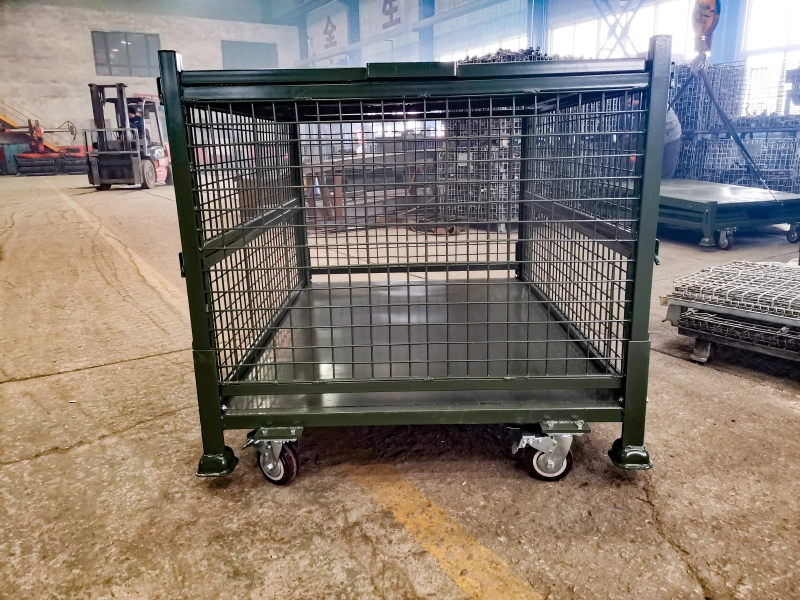
Caster versions create a movable container for kitting and high-frequency picking, with braking specified for the application.
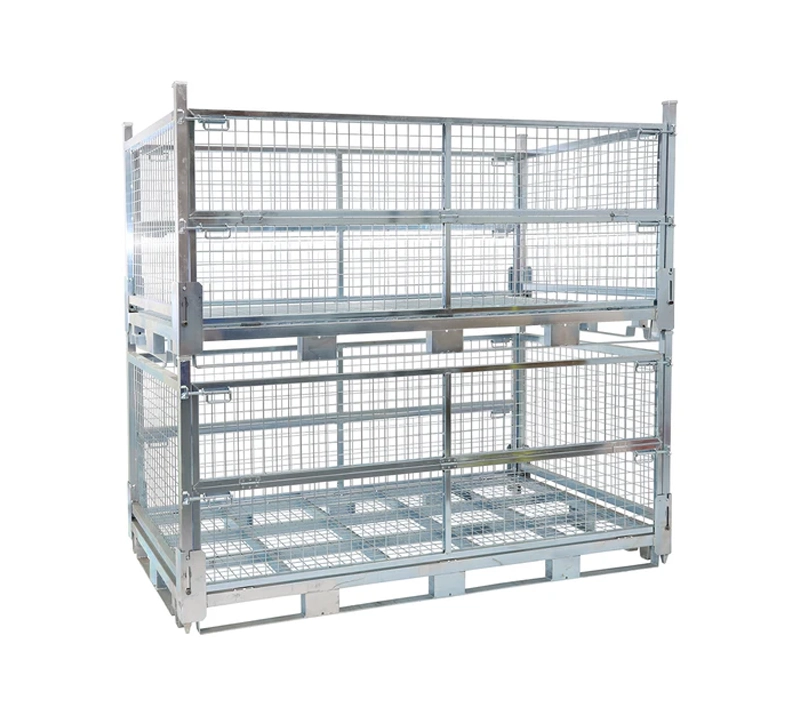
Some forms sit on beam racking while keeping the ability to stack, making use of existing warehouse height.
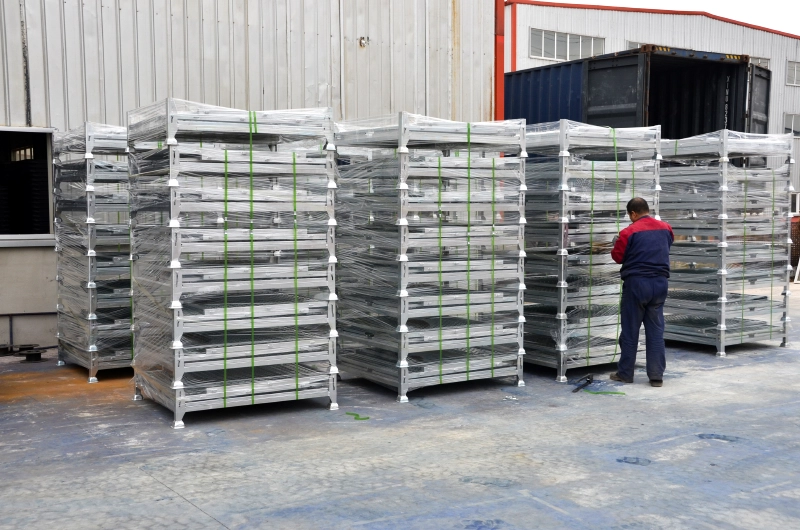
Fold the empties flat for container loading and return trips; plate, lid and lifting options are specified for the load.
Tell us what you carry and how it moves, and we can specify the right container.
| What to tell us | Why it matters |
|---|---|
| Part type, size, weight and whether the load is uneven | Sets the frame, walls and base specification |
| Required internal size and any stacking height | Fixes the outer dimensions and stack design |
| Stacking: how many high and the allowed weight of each upper box | Defines the posts, feet and stack limit |
| Door arrangement and how parts are picked | Determines half/full/removable or multi-side doors |
| Handling: forklift, pallet jack, casters or lifting, and equipment size | Confirms the base, entry and any mobility options |
| Environment and need for lid, plate or liner | Selects wall type and finish for the site |
| Quantity, loading plan and delivery terms | Allows correct loading and packaging to be worked out |
A collapsible steel container that carries parts as a rigid box, stacks when loaded and folds down when empty. It is a container platform configured per application, not a single fixed model.
Release the door latches, lift out the side posts and fold the panels onto the base. The empty box drops to a low height for stacking, storage and return.
Yes. The box’s own feet and corner posts take the load of an upper box. The number of layers and the allowed upper-box weight are set for your configuration.
Mesh suits visibility, ventilation and general parts; plate suits containment, dust and security. The choice follows what you carry.
Yes, where the fold design and the application allow. Each option affects load, stack and handling, so we specify them together with the container.
Some forms are designed to sit on beam racking while keeping stackability. Compatibility is confirmed for your racking and load.
Load and stack limits depend on size, walls, base and handling. They are set for your configuration in the approved drawing, not quoted as one universal rating.
Your parts and weights, required size, stack height and upper-box load, door and handling needs, environment, plus quantity and delivery terms.
Tell us what you carry, how high you stack and how the box moves. We will work out the size, walls, doors and options that fit and come back with a specification and a quotation.
Or send the details once using the product inquiry form below.