
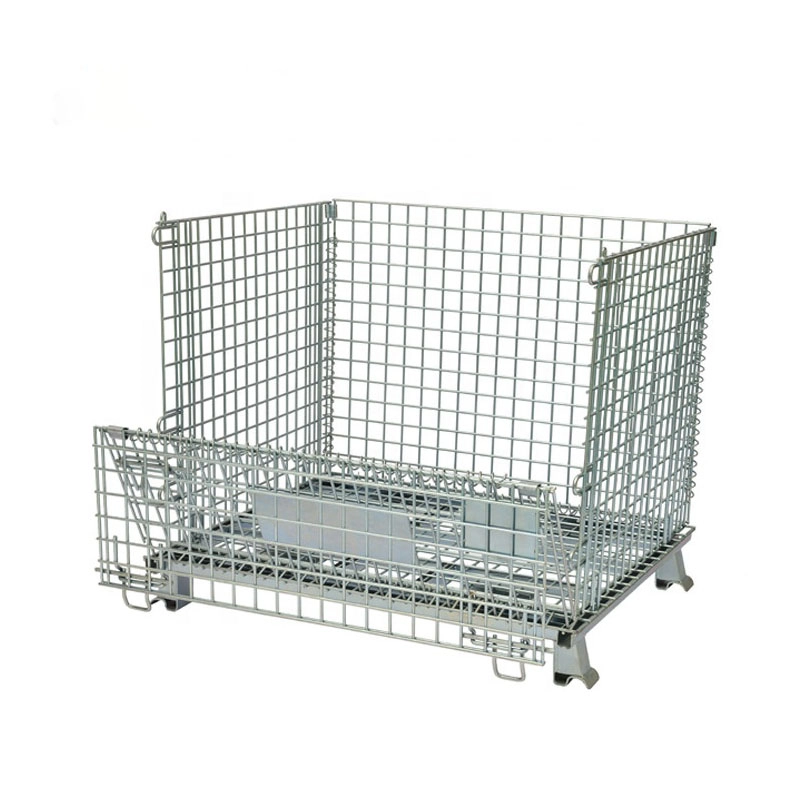
Most misrouted folding-container inquiries do not begin with a technical argument. They begin with a word. A trader forwards a line that says the client wants “a cage”, attaches nothing, and asks for a price. A drawing is prepared, a sample is booked, and only at the packaging stage does someone notice the unit on the drawing is not the unit in the client’s head.
This article is about product identification, not structure. The two failure patterns below are the recurring inquiry situations recorded in our internal folding-container comparison reference. They describe how inquiries typically go wrong in this product family; they are not a specific customer’s accident, and no company names, quantities or costs are attached to them.
Why “cage” cannot decide the model
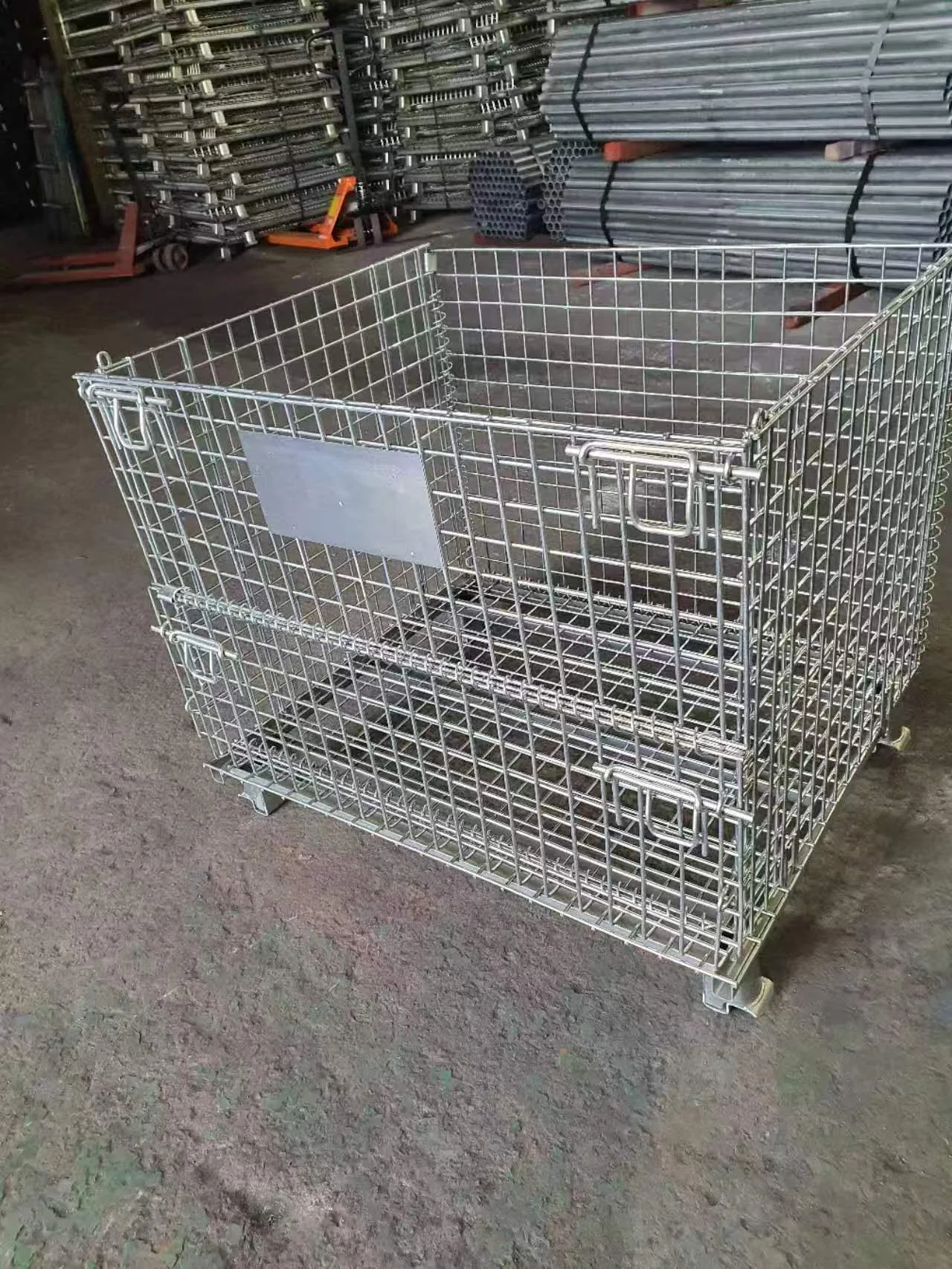
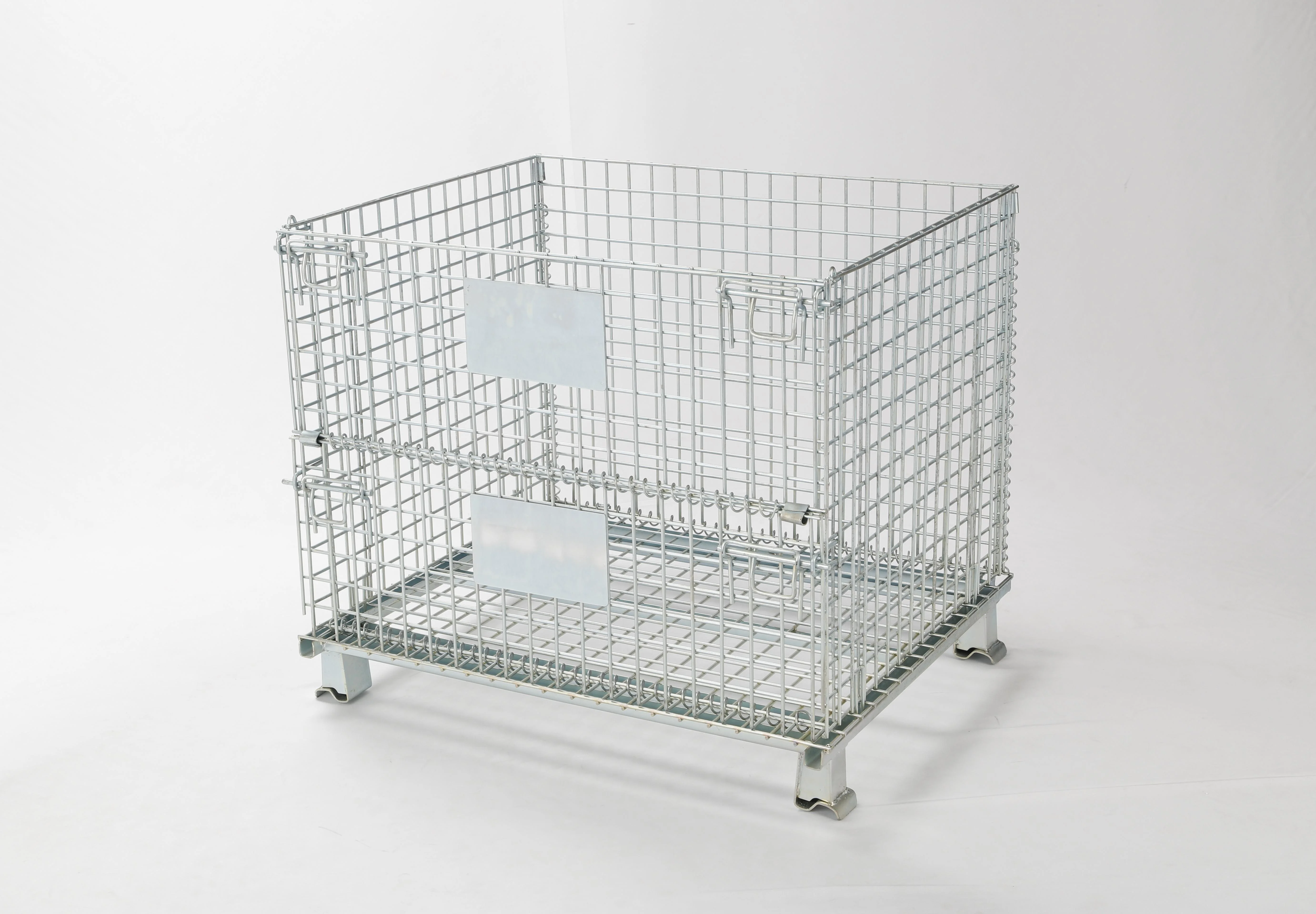
Inside one folding-container family, “cage” can point at two different structures. The mesh-based unit — Stbox — is built mainly from welded steel wire mesh panels on a channel-reinforced base, with a half-drop front gate, folding side panels and formed stacking feet. The square-tube variant in the same family carries its mesh panels inside a square-tube frame, and its square-tube uprights take the stacked load instead of the mesh. Both fold. Both are described by buyers as a cage, a box, a bin or a basket. A product name therefore does not remove the ambiguity; it only sounds as if it did.
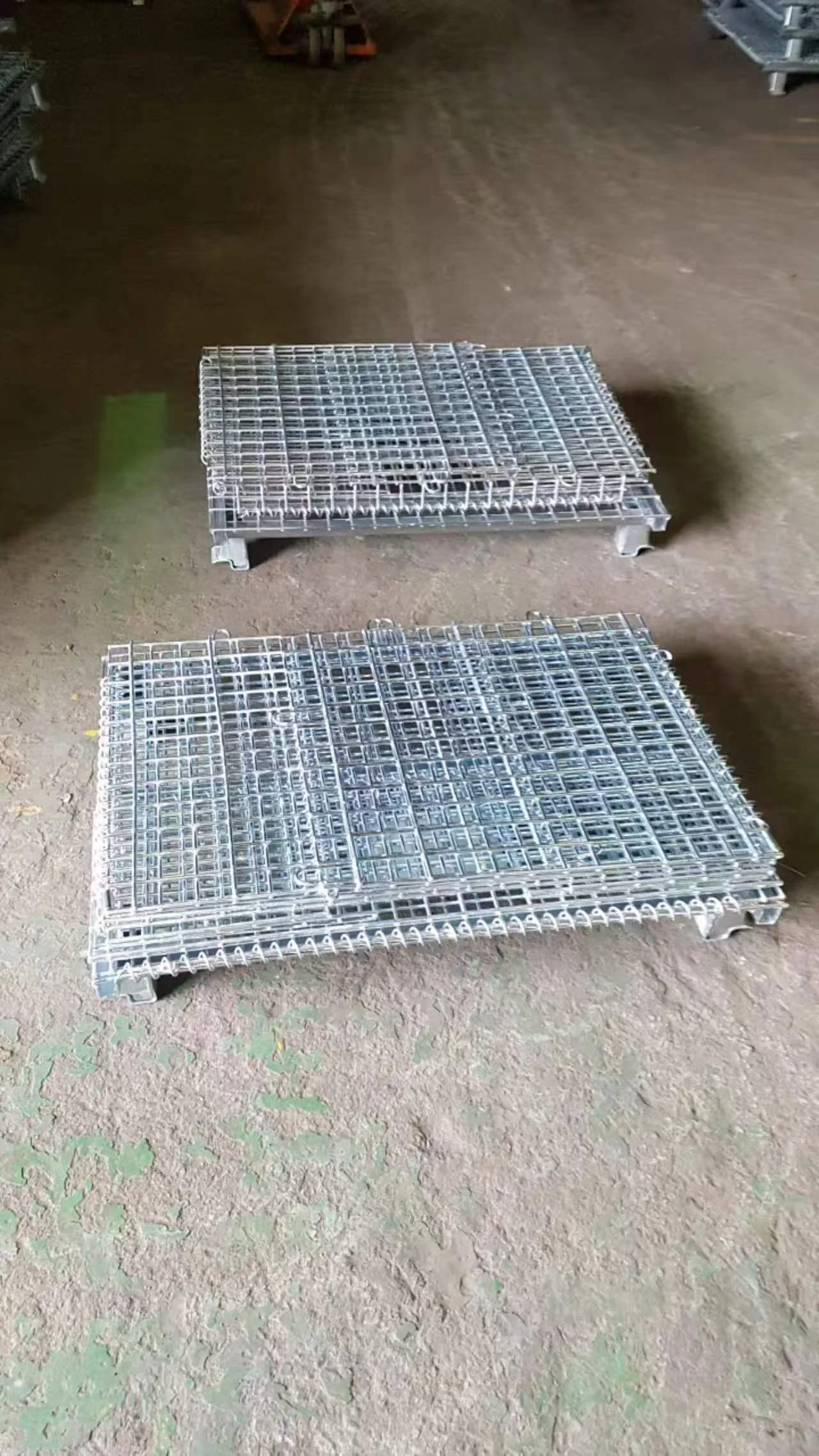
What actually separates the two is structure and load path: whether the mesh carries the stacked load or a tube frame does, how tall the unit stays when folded, and how many handling cycles it is expected to survive. None of that survives translation into a single spoken noun.
The spoken names that collide most often
The terms below are the everyday descriptions that most often arrive instead of a catalogue name. Each one is legitimate in conversation, and each one is ambiguous in a quotation request. The risk column is the assumption a quotation desk has to invent when only the word is supplied.
| What the customer writes or says | What it may actually mean | Assumption invented at the quotation desk |
|---|---|---|
| Cage, hamster cage, wire cage | Any folding mesh container, or a fixed mesh bin with no folding function | Which product the cage belongs to, and whether it folds at all |
| Folding box, box, metal box | Mesh-based cage, or the square-tube version | Whether a tube frame carries the stacked load |
| Pallet cage, pallet box | Mesh container with a base designed for pallet handling, or a solid-sided steel pallet box | Base type, gate type and whether the sides are mesh or sheet |
| Wire mesh pallet, mesh pallet | A mesh container with sides, or a flat mesh deck with no containment | Whether the item is a container or a pallet platform |
| Stillage, post stillage | Folding mesh cage, fixed post stillage, or a rack-mounted stillage | Handling interface and whether the unit stacks |
| Basket, wire basket | Light wire basket, or a heavy industrial wire container | Which load class the unit is being priced in |
| Container, bin | Mesh container, sheet-steel bin, or an unrelated shipping container | The whole product scope |
Read together, the table shows why a name-only inquiry cannot be quoted safely. Two different descriptions can point at the same unit, and one description can point at two different units. Photographs, dimensions and a stated load resolve what words alone cannot.
Two recurring misrouting patterns
The comparison reference records two situations that repeat, and they run in opposite directions. In the first, the buyer needs the square-tube folding box but describes the requirement as a “hamster cage”. Because the nickname sounds like a mesh cage, the inquiry is read as a request for the mesh-based unit, and the quotation follows that reading. In the second, the buyer genuinely needs the mesh-based cage but attaches a photograph of the square-tube version. The photo then outranks the text, and the supplier reasons from the wrong picture.
Two softer versions of the same failure sit behind both cases. When only everyday wording is supplied, product identification depends entirely on interpretation rather than on a stated specification. And when the load requirement is never confirmed in writing, the recommendation cannot be checked against the actual application, so a technically correct answer to the wrong question still gets sent.
The cost is not confined to one step. A wrong identification does not stop at the drawing: it carries through drawing work, sampling, the manufacturing run and the freight plan. Folded height and folded profile decide how many units fit a container, so a misidentified model changes the loading plan as well as the product. Every one of those four steps has to be redone once the error surfaces, and the delay lands on the buyer and on the trader who forwarded the request.
Lock the model before the quote, not after the drawing
The workable control is not a longer form. It is two artefacts attached to every inquiry: a written terminology confirmation, and a photograph of the actual unit the customer intends to buy. The written confirmation fixes what the words mean; the photograph fixes what the product is. Where both exist, a misrouting has to be deliberate to survive.
For a folding wire container inquiry, the minimum confirmation set is short:
- Intended load per unit, in writing, as the maximum normal weight rather than an average.
- Expected number of use cycles, so one-time staging is not quoted as permanent equipment, or the reverse.
- Whether loaded units will be stacked, and if so how many levels and how much weight sits above the bottom unit.
- Indoor or outdoor staging, because the corrosion-protection decision follows the environment, not the price.
- Folded dimensions and assembled dimensions, since the folded profile sets the container count and the return freight.
- A photograph of the actual intended unit, or a reference to a previous purchase, attached to the request.
- Shipping destination and method, because delivered cost per unit is what the buyer actually compares.
- The customer’s own word for the product, written next to the agreed product name, so both sides are recorded.
Then close the loop in the quotation itself. Every quotation in this product family should carry the image of the product being quoted, the confirmed load, the expected reuse cycle, the intended stacking condition, the selected finish, and one sentence recording the terminology the customer used. In this family a photograph inside the quotation is more useful than the product name in the description. The same image should reappear on the purchase order and on the packing list, because the last place a misidentification can still be caught is the loading bay.
One caution on the load figure. The comparison reference treats approximately one tonne as a selection guideline for the mesh-based unit rather than a certified rating, and it recommends the square-tube version above that range. Use that number to steer the conversation, then confirm capacity, stacking and finish against the approved drawing for the specific configuration. A stated capacity and a recommended operating limit are not the same thing.
Buyer questions we receive
If a customer says “hamster cage”, is that our mesh container?
It is a nickname, not an identification. It tells you the buyer expects a folding wire cage; it does not tell you whether the load path is mesh or square tube, how tall the folded unit stays, or how many cycles it must survive. Treat the phrase as a prompt to ask for a photo, a load figure and folded dimensions before any drawing is issued.
If the load is under one tonne, is the mesh cage always the right answer?
No. Load is the first filter, not the only one. Reuse cycles, loaded stacking, indoor or outdoor service, and folded volume all change the selection. A light load used once and shipped abroad points one way; the same load returning to the workshop every week points the other. Confirm the full set before the model is fixed.
What if the customer genuinely has no photo of the unit?
Then hold the drawing and send two or three candidate images for the buyer to confirm in writing. That exchange costs one email and one reply. The alternative costs a drawing, a sample, a manufacturing run and a freight plan built on an interpretation.
If you want the underlying selection logic before you confirm terminology, start with the full comparison of the mesh cage and the square-tube folding box, then read how folded height drives container count and shipment planning and how reuse cycle counts decide between economy and long-life units. When you send a folding wire container request, include the load per unit, the reuse expectation, the stacking condition and one real photograph. That combination is what turns a spoken word into a quotation for the right unit.
Heeft u een op maat gemaakte opslagoplossing nodig?
Spreek rechtstreeks met onze technische ingenieurs. Wij bieden gratis constructieontwerpen, evaluaties van zwaar belaste catalogi en snelle B2B-prijsopgaven.
Vraag nu een offerte aan →