
Rerack Stack Rack | 100 mm Nesting Gap for Empty Return Freight
Learn how Rerack stack racks use project-designed nesting clearance— including a documented 100 mm forklift-tine reference—to reduce empty return volume, seasonal buffer space, and temporary staging footprint. Review 52, 64, 88, and 144-unit loading samples and confirm your pallet, fork, and gap requirements.
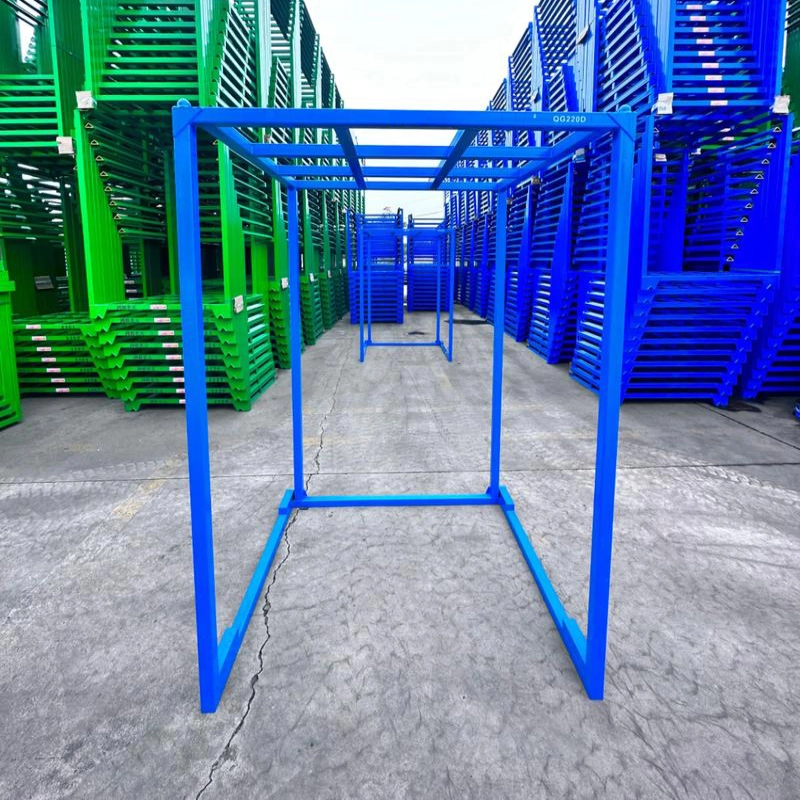
Nest empty stack racks to release floor space and freight volume
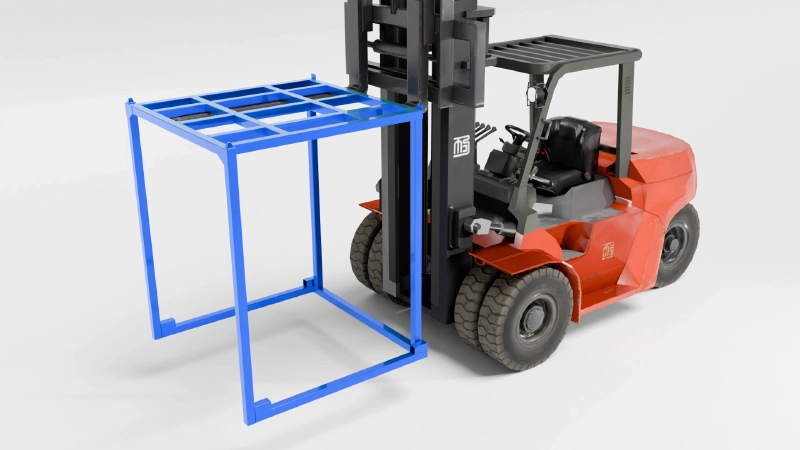
Rerack is a welded steel inverted stack rack for palletized goods. When the rack is empty, its base and frame geometry allow units to nest into one another instead of travelling as separate full-height frames.
One documented 1200 × 800 mm pallet project used a 100 mm empty nesting gap. That clearance was designed around the forklift tine thickness, so the forks could engage the nested group without forcing the frames apart. The 100 mm value is a project reference—not a universal Rerack specification. The nesting gap, fork-entry geometry, and tine thickness must be confirmed together before production.
- Empty return: nested frames reduce the volume that must be collected, stored, or shipped back.
- Seasonal buffer: empty units can be consolidated when demand drops, releasing usable warehouse floor area.
- Production staging: loaded racks can support temporary WIP or finished-goods staging without anchoring a fixed pallet-racking layout.
- Loaded handling: forklift entry, pallet footprint, cargo-plus-pallet height, and complete upper-rack seating are engineered as one operating system.
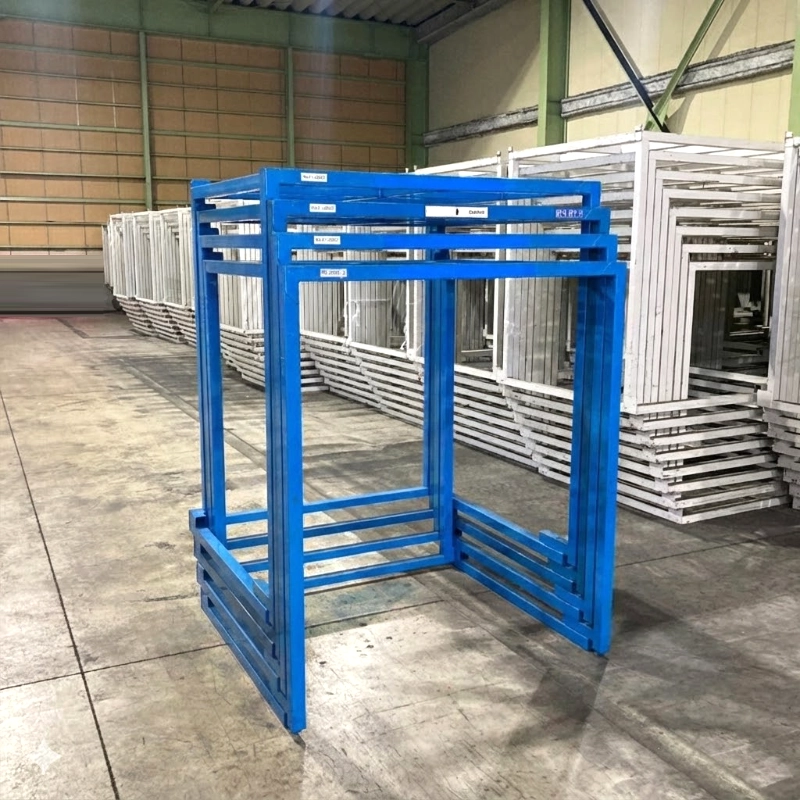
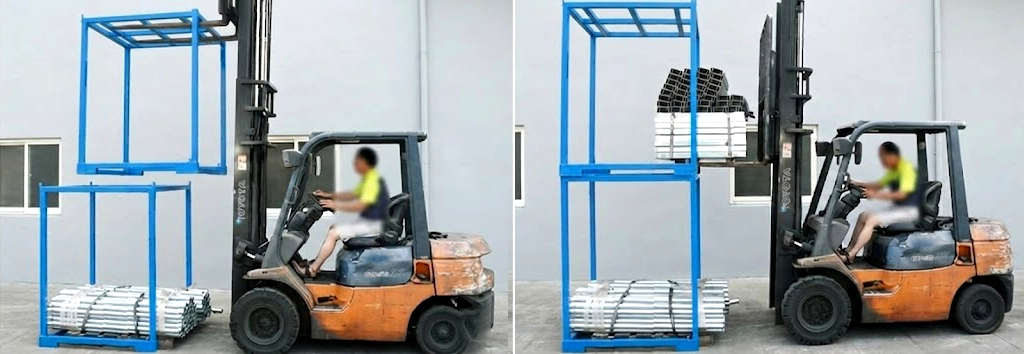
Choose the rack around the operating loop
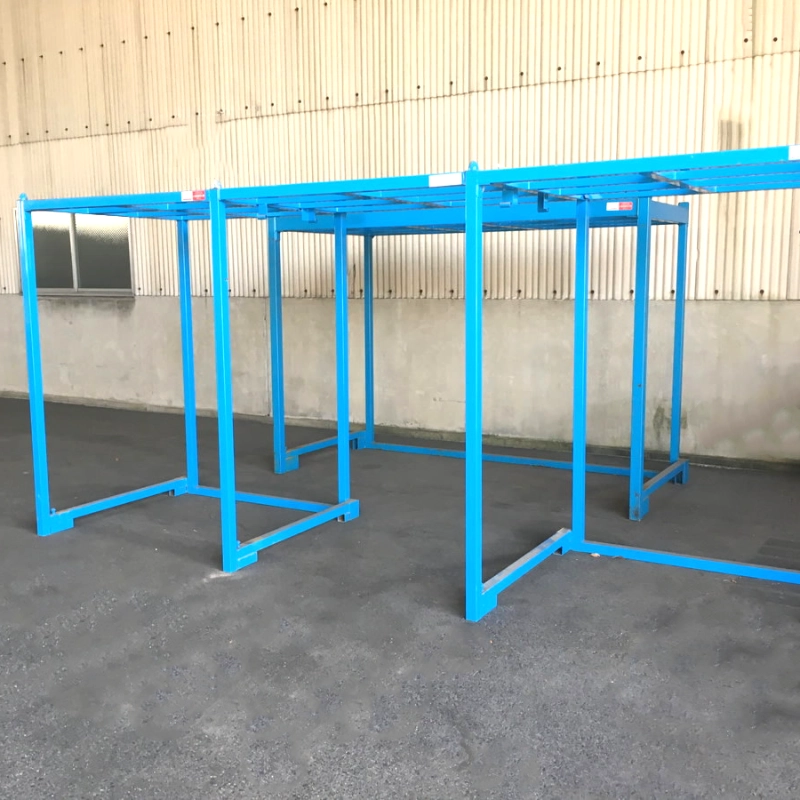
NESTING RERACK
Fixed welded frame for repeatable nesting
Use this direction when the priority is loaded stacking plus compact empty returns. The documented Rerack is fixed and non-demountable; it is not a folding or removable-post rack by default.
PROJECT ENGINEERING
Match clearance to pallet and forklift
For 1100 × 1100, 1200 × 800, or 1200 × 1200 mm pallets, the internal size must leave room for the load envelope while keeping the fork-entry path usable. Crossmembers can be positioned around pallet support legs where required.
ALTERNATIVE TO COMPARE
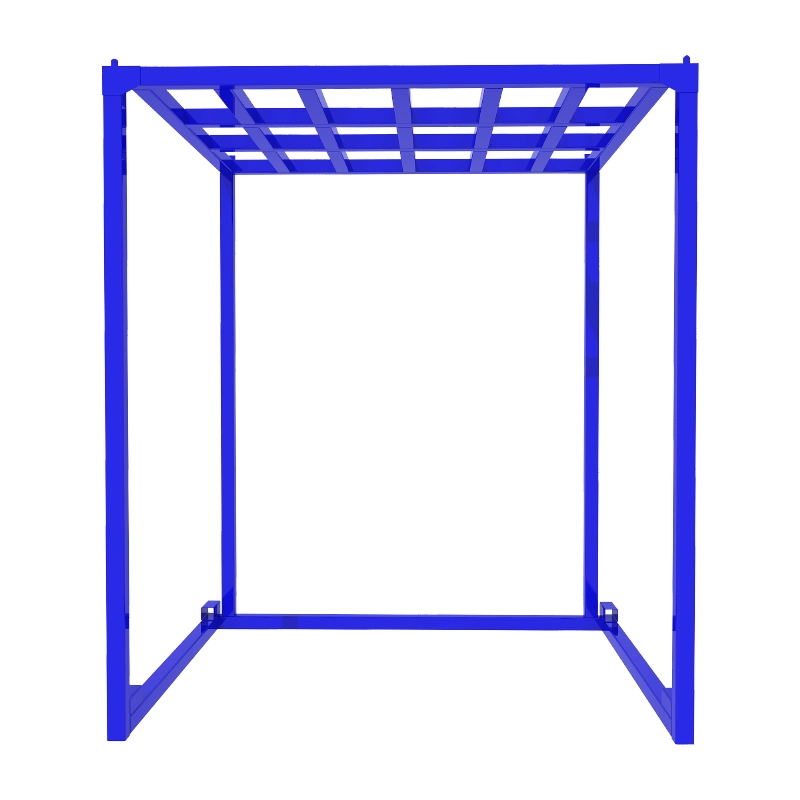
When a demountable post pallet fits better
A demountable post rack can be the better route when removable posts, base reuse, or machine-palletizing flexibility matters more than the fixed welded frame. Compare both layouts before treating them as interchangeable.
The value is measured across the whole logistics loop
Fewer empty cubic metres
Each empty Rerack still occupies a frame envelope. Nesting consolidates that envelope for return legs and for storage between production peaks. The actual saving depends on the nesting pattern, packaging, vehicle, and loading limits.
More flexible seasonal buffering
When seasonal demand falls, empty units can be grouped rather than spread through active aisles. This can release floor area for other inventory, but the stack height and handling plan must be approved for the specific design.
Temporary staging without anchors
For factory WIP, finished goods, or overflow storage, the rack can create a temporary stack-and-rack layout without committing the site to fixed beam racking. It suits stable palletized loads, not loose or overhanging cargo.
Evidence-based loading plans
Documented project plans include 52 units in a 40 ft container, 64 and 88 units in 40 ft high-cube plans, and 144 units on a 17 m flatbed arrangement. These are project samples, not a standard loading guarantee.
What to confirm before a stack rack quotation
Map the load
Send pallet footprint, cargo-plus-pallet height, unit weight, cargo overhang, and the number of loaded levels. Documented references include 500 kg, 600 kg, 1000 kg, and 1.5 t per pallet; these do not define one universal rating.
Map the empty return
State the number of empty racks, return frequency, route, container or truck type, and whether racks are collected, stored, or both. This establishes the target nesting pattern.
Set the clearance
Confirm forklift fork thickness, entry direction, base geometry, and the required nesting gap. The 100 mm gap belongs to a documented project and must not be copied to every variation.
Validate the operation
Review the loading diagram, packaging choice, aisle access, upper-rack seating, inspection points, and surface-treatment environment before release. Avoid prolonged rain exposure and forced forklift entry.
Questions buyers ask about nestable steel stillages
Does a 100 mm gap mean every Rerack nests at the same rate?
No. It is a documented project value selected to accommodate a particular forklift tine thickness. Clearance and nesting rate must be confirmed for the pallet, frame, fork, and handling sequence in your project.
Is Rerack a folding stack rack?
The documented standard Rerack is a fixed welded frame that nests when empty. Do not assume removable posts or a folding mechanism. If dismantling is important, request a separate demountable post-pallet comparison.
What do the 52, 64, 88, and 144 figures mean?
They are loading samples from different project layouts: 52 units in one 40 ft container plan, 64 and 88 units in 40 ft high-cube plans, and 144 units on a documented 17 m flatbed arrangement. Packaging, dimensions, stacking method, and vehicle limits can change the result.
Can nested empty racks be stored outdoors?
Long-term rain exposure is not supported by the current evidence. Water can enter tubes, cause internal rust, and release rust water. Confirm the environment and coating requirement; powder-coated steel is documented for indoor and cold-store project use, not as a blanket outdoor guarantee.
When is another solution more suitable?
Fixed pallet racking may suit a permanent, high-throughput layout. Floor block stacking may suit low-cost short-term storage but can expose lower goods and pallet feet to compression. A demountable post pallet may suit removable-post or machine-palletizing requirements. The right choice depends on the operating loop.
What should I send for a nesting quotation?
Send the empty rack quantity, seasonal buffer quantity, return route, vehicle or container type, pallet dimensions, cargo-plus-pallet height and weight, forklift tine thickness, desired loaded levels, and indoor or outdoor environment. We will return a project nesting and loading proposal.
B2B Racking Structural Engineering Calculator
Input your structural guidelines below. Our math system calculates material deflection, stress bounds, and recommends optimal profiles.
Click Compute to calculate stress factors and display structural drawing recommendations.