🏭 Steelpallet · Factory Direct · OEM Available

Rerack Full-Load Anti-Crush Stack Rack | Bottom Cargo Protection
Rerack

Rerack stack racks for palletized cartons, bagged goods, and box-packed loads. Welded frame support, foot-aligned cross members, vertical stacking, and optional side containment.

100%
Steel Quality
Heavy
Duty Rating
Custom
Sizes Built
Rerack Full-Load Anti-Crush Stack Rack | Bottom Cargo Protection

Carry the load on the frame, not on the floor

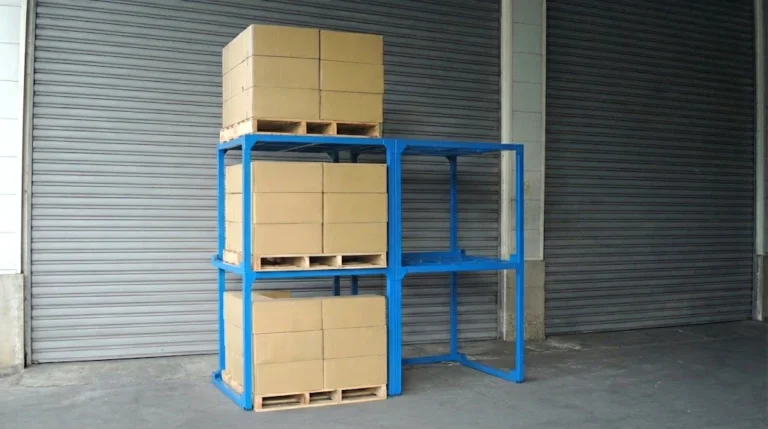
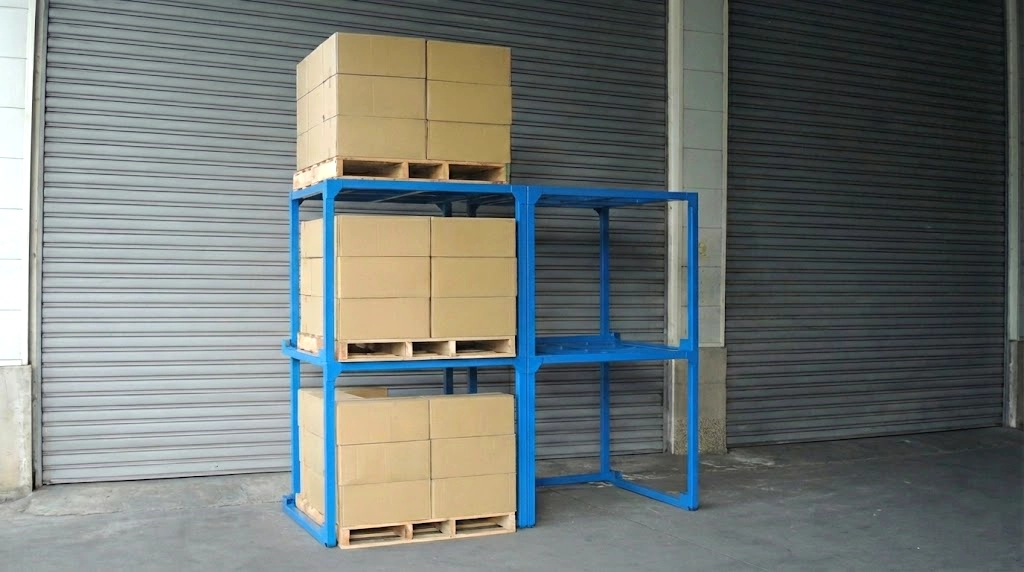
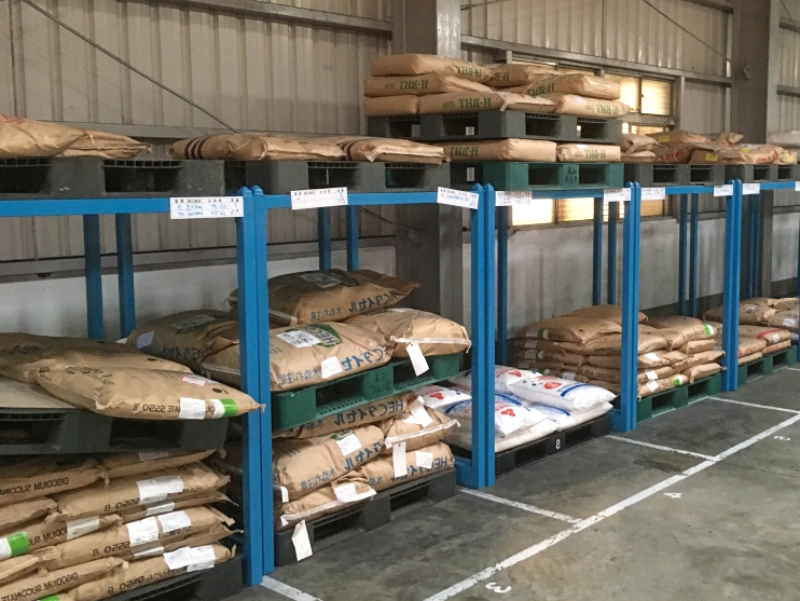
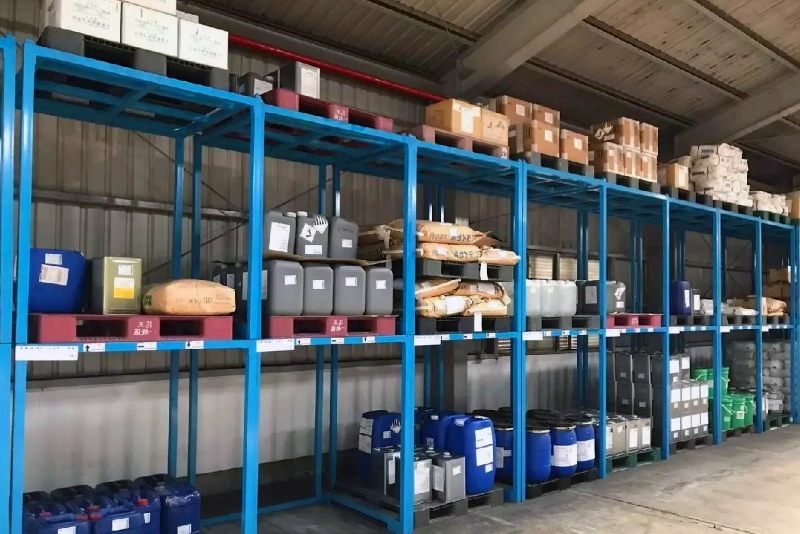
For palletized cartons, bagged goods, bucket goods, and box-packed wet wipes, Rerack lifts the load path away from the floor so the bottom layer is not crushed and pallet feet are less likely to deform.

Unlike ground stacking, the welded steel frame becomes the load carrier. In a reference configuration, 1100×1100 mm pallets with a 1600 mm total height and 1000 kg per pallet were arranged into a 1250×1150×1700 mm internal size, with two racks stacked and three tiers of goods. Final load is confirmed by pallet size, single-pallet weight, and stack pattern; we do not publish one universal rated load here.

  • Welded steel frame transfers weight into the rack structure, not the bottom cartons.
  • Cross members can be aligned to the pallet foot positions to reduce wood pallet foot deformation.
  • Vertical stacking turns floor area into multi-layer storage without a fixed floor-mounted rack.
  • Add side rails or stop plates when the top layer is tall, bagged, mixed, or easy to tip.

Send your pallet size and single-pallet weight

Three practical ways to use Rerack in a crush-sensitive warehouse

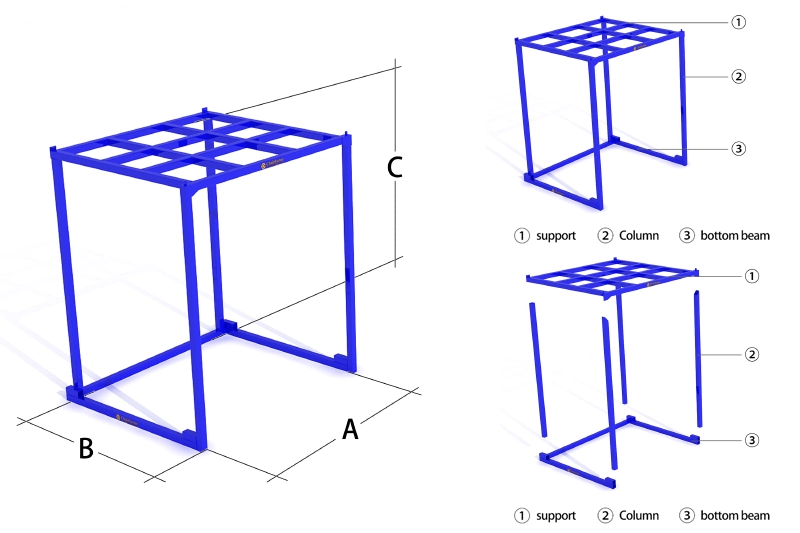
3D render of blue steel stack rack with detachable columns, top grid deck, and base beams
Ground stacking comparison

Ground stacking

Use only when the cargo is self-supporting and the bottom layer can tolerate direct compression. It is simple, but the bottom cartons and pallet feet take the full load path.

No frame lift.

Highest risk of bottom crush.

Not suitable when pallet feet are already weak.

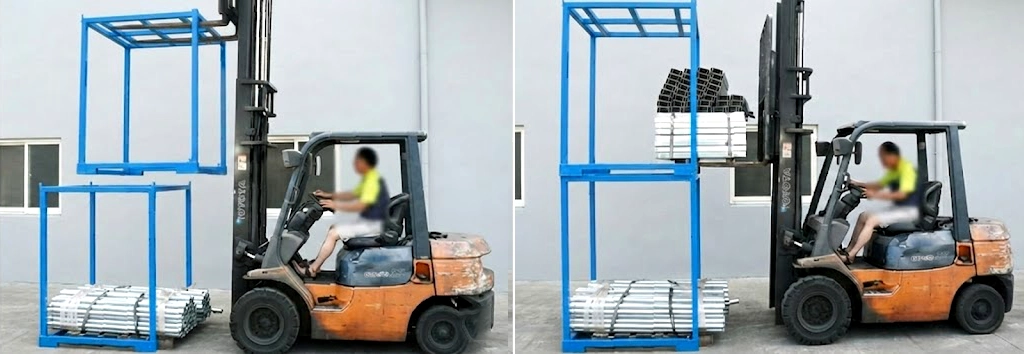
Forklift loading palletized goods into a blue welded steel stack rack, with empty racks nested below for compact storage
Aligned cross members

Rerack with foot-aligned cross members

This is the core option for wood pallets and other footed pallets. Set the cross members to the pallet support points so the load enters the steel frame instead of bending the pallet feet.

Best for palletized cartons, bagged goods, and stable box loads.

Supports multi-level vertical storage.

Project load and stack height are confirmed by configuration.

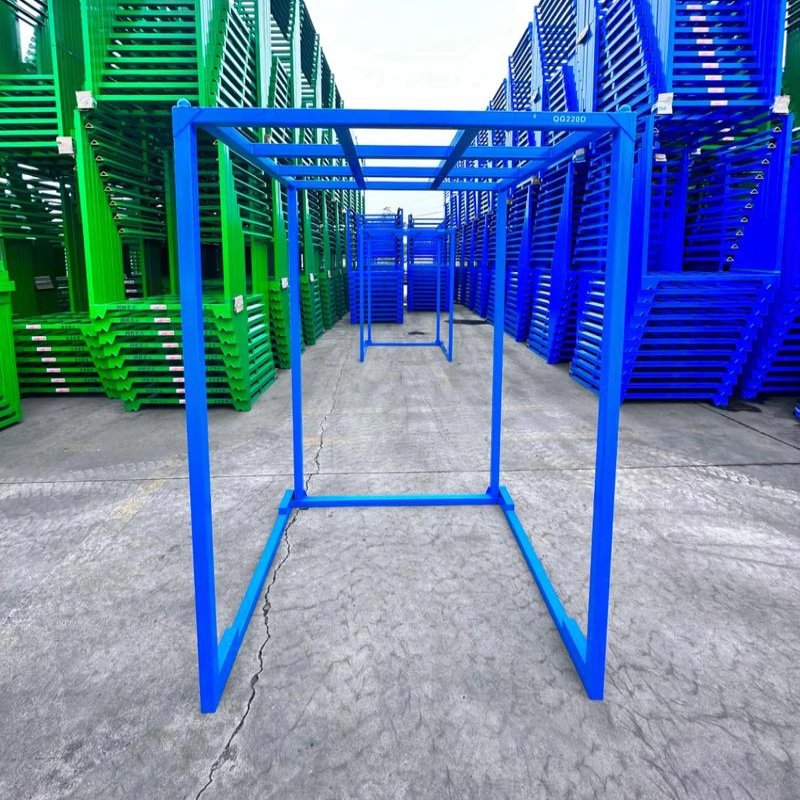
Blue heavy-duty welded tubular steel stack rack frames nested outdoors for palletized goods storage.
Top-load protection

Side rails or stop plates for unstable top layers

When the top layer is tall, soft-sided, or mixed, add side rails or a stop plate. This keeps the load centered and reduces the risk of tilt or shift during stacking and forklift handling.

Recommended for tall cartons, bagged goods, pails, and mixed pallets.

Use containment when the top layer can lean or slide.

Do not assume all loads can stack without restraint.

Four reasons the rack protects the bottom layer

1

Frame load, not floor load

The welded structure carries the stack, so the bottom cargo is not forced to absorb the entire static pressure from above.

2

Cross members match pallet feet

When the cross members sit under the pallet support points, wood pallet feet are less likely to twist, split, or collapse.

3

Vertical space becomes usable

Rerack lets you stack upward in layers, so a floor area can hold more palletized cargo without installing a fixed rack line.

4

Containment can be added where needed

If the upper layer is easy to tip, specify side rails or a stop board before production. Stable cargo can run open-frame.

Send the load data and we will map the layout

1

Pallet size and foot layout

Share the pallet footprint, foot position, and whether it is wood or plastic. This determines the cross-member layout.

2

Single-pallet weight and cargo form

Tell us the weight per pallet and whether the cargo is carton, bag, bucket, or mixed. This drives the frame build and containment choice.

3

Stack layers and handling route

Confirm how many racks and how many layers you want to stack, plus whether the rack will stay indoor, in staging, or in cold storage.

4

Choose the safe option

We will match the frame, cross members, and side protection to the actual load instead of forcing a one-size load claim.

Common questions on full-load anti-crush stacking

Can Rerack replace ground stacking in every case?

No. If the cargo is already self-supporting and you do not need to preserve pallet feet, ground stacking may still be acceptable. Rerack is the better choice when bottom crush and pallet foot deformation matter.

Do you publish one universal rated load?

No. The final load is confirmed by pallet size, support point position, cargo weight, and stack configuration. That is the only safe way to quote a crush-sensitive project.

When should I add side rails or a stop plate?

Add containment when the top layer is tall, bagged, mixed, or easy to tip. If the stack can shift, it should not be left open-frame.

What reference pages should I review next?

For related buying paths, review PDP-01, PDP-05, BLOG-01, and BLOG-05, then send your load data so we can map the right crush-protection configuration.

Request Pricing Details


    Request Quote List

    Your quote request list is empty.

    Unlock Professional Blueprint Drawings

    Please provide your business contact information to retrieve original CAD/DWG drawings and engineering calculations.