
Which Insert Should I Choose for a Cage Pallet: Wire Mesh Panels or Solid Steel Plate?
Choose wire mesh or solid steel plate inserts for a Sebox collapsible cage pallet: visual inventory and drainage versus small-part containment, dust and oil residue. Insert selection is confirmed per SKU.
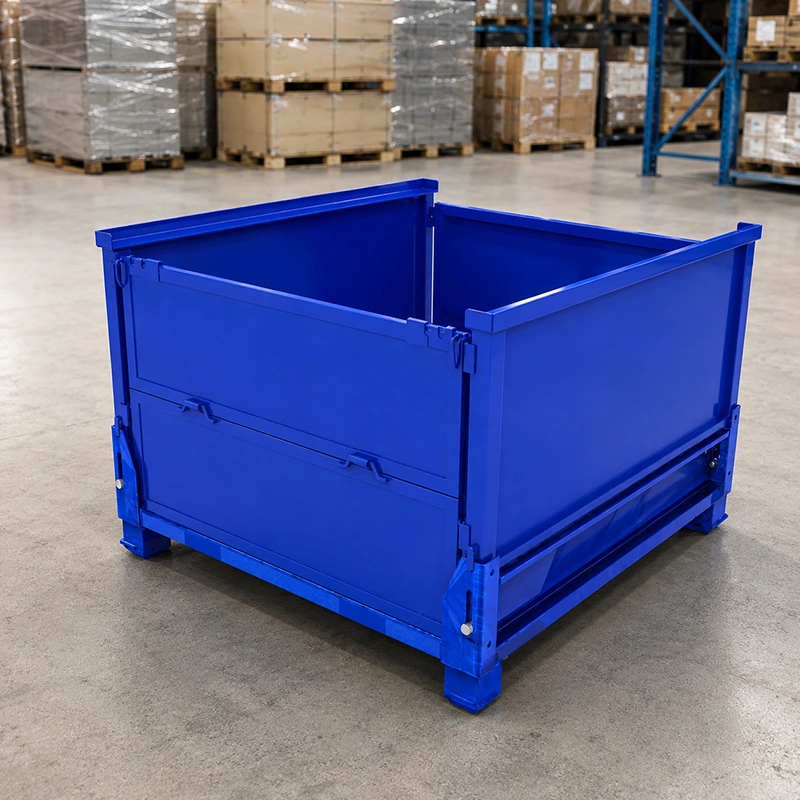
One Collapsible Container Frame, Two Ways to Close It
On Sebox, the base and each of the four gates can be built as a wire mesh panel or as a solid steel plate. The frame, the bolted base-to-gate assembly, the folding mechanism and the gate hardware stay the same — what changes is what the parts inside the bin are allowed to do.
Mesh is the answer when the load must be seen without opening the gate, when wet or oily parts need to drain and ventilate, or when the smallest piece in the bin is still larger than the mesh opening. Steel plate is the answer when parts are small enough to slip through mesh, when the process throws dust or swarf, or when oil residue has to stay inside the container instead of being thrown out through the sides during forklift handling. Mixed configurations are normal in practice: a plate floor under mesh sides, or a plate gate at the face where parts are pulled out. Mesh aperture, plate thickness and the resulting load rating are confirmed on the approved drawing for your SKU — the recorded schemes carry a 1 mm plate floor and Ø5 mm wire on one size and a 1 mm plate floor on the larger sizes, so those figures do not transfer between sizes.
- Base plus four gates, each selectable: mesh or steel plate is specified face by face on one container frame, not as a fixed catalogue version.
- Mesh buys visibility and drainage: contents are counted and identified from the aisle, and coolant or wash water leaves the bin instead of pooling.
- Plate buys containment: small parts, pins, swarf and dust stay in, and oil residue is not sprayed out through openings during handling.
- Load is a SKU figure, not a series figure: the recorded uniform loads of 1000 kg, 1300 kg and 1500 kg belong to three different sizes and cannot be read across.
Three Ways to Specify the Enclosure
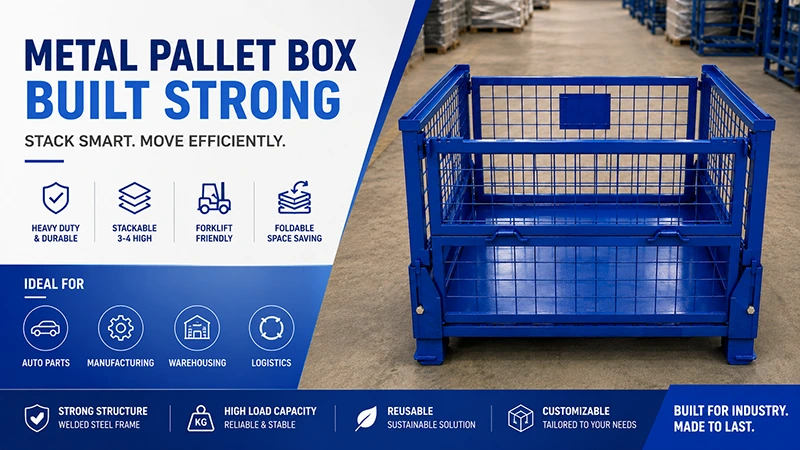
Option A
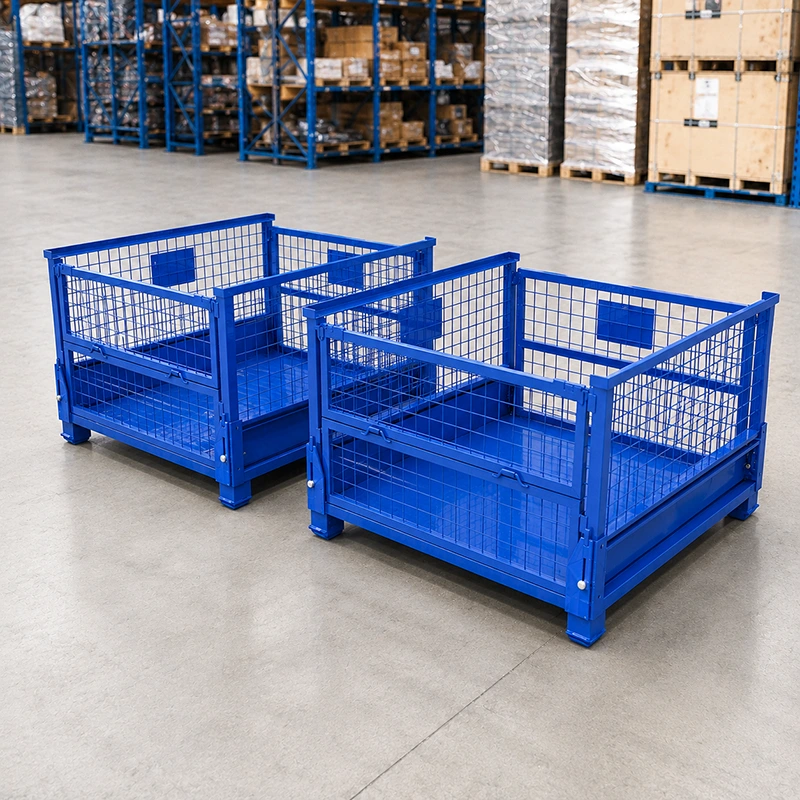
Wire mesh base and four mesh gates
Welded mesh on the floor and all four gates. Contents stay visible from the aisle, air moves through the bin, and coolant, wash water or rain drains instead of collecting on the floor panel. Suited to machined and cast parts, mixed heavy parts, and any load where the smallest piece is larger than the mesh opening.
Best for: parts larger than the mesh opening, wet or oily parts that must drain
Confirm: mesh aperture and wire diameter on the approved drawing
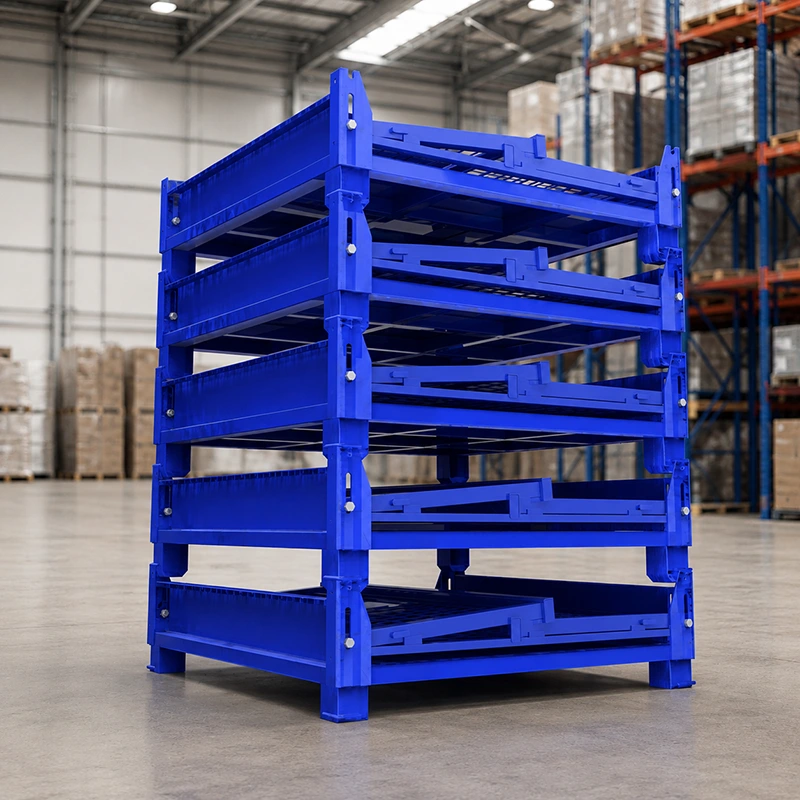
Option B
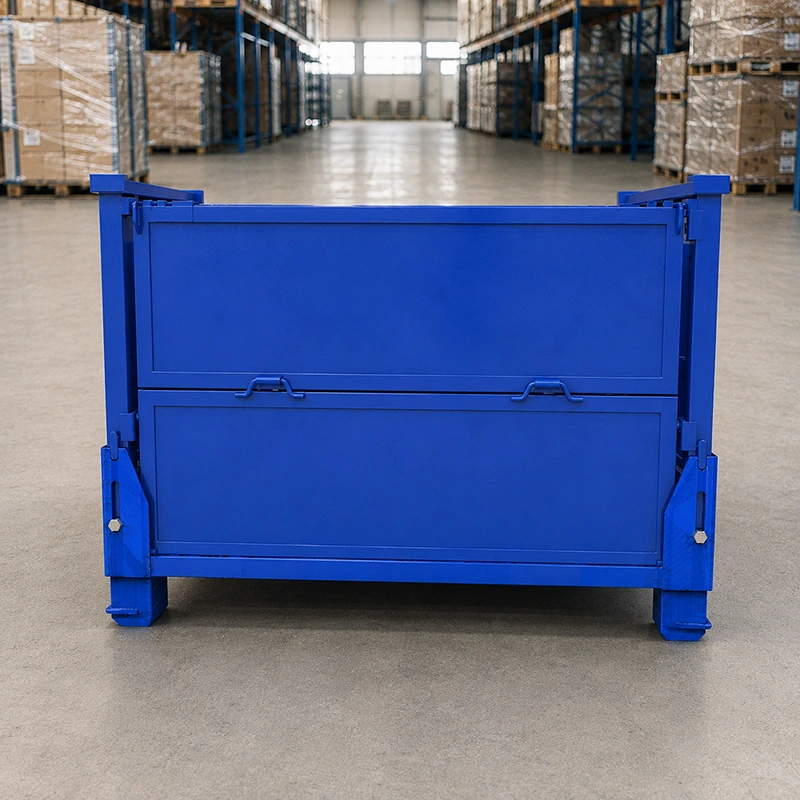
Solid steel plate base and four plate gates
Closed plate panels on the floor and all four gates. Small parts, pins, bushings, swarf and dust cannot escape through the wall during tipping, fork handling or stacked storage, and oil residue is held inside the bin instead of being thrown out through openings. Suited to fasteners and small stampings, grinding and deburring waste, and oily machined parts.
Best for: small parts, dust and swarf, oily parts
Confirm: plate thickness, drain points and cleaning method
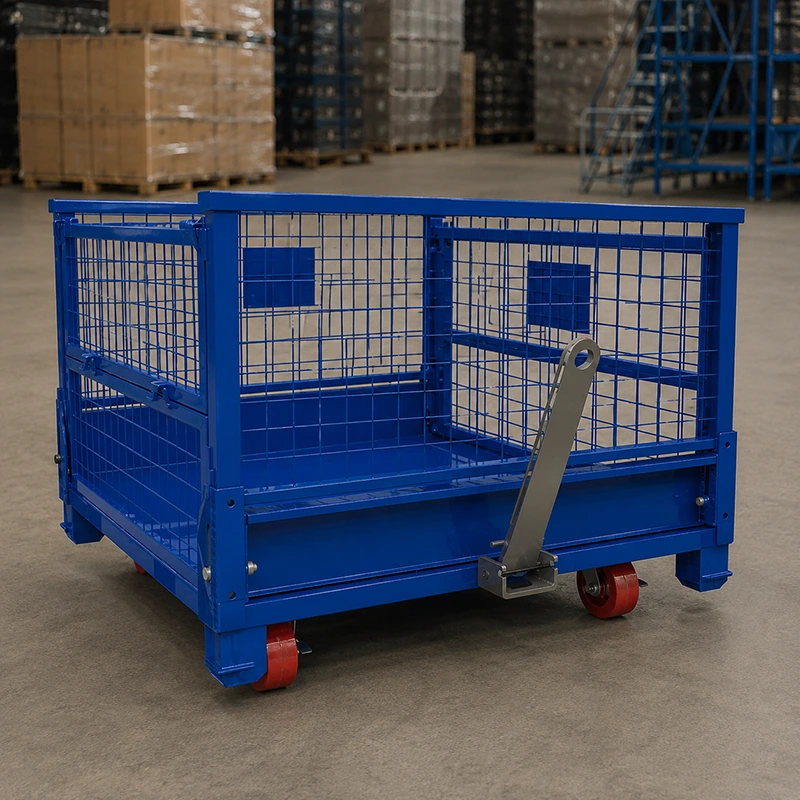
Option C
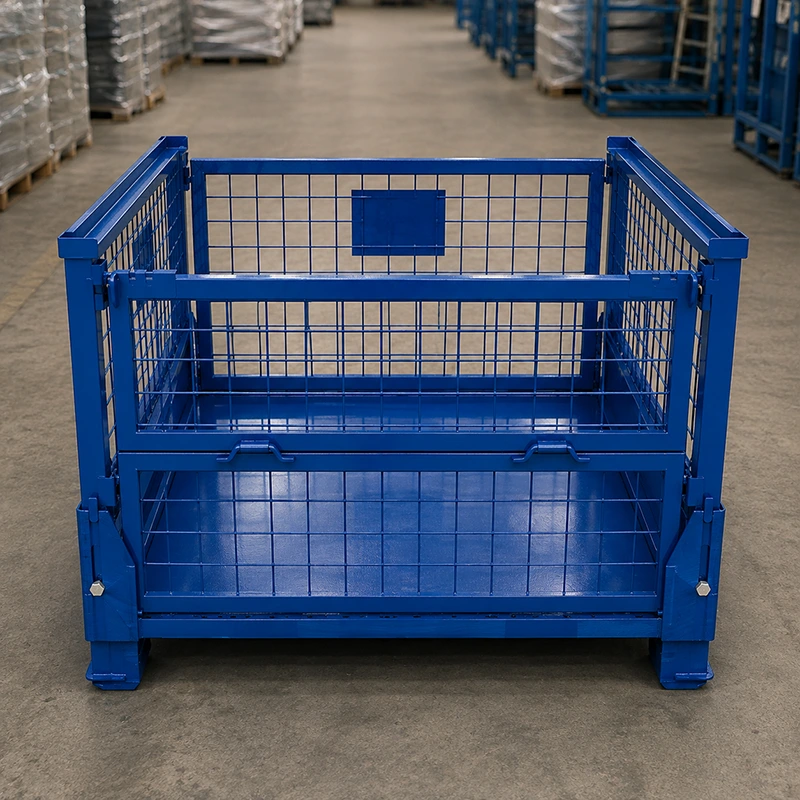
Mixed mesh and plate on one frame
Mesh and plate are chosen face by face. The two mixes buyers ask for most are a plate floor with mesh sides, so small pieces cannot drop through the bottom while the load stays visible, and a plate gate at the extraction face with mesh on the remaining sides for ventilation. Recorded schemes also add casters or a tow arm when the bin moves between workstations.
Best for: one bin serving two part families, or small pieces collecting at the bottom
Confirm: which faces carry plate, plus caster or tow-arm capacity
Deciding Face by Face, Not by Habit
Visual inventory without opening the gate
Mesh faces let a storekeeper count and identify contents from the aisle, so cycle counting and picking do not require opening the gate of a stacked bin. Plate faces hide the load, which means identification moves to a label, a barcode or the open top. If the reason you are choosing mesh is inventory speed, say so — it decides how many faces need mesh.
Containment where the parts are small
The failure mode of a mesh-sided bin is parts escaping through the wall during transport, tipping or fork handling, and small pieces settling at the bottom. Where the smallest part is close to the mesh aperture, put plate on the base and on the faces that face the aisle and the forklift, and keep mesh only where visibility is genuinely needed.
Dust, swarf and oil residue stay in
Plate panels keep grinding dust, machining swarf and oil residue inside the bin, which matters when the same container moves on into a clean assembly or inspection area. Plate is not a sealed vessel: it is not gasketed and is not offered as a leak-tight or liquid-tight container. Sealing, drainage and cleaning requirements have to be confirmed before a bin is used for liquids, powders, food or chemicals.
Face changes sit at a bolted interface
On the recorded scheme the base is bolted to the front and side gates, and the container ships and folds as separate parts, so face-level specification happens at that bolted interface. Whether a mesh face on a bin already in service can be replaced by a plate face is confirmed against the approved drawing for that SKU — it is not assumed from the general structure.
From Material Form to a Frozen Insert Specification
Send the material form
Smallest and largest piece in the bin, weight per loaded bin, whether the load is uniform or point-loaded, and whether parts arrive dry, oily or wet.
Map the faces
Which faces need visibility, which need containment, and whether the base has to hold small pieces. This is what turns the mesh-or-plate question into a per-face answer.
Confirm gates and handling
Front gate type, whether the bottom bin must be opened while stacked, and the handling method — forklift, pallet truck, casters, tow arm or crane. Casters and crane use change the data you have to confirm.
Freeze it on the drawing
Mesh aperture, plate thickness, uniform load and stacking are written into the approved drawing for that SKU. Nothing is quoted as a series-wide figure, and no size is treated as sharing another size’s configuration.
Mesh or Plate: the Questions Buyers Ask
Which parts belong in a mesh-sided bin?
Parts larger than the mesh opening, and loads that need air or drainage: hot parts straight off a machine, wet or coolant-covered parts, castings and forgings, and mixed heavy parts where a storekeeper has to see what is inside. Mesh also suits block stacking, because the load can be inspected from the aisle without breaking the stack.
Which parts need solid steel plate?
Anything small enough to pass through mesh — pins, fasteners, small stampings, bushings, grinding and deburring waste — and any process that generates dust or swarf. Plate also suits parts carrying oil residue that must stay inside the bin rather than being thrown out through the wall while the container is handled.
Can mesh and plate be mixed on one container?
Yes. The base and each of the four gates is specified separately, so a plate floor with mesh sides, or a plate gate at the extraction face with mesh on the other sides, is a normal configuration rather than a special. Mixed bins are usually chosen when one container serves two part families, or when small pieces collect at the bottom of the bin.
Does a steel plate bin hold liquids without leaking?
No. Plate panels contain dust, small parts and oil residue, but the container is not built as a sealed or gasketed vessel and no leak-tight claim is made for it. If the load is liquid, powder, food or chemical, sealing, drainage, cleaning and surface treatment requirements have to be confirmed first — those applications sit outside what the current records support.
Does plate instead of mesh change the load rating?
The working load belongs to the SKU and the approved drawing, not to the enclosure material. Recorded uniform loads of 1000 kg, 1300 kg and 1500 kg sit on three different sizes and are not a series-wide rating, so they cannot be read across. Face material changes weight and local stiffness, which is why the rating is re-confirmed when a non-standard face combination is specified.
Is mesh or plate better for stacking?
Both stack, and the recorded stacking guidance differs between schemes — one scheme records 3–4 layers, another records a maximum stack height. What actually governs stacking is the bin size, the loaded weight, floor flatness, load distribution and whether the gates are locked. Stacking is confirmed for your SKU instead of being read across from another size.