
Ttrack / tire handling configuration guide
Car Tire Pallet vs Truck Tire Pallet: How to Match Weight, Tier Count, and Container Density
When tire teams ask for a pallet, the right question is not only how much it can hold. The real decision is how tire diameter, unit weight, stack height, and return logistics work together. The figures below are planning references for configuration work, not a substitute for a final engineering check.
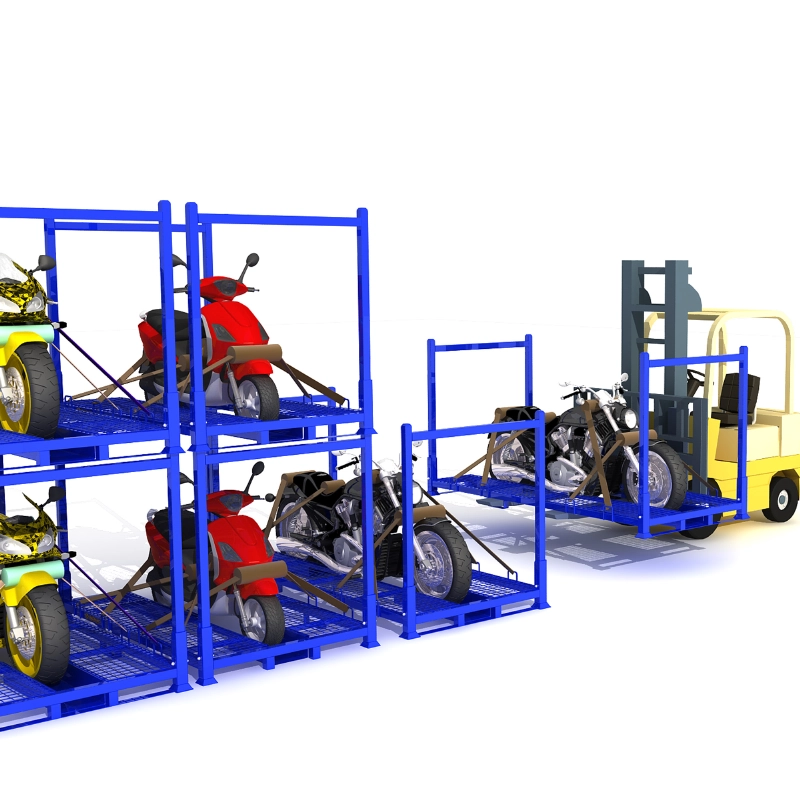
Start with the tire family, not the rack
If you treat every tire as the same load, the pallet will be either overbuilt or under-protected. Passenger car tires, truck tires, and recycled or reclaimed tires create very different load envelopes. They differ in outer diameter, sidewall stiffness, unit weight, and how much compression they tolerate before the stack becomes unstable.
That is why the first decision is not color, coating, or accessory count. It is the load geometry: how much vertical pressure the stack can accept, how wide each bay needs to be, and how much fork access you need for fast handling.
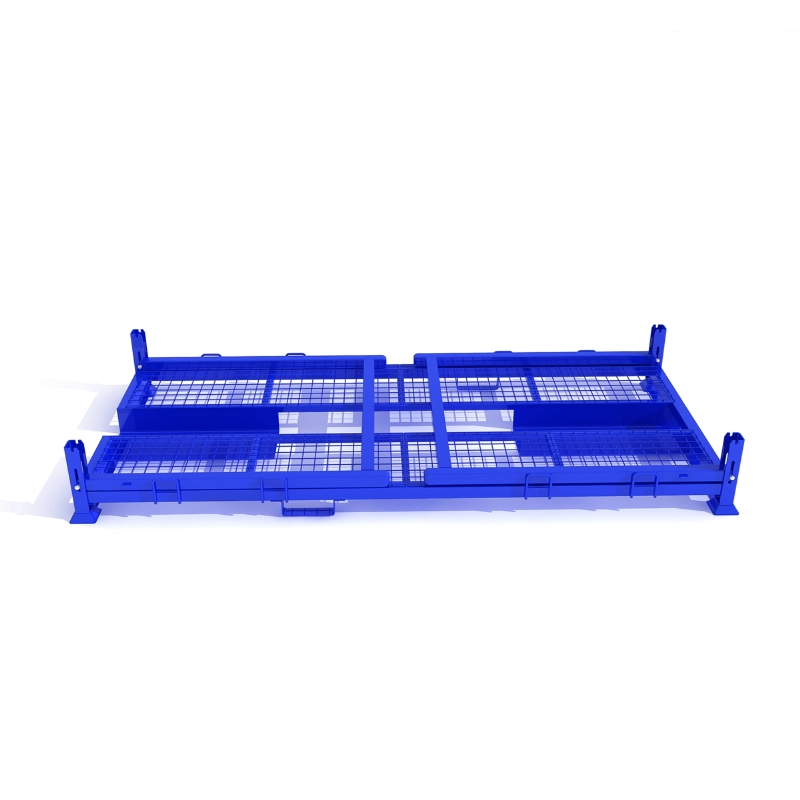
Reference configuration for car and recycled tires
For car tires and recycled tire flows, the practical answer is usually a more enclosed basket with a higher stack. As a planning reference, the current layout logic often starts around a 168 kg unit mass and a three-tier basket. That makes sense when the SKU family is repeatable, the tire diameters stay close to one another, and the goal is to move more pieces per footprint without losing control of the pack.
- Use this direction when the same tire sizes repeat across many orders.
- Keep the bay pitch tight enough to stop lateral drift, but not so tight that loading becomes slow.
- Choose this style when return shipping matters, because denser stacks usually lower reverse logistics cost per unit.
Do not force this setup when the batch is mixed too widely. If the diameters vary a lot, the upper tier will rest unevenly and the outer tires will start to lean. In that case, lower the tier count or widen the frame spacing before you raise the stack height.
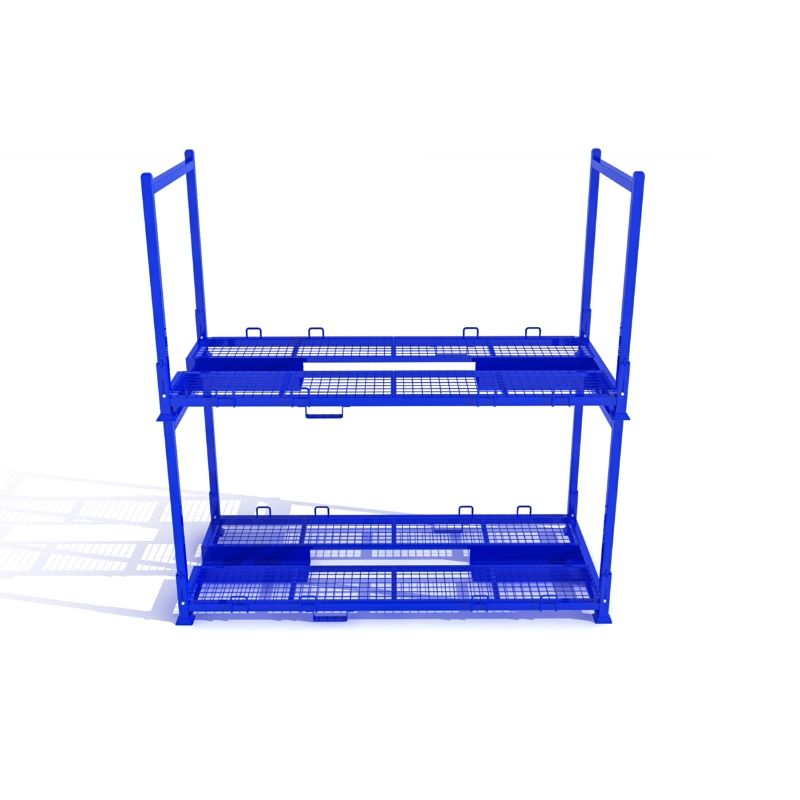
Reference configuration for truck tires
Truck tires need a different starting point. They are larger, heavier, and less forgiving when the load is compressed from the wrong direction. As a planning reference, many layouts start around 105 kg per unit and a two- to three-layer arrangement, depending on tire size and handling route.
- Use a lower tier count when the sidewall is tall or the tire OD is large.
- Reserve more space for restraint points, because truck tires are harder to keep stable once the stack begins to shift.
- Prioritize fork access and load path control over absolute density.
This is where many teams make the wrong trade-off. They try to push the truck tire pallet to car-tire density, but the result is more damage risk, slower loading, and poorer stacking behavior in the yard or container.
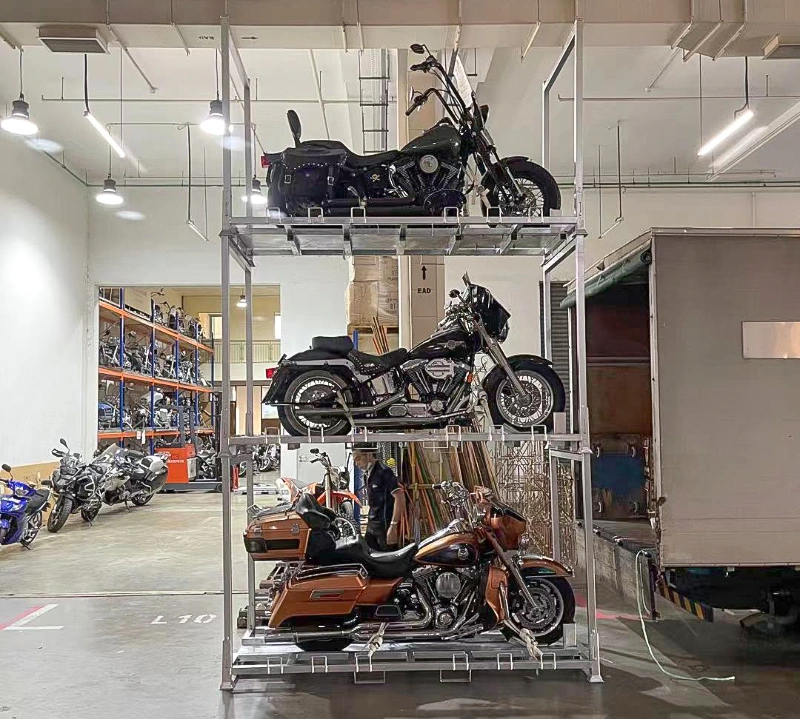
What changes when you optimize for container loading
Container density is not just about squeezing more units into the box. It is about keeping the stack stable through loading, transit, and unloading. Car and recycled tire packs usually gain more from vertical nesting and tighter return packing. Truck tire packs usually gain more from safer bay spacing and fewer contact points that can deform the casing.
In practice, the winning configuration is the one that reduces dead space without forcing the tires to fight the rack. If the pack is stable, the forklift driver can move faster, the yard can turn inventory faster, and the container can be loaded with less rework.
How to choose the right option in one move
If your team is still deciding, ask five inputs before you freeze the spec: tire family, outer diameter range, average unit weight, target stack height, and whether the pallet must return empty. Those five inputs tell you almost everything about the rack geometry you need.
- Choose the higher-tier, more enclosed option when the SKU family is stable and reverse logistics matter.
- Choose the lower-tier, more open option when the tire is larger, heavier, or more sensitive to side pressure.
- Avoid mixing car and truck logic inside the same configuration unless the load envelope has already been validated.
- For recycled tires, allow more tolerance for uneven carcasses and dirty surfaces, because the pack will not behave like a clean new-tire line.
That is the core logic behind the Ttrack selection workflow: match the pallet to the tire family first, then tune the tier count, restraint points, and container plan around that family. When the geometry is right, the pallet becomes a working logistics asset instead of a compromise.
What this guide is not for
This guide is not for highly irregular mixed batches, extremely soft or damaged carcasses, or sites that rely on manual handling more than fork movement. In those cases, you need a more conservative layout and a tighter internal handling process before you raise the stack height.
If your current buying decision is still open, compare the detailed variants first. For the next step, review PDP-02, PDP-03, PDP-05, and SOCIAL-05 so your team can choose the load class that actually matches your operation.
Need help matching tire type, stack height, and container density to a real warehouse flow? Ask for a configuration review before you place the order.
Need a Custom Storage Solution?
Speak directly with our technical engineers. We offer free structural designs, heavy-duty catalog evaluations, and quick B2B price quotations.
Request a Quote Now →