
In cold storage, rust usually starts where people do not look first: weld seams, post sockets, fork pockets, and the corners that keep seeing condensation after every door opening. For a Derack-style demountable post pallet, that matters because the rack is built to be assembled, dismantled, stacked, and returned again and again.
If your rack stays in a dry indoor zone, a spray-coated finish can be a practical budget option. If it lives in chilled rooms, humid docks, or wash-down areas, hot-dip galvanizing is usually the safer finish to protect the steel over the full service cycle.
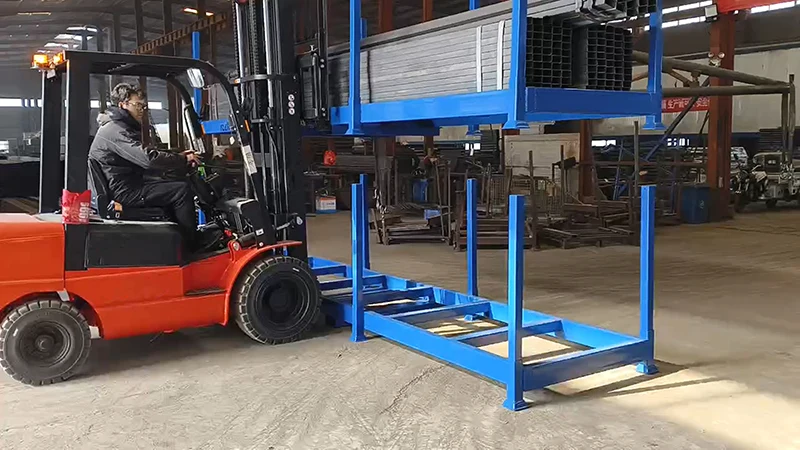
What is the real difference between spray coating and hot-dip galvanizing?
Spray coating is a surface film. It can look clean, it can be color-matched, and it is often the lower-cost way to finish a steel rack. But it still depends on the coating staying intact. If the film is scratched, chipped, or thin at a joint, moisture can reach the base steel and corrosion starts there.
Cold-galvanized or zinc-rich finishes often look brighter and more metallic out of the box, but that bright look does not automatically mean stronger protection. The protection is still relatively thin compared with hot-dip galvanizing.
Hot-dip galvanizing works differently. The fabricated steel is dipped into molten zinc, so the zinc layer reaches the whole part, including edges and many hard-to-reach areas. That is why it performs better when condensation, handling marks, and repeated loading cycles are part of the job.
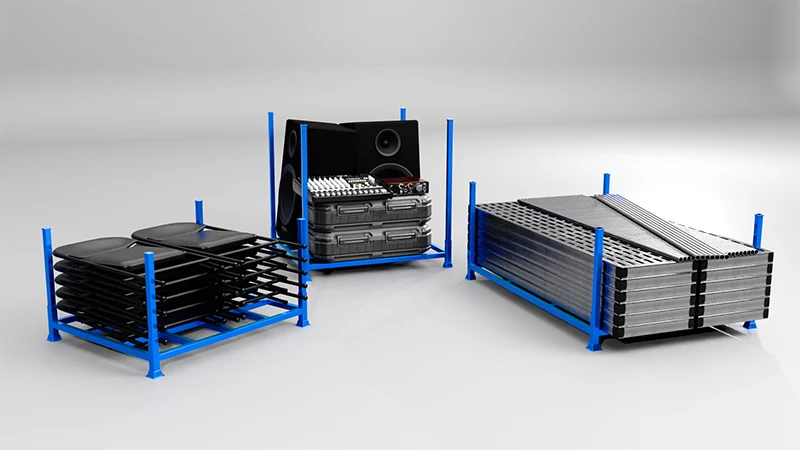
Why hot-dip galvanizing fits cold storage better
Cold rooms create a simple problem: warm air meets cold steel and water appears. Once that happens, moisture collects on beams, base frames, and post sockets. If the rack is moved in and out of the room every day, the coating is also taking repeated abrasion from forklifts and stacking.
That is where hot-dip galvanizing pays back. Zinc is sacrificial, so even if the surface is worn, the coating keeps working longer than a basic spray film. For returnable transport packaging, that matters more than the initial purchase price because the rack has to survive many cycles, not just one delivery.
For Derack in particular, hot-dip galvanizing is a strong choice when the rack is used in cold storage, humid warehouses, outdoor staging, or any operation that includes regular wash-down. In those environments, a lower-cost spray finish may look fine on day one and still lose the long game.
How to balance cost without overbuying
The right finish depends on the actual environment, not the catalog photo. If the rack is used only in a dry indoor warehouse, with low humidity and little handling damage, spray coating can be enough. It keeps the entry cost down and gives you flexibility on color.
If the rack is part of a closed-loop fleet, the question changes. You should judge the finish by cost per usable cycle, not by the first invoice. Early rust means more touch-up, more downtime, and a higher risk of product contamination or customer complaints. In that case, hot-dip galvanizing is often the more economical option over time.
There is also a hybrid route: hot-dip galvanizing plus a topcoat. That can be a good choice when you want stronger corrosion resistance and a branded appearance, but it is the highest-cost option and should be reserved for projects that really need both.
Best-fit scenarios
- Choose spray coating when the rack stays in a dry indoor area and the budget is tight.
- Choose hot-dip galvanizing when the rack works in a cold room, humid dock, outdoor staging area, or wash-down environment.
- Choose hot-dip plus topcoat when you need both a corrosion margin and a specific visual finish.
- Choose the finish by cycle life, not by purchase price alone.
FAQ
Is spray coating enough for a cold storage rack?
Only in mild conditions. If humidity is controlled, condensation is rare, and the rack is not regularly washed or scraped, spray coating can be acceptable. If condensation is routine, hot-dip galvanizing is the safer default.
Can we combine hot-dip galvanizing with powder coating?
Yes. A zinc base with a topcoat can improve appearance and add another layer of protection. It costs more, but it can make sense when the rack must look consistent and still handle harsh storage conditions.
Need a Custom Storage Solution?
Speak directly with our technical engineers. We offer free structural designs, heavy-duty catalog evaluations, and quick B2B price quotations.
Request a Quote Now →