
Choosing storage is not just a question of how many levels you can stack. It is a question of movement, stability, and return logistics: do you need a structure that stays fixed in place, or a load carrier that can move, nest, and come back empty with less waste?
Derack sits between a pallet and a fixed rack. That is exactly why it can solve some warehouse problems very well, and why it should not be the first choice for every site. The right answer depends on how often your goods change, how rigid your layout is, and whether return transport matters.
What each option is trying to solve
Beam racking is built for a fixed warehouse layout. It works well when you want stable lanes, repeatable picking positions, and a storage system that stays where it is. If your inventory is highly standardized and your team picks from the same locations every day, a fixed rack can be the simpler long-term answer.
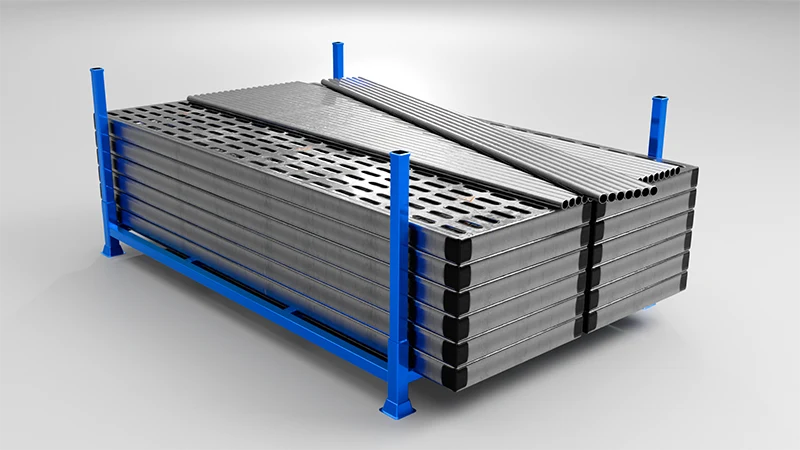
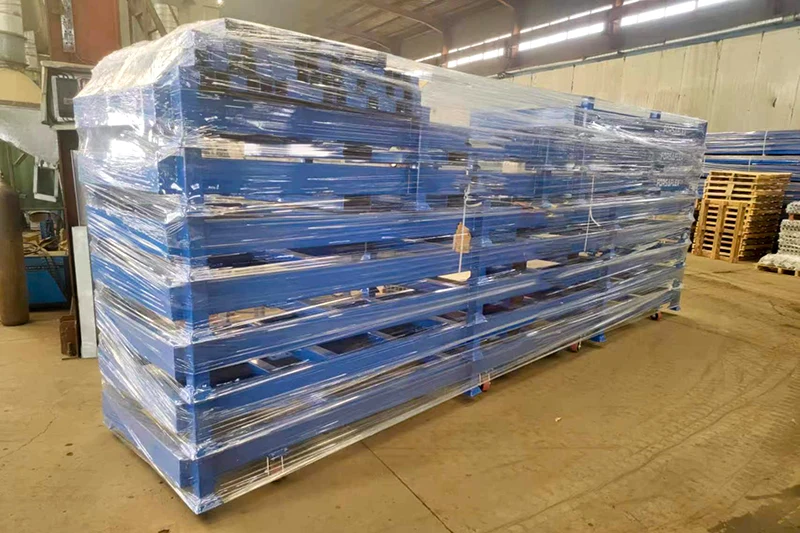
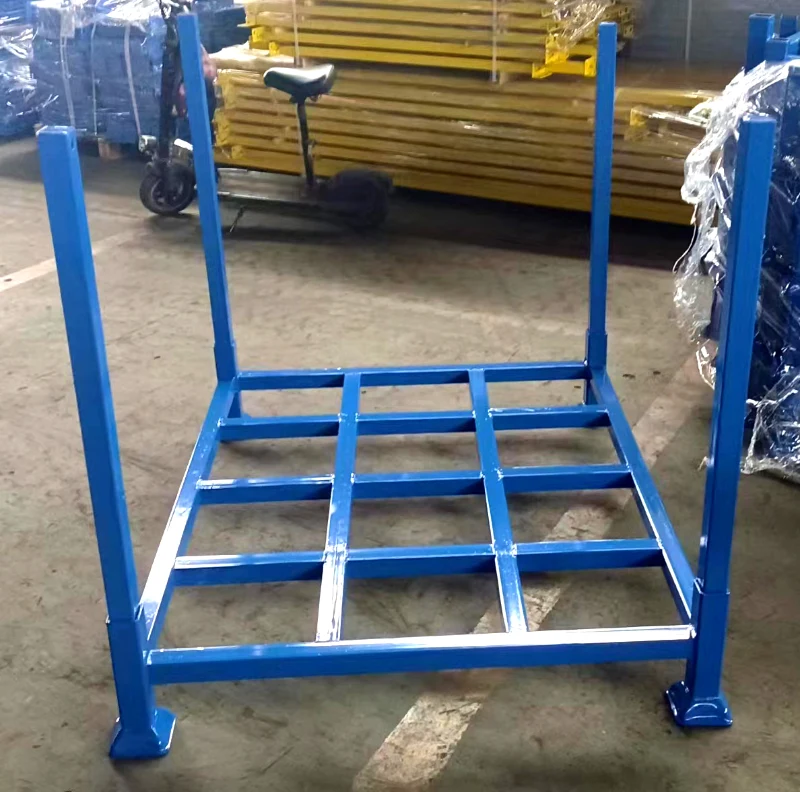
Derack solves a different problem. It is designed for goods that need structural support, but also need to move with the flow of the plant or warehouse. Because the posts can be removed and the units can nest when empty, it is often chosen for returnable transport packaging, temporary storage, mixed batches, and locations where the layout changes over time.
When beam racking is usually the better fit
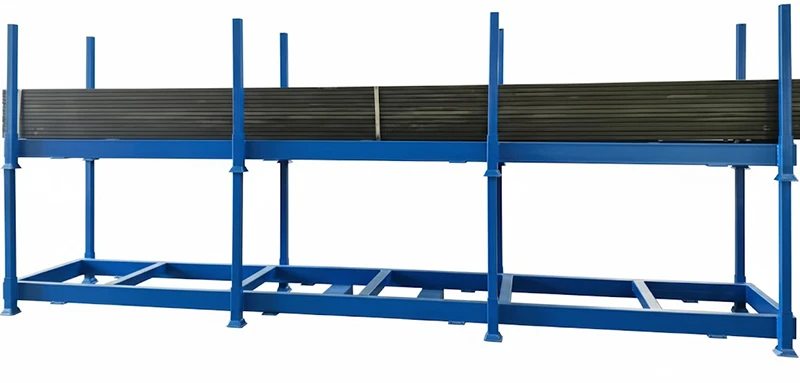
If your warehouse is built around fast, repeated picking from the same aisles, beam racking is often the more natural choice. It gives you a permanent structure, clear access lanes, and a storage pattern that is easy to standardize across shifts and operators.
It is also a strong option when the building layout will not change for a long time. In that case, paying for a fixed system can make sense because you are buying consistency more than flexibility.
When Derack makes more sense
Derack is a better fit when the goods themselves are the problem. Heavy items, awkward shapes, goods that should not be crushed, and batches that need to move between factory, warehouse, customer, and return routes all benefit from a reusable load carrier.
It is especially useful when you want to stop relying on floor stacking. By moving the load into a structural frame, you reduce the risk of bottom-layer damage and make forklift handling more organized. When the empty units can nest, the return leg becomes easier to manage than a fixed structure with no mobility.
Where Derack should not be the first choice
Derack is not a universal replacement for fixed racking. Its strength is portability and nestability, not the same kind of rigid, permanent storage density a beam rack can provide in a highly structured picking warehouse.
- If you need very frequent single-item picking from fixed locations, a permanent rack system may be easier to operate.
- If your layout will stay unchanged for years, the flexibility advantage of Derack becomes less important.
- If the site needs maximum lateral rigidity as the main priority, a fixed rack deserves stronger consideration.
- If the warehouse is designed around a classic pallet-racking workflow, Derack may add handling steps instead of removing them.
How to balance cost and flexibility
The real comparison is not just purchase price. It is total operating cost: installation, layout changes, return transport, empty-unit storage, damage risk, and how often the storage method has to adapt to new products.
Beam racking often wins when the answer is “make the warehouse permanently efficient.” Derack often wins when the answer is “keep the load movable and the empty units compact.” If your business has seasonal swings, changing batches, or a closed-loop return path, flexibility can be worth more than a permanent frame.
A simple decision check
- Do the goods move frequently between sites, or stay in one fixed warehouse position?
- Will the layout change, or is the rack plan stable for the long term?
- Do you need empty units to nest and return efficiently?
- Is the key risk crushing, deformation, or unstable floor stacking?
- Do you need a reusable transport system, or only a permanent storage system?
When the answer points to mobility, returnability, and batch change, Derack is usually worth a close look. When the answer points to fixed aisles, repeat picking, and maximum rigidity, beam racking remains the safer baseline.
Need a Custom Storage Solution?
Speak directly with our technical engineers. We offer free structural designs, heavy-duty catalog evaluations, and quick B2B price quotations.
Request a Quote Now →